
Latest News
Kishan, Hardik, spinners hand India record win


Ishan Kisha set things up with a 20-ball half-century, Hardik Pandya made a 27-ball half-century and picked up two wickets. Varun Chakravarthy took three wickets in his first ten balls.
India posted a 200-plus total, and didn’t let Namibia get anywhere near them. Their 93-run win was their biggest in T20 World Cups..
And yet, because of the expectations India have carried into this tournament and the scrutiny that follows them everywhere, this match was also about all the things they didn’t do. When Kishan was taking Namibia’s seamers apart, 300 was a not unrealistic possibility. When Hardik was at the crease, 240 seemed on the cards.
That they only made 209 was down mainly to one man. Namibia captain Gerhard Erasmus, bowling offspin with the widest imaginable range of release points – high-arm and round-arm, sometimes from well behind the bowling crease – made the most of a Delhi pitch with just a bit of grip in it to take 4 for 20 from his four overs. This included two in his final over, the 19th, which also featured a run-out. And that over began a late and only partially explicable collapse from India, who lost 5 for 4 off the last 11 balls of their innings.
For most part, it was normal service for India against an Associate team. But Erasmus and that late collapse briefly brought the contest to life, and perhaps gave India’s future opponents – including Pakistan, who face them on Sunday and have an artful round-arm spinner of their own – a few ideas.
With a stomach bug ruling out Abhishek Sharma, who had been discharged from hospital on the eve of the match, a door reopened for Sanju Samson. He began his World Cup debut with a flurry of effortless hits – three sixes and a crisp drive for four over extra-cover – before falling for 22 off 8, chipping a Ben Shikongo slower ball straight to deep midwicket.
It was brief, exhilarating, and ultimately told us nothing new. Samson plays a high-variance style at the top of the order, and of late his trigger movement – which takes him deep into his crease and leg-side of the ball – has been getting him into early trouble. He adopted the same trigger in this game, whether he was striking the ball sweetly or being dismissed off a shot he didn’t fully commit to.
In Ruben Trumpelmann and JJ Smit, Namibia have a pair of left-arm quicks who can put big teams in trouble on their day. This wasn’t their day; their angle and lengths kept feeding Kishan’s leg-side repertoire, and he took both bowlers apart while rushing to 61 off 24.
India were 86 for 1 after six overs – their biggest powerplay in a T20 World Cup game – and brought up their 100 in 6.5 overs – no team has got to that mark quicker in a T20 World Cup game.
India seemed on course for a monumental total.
Erasmus brought himself on in the eighth over and struck with his first ball, cramping Kishan on the pull to have him caught at deep midwicket.
The wicket transformed the game, as he and left-arm spinner Bernard Scholtz pulled the scoring rate back dramatically. They bowled six overs in tandem from the eighth to the 13th, conceding just 30 runs and picking up two more wickets, with Suryakumar Yadav and Tilak Varma falling in the attempt to hit out.
With the seamers returning, and Hardik and Shivam Dube getting stuck into Scholtz in his final over, India seemed to put their mid-innings lull behind them, scoring 65 from overs 14 to 18. And when Erasmus brought himself back in the 19th, it seemed like he was taking a massive risk, bowling offspin against two set batters with fearsome end-overs records. Hardik pulled the first ball of that over for his fourth six, bringing up his fifty and India’s 200.
The next ball could have gone for six too, only for substitute fielder Dylan Leicher to take a spectacular running, juggling, in-out-in catch on the deep square leg boundary.
Pandemonium ensued. Dube was run out in a mix-up with Rinku Singh. Axar Patel played all around Erasmus’ final delivery, a slow, low-arm grubber. The collapse continued through the final over with Smit – who, along with Trumpelmann, bowled superbly at the death, both nailing their yorkers with a high degree of efficiency – which brought three runs and two wickets.
This was still a daunting total, but imagine the look on Namibia’s face if you’d told them they’d only be chasing 210 when Kishan was blazing away.
Left-right openers Jan Frylinck and Louren Steenkamp looked briefly impressive, both hitting flurries of boundaries off Arshdeep Singh – who went for 36 in three powerplay overs – before falling in the 20s.
They did a good enough job for Namibia to start the eighth over at 67 for 1. Then Varun struck with his first ball, ripping a wrong’un through Steenkamp, bringing a hefty dose of perspective to anyone who might have harboured visions of an upset.
By the time he had bowled ten balls, he had taken three wickets, and the contest was effectively over. Erasmus was still there on the burning deck, having slog-swept Axar for a pair of sixes in ninth over, but the left-arm spinner had his revenge in his next over, and that was pretty much it.
Zane Green and Trumpelmann dragged the game deeper with a seventh-wicket stand of 17 off 27 balls, but once Jasprit Bumrah – playing his first match of the tournament after recovering from illness – ended it with a pinpoint yorker, the end was swift, with Hardik topping off an excellent evening with wickets off successive balls in the 18th over.
Brief scores:
India 209 for 9 in 20 overs (Ishan Kishan 61, Sanju Samson 22, Tilak Varma 25, Suryakumar Yadav 12, Hardik Pandya 52, Shivam Dube 23; Ben Shikongo 1-41, JJ Smit 1-50, Gerhard Erasmus 4-20, Bernard Scholtz 1-41) beat Namibia 116 in 18.2 overs (Louren Steenkamp 29, Jan Frylink 22, Jan Nicol Loftie-Eaton 13, Gerhard Erasmus 18, Zane Green 11; Varun Chakravarthy 3-07, Axar Patel 2-20, Hardik Pandya 2-21, Arshdeeep Singh 1-36, Shivam Dube 1-11, Jasprit Bumrah 1-20) by 93 runs
[Cricinfo]

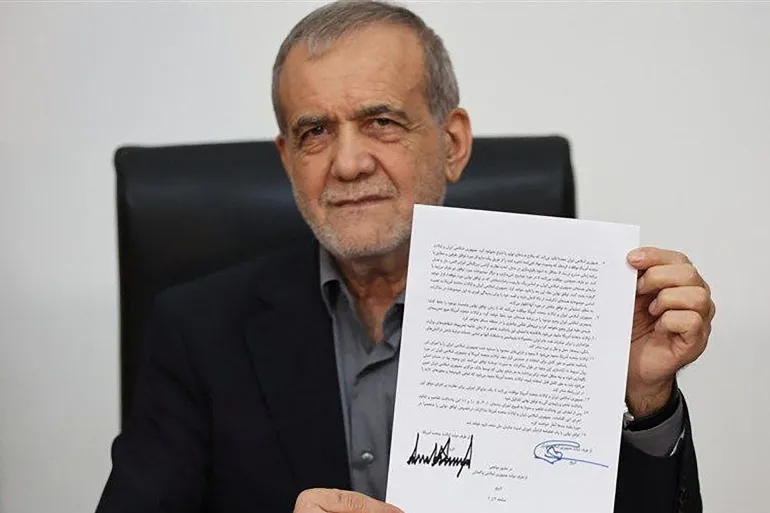
The United States provided details of the 14-point memorandum of understanding it reached with Iran on Wednesday.
Neither has released a physical copy, but a US official read out the text during a call with reporters on Wednesday. Iranian officials have yet to confirm the US version of the text.
The account is the clearest yet from the administration of US President Donald Trump on the deal, which had been scheduled to be signed in a ceremony in Switzerland on Friday, but which Trump signed in Versailles on Wednesday. However, it leaves a large number of questions unanswered, experts say.
We break down what the 14-point agreement says about issues that have emerged as major sticking points during peace negotiations between the US and Iran.
The first clause of the MoU states that the US and Iran have agreed to the “immediate and permanent termination of military operations on all fronts, including in Lebanon”.
Additionally, the memorandum adds that both sides will commit to ensuring the “territorial integrity and sovereignty of Lebanon”.
However, it makes no mention of Israel, which currently occupies one-fifth of the country and has subjected Lebanon to near-daily strikes since early March, killing at least 3,000 people and displacing more than one million from their homes.
Given that the agreement is solely between the US and Iran – Israel and the Lebanese group Hezbollah it is at war with are not signatories – it is unclear how a ceasefire in Lebanon would be implemented, or whether it means Iran must stop funding Hezbollah. In fact, Iran’s support for proxy groups around the region generally is not mentioned in the agreement.
Israel has stated several times this week that it will not withdraw from Lebanon.
On Monday, Defence Minister Israel Katz said in a statement: “Prime Minister Benjamin Netanyahu and I are pursuing a clear policy under which the [military] will remain in the security zones in Lebanon, Syria and Gaza for an unlimited period of time in order to protect the border and Israeli communities from there against jihadist elements”.
Lebanon has been a key sticking point during negotiations. Tehran has repeatedly signalled that an end to Israeli military operations in Lebanon is a prerequisite for any broader peace deal.
The US and Iran met in Pakistan in April for the first direct talks between the two sides since the 1979 Islamic revolution in Iran. Ahead of these talks, Iranian Parliament Speaker, Mohammad Bagher Ghalibaf, publicly stated that for Iran, a ceasefire by Israel in Lebanon and the unfreezing of Iranian assets abroad were non-negotiables for Tehran. Iran has not wavered from this red line.
On April 16, Trump announced that Israel and Lebanon had reached a 10-day ceasefire to allow negotiations for a more permanent security and peace agreement to continue. That came after six weeks of fighting between Israel and Hezbollah.
Despite the ceasefire, Israel has continued attacks and advances in Lebanon even throughout this week, after Washington and Tehran signalled they were close to a deal.

The MoU states in its second paragraph that the US and Iran will “undertake to respect each other’s sovereignty and territorial integrity, and to refrain from interfering in each other’s internal affairs”.
This appears to suggest that the Trump administration has relinquished any hopes of forcing regime change in Iran. In recent weeks, Trump has made attempts to distance himself from this aim in an apparent face-saving exercise.
At the G7 summit in France this week, Trump said that he “never cared about regime change” anyway, but also reiterated his claim that the assault on Iran has resulted in regime change, even though the clerical government is still firmly in place.
“You talk about regime change. I never cared about regime change. It [was] never a part.”
However, on February 28, when the US and Israel launched the first strikes on Tehran, Trump suggested that one of the aims was to force regime change. In a social media post addressed to the Iranian people, he wrote: “The hour of your freedom is at hand.”
“When we are finished, take over your government. It will be yours to take. This will be probably your only chance for generations.”
The fourth paragraph of the agreement states that the US “will begin the removal of its naval blockade” and “will fully end the naval blockade within 30 days”. It also states that the US “undertakes to remove its forces within 30 days after the final deal”.
The fifth point of the agreement states that Iran will make “its best efforts for the safe passage of commercial vessels with no charge for 60 days only from the Persian Gulf to the Sea of Oman, and vice versa … Iran will conduct dialogue with the Sultanate of Oman to define the future administration and maritime services in the Strait of Hormuz”.
The issue about control of the strait has been another major sticking point in peace negotiations between the US and Iran, which sees it as its most important piece of leverage.
Soon after US-Israeli strikes began, Iran closed the strait to shipping.
In April, the US began a corresponding naval blockade on Iranian ports, further adding to the disruption of global oil and gas supplies.
Iran has allowed the passage of a few vessels from select countries through the strait at times during the conflict, but shipping companies have been required to negotiate transit with the Islamic Revolutionary Guard Corps (IRGC) – with some understood to have paid tolls of as much as $2m per ship. In the meantime, insurance premiums for ships in the strait have soared or been withdrawn altogether and many shipping operators will be unwilling to risk the voyage before there are guarantees that mines have been removed.
In its previous proposals to end the war, Iran has referred to charging transit tolls for vessels. Washington and other countries have repeatedly rejected the prospect.
Under international maritime law, it is not permissible to charge tolls for passage in natural straits such as Hormuz, however, adjacent countries may charge fees for services such as insurance or docking.
The 14-point agreement makes little reference to this, and on Wednesday Iran’s lead negotiator Ghalibaf said the “Strait of Hormuz will not return to pre-war conditions” and Iran will “receive a fee for services” to shipping.

In the eighth clause of the agreement, Iran “reaffirms that it shall not procure or develop nuclear weapons”.
It also states that the US and Iran “have agreed to resolve the disposition of stockpiled, enriched material pursuant to a mechanism that will be mutually agreed upon … with the minimum methodology to be down-blending on site under the supervision of the IAEA”.
Iran’s Uranium enrichment programme has also been a major bone of contention between the US and Iran.
Although Iran has consistently stated in the past that it does not intend to build a nuclear weapon, it has insisted on the right to develop a nuclear power programme. However, Iran is believed to have an estimated 440kg (970lb) of uranium enriched to 60 percent, short of the 90 percent required for weapons-grade material, but at the point at which it becomes much quicker to reach 90 percent. This is far higher than the three to 5 percent required for generating nuclear power.
The US and other Western countries say they believe Iran is preparing to have the capacity to build nuclear weapons.
While the US has been calling for Iran to hand over its stockpile of enriched uranium to it, Iran has stated consistently that it will not do this – although it has, at times, appeared willing to consider the prospect of handing it over to a third country. Last week, it was reported that Iranian Supreme Leader Mojtaba Khamenei had issued a directive that Iran’s enriched Uranium should not be sent abroad at all.
This clause in the agreement appears to suggest the US may agree to Iran diluting its stockpile back to nuclear power levels rather than handing it.
Downblending, which would most likely be carried out under the supervision of the International Atomic Energy Agency (IAEA), is an irreversible process.
Since the war on Iran began, it has also emerged that on February 26, during informal negotiations with the US in Geneva two days before the US and Israel launched attacks on Iran, Tehran had already offered to downblend the stockpile from 60 percent enrichment to 3.67 percent.

The term “reparations” is not mentioned.
However, the sixth clause of the agreement states that the US “undertakes with regional partners to develop a definitive, mutually agreed plan with at least $300bn for the reconstruction and economic development of the Islamic Republic of Iran. All required licenses, waivers and permissions needed for the relevant financial transactions will be granted by the United States of America”.
butions from Gulf countries for this, and insisted that US taxpayers will not foot the bill.
The Gulf countries, which are seen as the “regional partners” mentioned in the agreement, have not commented.
The seventh clause deals with sanctions. It states that the US “undertakes to terminate all types of sanctions against Iran in an agreed-upon schedule as part of the final deal”.
However, it does not specify if this relates to US sanctions only, or also to UN-mandated sanctions.
Iran is one of the most heavily sanctioned countries in the world, having been subject to US sanctions for decades. The lifting of some secondary sanctions under the 2015 nuclear agreement reached by the former Obama administration with Iran and a number of other countries was reversed when Trump withdrew the US from the landmark deal during his first term in 2018.
Billions of dollars of Iranian assets remain frozen in foreign banks as a result. Iran has stated consistently that it needs this money to rebuild following the war
(Aljazeera)
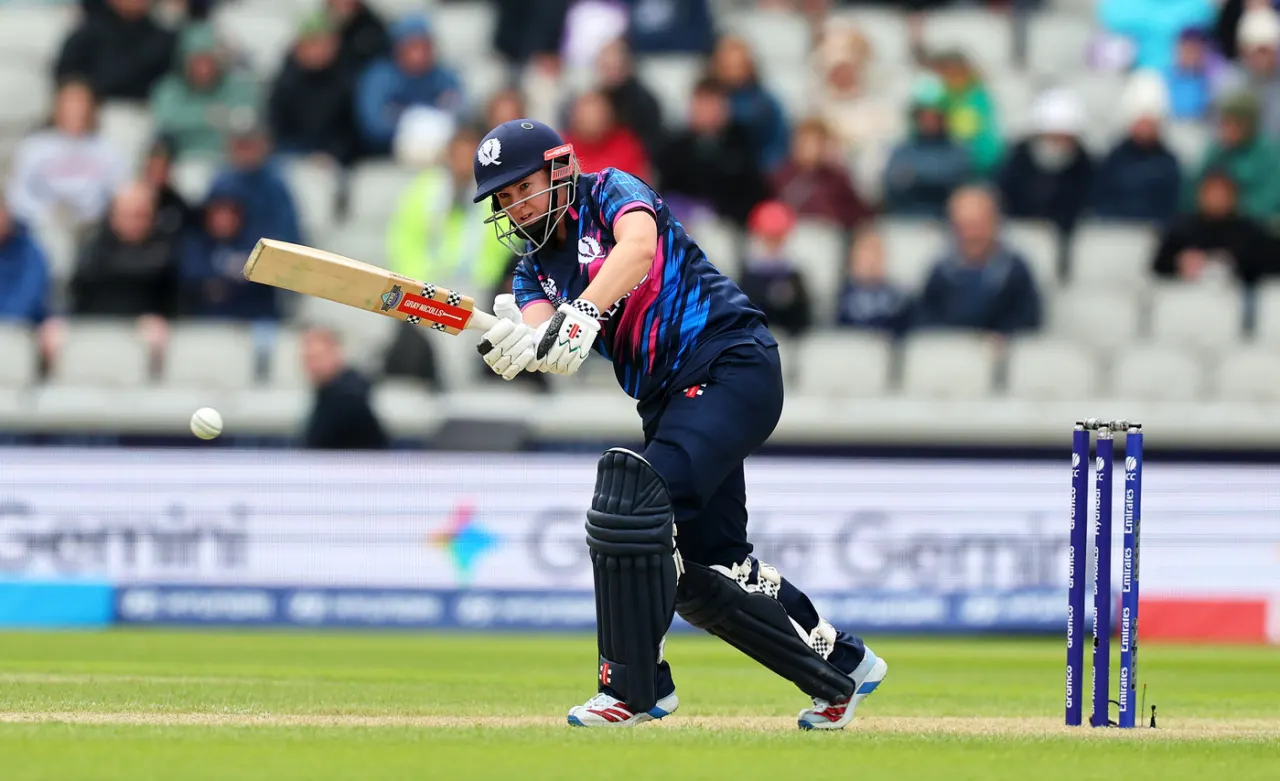
Scotland take on West Indies in Leeds at 18:30 local time (17:30 GMT) in Group 2 of the Women’s T20 World Cup 2026. Both teams won their opening matches in this competition – Shemaine Campbelle’s unbeaten 90 aided by New Zealand’s dropped catches saw West Indies emerging victorious, while a strong all round performance from Scotland brushed aside Ireland.
Scotland and West Indies have played each other only three times across formats – their lone T20I meeting coming at the last World Cup. Crucially, though, Scotland dealt West Indies perhaps their biggest blow in recent times with their win in the Women’s ODI World Cup Qualifier last year. Scotland staved off an all-round show from Hayley Matthews to eke out an 11-run win, denying West Indies a chance to qualify for the ODI World Cup last year.
Coming on the back of a comfortable win, expect Scotland to go in unchanged.
Scotland (probable XI): Darcey Carter, Katherine Fraser, Kathryn Bryce (capt), Sarah Bryce (wk), Ailsa Lister, Megan McColl, Priyanaz Chatterji, Rachel Slater, Chloe Abel, Kirstie Gordon, Gabriella Fontenla
West Indies head coach Shane Deitz had said that Chinelle Henry was close to playing their opening game. If fit, she can add heft to their lower-middle order as well as the bowling department.
West Indies (probable XI): Qiana Joseph, Hayley Matthews (capt), Shemaine Campbelle (wk), Deandra Dottin, Jahzara Claxton/Chinelle Henry, Jannillea Glasgow, Aaliyah Alleyne, Zaida James, Shawnisha Hector, Afy Fletcher, Karishma Ramharack
Players to watch:
Kathryn Bryce: The Scotland captain had a big role to play in their first win at this T20 World Cup. She scored a rapid half-century and picked up two wickets against Ireland. Bryce has picked up at least one wicket in 11 of the 12 T20Is she has played this year, apart from being consistent with the bat. Her experience of playing regularly in England’s domestic circuit could be key for Scotland against West Indies.
Deandra Dottin: She was at her brutal best in the last iteration of the T20 World Cup (strike rate 165.54, average 39.4, 12 sixes) but since the start of 2025, Dottin has only one T20I half-century at a strike rate of 122.84. Dottin had scored an unbeaten 15-ball 28 the last time she faced Scotland. Can she find her mojo back against them?
While Australia’s bowlers bulldozed Bangladesh, India’s batters made merry to show the batting-friendly nature of the surface in Leeds. Weather wise, the evening is likely to become cooler, with temperatures ranging from 19 to 22 degrees Celsius. There is no forecast of rain, even though it grew slightly overcast towards the start of Netherlands’ innings on Wednesday.
[Cricinfo]
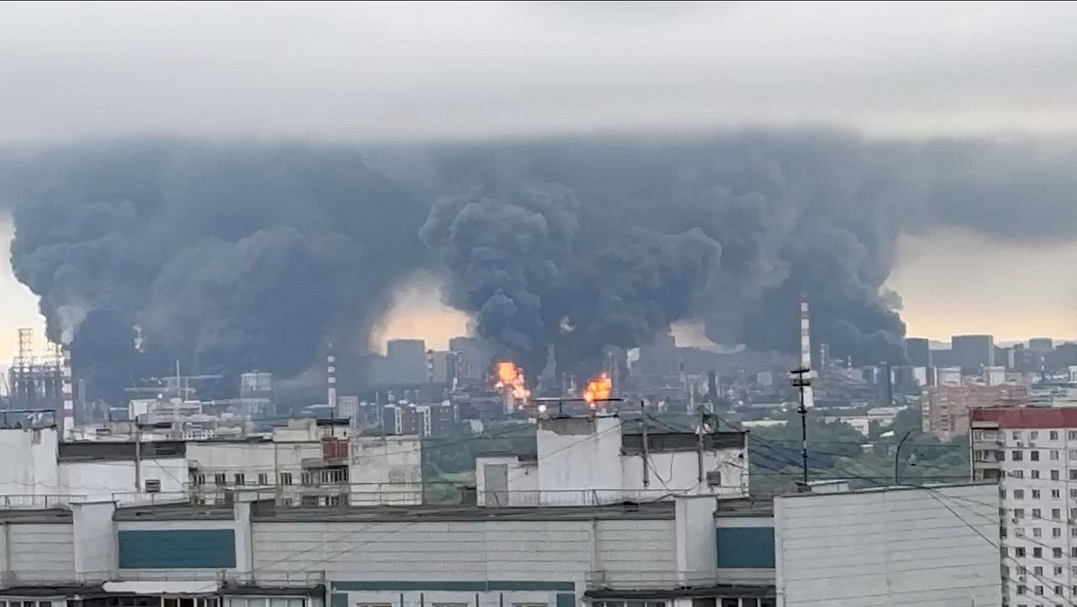
Moscow has come under the largest Ukrainian attack since the start of the full-scale war, with close to 200 drones hitting targets around the Russian capital and setting columns of thick smoke billowing high into the sky.
Seventeen people were wounded in the Moscow region, according to local governor Andrei Vorobyov.
Almost 1,000 drones and four Ukrainian cruise missiles were intercepted and destroyed across the country in 24 hours, Russia’s defence ministry was quoted as saying. An oil depot was struck in the southern Rostov region, where one person was killed.
Volodymyr Zelensky said Kyiv had once again hit the Moscow region with “long-range sanctions” – a euphemism for Ukrainian long-distance strikes on Russia.
“It’s time to end this war, and Russia must take the necessary steps in diplomacy,” he added.
He said the massive drone strike was in response to last week’s Russian attack on Kyiv, which set a major religious landmark ablaze.
“We don’t want this war and have never wanted it,” Zelensky said. “But if Ukraine burns, your Moscow will burn too.”
Fires broke out as the Kapotnya refinery in south-east Moscow was hit for the third time in a month and the second time this week, colouring the sky black with smoke. Numerous videos showed the lid of a large oil storage tank blown dozens of metres into the air by the force of an explosion.
A nearby shopping centre was also burning, reportedly after drone debris fell on the building, and several residential high-rise blocks were evacuated.
Moscow’s four airports were temporarily shut and more than 500 flights were cancelled or delayed.
Although local authorities across Russia have banned publication of images of the aftermath of drone strikes, dozens of videos were posted on social media showing drones flying across the sky in broad daylight and explosions over industrial areas on the outskirts of Moscow.
Four and a half years since Moscow launched its full-scale invasion of Ukraine, the war of attrition on the front line in Ukraine grinds on, out of sight for many ordinary Russians.
Kyiv’s long-range strikes on targets across Russia as well as Moscow and St Petersburg are an indication of Zelensky’s aim of “bringing the war home” to Russians.
Drone attacks on Moscow – about 500km (310 miles) from the Ukrainian border – have become more frequent as Kyiv has developed its long-range capabilities. Ukraine’s first successful drone strikes reached the Russian capital in spring 2023, although they were sporadic and rarely involved more than a handful of drones.
Since then, extensive air defences have been set up around Moscow – but the number of drones used by Ukraine in its attacks has also multiplied and some have penetrated those defences.
Meanwhile, Russia launched more than 200 drones and multiple ballistic missiles at Ukraine overnight, Kyiv said.
Vladimir Putin, who is hosting southeast Asian leaders for a summit in the central city of Kazan, has not commented on the large-scale attack on the Russian capital.
Writing on X, Ukrainian Foreign Minister Andriy Sybiha said: “One of the most popular questions asked by Muscovites this morning is ‘What is going on?'”
“I can answer. Your country started a war of aggression against ours. For years, it has been killing our people,” Sybiha wrote.
“Now that you know what’s going on, ask Putin when he is planning to end it.”
[BBC]

What the Trump-Iran agreement says about Lebanon, Hormuz and Uranium

Scotland face West Indies with a chance to reopen World Cup wounds

Moscow hit by largest Ukrainian attack since start of Russia’s full-scale war

Sooryavanshi to have parents with him on tour of Ireland and England

Luis Diaz, Colombia defeat World Cup 2026 debutants Uzbekistan

Oil prices fall, stocks rally as US, Iran sign framework to end war

‘Dates have the highest sugar content to fight Coronavirus’

Sunday Island 27 December – Headlines

#SundayIsland 17th December – Headlines

Sunday Island – 28th March

Sunday Island Headlines – 21 March

Sunday Island – 21st February – Headlines
-

 News4 days ago
Release of 2025 O/L results likely to be delayed
-
 News7 days ago
CIABOC summons Yoshitha over his participation in British Navy training programme
-

 News7 days ago
Justice Minister responds to social media claims he represented Easter Sunday ringleader
-

 Sports4 days ago
Tharanga set for high-profile javelin clash in Ostrava
-

 Features5 days ago
Politics of protected species
-

 News3 days ago
Beijing Capital Airlines to resume flights to Colombo signalling boost to tourism
-

 News4 days ago
Theft of USD 2.5 mn from Treasury: CoPF accused of complicity in NPP cover-up
-

 News6 days ago
Commonwealth lawyers urge Lanka to uphold rule of law