
Features
The Catastrophic Impact of Tropical Cyclone Ditwah on Sri Lanka:


A Comprehensive Examination of Human Loss, Environmental Devastation, and Governance Failure
Tropical Cyclone Ditwah, which blew its way across Sri Lanka between November 27 and November 30, 2025, has emerged as one of the lengthiest, destructive natural disasters in the country’s modern history. Although it did not surpass the human death toll of the 2004 Boxing Day Tsunami, which claimed approximately 40,000 lives, its scale of destruction, economic cost, geographic spread, and the depth of infrastructural collapse have collectively positioned Ditwah as the most economically devastating catastrophe Sri Lanka has faced since independence.
The cyclone’s arrival exposed not only the vulnerability of the island’s terrain, especially its central hill country, but also the alarming weaknesses in governance, preparedness, and coordinated emergency response within the incumbent administration. For days, the cyclone battered the central highlands with relentless rainfall, triggering landslides, avalanches of mud, and sudden reservoir spillovers that swept through valleys, villages, and towns with little warning.
More than 550 millimetres of rain fell within twenty-four hours across several districts, overwhelming all natural and engineered waterways and turning mountain slopes into sheets of sliding earth. The regions of Badulla, Kandy, Matale, and Nuwara Eliya suffered the heaviest toll, with nearby communities in Kurunegala, the North, North Central, and Eastern provinces also sustaining widespread damage as rivers overflowed, irrigation systems collapsed, and entire settlements found themselves submerged or erased.
In the chaos that followed Ditwah’s landfall, the human cost became painfully apparent. By six o’clock in the evening on December 2, government estimates and independent assessments suggested that more than 1.5 million Sri Lankans had sought refuge in schools, temples, community halls, churches, and makeshift shelters while reported death tall is around 500+. Though the magnitude of the destruction clearly suggests a far higher death toll, with estimates likely exceeding 1,000.
Many arrived at these makeshift facilities barefoot, injured, drenched, and carrying nothing but the clothes they had been wearing when they fled. Homes had crumbled on top of families as hillsides collapsed. Water had risen unexpectedly in the dead of night. Tidal surges along rivers, exacerbated by sudden spill releases from large reservoirs, had torn homes from their foundations. More than 500,000 families were directly or indirectly affected; thousands of houses were utterly destroyed. In several districts, mudslides buried entire neighbourhoods, leaving only rooftops visible above the soil or nothing at all.
Some of the most harrowing stories came from Gampola, Minipe, Kotmale, and Walapane, where rescue teams reported scenes reminiscent of the worst tragedies Sri Lanka has ever endured. In more than one location, entire extended families had been wiped out, leaving not a single surviving relative. Such complete erasure of households had not been seen in this magnitude since the tsunami of 2004.
The question many Sri Lankans are now asking is whether the disaster had to be so severe. Local and international meteorological agencies issued repeated warnings days before Ditwah made landfall, but these warnings failed to translate into effective readiness or evacuation protocols. Despite the clearly predicted rainfall patterns and the heightened probability of landslides in the central hills, the government’s disaster management apparatus was sluggish, uncoordinated, and riddled with political interference.
Local authorities complained that they have not received coordinated instructions from political authorities within the government. District-level officers struggled to determine which chain of command to follow during financial disbursement for welfare and support: either presidential directions or newly implemented Anti-corruption Act. Reservoir management units did not synchronize their operations, and spill gates were opened abruptly in several major reservoirs, including Kotmale, Randenigala, Victoria, and Moragahakanda.
These sudden releases unleashed violent torrents downstream, catching residents off guard and amplifying both human and property losses. In many cases, villagers reported that they heard the roar of rushing water minutes before their homes were consumed. The failure to provide timely evacuation notices or spill warnings has become a major point of public anger, with many accusing the government of negligence, complacency, and a failure to act decisively in the face of impending catastrophe.
The chief custodian of the Sacred Tooth Relic in Kandy, Pradeep Nilanga Dela, together with the Buddhist clergy, was among the first to respond by providing food and essential support to affected communities despite shortcomings in the government’s disaster-management mechanism. The Sri Lanka Army, Navy, Air Force, and Police also extended tremendous assistance in evacuation efforts, although these operations were at times uncoordinated due to the scale of the crisis.
Local communities and youth groups, including well-known YouTubers such as Kelum Jayasumana, Waruna Rajapaksha, Sepal Amarasinghe, and Iraj Weeraratne, as well as Milinda Rajapaksha of Biththalksala, the ThreePosha group, and many other volunteer organizations, played a major role in providing food and relief to nearly 1.5 million displaced people across the country. Buddhist temples islandwide have been offering profound and continuous support to these humanitarian activities.
Hundreds of university students, especially those trapped in hostels at the severely affected University of Peradeniya, received meals and essential supplies predominantly from the Sri Dalada Maligawa, Kandy. At the time of writing, several evacuation sites and affected groups are still awaiting adequate welfare assistance. The Sabaragamuwa University community, electronic media giants such as Hiru, Derana along with many Old Boys’ Associations of prominent colleges, were also among the major responders. The Government Medical Officers’ Association (GMOA), in collaboration with medical students from universities that were not impacted, established medical camps and an online counseling service to support victims. Sri Lanka’s private tuition providers, including prominent educators such as Dinesh Muthugala, along with many other community support groups, also stepped forward to fill critical gaps left by the failures in the state disaster-response system.
The impact on the central highlands has been particularly severe, with the mountainous terrain amplifying the destructive potential of heavy rainfall. The steep slopes of Badulla, Matale, Kotmale, Gampola, Walapane, and Minipe turned into dangerous channels for mud and debris. Landslides were so extensive in some locations that rescue workers described entire landscapes as “unrecognizable.” Roads disappeared under several metres of mud. Tea plantations that had stood for generations were stripped bare. Estate line rooms were flattened, and in some cases, completely buried.
Hundreds are still missing in these areas, and officials warn that many bodies may never be recovered due to the unstable soil and the scale of the terrain collapse. Survivors who lost their families wander through temporary shelters in a state of shock, clinging to photographs, schoolbooks, or items pulled from the mud—often the last remaining evidence that their loved ones existed.
Yet, Ditwah’s significance extends beyond its immediate human tragedy. It struck at a time when the country’s economic and infrastructural landscape had evolved dramatically compared to 2004. When the tsunami hit, Sri Lanka had limited large-scale infrastructure, modest tourist development, and a smaller network of modern roads. Reconstruction, though painful, did not involve rebuilding the colossal national assets that today define the country’s economy.
In contrast, by 2025, Sri Lanka had spent more than a decade investing in large development projects, much of which occurred during the 2010–2015 period under President Mahinda Rajapaksa. Those years saw the construction of highways, expressways, expanded ports, new airports, modern bridges, and upgraded transport systems that reshaped the national economy and positioned Sri Lanka as a tourist and logistical hub in South Asia. This infrastructure was designed to endure decades. Yet Ditwah’s ferocity inflicted damage that experts believe may take years – and in some cases, perhaps a generation – to repair.
Ironically, it was the infrastructure of the Rajapaksa era that prevented the disaster from becoming even more deadly. As Ditwah knocked out nearly every A-class and B-class road in the central, northern, and eastern regions, the country’s expressway network remained largely operational. The Southern Expressway, the Katunayake Expressway, and the Outer Circular Expressway served as the only reliable land routes for emergency convoys, medical transfers, and military deployments.
Without these expressways, Sri Lanka’s most affected regions would have been completely isolated, making the delivery of relief and rescue assets far slower, more dangerous, and potentially impossible. Rescue workers, emergency physicians, and the armed forces relied heavily on these highways to access the worst-hit districts. Food, medicine, water, and fuel were transported almost exclusively through these corridors during the first 72 hours of the crisis. The fact that the expressway system withstood the cyclone has prompted both relief and reflection. While it stands as a testament to long-term infrastructure planning, it also underscores the fragility of the rest of the country’s transport network, which collapsed under the combined force of rainfall, flooding, and landslides.
The disruption to education has been severe. Schools across the island remain closed until December 16, while universities are shut until December 8 due to damaged buildings, inaccessible roads, and their repurposing as emergency shelters. The GCE Advanced Level examination, which was underway when the cyclone struck, has been canceled and postponed indefinitely, leaving hundreds of thousands of students in uncertainty.
The psychological toll on young people, especially those displaced with their families or who lost homes or relatives, will likely take months to properly assess. Many students interviewed at shelters said they felt as though their future had collapsed along with their homes. Some described leaving exam halls only to find rivers overflowing, walls cracking, and chaos erupting around them. The sudden halt of a national examination -a rare event – underscores the magnitude of Ditwah’s disruption of daily life.
Economically, Sri Lanka faces a long and arduous recovery. The destruction of tea estates in Nuwara Eliya, Badulla, and Kandy poses a significant blow to one of the country’s most valuable export sectors. Landslides have ruined slopes that have taken decades to cultivate. Vegetables, which the central highlands supply to much of the nation, have been lost in enormous quantities. The North Central and Eastern provinces, which function as key rice-producing regions, suffered severe flooding that destroyed large stretches of paddy fields.
Irrigation channels, small-scale tanks, and large reservoirs have been damaged, blocked, or filled with silt. Livestock losses across multiple districts add a further layer of agricultural disruption. Economists warn that food prices will rise sharply in the coming months, export earnings will fall, and supply shortages may persist well into 2026. Reconstruction of roads, bridges, culverts, water systems, and damaged power infrastructure is expected to consume vast resources at a time when Sri Lanka’s economy is still struggling with debt, inflation, and reduced fiscal capacity.
This disaster has also forced a critical public conversation about preparedness, governance, and the apparent failures of state institutions. Many citizens argue that while the cyclone itself was unstoppable, its deadliest consequences were not. The lack of coordinated communication, delayed evacuations, and sudden, poorly managed reservoir spillway releases have drawn intense scrutiny. Freelance investigations have already begun into whether certain reservoir operations violated established safety and warning protocols.
Some experts warn that political interference in technical decisions may have contributed to the chaos. Reports from district engineers suggest that requests for controlled, phased releases were ignored or overridden until the situation became unmanageable, forcing emergency gate openings that released thousands of cubic meters of water at once. Communities downstream -some of which had no history of flooding-were hit without warning. Survivors describe hearing what sounded like “a waterfall appearing from nowhere” before torrents engulfed their homes.
In the aftermath, the emotional weight of the disaster is overwhelming. Journalists and aid workers entering Gampola, Walapane, Minipe, and Kotmale have described scenes of profound grief and desolation. Parents sit silently beside the ruins of their homes, unsure whether their missing children are buried beneath the soil or carried away by floodwaters. Elderly survivors wander through shelters unable to locate relatives or neighbours. In some communities, mass graves have been dug for unidentified victims, echoing the darkest days of 2004. Funeral rites are performed in hurried, crowded shelters as survivors try to reconcile the magnitude of their loss. Entire generations of families have been wiped out in some hillside villages, leaving only distant relatives to grieve on their behalf.
Despite the overwhelming tragedy, stories of courage have also emerged. Volunteers, both local and international, have rushed into danger zones, pulling survivors from collapsed structures, carrying injured elders across flooded roads, and working around the clock to distribute food and clean water. Medical teams have set up mobile clinics along expressway exits and in remote rural schools. The armed forces have deployed helicopters to airlift trapped residents from landslide-prone ridges.
Yet even these remarkable efforts cannot mask the sobering reality: the scale of the disaster far exceeded the capacity of Sri Lanka’s emergency response systems. The country now stands at a crossroads, confronting questions that cannot be postponed. How can Sri Lanka adapt to a future in which extreme weather events are accelerating due to global climate change? Are existing disaster-response frameworks adequate for the new climate reality? What reforms are required to ensure that reservoir management, early warning systems, and evacuation protocols function with precision and authority? And most importantly, what political and administrative changes are necessary to prevent preventable loss of life during future crises?
Cyclone Ditwah will be remembered not only for the destruction it unleashed, but for the uncomfortable truths it revealed. It exposed the fragility of the nation’s governance structures, the consequences of political fragmentation, and the urgent need for professionalized disaster management. At the same time, it highlighted the enduring value of robust infrastructure, exemplified by the expressway network that served as a lifeline when the rest of the country was cut off.
While the human death toll, though painfully high, may remain below that of the 2004 tsunami, the economic damage is without precedent. Rebuilding will take years. Restoring agricultural productivity will take seasons. Reconstructing roads, bridges, schools, and reservoirs will require financial resources that Sri Lanka can scarcely afford. But the deepest scars will be carried by the families who have lost everything, by the children whose education has been shattered, and by the communities that now exist only as memories beneath landslides and floodwaters.
As Sri Lanka begins the long road to recovery, Ditwah stands as a stark reminder that natural disasters, when met with insufficient preparedness and fragmented governance, become national tragedies of far greater magnitude. Techniques such as soil nailing with a shotcrete facing, along with improved surface drainage systems-including the construction of basin drains at valley points to collect runoff and channel it into cascade drains-are essential methods that Sri Lanka must adopt to prevent landslides in the future (Figure 1 and Figure 2). The storm has passed, but its impact will shape the nation’s future for decades to come.
Sri Lanka now needs strong international support to recover from the massive losses caused by Ditwah. This recovery effort requires close collaboration with global partners, including India, the United States, Russia, the European Union, Japan, and China, as well as both G8 and BRICS nations. Notably, India’s prompt response—along with the statements and commitments made by the Indian Finance Minister and Prime Minister Narendra Modi has been especially appreciated. Their call to initiate a Sri Lanka Rebuilding Donor Conference could play a pivotal role in the country’s recovery and long-term reconstruction. It is essential that the Government of Sri Lanka begins this process immediately, without any delay.
About the Writer:
Writer is senior academic at Sabaragamuwa University of Sri Lanka, Fulbright scholar, Indian Science Research Fellow, Australian Endeavor fellow and also visiting Professor in University of Nebraska, Lincoln, USA. His international experience in various policy events and also experience in disaster and human and animal catastrophic management during 2019-2022 is significant, He served as Chairman National Livestock Development Board during 2019-2022 and also served as Dean- Faculty of Agriculture at Sabaragamuwa University of Sri Lanka.
E mail; . magamage@agri.sab.ac.lk.
By Prof. MPS Magamage
Faculty of Agricultural Sciences,
Sabaragamuwa University of Sri Lanka


by Jehan Perera
The NPP government is going after powerful figures from the past and present who have engaged in corruption, fraud and criminal activity in a way that no previous government in Sri Lanka has done. Former ministers, politicians and senior state officials are among those facing investigations and legal proceedings. The government has placed before Parliament a document listing 50 cases involving corruption, fraud and other crimes. These include not only financial offences but also cases relating to the Easter Sunday attacks, the killings of Lasantha Wickrematunge and Wasim Thajudeen, the disappearance of Prageeth Ekneligoda and attacks on journalists Keith Noyahr and Upali Tennakoon.
The significance of this effort is that it can demonstrate that nobody is above the law, regardless of political connections or social standing, which will help restore public confidence in institutions that have long been distrusted. It could also recover public resources, improve the investment climate and strengthen the foundations for a more prosperous and just Sri Lanka. When criticised for focusing on the past and not the present, the government position is that these investigations were initiated under earlier governments, particularly between 2015 and 2019, and that it is now allowing investigators to proceed to deal with the backlog without political interference.
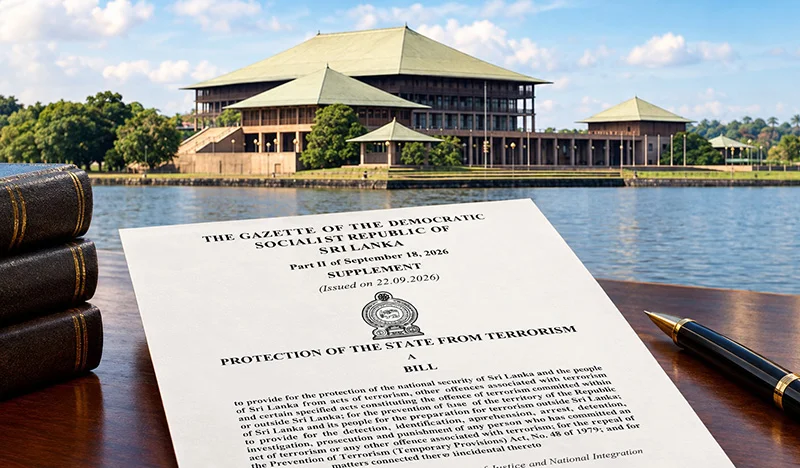
But there is an aspect of the government’s approach that is less justifiable. While pursuing past wrongdoing by powerful individuals, it is also advancing a triumvirate of draft laws that could give the state sweeping powers over citizens, organisations and dissent in the present and future. The draft Prevention of Terrorism legislation, the Prevention of Organised Crimes Bill and the NGO Registration and Supervision Bill raise serious questions about the over-centralisation of power. Each of these laws strengthens the powers of the state while weakening the rights and safeguards that protect people from their misuse and thus questions the basic rights of people in democracy where ‘the power of the people is vested in the government’. This is a recipe for future misrule rather than the rule of law. As the well-known saying goes, power corrupts and absolute power corrupts absolutely.
Proposed Laws
The real test of system change, for which the government obtained an overwhelming mandate, requires not only a government willing to hold others accountable, but one prepared to subject itself to the same principles of legality, transparency and restraint. The three proposed laws that are particularly important in this regard are the Protection of the State from Terrorism Bill, the Prevention of Organised Crimes Bill and the NGO Registration and Supervision Bill. Each of these draft laws has been presented as serving a legitimate purpose. Preventing terrorism, combating organised crime and ensuring that NGOs do not facilitate money laundering or terrorist financing are proper responsibilities of the state. Sri Lanka has international obligations in these areas, and no responsible government can disregard them. However, the existence of a legitimate objective does not justify every means adopted to achieve it.
The proposed Protection of the State from Terrorism Bill illustrates the problem. Although its definition of terrorism draws on a model developed by a former United Nations Special Rapporteur, the Human Rights Commission of Sri Lanka has warned that the definition of terrorism extends beyond the model and could bring legitimate political protest, trade union action and civil disobedience within the scope of counter-terrorism legislation. Its concerns also include prolonged detention, inadequate judicial oversight and restrictions on access to legal counsel. These are objections that go to the heart of the relationship between the citizen and the state. The government cannot credibly promise to protect democratic freedoms while creating powers that could be used to restrict them. It is necessary for the government to reassess the draft through transparent consultation and revise provisions that could criminalise legitimate dissent.
The Prevention of Organised Crimes Bill raises similar concerns. It is presented as giving effect to the United Nations Convention against Transnational Organised Crime, which Sri Lanka ratified in 2006. The Centre for Policy Alternatives (CPA) has argued that the convention does not require many of the bill’s provisions. The proposed law extends to a broad range of offences, permits detention orders lasting up to a year, makes confessions to police admissible for purposes of legal evidence, and introduces extensive surveillance powers. A law intended to dismantle criminal networks should not create a parallel system of exceptional powers that could be applied far beyond organised crime. Nor should safeguards developed through years of experience with abuses under the Prevention of Terrorism Act be weakened through legislation bearing a different name. The government should review whether or not existing laws could be used effectively to control these crimes or whether each exceptional power is necessary.
Civil Society
The proposed NGO Registration and Supervision Bill presents another test of the government’s intentions. The government may reasonably seek transparency in the finances of organisations receiving public or foreign funds, including measures to prevent money laundering and terrorist financing. It seeks to justify its overreach on the grounds of meeting the internationally mandated requirements of the Financial Action Task Force (FATF) for the Asia-Pacific region. But these objectives do not justify placing civil society and NGOs under excessive administrative control when even the FATF ranks them as low to medium risks. The draft bill would require registration and renewal, impose extensive obligations on organisations and empower authorities to suspend or deregister them on broadly framed grounds. It is important to redraft provisions that confer excessive discretion over registration, renewal, suspension and deregistration of NGOs.
Among the concerns raised by United Nations human rights special rapporteurs with regard to the draft NGO law are provisions requiring organisations to align with government policies and restrictions that could affect advocacy, dissent and freedom of association. The implications extend well beyond organisations that engage directly with the government. Community groups, human rights organisations, independent researchers and organisations working on reconciliation or accountability could find their activities constrained by uncertainty over how these provisions might be interpreted. Organisations that criticise government policies are not thereby working against the country. Their freedom to do so is part of what distinguishes a democracy from a system in which the government determines which opinions and activities are acceptable.
The government has generated considerable public goodwill through its pursuit of corruption and criminality. It should not assume that this goodwill gives it an unlimited mandate to strengthen the coercive powers of the state. The NPP knows from its own history that governments can treat dissent as a threat and use the machinery of the state against their opponents. There is still time to correct the drafts through transparent public consultation, narrow definitions of offences, meaningful judicial control over detention and surveillance, and effective remedies against arbitrary decisions. A government that pursues corruption while weakening safeguards against state abuse risks undermining its own achievements. Besides bringing to light the abuse of power by previous governments, the NPP government needs to build a system in which no future government can abuse power in the belief they can get away with it.

 By Ramya Kumar
According to the Quality Assurance Council (QAC) of the University Grants Commission (UGC), quality assurance (QA) refers to “the means (i.e. the policies, attitudes, actions, procedures, etc.), by which an institution can guarantee with confidence and certainty, that the standards and quality of its educational provision are being maintained and enhanced”.
An expansive structure has been in place since 2005 to govern and implement QA processes within the state university system. The QAC is the focal point at the UGC that implements external reviews of state universities and institutes. Each university has its own Centre for Quality Assurance (CQA) tasked with performing QA in line with QAC directives. Faculties, in turn, have Internal Quality Assurance Cells (IQAC) performing their own QA; they are answerable to the CQA.
The big question is whether this all-encompassing top-down QA system, that in many ways undermines the internal dynamics of university governance, actually supports universities to enhance the quality of education. This article highlights some concerns.
Top-down check-box activities
The QAC conducts external reviews of universities and degree programmes. A review team appointed by the UGC (who may or may not have experience in the institution/programme in question) examines the self-evaluation report submitted by the said institution/programme. The team then conducts a site visit to verify the claims made in the university’s self-evaluation report, clarify issues identified during the desk review, and examine how QA procedures operate in practice. The team holds meetings with the university administration, members of the Council and Senate, Deans, Heads of Departments, academic and non-academic staff, students, and others. Following the visit, a draft report is submitted to the relevant institution/programme for comment before final publication. The reviewed institution/programme then prepares and publishes an action plan addressing the recommendations, with subsequent monitoring of progress.
There are some worthy QA initiatives under implementation, such as improving facilities for students with disabilities and strengthening mechanisms to address sexual- and gender-based violence. However, for the most part, QA activities have little to do with improving the quality of education. They are mostly preoccupied with monitoring faculty and department websites, digital transformation, student feedback, subject evaluation, course evaluation, peer evaluation, and, more recently, staff appraisal. These activities, which consume an inordinate amount of time—so precious at understaffed universities—have become check-box activities completed to generate evidence for the next review. Below is an excerpt of a conversation between two academics (1 and 2) that conveys how QA plays out at universities (reproduced with permission).
1: … .it’s like social media you know, like posting things on Facebook or twitter or Instagram. When people do a lot of social media, everything they do, they do thinking, “okay I’m going to post it in this way… this I have to put on my Instagram.” QA is a little like that… everything is considered in light of, “ah we can use this for the review, as evidence… for example very recently we were encouraged to have all the things that we do in our department in the faculty newsletter so then they can put in the review. Every little thing has to be noted down….
2: And with pictures and all…
1: At the very least it has to be written so that you have written evidence .. you can’t be doing something for the sake of doing something or because it is good for the department … and sometimes people tell me “oh yea that’s a good idea we can fit that under this x, y section of the review..”
2: Yea, and nobody really thinks about the actual outcome… whether it’s actually helping anyone..
1: I also find that a lot of the words that we used in different ways have now been co-opted to the QA discourse ..including quality.. I can’t actually say what I want as an “outcome”, for example, that the outcome of this workshop is that my students “think about” … then I am told “ah but no that’s not one of the Bloom’s taxonomy words, “think about”.…
2: And the worst part is these medical and agriculture people, these types of people go around spreading it like some kind of gospel!
1: Yea, this cookie cutter way of doing things, they think is the height of innovativeness or creativity, when actually it is so mundane … for me the most awful thing about it is like some fungus of mundanity has taken over through QA reviews.
2: yea, when you say QA, my mind closes off immediately and I stop listening…
Auditing everything but power
QA leaves out crucial aspects of university governance. For instance, there is no review or assessment of the “quality” of university administrations under Criterion 1 or the integrity of procedures governing the promotion of academic staff under Criterion 6 of the institutional reviews.
The majority in the Council—the university’s executive and governing body, which is responsible for selecting the Vice-Chancellor (VC)—are appointed in ad hoc fashion. Apart from the Ex-Officio members in the Council (VC, Deans, etc.), and the two members elected by the Senate, the remainder are appointed by the UGC with no formal consultation or vetting procedure. The VC appointment process described in UGC Circular No. 03/2023 exemplifies how an ostensibly technical process can become entangled in political sycophancy. The Registrar invites applications for the position of VC through advertisement. Applicants must submit a curriculum vitae, a statement of vision for the university and supporting documents. The University Council appoints a three-member Search Committee of senior academics to encourage “eminent persons” to apply, while the UGC appoints a former VC from another university to “observe” the selection process.
A Special Meeting of the University Council is convened. Candidates are interviewed and must make a presentation to the Council Members, followed by questions. Each Council member “gives marks” for seven prescribed criteria: strategic focus (20%), effective leadership (20%), holistic thinking/conceptual skills (10%), academic and research excellence (15%), personal integrity (10%), professional communication (10%) and managerial competence (15%). Marks are averaged, and the Council recommends three candidates to the UGC in rank order. The UGC-appointed observer separately submits a confidential report on the selection process.
This procedure is expected to guarantee quality, but does it? Applications are submitted to the Council Members, who have been appointed on questionable bases, and who are expected to review the applications and give scores, based on objective assessments. But, in reality, most Council Members are manipulated by VC candidates, who often have personal ties with them. The UGC-appointed observer usually has no genuine interest in the outcome. And there is no way for anyone to actually question the Council’s decision once it is made. Although the highest-ranked candidate may ultimately be appointed, the selection remains a political decision made by the President, who retains the discretion to appoint any one of the three.
External reviews also do not look into the promotions of academic staff, except to scrutinise whether there are policies and procedures in place to govern promotion. Academic staff may apply for promotion to Professor once they satisfy the prescribed eligibility requirements, which typically include the period of service, academic qualifications, research and publication achievements, teaching experience, and contributions to the university and wider community. Applications are evaluated against specified criteria, with research output and academic contributions assessed through documentary evidence and expert evaluation. Under the UGC’s scheme for Professors, two experts from outside the applicant’s institution assess specified aspects of research and knowledge dissemination. Again, beneath this technical process, which is externally evaluated, lies a problematic points-based scheme that can be manipulated and abused with impunity.
Rethinking university QA
Like the VC election process and the schemes of promotion for academic staff, QA reviews are open to manipulation. Before a review, there is a chaotic rush to complete evidence gathering and reporting. Academics leave all other work aside, including at times their teaching, to focus on completing documentation and preparing reports. The standardised criteria in the review manuals and scoring sheets often do not reflect differences in disciplines and institutional contexts. But this does not really matter because any serious problems experienced by institutions or programmes are hastily brushed under the carpet to conceal any evidence that could taint the review. The goal is to obtain an A or at least a B grade at whatever cost.
QA may result in positive change if it moves beyond top-down check-box activities towards internally designed and owned processes encompassing all aspects of university governance, led by departments and faculties, and supported by adequate resources. The current QA system needs to be dismantled and replaced by procedures that are accountable, not to the UGC, but to our students and the communities we serve.
(Ramya Kumar is attached to the Department of Community and Family Medicine, Faculty of Medicine, University of Jaffna)
. Kuppi is a politics and pedagogy happening on the margins of the lecture hall that parodies, subverts, and simultaneously reaffirms social hierarchies.
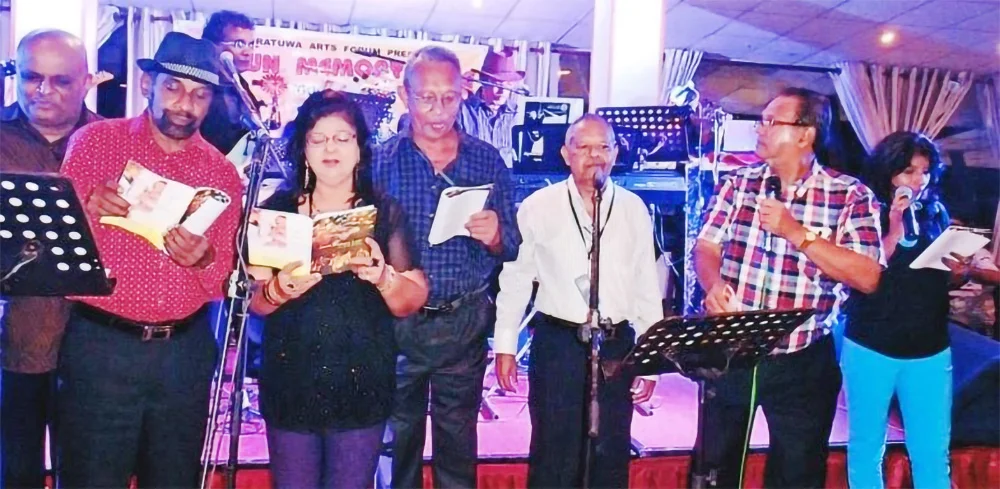
 Yes, Down Memory Lane, the beloved Sing-Along concert series that first struck a chord, way back in 1997, returns for its landmark 20th edition this Saturday, 17th October, at the beautiful Bolgoda Grand Resort, Moratuwa town centre.
Having celebrated its glorious 25th anniversary with the show in 2023, this milestone 20th concert promises to be even more special.
The organisers, the ever-popular Moratuwa Arts Forum, are pulling out all the stops to present yet another unforgettable evening, brimming with camaraderie, fellowship, and pure nostalgia.
Get ready for two-and-a-half hours of non-stop singing as veteran vocalists, from the Moratuwa Arts Forum, will take the stage to lead and inspire the happy audience to sing, sing and sing to their hearts’ content.
The repertoire? Absolutely magical, according to the organisers.
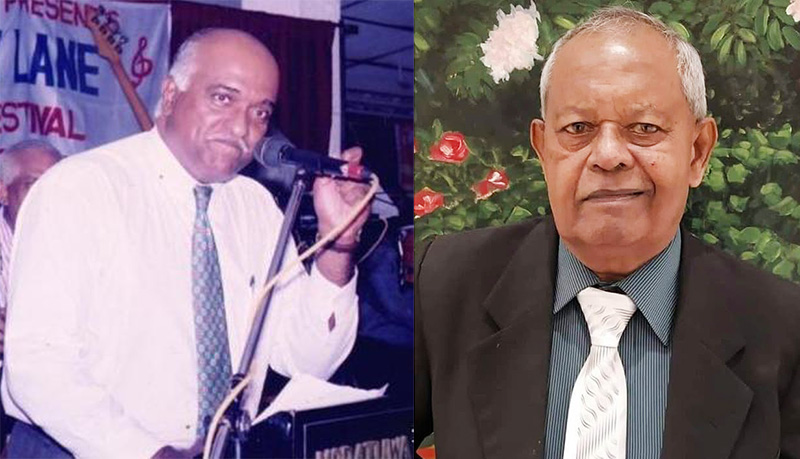
Veteran Arun Dias Bandaranaike: Will handle the evening’s proceedings / Priya Peiris: Event Conceptor
Around 40 golden oldies — from timeless English vintage evergreens and hits from the 50s to the 90s, to toe-tapping calypsos, soulful American plantation melodies, rousing cowboy and Dixieland favourites, aa well as cherished Sinhala standards. All to be sung with much gusto!
This year’s dedicated organising committee comprises Brian Coorey (Chairman), Priya Peiris (Event Conceptor), Hiran Fernando, Suranga Fernando, Viranjan Perera, Hemka Fernando and Neelesh Silva. Guidance and support comes from Moratuwa Arts Forum President Sarana Guneratne and Secretary Chandani Silva.
Adding his signature charm to the evening, as Master of Ceremonies, will be the veteran Arun Dias Bandaranaike.
Don’t miss this landmark celebration of music and memories!
For further details, contact Hiran Fernando on 0772636446 or WhatsApp 0783636446.

Missiles intercepted near Riyadh after Saudi coalition hits Yemen fuel depot

MI5 chief warns of threats to UK from Russia, Iran and AI

Pope diagnosed with lung cancer but had successful surgery, Vatican says

Expedite the cleaning of Colombo’s canals and drainage systems within the next two weeks – PM instructs officials

Kusal Mendis’ unbeaten 87 hands Sri Lanka consolation win

Cabinet approves redrafting of State Assets Management Act

‘Dates have the highest sugar content to fight Coronavirus’

Sunday Island 27 December – Headlines

#SundayIsland 17th December – Headlines

Sunday Island – 28th March

Sunday Island Headlines – 21 March

Sunday Island – 21st February – Headlines
-

 Features6 days ago
The Sri Lankan who made Scottish history
-

 Sports6 days ago
Nissanka absence opens door for Sri Lanka’s young guns
-

 News5 days ago
NDB fraud Rs 60mn more than reported
-

 News7 days ago
Gnansara Thera to be assigned to prison printing section: Officials
-

 News5 days ago
Removing monk’s robes matter for Sangha to decide: Mahanayake Theras
-

 News7 days ago
OIC of FCID summoned before Maligakanda Magistrate
-
 News6 days ago
Shiranthi R remanded until 13 Oct.
-

 Features6 days ago
Future of Sri Lanka’s state university system: Should it be shut down and reopened?