
Editorial
Stifling democracy


All the signs are that there will be no Provincial Council (PC) elections next year. The government’s decision to appoint a Parliamentary Select Committee (PSC) to inquire into matters pertaining to the delayed PC polls is an indication that the ruling NPP is afraid of facing an election any time soon and therefore all out to prevent its popularity and electoral strength from being put to test. It is using the same modus operandi as the previous governments to postpone the PC polls further—the delimitation of electoral boundaries. It has demonstrated that it has no sense of shame, just like those who made the PC polls disappear, as it were, eight years ago.
One may recall that electorates were delimited during the UNP-led Yahapalana government as a legal requirement for the implementation of the new mixed proportional system, but the report of the Delimitation Committee was not approved by Parliament. In August 2018, when a division was taken on the report following a debate, 139 MPs voted against it. There wasn’t a single vote for the report, which was required to be approved by a two-thirds majority, for the PC polls to be held under the new electoral system.
The Election Commission (EC) has reportedly said a fresh delimitation process will take about one year to reach completion. A PSC can be made to drag on, delaying the PC polls indefinitely. This seems to be the NPP’s battle plan. It is said that when a government fears the people, there is liberty. But when a government fears elections, democracy is in jeopardy. Since 2017, three governments have kept the PC polls in limbo by refusing to take action to hold them.
The PC polls can be held in a few months if Parliament resolves that they be conducted under the Proportional Representation (PR) system, election monitors and former EC Chairman Mahinda Deshapriya have said, urging the government and the Opposition to do away with the legal obstacles to the conduct of the PC polls fast, but the NPP government is sure to block any such attempt. Deshapriya is of the view that the PCs have been kept under the Governors in violation of a Supreme Court ruling. Emboldened by a string of defeats the NPP has suffered in cooperative society elections and in budget votes at some local government institutions, during the past several months, the Opposition is now pressuring the government to amend the PC Elections Act, enabling the PC polls to be held under the PR system, as in the past.
Ironically, some election monitors have urged the NPP government either to hold the PC polls expeditiously or to decide whether to retain the PCs, as it is antithetical to democracy to allow the PCs to be kept under the President through the Provincial Governors appointed by him. An opportunity has now presented itself for the JVP to fulfil its vow to do away with the PC system. The JVP drove thousands of its cadres to take up arms and lay down their lives in the name of a campaign to scuttle the PC system, among others, in the late 1980s The JVP leaders were seen recently commemorating the party members killed during their abortive uprising. They have made an about-turn on that vow, and are all out to retain control of the PCs by postponing elections further.
The Opposition is pretending that its leaders and members had nothing to do with the postponement of the PC polls. But they helped the Yahapalana government amend the PC Elections Act in 2017 to put off elections on the pretext of increasing female representation in the PCs. Most of the SJB MPs who were in the UNP at the time, the JVP, those who are in the SLPP at present, the SLMC, the TNA, etc., facilitated the passage of an amendment bill, which was changed beyond recognition at the committee stage, with a slew of sections smuggled into it to pave the way for the postponement of the PC polls as the UNP-led Yahapalana government was scared of facing an electoral contest.
Shame on both the JVP-led NPP, which is bent on delaying the PC polls further, and the Opposition, which has opted for ‘floating like a bee and stinging like a butterfly’ instead of launching an all-out campaign to pressure the government to legislate for the PC polls to be held fast under the PR system!


Saturday 25th April, 2026
Another scandal has come to light and made international headlines. The illegal diversion of Treasury funds amounting to USD 2.5 million, meant for bilateral debt repayment to Australia, to a third party, could not have come at a worse time. It has happened close on the heels of the launch of the National QR Payment Adoption Programme to transform Sri Lanka into a cash-lite economy. Although the two payment systems are vastly different, and risks are much lower where the QR-based payment is concerned, the fraudulent diversion of Treasury funds is likely to erode public confidence in online fund transfers, if posts being shared via social media are any indication. The digital payment scheme is the way forward for the country, and it behoves the government to take action to clear doubts being created in the minds of the public. A misinformation campaign is already underway, and it needs to be countered.
Opposition Leader Sajith Premadasa has accused government politicians of making contradictory statements about the theft of Treasury funds. As he has rightly pointed out, it is clear from their claims that the government is still at sea, and instead of getting to the bottom of the fraud, it is trying to manage the political fallout from the incident. Some of them have even gone to the extent of bashing the Opposition. They ought to study the issue properly and speak with one voice. One need not be surprised even if the government propagandists concoct a conspiracy theory that the political rivals of the JVP/NPP masterminded the diversion of Treasury funds.
What one gathers from the government politicians’ different claims is that cyber criminals gained unauthorised access to the computer system of the External Resources Department (ERD) within the Finance Ministry through emails. They altered payment instructions, redirecting the funds to unauthorised accounts. There has been no system level hacking, according to cyber security experts. It defies comprehension why the ERD officials have not been trained to handle situations of this nature, which are not uncommon in the digital space. Even ordinary people double-check account details before transferring funds. A telephone call to the Australian creditor that was to receive funds from the Sri Lanka Treasury would have helped save USD 2.5 million.
The Opposition politicians are no better. They are also making various claims that are contradictory, and some of them have betrayed their ignorance of the issue. Most of them do not seem to know the difference between the functions of the Treasury and those of the Central Bank. They are only making the public even more confused by expressing opinions and making allegations to gain political mileage. Among them are lawmakers. They ought to be educated on the duties and functions of the Finance Ministry/Treasury and the Central Bank. What they will come out with in case of a parliamentary debate being held on the Treasury payment scam is anyone’s guess.
What needs to be done now is to ensure that the illegal fund diversion is probed thoroughly and the stolen money recovered forthwith while action is taken to prevent the repetition of such incidents. Political battles will not serve the country’s interests.

Friday 24th April, 2026
The Opposition is intensely resentful that the government has thwarted its attempt to have President Anura Kumara Dissanayake, who is also Minister of Finance, summoned before the Parliamentary Select Committee (PSC) probing the green-channelling of 323 red-flagged freight containers in the Colombo Port in January 2025. When the Opposition members of the PSC proposed that President Dissanayake be summoned, their government counterparts put the proposal to a vote and defeated it.
The Opposition’s abortive bid was not devoid of politics, but Sri Lanka Customs, which released the aforementioned containers without mandatory inspections, is under the Finance Ministry. Therefore, the Finance Minister is accountable to Parliament and must answer questions from the container PSC, as it were.
The dispute between the government and the Opposition over the container scandal has more to it than a mere political argy-bargy. It reflects a deeper constitutional issue. The Constitution requires the President to attend Parliament, but frequent politically strategic interventions by him or her dilutes the spirit of the separation of powers and strengthens the Executive’s dominance over the legislature. This practice is bad for the wellbeing of democracy. The President has used, if not misused, Articles 32 and 33 of the Constitution to dominate Parliament in this manner over the years.
The JVP, on a campaign for abolishing the Executive Presidency, played a pivotal role in introducing the 17th, 19th and 21st Amendments to the Constitution to reduce the executive powers of the President, but ensconced in power, it is now silent on its pledge to restore a parliamentary system of government.
The Opposition has claimed that President Maithripala Sirisena testified before the PSC which probed the Easter Sunday terror attacks in 2019, and therefore President Dissanayake ought to do likewise. What it has left unsaid is that President Sirisena made a statement at the 20th meeting of that PSC, held at the Presidential Secretariat, on 20 September 2019. The PSC report has referred to the event as a ‘discussion’. Sirisena, who secured the executive presidency, promising to reduce the powers vested therein, should have refrained from undermining the legislature and visited the Parliament complex to testify before the PSC, as the Minister of Defence.
The least President Dissanayake can do to avoid the public perception that he, too, is undermining the legislature is to follow the precedent created by President Sirisena. Ideally, he ought to appear before the PSC in the parliamentary complex in keeping with his government’s much-touted commitment to upholding accountability and the separation of powers. After all, when the question of summoning President Sirisena before the PSC on the Easter Sunday attacks came up, the then JVP MP Dr. Nalinda Jayatissa, who was also a PSC member, defended the rights of Parliament. He declared that the PSC had the authority to summon anyone for questioning.
Now that the government members of the container PSC have gone out of their way to defend President Dissanayake, the question is whether they can be expected to allow an impartial investigation to be conducted and help uncover anything detrimental to the interests of the President and the ruling coalition.
By scuttling the Opposition PSC members’ effort to have President Dissanayake testify before the container PSC, and undermining the legislature in the process, the JVP-NPP government has unwittingly reminded the public of its unfulfilled election pledge to introduce a new Constitution, inter alia, “abolishing the executive presidency and appointing a president without executive powers by the parliament” (A Thriving Nation: A Beautiful Life, NPP Election Manifesto, p. 109).


Thursday 23rd April, 2026
Sri Lanka has reaffirmed its commitment to strengthening its national security and countering terrorism financing with renewed focus on Targeted Financial Sanctions (TFS), according to media reports quoting the Ministry of Defence. Sri Lanka’s compliance with the implementation of the TFS is in line with UN Security Council Resolutions, we are told. The irony of the aforementioned government announcement, which has come close on the heels of the seventh anniversary of the Easter Sunday terror attacks, may not have been lost on political observers.
The targeted financial sanctions, imposed on individuals and organisations suspected of involvement in terrorism or the financing of terrorism, include freezing assets, limiting access to financial systems and preventing designated persons or entities from conducting any form of financial activity within the country. Once a designation is published through a Gazette notification, a legally binding freezing order comes into effect. This results in the immediate freezing of bank accounts and restrictions on the use, transfer, sale, or leasing of movable and immovable assets, including property, vehicles, jewellery, and other valuables.
Eliminating the scourge of terrorism financing is a prerequisite for the success of any anti-terror campaign. Hence, the focus of all operations to defeat terrorism is on following the money trail, which is a forensic investigation technique used to trace financial transactions from their origin to the final destination, uncovering corruption, money laundering, or terrorism. In the case of the Easter Sunday terror strikes, it was not difficult to find out who had funded the National Thowheed Jamaath (NTJ) terror campaign. Sri Lankan investigators and the Federal Bureau of Investigation (FBI) of the US confirmed that the Ibrahim family, two of whose members carried out suicide bomb attacks, had financed the TNJ terror project.
The JVP-NPP government has drawn criticism from its political opponents for shielding the head of the Ibrahim family, Mohamed Ibrahim, who was a JVP National List nominee in 2015. Taking exception to the release of the assets seized from the residence of a suspect in the Easter Sunday terror strikes, the Opposition politicians have called for confiscating the wealth of the Ibrahim family and using it to compensate the victims of the Easter Sunday terror attacks. Interestingly, former President Maithripala Sirisena, ex-Defence Secretary Hemasiri Fernando, former IGP Pujith Jayasundara, former State Intelligence Service Chief Nilantha Jayawardena, and ex-State National Intelligence Service Chief Sisira Mendis have paid compensation to the Easter carnage victims, as per a Supreme Court order, for their failure to prevent the terror attacks.
The offence of financing terrorism is no less serious than the act of carrying out terrorist attacks. There is reason to believe that the issue of financing the Easter Sunday terror campaign has not been probed properly. The need for a fresh investigation into this vital aspect of the carnage cannot be overstated. However, the incumbent dispensation cannot be expected to open a can of worms by ordering a probe into this issue, and therefore a future government will have to get to the bottom of it.
It must also be found out what has become of the assets of the other terrorist organisations which raised colossal amounts of funds in this country. The LTTE and the JVP carried out numerous robberies, including bank heists, and obtained protection money from many people. They also robbed money and gold jewellery from the public. There have been election promises to trace the overseas assets of former rulers, but no serious effort has been made to fulfil these pledges. Illegal assets stashed away overseas must be brought back. Curiously, no political party has pledged to trace the missing assets of the former terrorist groups.

Advisory for Severe Lightning issued For Western, Sabaragamuwa and North-western province

AI chatbots could be making you stupider

‘A remarkable time capsule’: The enchanting history of Oxford University’s 750-year-old medieval library

Kohli, Padikkal hit fifties as Royal Challengers Bengaluru ace the chase against Gujarat Titans

Showers expected in the Western and Sabaragamuwa provinces and in Galle, Matara, Kandy, Nuwara-Eliya and Puttalam districts after 2.00 pm

Heat Index at Caution Level in the Northern, North-central, North-western, Western, Sabaragamuwa and Eastern provinces during the day time

‘Dates have the highest sugar content to fight Coronavirus’

Sunday Island 27 December – Headlines

#SundayIsland 17th December – Headlines

Sunday Island – 28th March

Sunday Island Headlines – 21 March

Sunday Island – 21st February – Headlines
-
 News5 days ago
Rs 13 bn NDB fraud: Int’l forensic audit ordered
-

 Opinion6 days ago
Shutting roof top solar panels – a crime
-

 News3 days ago
Lanka faces crisis of conscience over fate of animals: Call for compassion, law reform, and ethical responsibility
-

 News2 days ago
No cyber hack: Fintech expert exposes shocking legacy flaws that led to $2.5 million theft
-

 News7 days ago
From Nuwara Eliya to Dubai: Isha Holdings markets Agri products abroad
-
 News2 days ago
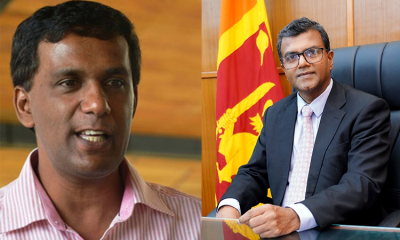
Whistleblowers ask Treasury Chief to resign over theft of USD 2.5 mn
-

 Life style7 days ago
After dark in Sri Lanka: Tiny wild cats step into the spotlight
-
 News6 days ago
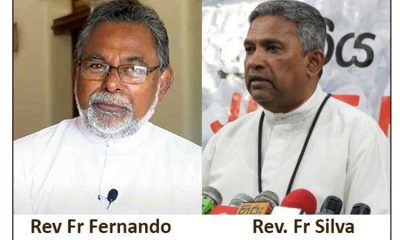
Church calls for Deputy Defence Minister’s removal, establishment of Independent Prosecutor’s Office