
News
Trincomalee in turmoil over removal of Buddha statue


Situation under control – Minister
Issue was mismanaged – Sajith
Dayasiri prevented from raising issue
The removal by the police of a Buddha statue from a famous temple plunged Trincomalee into turmoil, on Sunday. The police stepped in amidst tension over an attempt by the Coast Conservation Department to take action against a building near the Sri Sambuddha Jayanthi Bodhiraja Vihara, in Trincomalee.
The monks of the temple and devotees staged a protest, claiming that they were restoring a Dhamma school building.
Subsequently, the police personnel removed a Buddha statue placed on the disputed site.
 SJB MP Dayasiri Jayasekera tried to raise the issue in Palriament on Monday, but he was not given an opportunity to speak. Opposition Leader Sajith Premadasa took up the issue, accusing the Speaker of having acted in a partisan manner and prevented MP Jayasekera from bringing a vital issue to the attention of the House.
 Public Security Minister Ananda Wijepala told the House that the Buddha statue had been removed for its safety and it had been returned to the temple yesterday morning under police protection.
Wijepala said the police had removed the statue after receiving information about possible vandalism, prompting the overnight removal of the statue from the Dhamma school premises. It was returned to the site yesterday morning. He said police had been instructed to maintain calm and enforce a special security plan from today to ensure the statue’s safety.
Minister Wijepala said further action would be taken according to the decision in a court case.
Wijepala said that the Coast Conservation Department had lodged a complaint about an alleged illegal restaurant operating in the same area. The police, he said, would proceed with legal action once a court directive was issued.
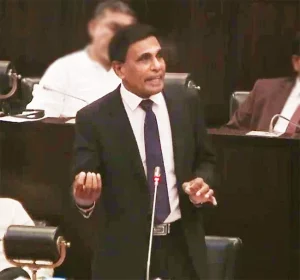
The Minister’s explanation drew sharp criticism from Batticaloa District MP Shanakiyan Rasamanickam, who accused him of capitulating to nationalist pressure. In a post on X, the MP described the Minister’s justification as a “major U-turn,” arguing that the Tamil community had never targeted places of worship, even during the decades-long conflict.
A video, circulating on social media, shows a Buddhist monk insisting the site is of religious heritage value. However, officials note that the land was under the Coast Conservation Department, which had previously flagged unauthorised activity there.
The Minister said that the situation was under control, with enhanced security measures now in place ahead of the statue’s reinstallation. “Further actions would be taken on the basis of court decisions,” he said.
By Saman Indrajith


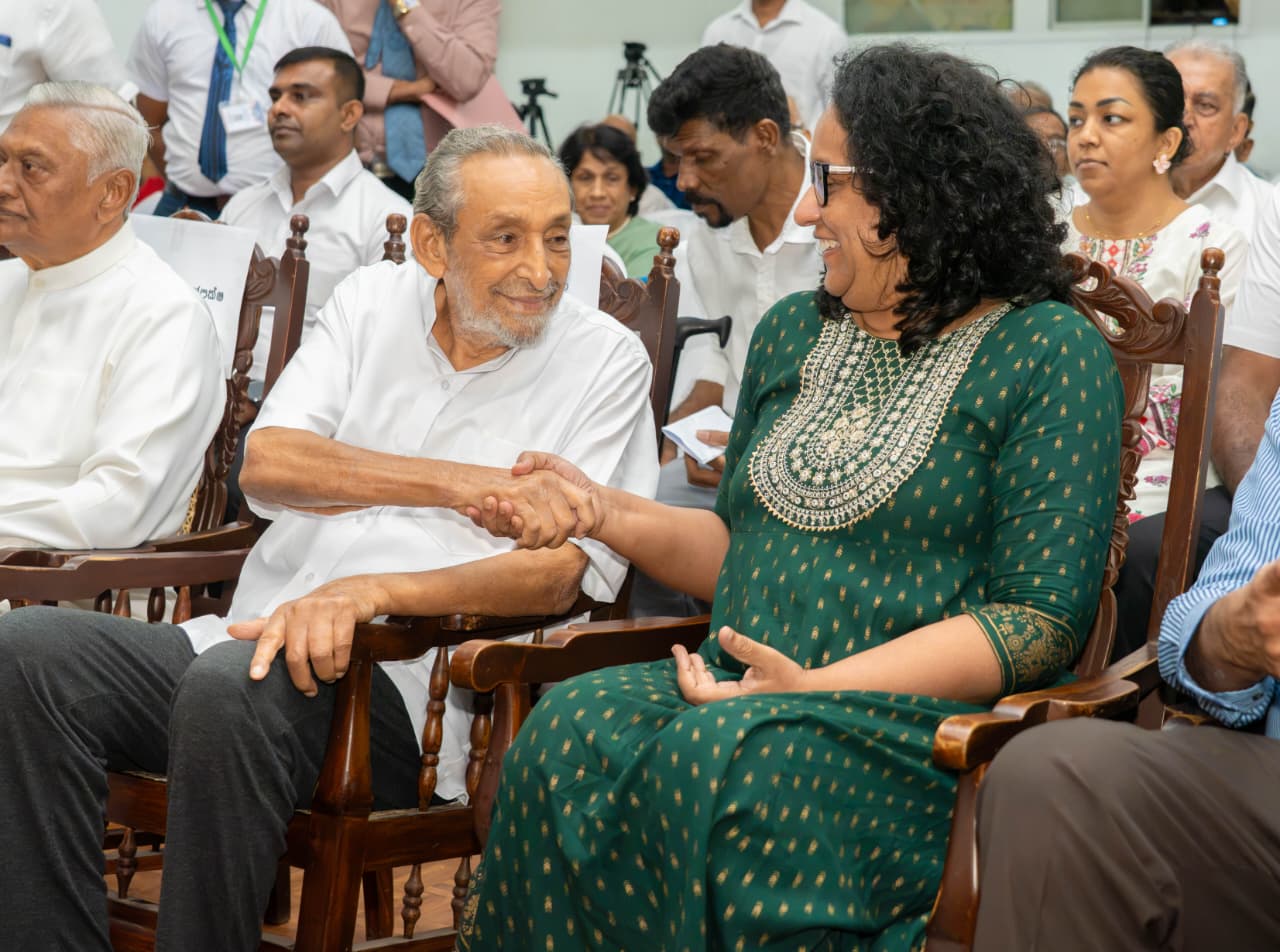
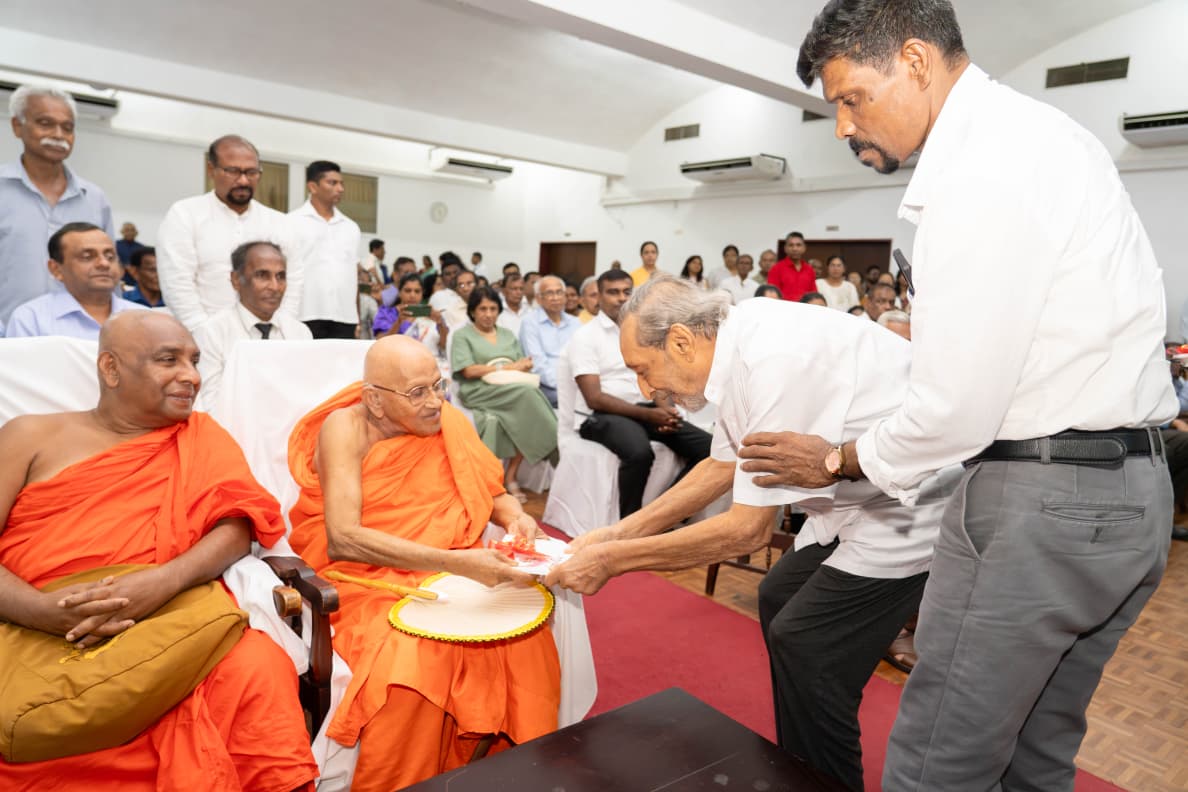
The book “Rathuwewi Mihimadala”, written based on the life story of Vasudeva Nanayakkara, Leader of the Democratic Left Front, was launched on Friday [August 28] at the Bandaranaike Memorial International Conference Hall (BMICH) in Colombo, with the participation of Prime Minister Dr. Harini Amarasuriya.
Speaking to the media afterwards about Vasudeva Nanayakkara, Prime Minister Dr. Harini Amarasuriya stated:
“Vasudeva Nanayakkara is a prominent figure in Sri Lankan politics, particularly within the left-wing political movement. There were several influential figures within the left movement, and that left-wing influence also contributed to bringing the country to where it is today. Politically, there were areas where we agreed and areas where we did not. However, I have great respect for the contribution made by Vasudeva Nanayakkara to left-wing politics. When I entered Parliament in 2020, Vasudeva Nanayakkara was also in Parliament. We sat in the same row, and we spoke about many important as well as interesting moments in his political career. I believe some of these experiences have also been included in this book.”
The event was attended by members of the Maha Sangha, Minister of Justice Harshana Nanayakkara, former President Maithripala Sirisena, former Speakers Karu Jayasuriya and Chamal Rajapaksa, as well as party members, family members and friends.
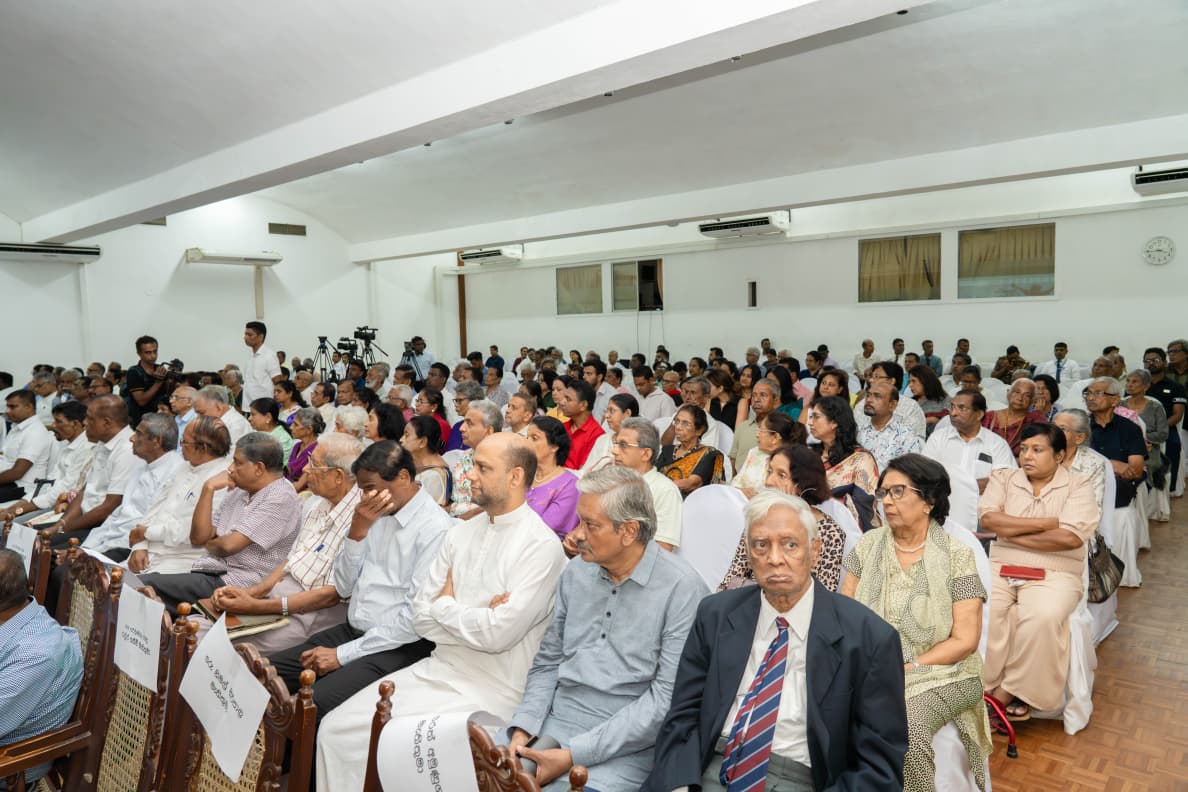
[Prime Minister’s Media Division]
Latest News
Sun directly overhead Mannar, Periyamadu, Puliyankulam, Welioya and Pulmoddai about 12.11 noon today (30)


The sun is going to be directly over the latitudes of Sri Lanka from 28th of August to 07th of September due to its apparent southward relative motion.
The nearest places of Sri Lanka over which the sun is overhead today (30) are Mannar, Periyamadu, Puliyankulam, Welioya and
Pulmoddai about 12.11 noon.

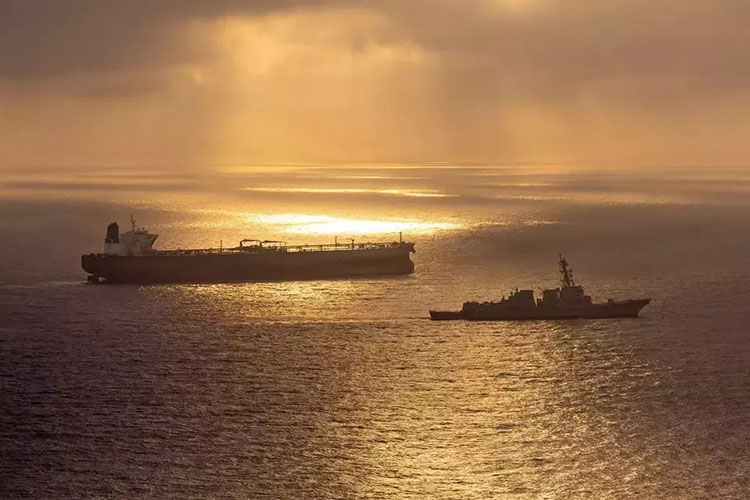
(AFP) Sri Lanka’s maritime authorities were monitoring a fleet of 11 US-sanctioned Iranian oil tankers just off the island’s southern coast, the foreign minister said Wednesday.
The tankers were spotted close to the Galle harbour where an Iranian frigate, IRIS Dena, was sunk by a US submarine in March, killing 104 sailors. Sri Lanka’s navy rescued 32 Iranian sailors from that frigate.
Iranian vessels have been in limbo, unable to return to their home port because of a US blockade.
Sri Lanka’s Foreign minister Vijitha Herath said the tankers were in international waters where they had freedom of navigation.
“These ships are away from our territorial waters… we have no hold on them, nor have we facilitated them,” Herath told AFP.
The military deployed reconnaissance aircraft and patrol boats to monitor the vessels outside Sri Lanka’s 12-nautical-mile territorial waters, a military official told AFP on condition of anonymity.
“There is no indication of any ship-to-ship transfer of oil or illegal discharge of pollutants, so there is no basis for Sri Lankan authorities to take action against them,” the official said.
Many Iranian merchant vessels moved east towards the Strait of Malacca and Singapore due to US sanctions, while several remained near Sri Lankan waters, authorities said.
Sri Lankan officials said Washington had not formally notified Colombo about sanctioned Iranian-flagged vessels

Head teacher evacuated 900 children minutes before school washed away by Nepal floods

UPDATE: Seven killed and 23 missing after boat capsizes off northern Cyprus, says Turkish Cypriot PM

Iceland votes against restarting talks on joining EU

“Rathuwewi Mihimadala” Book Launched with the Participation of the Prime Minister

Turkiye, Somalia forces free cargo vessel hijacked by pirates

Ferry carrying 260 people capsizes off northern Cyprus coast

‘Dates have the highest sugar content to fight Coronavirus’

Sunday Island 27 December – Headlines

#SundayIsland 17th December – Headlines

Sunday Island – 28th March

Sunday Island Headlines – 21 March

Sunday Island – 21st February – Headlines
-

 News6 days ago
Missing doctor’s body found in Mahiyanganaya
-
 News6 days ago
Australia declines to release Finance Secy Suriyapperuma’s citizenship details
-
 News6 days ago
22A: BASL suggests CJ recuse himself from hearing petitions
-

 News3 days ago
Eight politicians in drug kingpin probe
-

 Editorial7 days ago
Govts. drag feet as undergrads age
-
 Features5 days ago
Insights from Chieftains of Uva: Genealogy of two Kandyan Families – Part II
-

 Business3 days ago
Sri Lanka opens up: A new season of direct connectivity
-
 Features3 days ago
Redefining ageing in Sri Lanka