
News
Reptiles in rock and time: Unveiling Sri Lanka’s ancient herpetological art


Hidden beneath the ancient canopy of Sri Lanka’s dry forests and shaded cliff faces lies a gallery like no other — a prehistoric museum where stone meets story. Painted and engraved thousands of years ago, these rock surfaces reveal how early islanders saw their world: not as conquerors, but as companions to the wild.
Among the elephants, deer, and human forms that adorn these caves, reptiles take centre stage — monitor lizards, crocodiles, tortoises, pythons, and geckos, all rendered with striking realism and reverence.
“Each stroke, each figure, is a message from the island’s earliest naturalists,” says Dr. Nimal Rathnayake, archaeologist and herpetologist, who has explored dozens of rock shelters across the island. “They reveal not only how our ancestors lived, but how deeply they observed and understood reptiles — the creatures that shared their landscapes.”
Ancient Art, Living Legacy
The world’s oldest known cave paintings — abstract symbols in Spain’s Cave of Maltravieso — date back some 64,000 years, likely drawn by Neanderthals. In Indonesia, a wild pig painted 45,500 years ago represents the earliest figurative art.
In Sri Lanka, cave paintings at Fa-Hien Lena in the Western Province, dated to over 11,000 years old, mark South Asia’s oldest known artistic expressions. These vivid works portray human and animal figures with a symbolic richness that still defies complete interpretation.
“Every pigment, every chipped line represents a memory,” says Dr. Rathnayake. “These caves are living archives — where biodiversity and belief converge.”
Sri Lanka’s Reptilian Heritage in Paint
Sri Lanka’s record of prehistoric rock art parallels its modern status as a biodiversity hotspot. With 246 known reptile species — including 164 endemic to the island — it is no surprise that early inhabitants immortalised them on stone.
“From pythons and crocodiles to geckos and tortoises, reptiles dominate many of these cave paintings,” says Dr. Rathnayake. “These weren’t random decorations. The proportions, the posture, the detailing — all reveal an astonishing level of observation. These people knew their reptiles.”
Sites like Dorawakakanda, Tharulengala, Tantirimale, and Phillegodagalge show depictions of land monitors (Varanus bengalensis), star tortoises (Geochelone elegans), mugger crocodiles (Crocodylus palustris), Indian rock pythons (Python molurus), and the iconic Sri Lankan golden rock gecko (Calodactylodes illingworthorum).
The Tharulengala Wonder
In the dry lowlands of Hulannuge, Ampara, stands one of Sri Lanka’s most extraordinary rock art sites — the Tharulengala Rock Cave. Carbon dating places its paintings at around 4,800 years old. The cave’s 16-metre wall bursts with figures: humans, elephants, and reptiles painted in ash, red, and white pigments.
Among the most striking is an enormous gecko — nearly 84 cm in length — believed to represent Calodactylodes illingworthorum, the Sri Lankan golden rock gecko. “It’s almost herpetologically accurate,” Dr. Rathnayake notes. “The limbs, digits, and the curved tail — even the clusters of eggs painted nearby — correspond exactly with how we see them in nature today.”
Other reptiles — a crocodile, a Russell’s viper, and a land monitor — share the same wall, painted in naturalistic proportions. Archaeologists once mistook the gecko for a crocodile, but closer zoological study proved otherwise. “It’s a perfect example of art meeting science across millennia,” Rathnayake adds.
Dorawakakanda’s Engraved Menagerie
In Kegalle’s wet zone, Dorawakakanda Cave offers a different form of artistry. Instead of pigments, its ancient occupants used chisels — or rather, sharp stones — to engrave shapes into rock. Here, elephants, fish, humans, and two land monitors stand etched into the stone.
“Imagine carving these without metal tools,” says Dr. Rathnayake, admiring the craftsmanship. “The engravings capture both movement and life — even after two thousand years.”
The site’s significance extends beyond artistry. “These images show ecological coexistence,” he explains. “It tells us that people of this era didn’t just hunt; they observed, respected, and recorded what they saw.”
Phillegodagalge: The Python’s Shadow
Deep in Kudimbigala Forest Heritage, near the entrance to Kumana National Park, lies the cavernous Phillegodagalge Cave. At first glance, its long, ribbed figures resemble centipedes. But closer analysis reveals the unmistakable form of the Indian rock python (Python molurus).
“The rib patterns are too consistent for an invertebrate,” says Dr. Rathnayake. “These were skilled observers — the ribs, length, and proportions point clearly to a python.”
Deraniyagala’s early research suggested that pythons were consumed by prehistoric hunters, a fact echoed in the site’s depictions. “What you see here could be both a record of diet and devotion,” he adds. “A species feared, revered, and ultimately remembered in art.”
Tantirimale: Crocodiles and Sea Turtles
In the North Central Province, the caves of Tantirimale house some of the most evocative prehistoric paintings on the island. Believed to date back 4,000 years, these artworks feature geometric patterns and animal figures — including a Leatherback Turtle (Dermochelys coriacea) and a Crocodile.
“The artist has even captured the ridges on the turtle’s shell,” notes Dr. Rathnayake. “It’s a remarkably accurate representation.” Archaeological excavations in Anuradhapura unearthed marine turtle bones dating to around 800 BC — evidence that sea turtles were traded or used for ornaments. “That connection between coastal species and inland art tells us these people were travellers, traders, and naturalists,” he adds.
Two Women’s Cave — Genu Dennage Galge
Few sites in Sri Lanka remain as hauntingly untouched as the Two Women’s Cave, or Genu Dennage Galge, at Buddama Village in Monaragala. Its single chamber, framed by drip-ledges to divert water, contains ghostly figures of elephants, birds, and a land monitor painted in white and green pigment. “This cave might have had a very different purpose,” says Dr. Rathnayake. “Based on the drawings, it could have been a slaughterhouse — a place where animals were slaughtered for food. The land monitor, prominently displayed, reflects what was most commonly hunted and eaten.” The scene includes possible depictions of deer, birds, and elephants — but it’s the monitor that commands attention. “Even in death, it was remembered,” he says softly.

Who Were the Artists?
Scholars like H.C.P. Bell, the Seligmanns, and Somadeva agree that these paintings are the work of Veddas, Sri Lanka’s indigenous hunter-gatherers. Early 20th-century Vedda women told the Seligmanns that they created drawings while waiting for their men to return from hunting, mixing ash and saliva to make paint and applying it with their fingers.
But not all art is ancient. “In some caves, we find recent graffiti and carvings by visitors,” Dr. Rathnayake warns. “Distinguishing authentic prehistoric art from modern additions is a challenge — one that calls for better protection and research.”
Conservation: An Urgent Call
Despite their age and significance, many of Sri Lanka’s rock art sites remain vulnerable. At Tharulengala and Dorawakakanda, visitors have carved their names or touched the paintings, smudging ash drawings that survived nearly five millennia. “Even geckos — ironically, the same species painted on the walls — lay their eggs on these surfaces, further damaging the art,” notes Dr. Rathnayake. “We need a clear, coordinated conservation plan. Spraying protective acrylic coatings, managing access, and continuous monitoring are essential steps.”
The Archaeology Department, he believes, must work with herpetologists, conservators, and local communities. “These are not just archaeological artefacts; they are ecological documents — the earliest evidence of humans recording wildlife.”
Echoes in Stone
Standing inside Tharulengala or Two Women’s Cave, one can almost hear the prehistoric hum of life. The same geckos that inspired early artists still cling to those walls, their eggs adhering beside their ancient likenesses.
“These caves are time capsules,” Dr. Rathnayake reflects. “Few places in the world allow such direct continuity between species and story.”
For him, the study of rock art is more than academic. It’s an act of cultural and environmental recovery — a reminder that Sri Lanka’s earliest artists were also its first conservationists.
“They didn’t separate art, nature, or spirituality,” he says. “They lived within them. That’s the message we must rediscover today.”
By Ifham Nizam ✍️

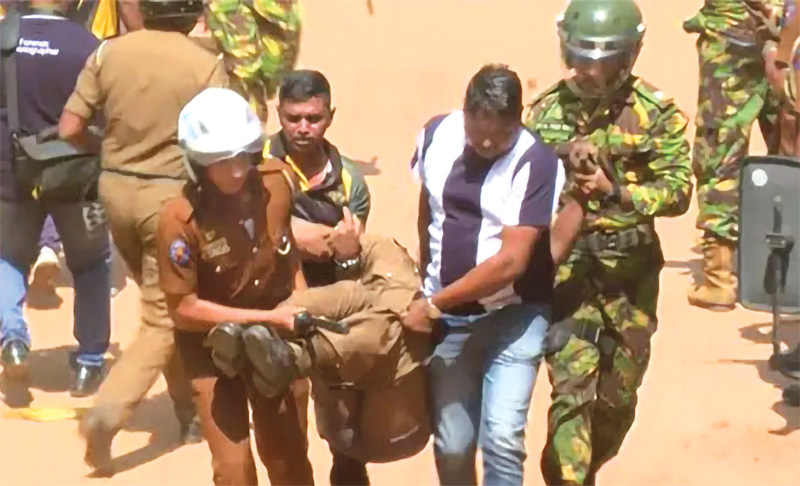
At least 26 people, including five prison officers and 20 inmates, have been confirmed dead following violent unrest at Negombo Prison, hospital sources said yesterday, as authorities struggled to restore full control over the facility.
According to unconfirmed reports the prison officers were killed by rioters yesterday morning, in retaliation, and weapons carried by those officers were grabbed by them.
Negombo General Hospital Director Consultant Dr. Pushpa Gamlath said nearly 100 injured persons had been admitted, following the clashes, and eight of the critically wounded had been transferred to the National Hospital, in Colombo, for further treatment.
The violence, which initially broke out on Sunday (5) between remand prisoners and convicted inmates, left two inmates dead and 38 others injured before being temporarily brought under control.
However, tensions flared again on Monday (6), with prison officials reporting renewed unrest inside the facility despite earlier assurances that the situation had stabilised.
Police said the initial confrontation was triggered by a dispute linked to the exposure of an alleged drug trafficking network, operating within the prison, and was reportedly orchestrated by a drug trafficker, identified as Suresh, who is said to have links to an underworld figure known as ‘Booru Moona’.
The violence rapidly escalated, with female inmates staging a protest on the Prison roof in support of those involved in the clashes, while relatives gathered outside demanding information on detainees. Police later facilitated visits for selected family members to hospitalised inmates.
The Negombo Prison, which houses around 1,800 remand and convicted inmates, descended into widespread disorder as rival groups clashed, with reports indicating that the violence later spread beyond the initial confrontation.
Authorities said rioting inmates had allegedly seized firearms during the renewed unrest on Monday, prompting heightened security measures.
The Sri Lanka Air Force deployed drones for aerial surveillance and a Bell 412 helicopter to monitor the situation, while additional military personnel were sent to reinforce security around the prison.
Prisons Department spokesperson A.C. Gajanayake said a special investigation team had been appointed, under the direction of the Commissioner General of Prisons, to probe the incident, while a separate police investigation is also underway.
Justice Minister Harshana Nanayakkara told The Island that he had called for a detailed report on the disturbances.
By Norman Palihawadane
News
Cleaner, cheaper electricity gathers momentum with rapid progress in 50 MW Mannar wind power project


Sri Lanka’s drive towards cleaner and cheaper electricity gathered fresh momentum with the reported rapid progress in the 50 MW Mannar Wind Power Project, which is expected to produce the lowest-cost wind-generated electricity in the country’s history while saving billions of rupees in annual fuel imports.
The Ministry of Energy announced that the first wind turbine for the project had already arrived in the country, while the remaining turbine components have reached the Port of Trincomalee and are currently being unloaded, signalling a major milestone in the construction of one of the country’s key renewable energy ventures.
The project, inaugurated by President Anura Kumara Dissanayake, in January this year, is expected to become a cornerstone of the government’s strategy to transform Sri Lanka’s electricity sector by expanding renewable energy generation and reducing dependence on imported fossil fuels.
According to the Ministry, electricity generated by the Mannar wind farm will be purchased at USD 0.0465 (approximately Rs. 14.37) per unit, making it the lowest tariff ever secured for wind-generated electricity in Sri Lanka.
Energy experts say the competitive tariff demonstrates the growing economic viability of renewable energy and could help stabilise future electricity prices.
The Ministry also estimates that once the wind farm is connected to the national grid, Sri Lanka will save approximately Rs. 4.7 billion annually by reducing the import of fossil fuels required for thermal power generation, easing pressure on the country’s foreign exchange reserves.
The Mannar project is expected to support the government’s ambition of substantially increasing the contribution of renewable energy to the national electricity mix, by 2030, while helping Sri Lanka move towards its long-term goal of achieving net-zero carbon emissions by 2050.
Hayleys Fentons PLC, selected through an international competitive bidding process, is responsible for the installation and maintenance of the wind turbines.
The National System Operator (NSO), operating under the Ministry of Energy, will oversee the integration and management of electricity generated by the project within the national grid.
By Ifham Nizam
Human trafficking has become increasingly sophisticated, with deceptive overseas employment offers, fraudulent recruitment practices and technology-enabled recruitment emerging as major threats that require a coordinated national response, Members of Parliament were told at a special awareness programme held in the House recently.
Addressing the programme, Secretary to the Ministry of Defence and Chairman of the National Anti-Human Trafficking Task Force, retired Air Vice Marshal Sampath Thuyacontha, said trafficking in persons had evolved significantly over the years and was now closely linked to organised transnational criminal networks.
He warned that fake foreign employment opportunities, fraudulent recruitment agencies, online recruitment platforms, forced labour, sexual exploitation and, in some instances, the use of victims for forced criminal activities had become key challenges confronting authorities.
The awareness programme organised jointly by the National Anti-Human Trafficking Task Force of the Ministry of Defence and Parliament, was aimed at strengthening legislators’ understanding of emerging trafficking trends, the legal and policy framework governing the issue, and the role of Parliament in strengthening anti-trafficking legislation.
MPs were also briefed on the National Strategic Action Plan on Combating Human Trafficking (2026-2030), which focuses on preventing trafficking, identifying and protecting victims, strengthening the criminal justice response and improving coordination among State institutions.
Special emphasis was placed on the growing use of digital platforms for recruitment, deceptive migration practices, labour exploitation and the coercion of victims into criminal activities.
The programme featured presentations by Additional Solicitor General Haripriya Jayasundara, PC, and State Counsel Sajith Bandara of the Attorney General’s Department.
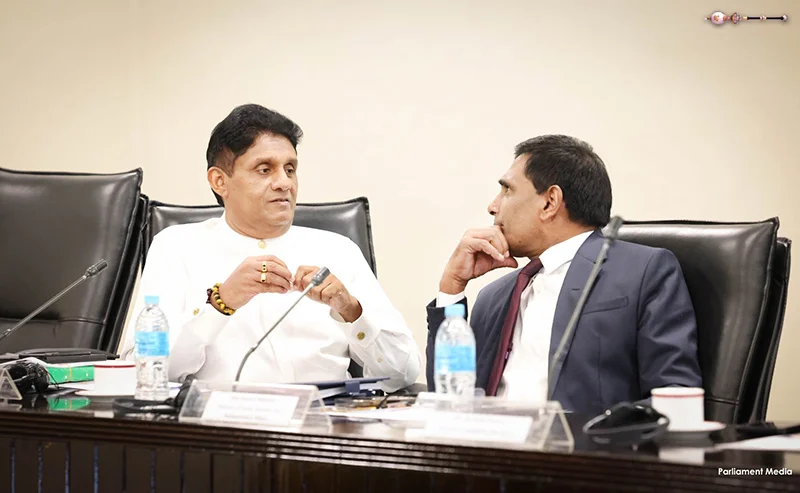
The event, held under the patronage of Deputy Chairperson of Committees Hemali Weerasekara, was attended by Opposition Leader Sajith Premadasa, Public Security and Parliamentary Affairs Minister Ananda Wijepala, Deputy Defence Minister retired Major General Aruna Jayasekara, Members of Parliament and senior officials of the Ministry of Defence, the National Anti-Human Trafficking Task Force and Parliament.

Late Spain goal eliminates Portugal, ends Ronaldo’s international career?

Nyamhuri and Ngarava stun Bangladesh by defending 141

Sri Lanka try to make a play after Greaves 180, Hope 112

Dry weather except for a few showers in the Western and Sabaragamuwa provinces and in Galle, Matara, Kandy and Nuwara-Eliya districts

Prison mayhem leaves at least 26 dead; five officers killed in revenge violence

Cleaner, cheaper electricity gathers momentum with rapid progress in 50 MW Mannar wind power project

‘Dates have the highest sugar content to fight Coronavirus’

Sunday Island 27 December – Headlines

#SundayIsland 17th December – Headlines

Sunday Island – 28th March

Sunday Island Headlines – 21 March

Sunday Island – 21st February – Headlines
-

 News2 days ago
Singapore-based Buddhist monk marks nearly four decades of humanitarian service
-

 News3 days ago
Freedom 250: US Embassy celebrates America’s 250th Independence Day through magic of American cinema
-

 News4 days ago
CIABOC to question Harak Kata on Rs. 200 mn bribery allegation
-
 News4 days ago
SLAF conducts successful rescue mission under UN command in Central African Republic
-

 Midweek Review6 days ago
H’tota port’s strategic status remains focal point of geopolitical scrutiny
-

 News1 day ago
AI concerned over proposed SL military deployment in Haiti
-

 News4 days ago
UNEP support pledged to strengthen Sri Lanka’s Environmental Priorities
-

 Features2 days ago
The NPP’s New Challenge: Balancing Easter Lawfare and Economic Welfare