
News
Lanka sees surge in higher education attainment


Sri Lanka is witnessing a quiet but significant transformation in its human capital, with a steady rise in higher educational attainment over the past decade, according to the latest findings of the Department of Census and Statistics.
Data from the Census of Population and Housing 2024 reveal that while challenges remain, particularly in aligning education with employment, the country has made notable progress in expanding access to advanced learning—reflected most strikingly in the growing number of doctoral graduates.
The number of PhD holders has risen from 6,557 in 2012 to 11,757 in 2024. Although they still represent just 0.1% of the population aged 25 and above, the increase signals a strengthening of Sri Lanka’s research base and intellectual capital.
More broadly, degree holders have more than doubled over the same period, climbing from 358,052 (3.0%) to 780,958 (5.6%). This sharp rise underscores a widening pathway to university education, driven by both state and private sector expansion, as well as increased overseas study opportunities.
The report also highlights a substantial surge in those with tertiary education, which grew from 2.19 million (18.2%) in 2012 to 3.63 million (26.2%) in 2024.
Analysts note that this shift reflects a generational change, with younger cohorts increasingly pursuing qualifications beyond secondary school in a competitive global economy.
At the pre-university level, the number of individuals with G.C.E. Advanced Level or equivalent qualifications rose from 1.72 million (14.2%) to 2.67 million (19.4%), indicating improved retention within the school system and a stronger emphasis on higher education readiness.
Meanwhile, secondary education remains the dominant attainment level, accounting for around 58% of the population in both census years. The absolute number increased from 7.07 million to 8.09 million, suggesting population growth as well as sustained access to schooling.
Encouragingly, the proportion of those with only primary education has declined markedly—from 18.4% to 12.5%—while the number of individuals with no schooling has also dropped from 4.7% to 2.9%. These trends point to continued success in expanding basic education and literacy across the island.
Education experts say the data reflect long-term investments in free education and social welfare policies, but caution that the next challenge lies in translating qualifications into meaningful employment and innovation.
“The numbers are impressive, particularly the growth in tertiary and postgraduate education,” a senior academic said. “But we must now ensure that these qualifications are matched by opportunities in the economy. Otherwise, we risk underemployment and brain drain.”
The findings come at a time when policymakers are grappling with how to position Sri Lanka as a knowledge-based economy, amid global competition and domestic economic pressures.
With more Sri Lankans attaining higher levels of education than ever before, the report offers both a measure of progress and a call to action: to harness this expanding pool of talent for national development.
By Ifham Nizam

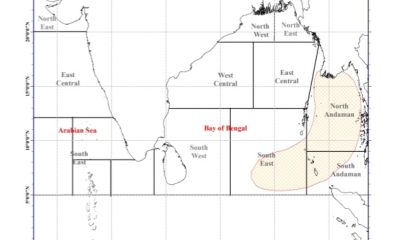





Advisory for strong winds and rough seas for Multi-day boats in the Bay of Bengal deep sea areas
Issued by the Natural Hazards Early Warning Centre
Issued at 05.00 p.m. 18 September 2026, valid for the next 24 hours.
PLEASE BE AWARE!
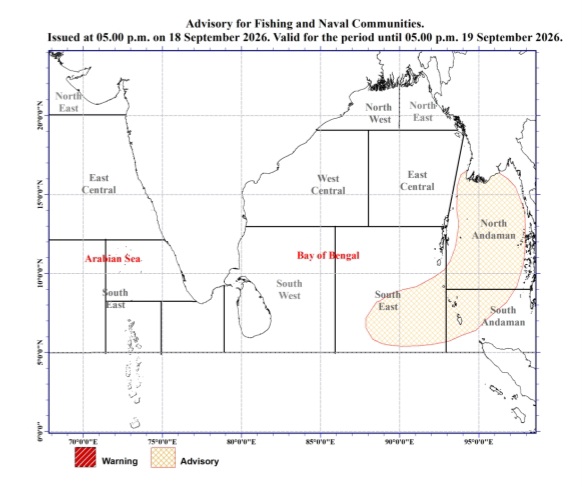
The atmospheric disturbance to the North of the Andaman Islands in the Bay of Bengal, is likely to develop into a low pressure area within the next 24 hours.
Due to its influence, wind speed over the Bay of Bengal sea areas will increase during the next few days starting from
tomorrow (19th).
The wind speed in the sea areas marked under the “Advisory” category on the map below will increase to 55-65 kmph at times and those sea areas will be rough or very rough at times.
Navel and fishing communities engaging the activities over this sea area are advised to be vigilant and be attentive to the future forecasts and bulletins issued by the department of Meteorology in this regards.

Text and Pic by Priyan de Silva
Director General of the Commission to Investigate Allegations of Bribery and Corruption (CIABOC) Ranga Dissanayake has questioned whether some promises contained in the National People’s Power (NPP) manifesto, A Thriving Nation – A Beautiful Life, could be fulfilled even if the government wanted to implement them.
Dissanayake raised the issue during a discussion following the release of the third biannual report on manifesto monitoring by the March 12 Movement, at the BMICH, on Wednesday.
He questioned whether the report had taken into account legal and institutional constraints affecting the implementation of certain pledges.
Citing the proposal to establish Anti-Corruption Investigation Offices in each district, Dissanayake said such offices could be established only with the agreement of CIABOC and that amendments to the Anti-Corruption Act would be necessary.
He also referred to the pledge to abolish the Executive Presidency, noting that successive governments had made similar commitments since 1994. He questioned whether there had been adequate consideration of where the powers vested in the Executive President would be transferred if the system were abolished.
On the proposal to establish a Public Prosecutor, Dissanayake questioned whether the Government intended to maintain the office alongside the Attorney General, who currently performs prosecution-related functions.
Executive Director of the Institute for Democratic Reforms and Electoral Studies (IRES) Manjula Gajanayake said Dissanayake’s remarks should be regarded as his personal views and not as Government policy.
Monitoring and Evaluation Consultants M. Thilakarajah and D.D. Mataharaarachchi presented the third-phase findings, covering January to June 2026.
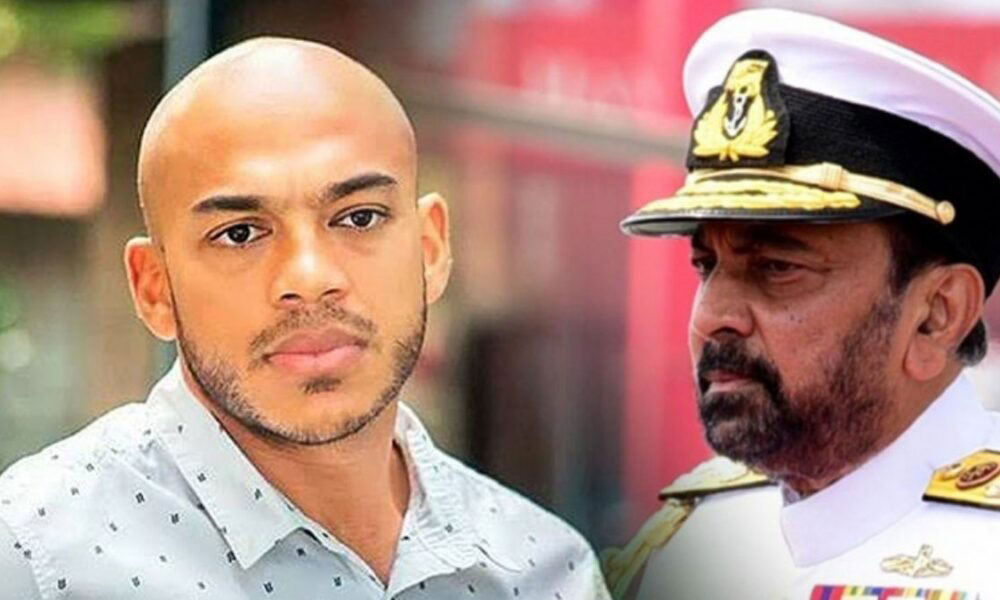
The corruption case filed by the Commission to Investigate Allegations of Bribery or Corruption (CIABOC) against former Navy Commander, Admiral of the Fleet Wasantha Karannagoda, and Yoshitha Rajapaksa was set for a pre-trial conference by the Colombo High Court.
The case was taken up before the Colombo High Court on Thursday (17), when the accused, who are currently out on bail, appeared before the court. After considering the submissions made, the court ordered that the case be called for a pre-trial conference.
The CIABOC had filed the case against the accused, alleging that a corruption offence was committed by sending Yoshitha Rajapaksa, son of former President Mahinda Rajapaksa, for training at the Royal Naval College in the United Kingdom despite him not having the required qualifications.

Advisory for strong winds and rough seas for Multi-day boats in the Bay of Bengal

Showers in the Western, Sabaragamuwa and North-western provinces and in Galle, Matara, Kandy and Nuwara-Eliya Districts

Some NPP manifesto promises may be difficult to fulfil – CIABOC DG

Yoshitha and ex-Navy chief Karannagoda’s case fixed for PTC

Court orders probe into Wimal’s rally speech

Court to rule on Dilith’s writ petition on September 30

‘Dates have the highest sugar content to fight Coronavirus’

Sunday Island 27 December – Headlines

#SundayIsland 17th December – Headlines

Sunday Island – 28th March

Sunday Island Headlines – 21 March

Sunday Island – 21st February – Headlines
-

 News6 days ago
Gnanasara Thero absconding after SC ruling
-

 Opinion5 days ago
From Galkissa (Mount Lavinia) to Tambuttegama
-

 Business6 days ago
HNB Finance strengthens Board with four independent directors
-

 News2 days ago
US embassy won’t comment on IGP’s probe into joint drug raid
-

 Features5 days ago
Sri Lanka’s university crisis: Brain drain and union action demand urgent reform
-

 Sports6 days ago
Culture within cricket team worrying authorities
-

 Features4 days ago
The emptying university: why are academics leaving?
-

 News6 days ago
House to debate 22A, Judicature Bill next week