
Foreign News
Trump and Xi reach trade deal, easing tensions in fierce US-China rivalry

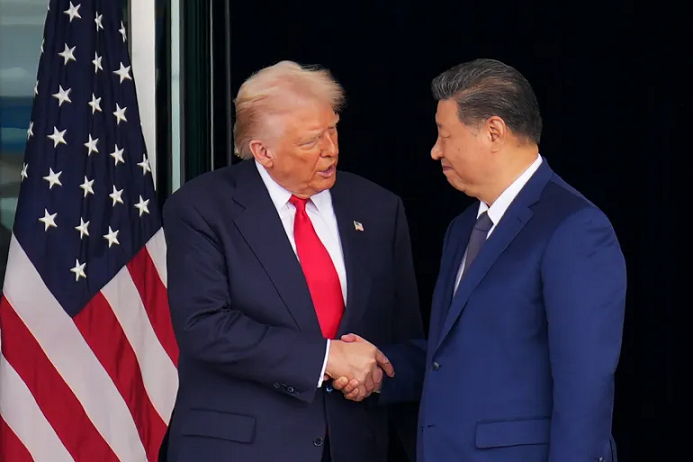
United States President Donald Trump and Chinese President Xi Jinping have agreed to call off a mutual escalation in their countries’ trade war, lowering the temperature in a heated confrontation that has threatened to upend the global economy.
Trump and Xi sealed a one-year trade truce on Thursday on the sidelines of the Asia-Pacific Economic Cooperation (APEC) summit in South Korea, where the two leaders met face-to-face for the first time since 2019.
But while Trump and Xi’s agreement offered a reprieve to businesses unsettled by months of back-and-forth trade salvoes, it did little to roll back existing trade barriers and left numerous points of contention between the sides unresolved.
“The apparent results of this meeting will be a pause and a small roll back in the trade war,” Dennis Wilder, a professor at Georgetown University who worked on China at the CIA and the White House’s National Security Council, told Al Jazeera.
“Both sides have not given up their trade weapons but merely have agreed to stop firing as long as both sides hold to the agreements,” Wilder said.
Under the deal, China agreed to defer its planned export controls on rare earths, while the US will drop a threatened 100 percent tariff on Chinese goods.
Trump said he would also lower a 20 percent fentanyl-related tariff to 10 percent after Xi agreed to “work very hard” to stem flows of the synthetic opiate.
“I believe he is going to work very hard to stop the death that is coming in,” Trump said on Air Force One after departing South Korea.
Trump, who hailed his 90-minute meeting with Xi as “amazing”, said the issue of rare earths had been “settled” under the agreement, which he said would be renegotiated every year.
“There’s no roadblock at all on rare earths – that will hopefully disappear from our vocabulary for a little while,” Trump said.
Trump, whose meeting with Xi capped a whirlwind tour of Asia that included stops in Malaysia and Japan, said China had also agreed to purchase “tremendous amounts” of American soya beans.
After Trump’s comments, Xi said the sides had reached a “consensus to address problems” in the talks, but did not directly reference specific details of the agreement.
Washington and Beijing should “promptly refine and finalise follow-up actions” to implement the consensus and “offer tangible results to reassure both countries and the global economy,” Xi said, according to a readout by the state-run Xinhua News Agency.
China’s Ministry of Commerce later confirmed aspects of the agreement, including the one-year deferral of its export controls.
The ministry also said Trump had agreed to suspend plans to extend Washington’s blacklist of firms prohibited from doing business with US companies and individuals to subsidiaries, and that both sides would pause tit-for-tat port fees.
Asian stock markets were largely unmoved, with benchmark indexes in Hong Kong, Shanghai and Sydney closing lower and Japan’s main index finishing flat.
China’s plans to require companies anywhere in the world to obtain a licence to export goods containing even trace amounts of its rare earths had raised fears of massive disruption to global supply chains.
Chinese producers hold a near monopoly on the supply of the critical minerals, which are used to make everything from smartphones to fighter jets.
Shan Guo, a partner with Shanghai-based consultancy Hutong Research, said the cut in the fentanyl tariff was “largely expected”.
“China has been asking for the fentanyl cut since Stockholm, it is now getting what it wants using rare earth as leverage,” Guo told Al Jazeera, referring to US-China trade negotiations that took place in the Swedish capital in July.
“It is a 10 percent cut instead of 20, likely because US still wants to maintain some leverage as the two sides talk more going forward. Regardless, this lowered tariff on China will reduce the competitive disadvantage of Chinese goods vs ASEAN peers,” Guo said, referring to the bloc of 11 Southeast Asian economies, many of which, like China, rely heavily on exports.

Expectations for a deal had been modest ahead of the summit, and Thursday’s agreement left most tariffs and export controls hindering trade between the sides in place.
Trump’s pledge to halve his fentanyl tariff would leave the average US duty on Chinese goods at around 47 percent, and China’s average tariff on US products at about 32 percent.
Washington continues to include more than 1,000 Chinese firms on its export control list, while Beijing has dozens of US companies on its comparable “unreliable entity list”.
Deborah Elms, head of trade policy at the Hinrich Foundation in Singapore, said the agreement could be seen as a “partial freeze” or “minor rollback” in the US-China trade war.
Cameron Johnson, a partner at Shanghai-based consultancy Tidalwave Solutions, said US-China ties should not deteriorate in the near term, describing the agreement as “probably the best both sides could have done given the circumstances”.
But Johnson noted Trump’s comments that the agreement would be subject to annual review.
“It allows both sides to calibrate the relationship, and also buying power, of each side every year now going forward,” he told Al Jazeera.
[Aljazeera]


Almost 5,000 people are known to have died in two earthquakes that devastated Venezuela in June, but the United Nations estimates that as many as 50,000 people may still be missing – with many feared buried under rubble.
The number of confirmed deaths is now higher at 4,930, lawmaker Jorge Rodriguez announced on Thursday
The disaster almost a month ago impacted tens of thousands of others. Nearly 17,000 people are wounded, and 21,120 are living in shelters.
Venezuelan teams have been operating since the earthquake struck, but locals say their response has been slow.
“From the very first moment, from when the earthquake happened, there was an immediate response, but from civilians. Civilians and independent people. The state’s response is only being seen now,” Cinthia Pulido, a Venezuelan displaced by the earthquakes, told Al Jazeera. “We’re watching and waiting for some kind of answer.”
International rescue teams sent in the immediate aftermath of the disaster have left as the focus moves to providing humanitarian relief.
“The little I can get is just for me to survive, support my children, and help my mum,” Louismarez Paez, who has also been displaced, told Al Jazeera.
Her mother, she said, does not receive any assistance other than that which she herself provides.
Venezuela has ‘crucial resources’ it cannot access
Venezuela has faced tight US sanctions since 2015, which experts say is making the government’s job even harder.
“Venezuela has crucial resources that it is not being allowed to access,” Mark Weisbrot, senior economist and co-director at the Center for Economic and Policy Research, said.
That includes $11bn blocked by the US and European countries that Venezuela “should legally have”, Weisbrot said.
Earlier this week, a group of 14 Democratic lawmakers in the US sent a letter urging the White House to ease economic sanctions on Venezuela to aid recovery efforts, according to a report from Spanish newspaper El Pais.
The sanctions, they wrote, are “severely hampering urgent relief efforts” and have “severely undermined the country’s response and reconstruction efforts”.
The UN estimates that the recovery efforts in Venezuela could cost the country $37bn.
[Aljazeera]
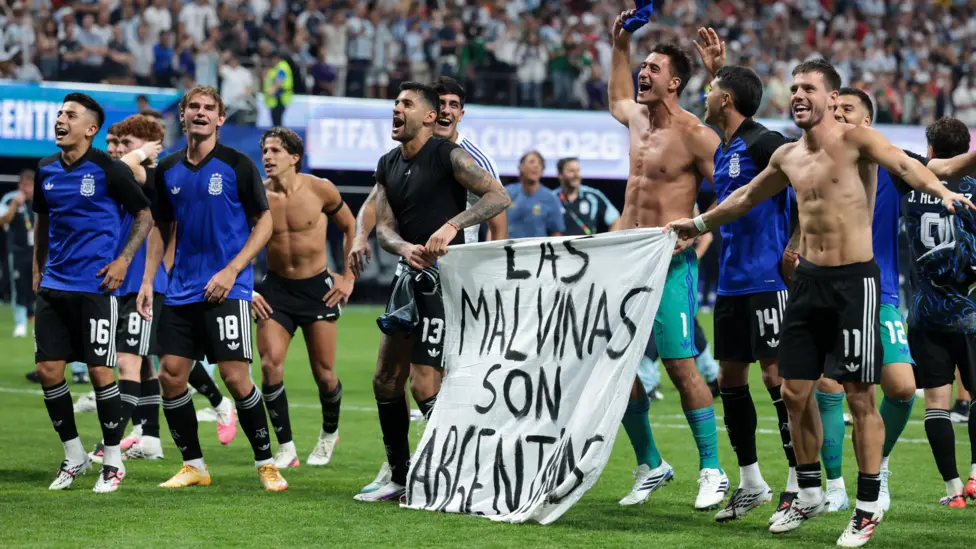
Argentina face the prospect of a Fifa fine after their players celebrated the World Cup semi-final win against England with a banner in support of their country’s claims to the Falkland Islands.
The defending world champions produced a dramatic late comeback in Atlanta, scoring twice to defeat Thomas Tuchel’s side 2-1 and book a showdown with Spain in Sunday’s final.
After the final whistle, Argentina players celebrated while holding a banner reading “Las Malvinas son Argentinas”, which translates as “The Falklands are Argentine”.
The Falkland Islands, a British overseas territory in the south-west Atlantic Ocean, remain the subject of a sovereignty dispute between Britain and Argentina.
The two nations went to war over the group of islands, situated 300 miles off Argentina’s east coast, from April to June 1982.
The 74-day conflict led to the deaths of 655 Argentine and 255 British servicemen. Three people from the islands also died.
In 2014, Fifa fined the Argentine Football Association 20,000 pounds after its players held up a banner with the same message before a friendly against Slovenia.
World football’s governing body said the gesture had breached rules on political action and team misconduct.
[BBC]
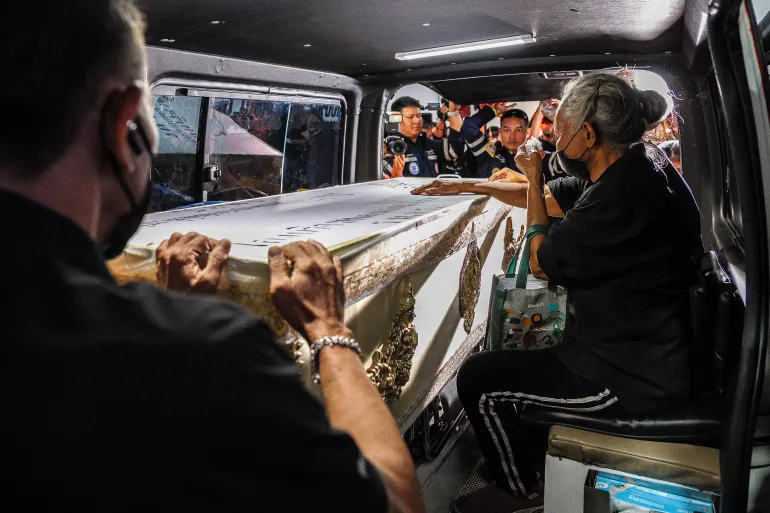
The death toll in a fire at a popular live music pub in Bangkok has risen to 32 after two more people died from their injuries, as Thai police continue to investigate possible negligence as a factor in the blaze.
The Erawan Emergency Medical Centre said on Wednesday that 30 people remained in hospitals in the city, with 15 of those being treated in intensive care units. It said 44 people had been discharged.
The fire, Thailand’s deadliest in 17 years, broke out at the Rong Beer Na Ladprao late on Sunday night. It took firefighters 30 minutes to put out the blaze.
Most of the victims died from smoke inhalation, while a few died from burn injuries, Wiroon Supasingsiripreecha, chief of the Institute of Forensic Medicine, told journalists on Wednesday.
Local police said that most of the people who were found dead were trapped in windowless bathrooms, where they may have tried to escape the blaze.
The cause of the fire has not been determined, and police are investigating the possibility of negligence at the venue, including whether emergency exits were obstructed.
Authorities say an electrical short circuit in a ceiling-mounted air conditioner may have sparked the fire. Some experts say that combustible acoustic materials around the stage may have ignited, producing extreme heat and smoke.
Some survivors and family members of victims arrived at the Phahonyothin Police Station on Wednesday to give statements, gather belongings and seek compensation.
Natthaphong Lakhorn, 26, told the Associated Press news agency that he was close to the stage when the fire started.
[Aljazeera]

Venezuela earthquake: Number of known dead rises to nearly 5,000 victims

A few showers may occur in the Western, Sabaragamuwa and North-western provinces and in Kandy, Nuwara-Eliya, Galle and Matara districts

Harmer, Markram and Wolvaardt win top honours at CSA awards

War of words erupts between Minister Chandrasekar and Archchuna in North

Cardinal seeks dismissal of Sallay’s petition

Money laundering case against Yoshitha, fixed for pre-trial conference

‘Dates have the highest sugar content to fight Coronavirus’

Sunday Island 27 December – Headlines

#SundayIsland 17th December – Headlines

Sunday Island – 28th March

Sunday Island Headlines – 21 March

Sunday Island – 21st February – Headlines
-
 Features5 days ago
Prison riots and politics: NPP’s biggest challenge and Sri Lanka’s biggest opportunity
-

 Editorial6 days ago
What’s the world coming to?
-
 Features2 days ago
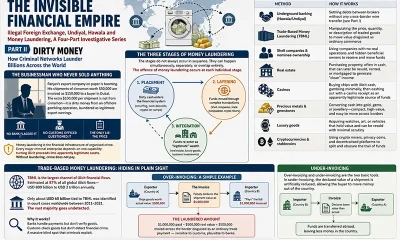
Dirty Money
-

 Editorial5 days ago
Much ado about crime: Fish or cut bait
-
 Features5 days ago
More on Saudi Arabia: ARAMCO and beyond
-
 Latest News3 days ago
Oil prices hit 1-month high as US-Iran attacks dim Strait of Hormuz outlook
-
 Midweek Review2 days ago
The sordid tale of theft and tragedy at Finance Ministry
-
 Features4 days ago
Deepening Democracy – Constitutions and Constitutionalism