
Latest News
WWC 2025: Wolvaardt, Brits fifties put South Africa closer to semi-final berth


South Africa took a big step towards a World Cup semi-final berth by chasing successfully for the fourth time in the tournament, this time in a rain-reduced encounter in Colombo. They played what was essentially a T20 against Sri Lanka, whose innings was paused for five-and-a-quarter hours, and whose semi-final hopes now hang by a thread. Sri Lanka have two points from two washouts and are winless. For any chance of a final-four spot, they must win their last two games and hope other results go their way.
After choosing to bat first, Sri Lanka faced 12 overs before the rain delay and scored 46 for 2. They returned to hit 59 runs in eight overs, losing five wickets in the process. South Africa’s target was adjusted up from Sri Lanka’s final score of 105 for 7 to acknowledge the hosts did not know they would only bat 20 overs for 60% of their innings.
Similarly South Africa’s bowling plans were scuppered by the revised playing conditions. Both senior seamers – Marizanne Kapp and Masabata Klass – were bowled out in the first 12 overs as the reduction only allowed for bowlers to deliver a maximum of four overs each. They had also included two offspinners – Sune Luus, returning from a hip flexor strain, and Nondumiso Shangase – but neither ended up bowling.
Instead, it was left-arm spinner Nonkululeko Mlaba, dealing with a wet ball, who took 3 for 30 and limited Sri Lanka after the resumption. Unlike in their previous two matches against India and Bangladesh, South Africa were barely troubled in the chase. Laura Wolvaadt scored a second half-century at this event and Tazmin Britts supported her with a fifty of her own as South Africa cruised to a win with 5.1 overs to spare. Their net run-rate, though, remains negative after their opening defeat to England.
South Africa may not have thought it would be that easy, when hours earlier, Sri Lanka – fresh from topping 250 against New Zealand – decided to go again by batting first in home conditions. But South Africa had an ace, Klaas, who threatened from the get-go when she beat Vishmi Gunaratne first with an outswinger and then an inswinger. In the next over, Gunaratne was completing a single off Kapp when a throw came into the non-striker’s end and struck her on the inside of her left knee. Going down in pain, she received treatment on-field and was stretchered off later. No serious damage was done as Sri Lanka Cricket (SLC) confirmed she would bat again later in the innings.
Athapaththu was on three of 12 balls at the time and only got her next runs six deliveries later when she hit Kapp inside-out over point for four. Just as she found her touch, South Africa also discovered theirs. Klaas bowled Hasini Perera, who played down the wrong line, with a beauty that shaped away. Then Kapp found Harshita Samarawickrama’s edge but the chance fell short of Chloe Tryon at slip. Klaas then snared the big fish when Athapaththu was given out lbw as she lunged forward to an inswinger. Athpaththu thought the impact was outside the line and reviewed but stayed out on umpires call. Sri Lanka were 37 for 2 after 10 overs.
Only two more overs were possible before the drizzle became too heavy and the players were taken off the field. They remained off for five hours and 14 minutes, during which time it rained heavily, eased off and eventually Sri Lanka’s excellent groundstaff got conditions ready for a restart.
Mlaba restarted proceedings and was dispatched for six first ball by Kavisha Dilhari, in an over that cost 10. Sri Lanka’s intent was clear when, in the next over, Samarawickrama tried to slog Nadine de Klerk but got a leading edge to mid-off, where Klaas could not hold on. De Klerk was rewarded later in the over when Dilhari handed a catch to Wolvaardt at cover.
It became two in two for Sri Lanka as Mlaba removed Samarawickrama at the start of her next over, with Wolvaardt doing the catching again. That brought Gunaratne back to the crease and she finished the over by hitting Mlaba down the ground for four. Gunaratne was in excellent touch and hit Chloe Tryon through point, and Mlaba for back-to-back fours to keep pressure on South Africa.
Nilakshika de Silva took on de Klerk but South Africa pulled things back in the last two overs. De Klerk’s fourth over cost just three runs and Mlaba picked up two wickets and conceded four to take her to second on the tournament wicket-takers’ list. De Silva, trying to get as many as possible, picked out deep midwicket and Gunaratne edged behind to give 18-year old wicketkeeper Karabo Meso her first World Cup catch.
Wolvaardt and Brits, who had not had the best tournament as an opening pair thus far, then took complete control. They posted their highest opening stand of this World Cup and dealt well with the early swing Malki Madara generated. Wolvaardt kept one that was destined for the stumps out and then advanced down the track to hit her over mid-on.
It took Brits, coming off back to back ducks, some time before she brought out a big shot. But when she did, it was huge. Coming down the track, she sent Inoka Ranaweera back over her head for six. South Africa’s fifty came up in the eighth over as Brits was nearly run out at the non-striker’s end with Wolvaardt pushing for two. Wolvaardt went on to give Brits the best view in the house as she creamed a cover drive off Athapaththu and asserted her authority on the game.
Brits survived an lbw review on 20 when Dilhari tossed one up. Dilhari’s night got worse from there when South Africa took 18 runs off her third over including four fours. Wolvaardt reached fifty off the second one, when she hit Dilhari leg-side, then Brits scored two of her own to enter the 40s. She finished things off quickly and got to fifty when she ended the game with a six over midwicket.
Brief scores:
South Africa Women 121 for 0 in 14.5 overs (Laura Wolvaardt 60*, Tazmin Brits 55*) beat Sri Lanka Women 105 for 7 in 20 overs (Vishmi Gunaratne 34, Chamari Athapaththu 11, Harshitha Samarawickrema 13, Kavishsha Dihari 14, Nilakshika Silva 18; Nonkululeko Mlaba 3-30, Masabata Klaas 2-18) by ten wickets (DLS method)
20-overs-a-side
[Cricinfo]

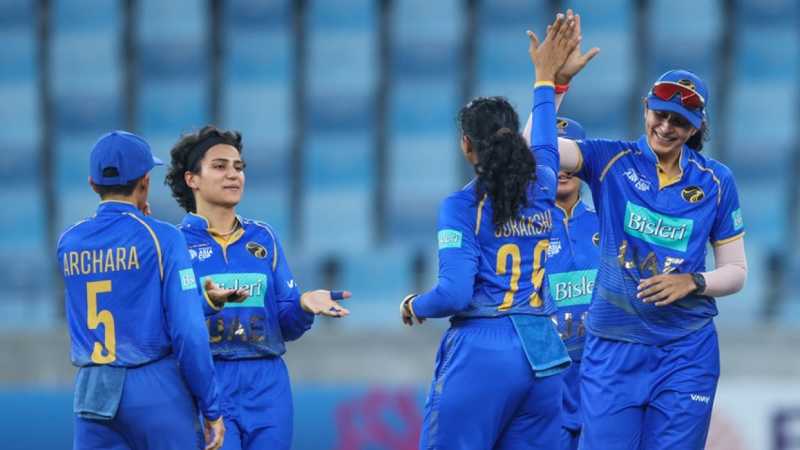
A complete performance from UAE’s bowling unit kept their semi-final hopes alive at the 2026 Women’s T20 Asia Cup, skittling Indonesia for 73 and then completing the chase with six wickets to spare. They now have to beat Bangladesh on September 8 and also hope other results go their way.
UAE were on top right from the first ball courtesy offspinner Suraksha Kotte, who starred with 3 for 16. Kotte struck with the first two balls of the innings, dismissing Indonesia opener Maria Corazon and No. 3 Ni Luh Dewi for first-ball ducks. UAE captain Esha Oza (2 for 11) then dismissed the other opener Rahmawati Pangestuti in the fourth over.
Indonesia captainN8 Puu Ayu Nanda Sakarini top-scored with a lone hand of 39 off 52 balls, with four fours and a six, accounting for 53.4% of Indonesia’s runs. But with little support, they could not find a way back in and were bowled out for 73.
Slow left-arm spinner Heena Hotchandani (2 for 6) and seamer Samaira Dharnidharka (1 for 12) also got among the wickets. Legspinner Vaishnave Mahesh struck twice in the 20th over to clean up the tail.
UAE openers Theertha Satish and Oza put on 17 for the first wicket. After losing Theertha in the fifth over, Oza hit two boundaries in each of the sixth and eighth overs. No. 3 Rinitha Rajith then hit three fours off Sofia Velic in the ninth over.
A brief wobble followed for UAE as they slid from 62 for 1 to 68 for 4. Oza fell for a 29-ball 30 at the start of the 11th over to Ni Ariani and Velic grabbed two wickets in the 12th. However, with only six runs needed, UAE wrapped up the chase at the start of the 14th over, the tournament hosts securing two points with 41 balls to spare. This was also Indonesia’s final match of the campaign, bowing out with losses in all three games.
Scores:
UAE Women 75 for 4 8n 13.1 overs (Esha Oza 30, Rinitha Rajith 22; Ni Riani 1-10, Sang Maypriani 1-17, Sofia Velic 2-25) beat IndonesiaWomen 73 in 19.4 overs (N8 Putu Ayu Nanda Sakarini 39, Desi Wulandari 12; Suraksha Kotte 3-16, Heena Hotchandani 2-06, Esha Oza 2-11, Samira Dharnidarkha 1-12 ) by six wickets
(Cricinfo)
Latest News
Sun directly overhead Moratuwa, Kesbewa, Handapangoda, Idalgashinna, Yudhaganawa, Kotiyagala and Panama about 12.08 noon today (05)

The sun is going to be directly over the latitudes of Sri Lanka from 28th of August to 07th of September due to its apparent southward relative motion.
The nearest places of Sri Lanka over which the sun is
overhead today (05) are Moratuwa, Kesbewa, Handapangoda, Idalgashinna, Yudhaganawa, Kotiyagala and Panama about 12.08 noon
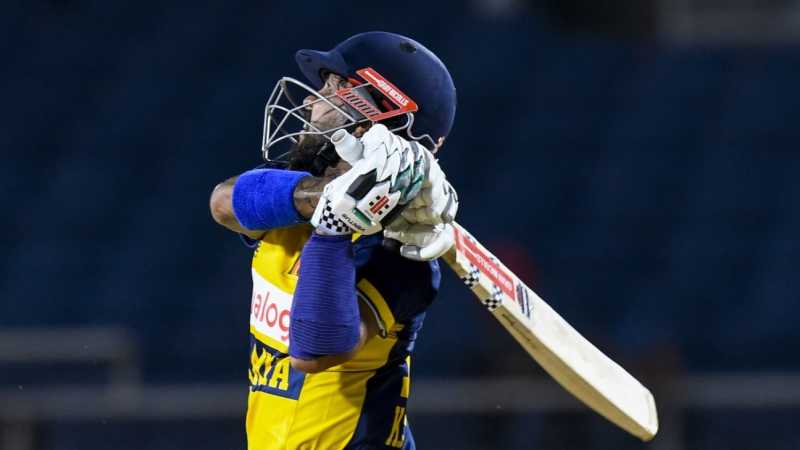
Kusal Mendis and Binura Fernando have been ruled out of Sri Lanka’s upcoming T20I series against England, with the SLC saying that the two were “still undergoing rehabilitation” after injuries picked up at the 2026 Lanka Premier League.
The update came just over a day after the two were named in the 16-member squad, with Kusal retained as captain of both the T20I and the ODI sides.Charith Asalanka, who had returned to the vice-captain’s position for the series, will now lead the side in the T20Is. Though Kusal hasn’t been ruled out of the ODIs just yet, were he to miss out, Asalanka, as the designated vice-captain, might step in there too.
Kusal has been out of action since July 19 with a right hamstring injury, while Binura hasn’t played since August 5, SLC putting his absence down to a back injury.
Pavan Rathnayake, the 24-year-old top-order batter, has replaced Kusal in the T20I touring party, while Dilshan Madushanka, the fast bowler who was in the squad for the Tests against India recently but didn’t get to play, has come in for Binura.
(Cricinfo)

Malaysia declares emergency in Sarawak as haze from Indonesia worsens

UAE keep semi-final hopes alive after convincing win over Indonesia

Sun directly overhead Moratuwa, Kesbewa, Handapangoda, Idalgashinna, Yudhaganawa, Kotiyagala and Panama about 12.08 noon today (05)

Showers above 75 mm are likely at some places in the Uva, Central and Eastern provinces and in Polonnaruwa and Mullaittivu districts after 2.00 p.m

Namal remanded until Sept. 18 over Airbus deal investigation

Dengue cases surpass 96,000 this year

‘Dates have the highest sugar content to fight Coronavirus’

Sunday Island 27 December – Headlines

#SundayIsland 17th December – Headlines

Sunday Island – 28th March

Sunday Island Headlines – 21 March

Sunday Island – 21st February – Headlines
-

 Features7 days ago
“Wrap Me Up in My Blazer”— A Gentlemanly Bradby Reminiscence
-

 Features6 days ago
When Sri Lankan stories find their own voice
-
 Features7 days ago
JVP/NPP government as seen from outside by Lionel Bopage now domiciled in Australia
-

 News6 days ago
BASL takes exception to Justice Ganepola being denied a place in SC
-
 Features7 days ago
Prof. Savitri Goonesekere: What has she done?
-

 News3 days ago
Denied of promotion to SC despite vacancies, justice Gurusinghe retires
-

 Latest News3 days ago
Grade 5 scholarship exam results released
-

 News3 days ago
22A: SC urged to suspend hearing, appoint full bench