
Features
The Aftermath of Empire – Reappraisal and Reconciliation (Part 1)

by Professor Chandra Wickramasinghe*
*The author is an Honorary Professor at the University of Buckingham, UK, at the University of Ruhuna, Sri Lanka, and also at the National Institute of Fundamental Studies in Sri Lanka.
He was a former Fellow of Jesus College, Cambridge, Staff Member of the Institute of Astronomy, Cambridge, and former Professor at Cardiff University. He is a pioneer of the discipline of Astrobiology and the author of over 450 scientific papers and some 35 books.
In our post-colonial modern world, the restoration of unity and harmony in our ethnically diverse multicultural polities stands out as an important priority. However, we have another task we cannot neglect – to explore and sift the enormous treasures of ancient wisdom and knowledge that have come to light following a long colonial history. An impartial assessment of competing paradigms would be of crucial importance for progress.
The British Empire finally ended in India in 1947, and a year later in Ceylon (now Sri Lanka). Its legacy – including the use of the English language pervades the modern world. But we also see many unresolved conflicts – conflicts between races in our newly generated polities, as well as clashes between competing paradigms. This article will explore a personal perspective of the decolonisation process focussing in particular on the Indian subcontinent. In this context it is relevant to declare my own personal background. I am very much a part of the British Empire, having grown up in the crown colony of Ceylon during the twilight years of the Raj. I went to a school (Royal College Colombo) that was modelled on Eton, learning Greek and Latin, but regretfully less of my own native mother tongue and culture. My early upbringing epitomises what the Roman historian Cornelius Tacitus (AD56-120) famously said of conquered people – that they readily adopt novelties of the conqueror’s ‘civilization’ whilst in fact they were adopting features of their own enslavement.
 Two generations of my ancestors have epitomised this connection. My paternal grandfather Dionicious Lionel had worked in the office of the Governor General Sir Reginald Edward Stubbs for which he was later honoured with the title Mohandirum. My father Percival Herbert**, who was a Cambridge-trained mathematician obtaining the highest distinctions in the Mathematical Tripos in the 1930’s (being taught by Sir Arthur Eddington), went on to become an Indian Civil Servant with his first posting as “Deputy Collector of Customs” in the Bihar state in India. With such a background and education a more colonially-oriented upbringing could not be imagined. To cap it all my arrival in Cambridge in 1960 and the start of my long career as an astronomer and astrobiologist in the UK began with the award of a Commonwealth Scholarship, a scholarship scheme that was presumably launched as part of a process of post-colonial atonement. However, the process of decolonisation at a much deeper level, which involves accommodation and acceptance of a diversity of races as well as ideas has still a long way to go.
Injustices of Empire
British rule in India has been variously described as benevolent and generous on one the one hand, and replete with cruelty, plunder and pillage on the other. The truth lies somewhere in between. However, the evidence of cruelty, of punitive taxation and concerted attempts at de-industrialising of India throughout the 17th and 18th centuries abound.
In the pursuance of purely commercial objectives the British administration in India has carried out many acts of violence and cruelty that in modern times would be deemed violations of human rights and crimes against humanity. These include the extraction of punitive taxation from the population of Bengal during two major famines that led to the deaths of millions of people. There was also the deliberated flooding of rice paddy fields in the coastal plains of Ceylon rendering the land unsuitable for paddy cultivation, done it would seem for the sole purpose of enhancing demand for the Empire’s new rice plantations in Burma; and the illegal sale of opium to China leading to addiction and great distress. The impoverished state of the subcontinent when the British finally left India in 1947 was at least in part due the imperial encounter of the preceding 3 centuries.
In my view, one of the most regrettable aspects of colonial rule both in India and Sri Lanka was its implementation of a policy of divide and rule – divide et impera (one that has been originally attributed to the father of Alexander the Great – Emperor Phillip II of Macedon (359-366BC)). The effect of imposing such a policy was to make it easier for the British to rule a religiously and ethnically diverse group of subjects; but on their eventual departure it undoubtedly contributed to many tragic events. The partition of India and its regrettable fallout had roots in the divide et impera policy, as did the ethnic conflicts that erupted between the Sinhalese and Tamils in Sri Lanka in the 1980’s.
Deep History of Empire
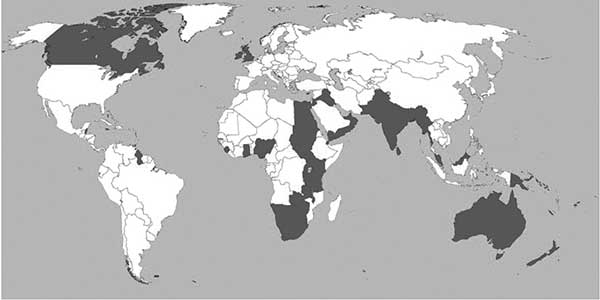
Empires in one form or other have existed throughout the history of human civilization. It is a process of colonisation that probably started in the fertile valleys of Mesopotamia and the Indus region over four thousand years ago. The formation of empires has always brought far-flung peoples and races together under a common banner, and this contributed to the spread of technological and intellectual discoveries over ever larger parts of the globe. But these advantages were often gained at the expense of much hardship and suffering, a feature that tends to go unnoticed in the euphoria of triumphant victories and achievement. We all know that in the recent history of empire, which included genocide, slavery and racism, amongst other evils, there is a great deal that is to be regretted. There is also much to be celebrated. I would not be writing this article in English if it was not for the British Raj that had once coloured a third of the world in its red vermilion hue and dominated world history for at least four centuries (Fig.1).
The British Empire and its European counterparts can all trace their cultural ancestry back to the Roman Empire that had dominated for a full millennium, and before that to the city states of classical Greece – “The glory that was Greece, and the grandeur that was Rome”. Beyond this point in history our westernised collective cultural memory conveniently begins to falter. What about the Persian Empire that preceded the Greeks, and the Mesopotamian and Indus Valley civilisations in the preceding two millennia? It was these most ancient civilizations that had indep0endently laid down the framework for mathematics, science as well as literature.
This is the point at which a Eurocentric culture with its built-in prejudices begin to assert itself most stridently.
Unravelling of Ancient wisdom
There is now little doubt that the Babylonians knew Pythagoras’s theorem and had even invented calculus by at least the 2nd millennium BCE. These were probably used as tools both for their development of city planning, surveying and engineering, as well as in nurturing their interest in astronomy. The Indians and the Indus valley civilizations of Mohenjo-Daro and Harappa at about the same time bear a similar testimony to a highly sophisticated scientific culture that included the invention of the so-called Hindu number system with concepts of zero and infinity, both of which were crucial for the later flourishing of mathematics. Throughout the middle ages, long after the collapse of the Roman Empire, the cumbersome system of Roman numerals continued to be used throughout Europe for arithmetic as well as for accounts for purely chauvinistic reasons. When the far better ancient system of Hindu numerals came to be discovered in Europe the reluctance to switch to this system is well documented.
The Arab mathematician Al-Khwarizmi in the 9th century was among the first to use Hindu numerals but it took over two centuries before translations of his work appeared in Europe. The great advantages of the new number system very slowly dawned on European mathematicians, although it was not until the 16th century when the Hindu numerals (renamed Hindu-Arabic numerals) completely replaced the old Roman numeral system. The delay in the transition was undoubtedly connected with a deep-rooted suspicion of the alien non-Christian pagan culture from which the system had emanated.
Trade and culture
After the start of the British East India Company in 1600CE a deeper knowledge of the ancient civilization of the subcontinent began to slowly dawn. The intellectual responses to this West-East encounter varied with time. The British colonisers and traders were initially surprised to find the Moghul empire of India far richer and more sophisticated than they might ever have imagined. Throughout the 17th and 18th centuries the technological difference between India and Britain was minimal. Moreover, the economy of India based on its long-established supremacy in cloth weaving, combined with a thriving steel and ship-building industries, made India among the richest countries of the world.
There can be no doubt that Britain’s trade with India over the next two centuries served to greatly increase its own prosperity at home. The planned demolition of the centuries-old cloth weaving industry in Bengal (allegedly including the chopping off of the weaver’s thumbs) was directly connected with the growth of similar industries in the north of England in the 18th century.
The development of an intellectual culture that was centred around Coffee houses (and later Tea houses) in London was also directly the result of the tea and coffee trade with India and later Ceylon. But despite all the beneficial developments that followed from Empire, responses to the encounter between Britain and India remained fraught with a deep sense of ambivalence. It was clear that Britain was dealing with an exceedingly sophisticated and very ancient civilization – albeit in straightened circumstances – one that was considerably older than any in the West. And this fact remained very difficult to admit and come to terms with.
Unravelling the treasures of Sanskrit
The realisation of the great literary and cultural heritage of the Indian subcontinent began to fully dawn through the work of the British Orientalist and Philologist Sir William Jones who arrived in Calcutta in March 1783 to take up a post as Judge in the Supreme Court of India. Besides quickly mastering Sanskrit and assiduously translating a vast body of ancient Indian literature, Jones as a philologist unravelled the ancestral relationship between Sanskrit several European languages of later date including Greek and Latin. His work is seen today as the starting point of comparative linguistics and the birth of the idea of an Indo-European family of languages. The genres of Sanskrit literature that were unravelled by Jones included epic poetry, drama, history that in its total volume far exceeds the combined content of the surviving Greek and Latin literature of Europe.
The European colonial rulers at this time found it exceedingly difficult to accept that their own languages and literature had any ancestral debt to any language that belonged to the dark-skinned people of the subcontinent, people who in their view were only fit to be servants and slaves. Although this sounds a harsh indictment today it remains a fact and one that we have to grasp.
William Jones founded the Asiatic Society on 15 January 1784 (later to become “The Royal Asiatic Society”) based in structure on the Royal Society of London. Its declared aim was ‘…….the investigation of subjects connected with, and for the encouragement of science, literature and the Arts in relation to Asia’. It perhaps came as no surprise that native Sanskrit scholars were initially excluded from membership of the society, a society that was ostensibly dedicated to unravelling their own indigenous intellectual culture and traditions! This constraint was lifted in later years but the racist overtones of the entire venture became clear at the outset and echoes of it rumbled long after.
A more recent shock to Eurocentric pride came in 1905 with the discovery in India of a Sanskrit text dating back to the 3rd century BCE dealing with statecraft which was amazingly similar in spirit and content to Niccolo Machiavelli’s classic work “The Prince” published in the 16th century of the common era. This was Kautiliya’s Arthashastra which was a comprehensive treatise on how a king should rule so as to enlarge his empire and his treasury as well as to bring happiness to his subjects. In one memorable statement Kautiliya recommends scrutiny of accounts supplied by his staff because: “Just as it is impossible to know when a swimming fish is drinking water, so it is impossible to find out when a government servant is stealing money”. This book that predated Machiavelli by nearly two millennia was a bitter pill for Western scholars to swallow. But the lesson to be learnt from the experience of Empire became clear – that no single polity or civilization can claim a monopoly of intellectual attainments of any kind.
(To be continued)

by Jehan Perera
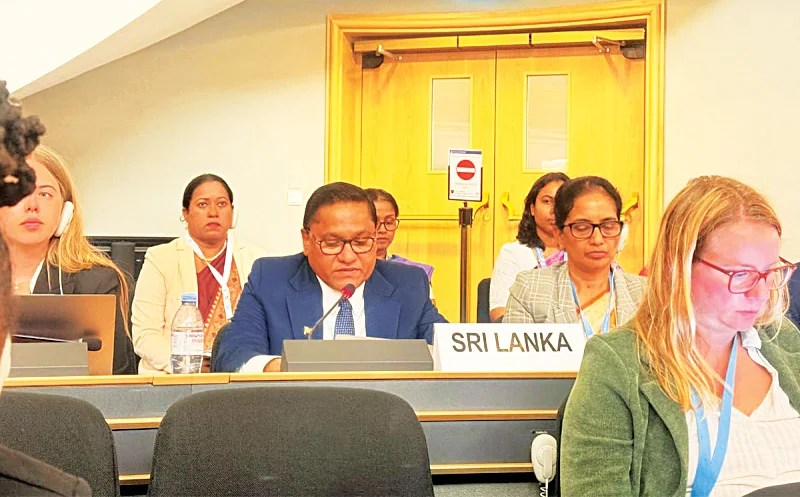
The government is preparing to meet the challenge of the UN Human Rights Council next month. A Sri Lankan delegation led by Foreign Minister Vijitha Herath is expected to attend the 63rd session of the UNHRC in Geneva, where the UN High Commissioner for Human Rights will present a written update on Sri Lanka. The government has already submitted its response to the advance version of the report prepared by the Office of the High Commissioner for Human Rights. The Foreign Minister, accompanied by officials from Colombo and Sri Lanka’s Permanent Mission in Geneva, is expected to explain the progress made on reconciliation, accountability and human rights. This is therefore an important moment for the government. It is an opportunity not merely to defend its record but to make new commitments.
The government has been criticised, as were its predecessors, for the manner in which it has dealt with past human rights violations, especially those connected with the thirty year war. The vexed issue of thousands of missing persons remains at the centre of this criticism. The government has sought to strengthen the Office on Missing Persons by providing it with additional staff and resources. It has also given support to the excavations at the Chemmani mass grave. Justice and National Integration Minister Harshana Nanayakkara has told Parliament that the government has allocated Rs. 57 million for the excavations and related legal work, though that figure has not been set against the cost of comparable forensic operations elsewhere.
The government also took the significant step of holding a national event in Jaffna to mark the International Day of the Victims of Enforced Disappearances. Minister Harshana Nanayakkara attended the event together with the Chairman of the Office on Missing Persons (OMP), Mahesh Katulanda, and other senior officials and political representatives. Their presence was meant to demonstrate the government’s commitment to addressing the issue. But on the victims’ side there is continuing dissatisfaction. The commemoration in Jaffna was met by a protest outside the District Secretariat, organised by families of the disappeared, who demanded to know what happened to relatives who, according to their accounts, surrendered to or were taken away by the military and were never heard from again.
Jaffna Protests
The protests in Jaffna are a reminder of the gap that remains between what the government is trying to do and what the victims expect. For these families, compensation and death certificates are not substitutes for knowing what actually happened to those they lost. The protests, and the police action taken against some of those who demonstrated, were reported by the international and Tamil media and by international human rights organisations, and overshadowed much of what the government had hoped to showcase at the Jaffna event. The OMP’s mandate is to establish the fate and whereabouts of missing persons, clarify the circumstances in which they went missing, and provide redress and assistance to their families. Accordingly, it has sought to verify complaints, remove duplicate entries, encourage people who have not yet made complaints to come forward, and facilitate compensation and other forms of assistance. The families of victims expect the OMP to do more to clarify the circumstances in which their loved ones went missing. An example would be the disappearance of 158 displaced Tamil persons from the Eastern University campus in Vantharumoolai, Batticaloa District, who were rounded up and forcibly removed in front of thousands of other similarly displaced persons, including the officer in charge Prof T Jayasingam.
The government has also increased the support available to families of the missing, and says it is accelerating the OMP’s investigations. But the scale of what remains undone is stark. There are around 11,000 complaints remaining to be investigated, according to the Justice Minister, while the OMP has reported that final information has been established in only 31 cases, communicated privately to the families concerned. On the government’s own figures, that puts the clearance rate for establishing fate and whereabouts at well under one percent of the outstanding caseload. There is a limit to what the OMP can do even with more resources and time. Its mandate is primarily to establish the fate and whereabouts of individual missing persons. It was not intended to produce the comprehensive, public account of the past that victims and the country as a whole require.
In 2015, the government headed by President Maithripala Sirisena and Prime Minister Ranil Wickremesinghe committed itself to establishing such a commission as part of a comprehensive approach to dealing with Sri Lanka’s past. Human Rights Council Resolution 30/1, which the government co-sponsored, specifically welcomed the proposed establishment of a “commission for truth, justice, reconciliation and non-recurrence”, together with an Office on Missing Persons and an Office for Reparations. However, the commitment to a truth-seeking mechanism was never fulfilled. The government should consider setting one up now. There is a growing feeling among Tamil people in the North and East that the government is failing to deliver on promises that are important to them. On issues important to them, they feel this is once again a Sinhala-dominated government like all the ones that came before.
Establish Truth
For the past two years the government has been concentrating on problems that it deems are important to the country as a whole such as the economy, development, poverty alleviation and corruption and criminality. However, the government needs to demonstrate that national unity means addressing the concerns of all communities, including those whose wounds from the war remain unhealed. Some of its own institutions have begun to act on this. The Office for National Unity and Reconciliation recently staged a drama entitled From Yakaweva to Nandikadal, depicting relationships between people that transcend the destruction caused by war. The drama portrayed the sufferings as well as the prejudices on both sides of the divide, from the Kebithigollewa bus bombing to the final days of the war around the Nandikadal lagoon. Its central message is that without forgiveness there cannot be reconciliation.
Particularly moving was the fact that the actors themselves came from families touched by the violence on both sides. The son of an LTTE Black Tiger leader and the daughter of an Army officer were among those who performed, alongside others who had experienced and survived some of the sites of carnage. The fact that a state institution is taking this message of reconciliation forward is itself a testament to the government’s openness to dealing with the past. A government institution can reach a population far larger than any civil society campaign could reach on its own, simply because the machinery of the state is so much more extensive. It is in this context that the government needs to give serious thought to setting up a Truth and Reconciliation Commission as the next step in the truth-seeking process. Special care will need to be taken to ensure that those who are appointed are not only politically non-partisan, but are acceptable to all the communities.
A Truth and Reconciliation Commission cannot by itself resolve all the wounds of the past. Nor can it replace criminal investigations or judicial proceedings where these are necessary. But it can provide something that existing institutions cannot provide on their own. This would be a comprehensive national process through which victims can be heard and the truth can be established. The general population needs to understand what happened, so that the country can begin to acknowledge its past without passing it on indefinitely to future generations. The government has already taken several steps. It is supporting the search for the truth at Chemmani. It has begun reaching out to families of the disappeared. Its own institutions are producing messages of reconciliation. But these are still not delivering the results that the victims and their families want. The next step should be to bring these efforts together to begin the journey from the missing to the missing truth, and from there to comprehensive justice.
A robe without recognition:
 by Anushka Kahandagamage
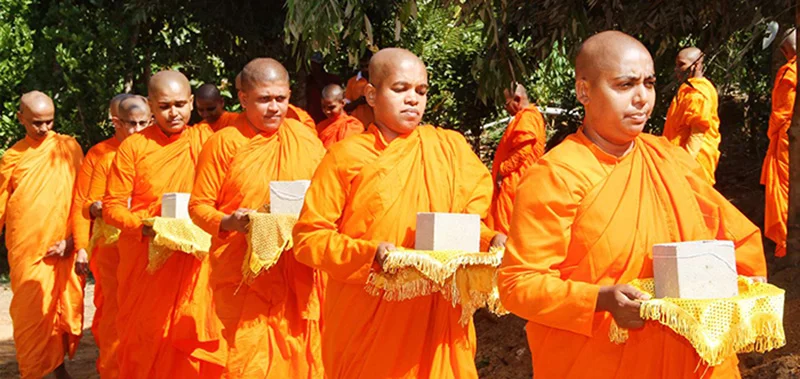
Education is the right of every child. Yet somewhere between childhood and the robe, that right becomes precarious for many Buddhist women in Sri Lanka, threatening not only their social standing, but their fundamental access to learning and the institutional discrimination they face. This piece is not about Buddhist disciplinary rules, which discriminates women, rather about how the state’s refusal to fully recognise bhikkhunis as bhikkhunis quietly determines what they are, and are not, permitted to learn.
Unlike dasasil mathas, who occupy a distinct and unofficial category within Buddhist renunciation, bhikkhunis belong to a formally ordained order recognised within Buddhist monastic tradition itself. Dasa sil mata means ‘ten-precept mother.’ They are women who observe the ten precepts (rather than the fuller Vinaya) and live a renunciant, celibate life, often in robes, but formal ordination has not translated into formal recognition by the state. Even after a Supreme Court ruling affirmed their right to be identified as bhikkhunis on their National Identity Cards, many still do not hold one. This stems from the hesitation of the male-dominated Buddhist hierarchy to recognise these women as part of the Theravada tradition, specifically refusing to validate their higher ordination. The identity card lists her title as Dasa Sil Mata. The ruling exists on paper, but they are still waiting for their identity cards. This is not a small bureaucratic oversight. It is the first link in a longer chain, one that reaches, eventually, into the classroom.
A Name Withheld
In Sri Lanka, there are 827 pirivenas, traditional monastic colleges that have, for centuries, served as the primary institutions of Buddhist education. Of these, only 12 are dedicated to female renunciants at all, and of those 12, just five serve fully ordained nuns specifically. The imbalance is stark on its face: 827 institutions for monks, five for fully ordained nuns. But the discrimination here is not only a matter of numbers, but it is also written into the very language used to name these institutions. Monks’ schools are called pirivena, a term carrying centuries of institutional weight, historical continuity, and state recognition under Sri Lanka’s education laws. Bhikkhunis’ schools, by contrast, are not called pirivenas at all. They are designated Buddha Sravika Meheni Adhyapana Ayathanaya (Institute for the Education of Buddha’s Female Disciples), a separate, parallel term that, however similar in function, withholds from bhikkhuni institutions the same legal and institutional status that the word ‘pirivena’ confers. Since there are ten-precept mothers, the institutes have not given the same name as the pirivena and lack the official as well as social recognition they deserve.
A Pattern a Century in the Making
Following the decline of the Buddhist nun (bhikkhuni) order after the Polonnaruwa period, the first woman to be robed again was ordained in 1905 as a dasasil matha. Although dasasil mathas have long served important religious and societal roles, they have historically lacked access to formal education. Unfortunately, today also, this pattern continuous to exist. Education, in this context, is never just about literacy or dhamma study. It is the currency of religious authority. A bhikkhuni denied equivalent education or educated in an institution the state refuses to name a pirivena, is denied that religious authority. She may know the Tipitaka as well as any monk yet will lack the institutional stamp that would make a lay community trust her reading of it. It was not indifference from the public; it was the accumulated effect of a system that has spent centuries teaching devotees, implicitly, that a woman’s robe does not carry the same weight as a man.
The female renunciants, both dasasil mathas and bhikkunis, although they wear robes, have not been regarded as individuals capable of comprehending or preaching dhamma, simply because they are women. This is most visible in education, the pirivena system, developed historically to train bhikkhus, offered dasasil mathas and bhikkunis no equivalent institutional pathway, no comparable curriculum, certification, or state recognition. This exclusion is notable because it runs counter to Sri Lanka’s broader educational trends, where women have historically outnumbered men in general university enrolment, the gap here is specific to monastic/religious education rather than a reflection of wider societal restrictions on women’s schooling. The country’s National Education Commission Policy has a section on Pirivena education. However, it does not address the education of Buddhist nuns, nor does it mention nuns within the policy. I recently learned that the policy was being reviewed, with a committee appointed by the Ministry of Education, scheduled to begin the review on the 1st of September. This presents an important opportunity to raise the issue of nuns’ education and advocate for its inclusion in the revised policy.
The monks and nuns’ education institutes are funded by the government, which allocates only 5,000–6,000 LKR per student for the entire year. This sum is grossly inadequate to cover even basic institutional needs, accommodation, food, learning materials, and the maintenance of the physical premises, let alone to support any meaningful expansion of the curriculum. With this level of funding, these education institutes are struggling to sustain themselves, and many are forced to rely almost entirely on external support simply to remain operational. This is where the disparity becomes most visible. As female renunciants have historically not been taken seriously, regarded neither as authoritative teachers of dhamma nor as figures worthy of the same reverence extended to their male counterparts, their education centres receive far fewer lay offerings than those for male renunciants. The result is a widening resource gap that mirrors and reinforces the very discrimination that caused it. Underfunded institutions produce fewer well-trained female scholars, which in turn reinforces the perception that female renunciants are less capable, a perception that then justifies continued underinvestment. Without deliberate intervention, either through equitable government allocation or targeted lay support, this cycle is likely to persist rather than resolve on its own.
Sitting Alone at the Bo Tree
I was at Jaya Sri Maha Bodhi in Anuradhapura, where a few monks sat preaching in the shade of the Bo Tree, each surrounded by small clusters of lay devotees. Nearby, I noticed a few female Buddhist renunciants, though I could not immediately tell whether they were bhikkhunîs or dasasil mathas, since visually, in their robes and demeanour, they appeared indistinguishable to an outside observer. Most of them sat alone, without the small crowds of devotees gathered around the monks nearby. This, too, is not incidental. Because women cannot enter the sâsana through the same pathway to ordination, available to men, many Buddhist female renunciants remain dasasil mathas, a status that carries the appearance of monastic life without its legitamised spiritual standing. They observe the 10 precepts, wear robes, and live in renunciation, yet occupy a lower, unofficial rung in the religious hierarchy, one that grants them neither the ordination lineage nor the institutional recognition given to monks. However, in June last year, the Supreme Court of Sri Lanka delivered a landmark majority ruling in SC/FR/218/2013, affirming that fully ordained Buddhist nuns have the fundamental right to use the title ‘Bhikkhuni’ on their National Identity Cards, legally recognising the de facto existence of the Bhikkhuni Sanga.
A Closed Loop
Social discrimination and educational discrimination feed each other in a closed loop. Because bhikkhunis have fewer, less recognised institutions, fewer are formally trained to a standard the public recognises. Because fewer are recognised as authoritative teachers, fewer devotees seek them out or support them. Because they attract fewer devotees, the education institutions of female renunciants remain under-resourced and easy to overlook in state budgets and in popular imagination alike. A dasasil matha or bhikkhuni without an active following also lacks the economic support that following brings, since in Sri Lanka’s monastic economy, devotees are patrons as much as students. The precarity is not only spiritual or bureaucratic; it is material, and it compounds across a lifetime spent in robes.
Until bhikkhunis’ education is named, funded, and recognised on the same terms as that of bhikkhus, this will remain a story not only about missing ID cards or under-resourced schools, but about an education system that continues to decide, quietly and continuously, which students are worth investing in. Education was supposed to be the one place where the women can speak for themselves, instead, for these women, it has become just another place where women have to ask permission to be heard.
(Anushka is a Sociologist who is working on contemporary Buddhist movements. She was formerly attached to the University of Colombo)
Kuppi is a politics and pedagogy happening on the margins of the lecture hall that parodies, subverts, and simultaneously reaffirms social hierarchies.

 Sri Lankan music knows no borders. Wherever our people go, our melodies follow — and our musicians make sure of it.
From Qatar’s Exit, to Melbourne’s EBONY, to Toronto’s Ceymphony, and Dubai’s Seven Notes, Sri Lankan bands abroad continue to keep the community connected to home, through song.
In July, Rajiv Sebastian set the Dubai stage alight with the band Seven Notes, creating an unforgettable night for Sri Lankans in the UAE. And the live-wire behind that magic? Niluk Uswaththa of Seven Notes.
Well, Niluk says he isn’t stopping there.
Now, Dubai is preparing for something truly special — ‘Memories of Milton – Live in Concert’, a grand musical tribute to one of Sri Lanka’s most beloved voices: Milton Mallawarachchi.
For more than a decade, Milton Mallawarachchi was a trending force in Sri Lankan music. With nearly 850 songs and over 35 albums to his name, he gave us melodies that became the soundtrack to our lives — songs of love, longing, and life itself.
On Saturday, 26th September 2026, from 8:00 PM to 3:00 AM, the Mercure Hotel, Al Barsha Heights, Dubai, will transform into a space of nostalgia.

Ranil Mallawarachchi; Carrying forward his father’s legacy / Yenuli Neriah
With the spotlight on Ranil Mallawarachchi — Milton’s eldest son, carrying forward his father’s legacy — along with Yenuli Neriah and Tharaka, the evening will certainly bring Milton’s timeless classics back to life … on one stage.
Seven Notes will do the needful, providing the live music that made Dubai dance before.
According to Niluk, this isn’t just a concert.
“It’s designed as a nostalgic musical journey — to bring cherished memories and beloved songs back to life,” he says.
And he promises: 26th September will be a night to remember.
In fact, Niluk Uswaththa has become a driving force for Sri Lankan entertainment in Dubai.
Through Seven Notes, he ensures the community always has something special to look forward to — especially when it comes to music that feels like home.
The success of these overseas shows naturally raises one big question back in Sri Lanka.
Yes, music lovers, in Sri Lanka, are keen to know whether the Seven Notes band will pop up in Colombo, sometime soon, for a live performance?
Music lovers, island-wide, will be watching … and waiting!

Nahida, Marufa help Bangladesh brush aside Indonesia

Showers will occur in the Western, Sabaragamuwa, Southern and Uva provinces and in Kandy and Nuwara-Eliya districts

Sun directly overhead Kalpitiya, Talawa, Sinharagama, Galkadawala, Nachchaduwa, Padikaramaduwa, Gomarankalla and Verugal about 12.10 noon today (01)

SJB asks what Speaker intended to do about allegations against CJ

Navy Chief attends strategic-level discussions in Delhi

ICRS: Sustained and collective efforts critical to address issue of missing persons

‘Dates have the highest sugar content to fight Coronavirus’

Sunday Island 27 December – Headlines

#SundayIsland 17th December – Headlines

Sunday Island – 28th March

Sunday Island Headlines – 21 March

Sunday Island – 21st February – Headlines
-

 News4 days ago
Eight politicians in drug kingpin probe
-

 Features2 days ago
“Wrap Me Up in My Blazer”— A Gentlemanly Bradby Reminiscence
-

 Business4 days ago
Sri Lanka opens up: A new season of direct connectivity
-

 Features4 days ago
Redefining ageing in Sri Lanka
-
 Features6 days ago
Insights from Chieftains of Uva: Genealogy of two Kandyan Families – Part II
-
 Latest News5 days ago
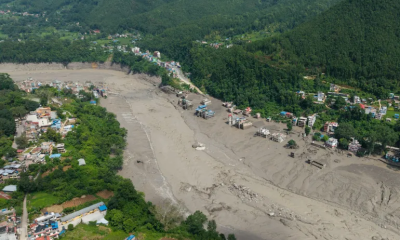
Nepal-Tibet floods: What happened, what caused them and who is missing?
-

 Editorial6 days ago
Warning of power cuts: El Niño and corruption
-

 Features6 days ago
Export diversification: Missing the wood for the trees – Part I