
Editorial
Crime Czars


Friday 3rd October, 2025
The NPP government is in overdrive to probe all crimes that shook the country during the Rajapaksa regime. Minister Bimal Rathnayake has claimed that the Rajapaksas ran what he describes as a ‘crime raj’. ‘He that hath an ill-name’ is said to be half-hanged; the Rajapaksas will have their work cut out to counter such allegations against them. Rathnayake’s claim may have struck a responsive chord with the public, given the sheer number of unsolved crimes during the Rajapaksa regime, which was characterised by a culture of impunity. However, other political parties are no better.
Crime and Sri Lankan politics are conjoined twins. Since 1977, when violence came to be institutionalised, all governments have been led by political parties with criminal records. The UNP’s 17-year rule (1977 to 1994) began with the release of a notorious underworld figure, Gonawala Sunil, who had been serving a jail term for raping a teenage girl, from prison on a presidential pardon. The UNP had a powerful underworld army, which attacked the Opposition, suppressed democratic dissent and rigged elections; one of its members, Kalu Lucky, stoned the houses of the Supreme Court judges who dared stand up to President J. R. Jayewardene. Soththi Upali, another underworld figure working for the UNP, terrorised not only ordinary people but also the police, with top cops saluting him in public. Presidents Jayewardene and Ranasinghe Premadasa institutionalised political violence and shielded criminal gangs openly.
Chandrika Bandaranaike Kumaratunga came to power, vowing to eliminate state terror and corruption as a national priority, but her government also became corrupt and had an underworld army consisting of the likes of Beddegana Sanjeewa, a contract killer, who was appointed a Reserve Sub Inspector and absorbed into the Presidential Security Division. The SLFP goon squads carried out abductions, extrajudicial killings and attacks on the Opposition besides rigging elections. President Mahinda Rajapaksa’s government had criminals like Wambotta to do its dirty work, and its goons openly operated alongside the police to attack Opposition protests. It was held responsible for some high-profile assassinations such as those of Wasim Thajudeen and Lasantha Wickrematunge.
The Yahapalana government consisted of the UNP and the SLFP—two parties with criminal records. The SLPP is an off-shoot of the SLFP, led by the Rajapaksas, but its government could not flex its underworld muscles because it ruined the economy, causing its leaders to head for the hills, with irate people in close pursuit. The incumbent government is led by the JVP, which committed many crimes, such as murders including political assassinations, armed robberies and arson attacks on public property. One of its hitmen, Lionel Ranasinghe, arrested by the CID confessed to as many as 41 murders including the assassination of Vijaya Kumaratunga during the JVP’s second uprising. His shocking confession has been reproduced verbatim in Dharman Wickremeratne’s book, Comrade Lionel. He was killed by his captors.
Successive governments have had crimes probed selectively to serve their political interests. This practice must be abandoned. All crimes committed by the UNP, the SLFP, the SLPP, the JVP, etc., must be probed. After all, as we pointed out in a previous editorial comment, President Anura Kumara Dissanayake, speaking at a ceremony to mark the 159th Police Day, on 03 September, declared that serious crimes were not subject to any statute of limitations and remained prosecutable indefinitely, and his government would ensure that no crime would go unpunished.
Crimes must be investigated in a credible and fair manner. Political leaders should leave such probes to the police without making political statements thereon. The police ought to refrain from acting in such a way that they are seen to be at the beck and call of the ruling party politicians. Worryingly, the current government leaders and some senior police officers give ball-by-ball commentaries, as it were, on ongoing criminal investigations, and their political statements undermine the integrity of those vital probes.


The US has acted decisively to rein in a runaway Executive, as it were. The House of Representatives has passed a resolution curbing President Donald Trump’s powers to attack Iran without congressional authorisation. Four Republicans joined Democrats to ensure the passage of the landmark bill in a vote of 215 to 208. However, the actual enforcement of this legislative measure will have to clear several hurdles, with the White House remaining determined to undermine it. But the Congress’s message to Trump is loud and clear. The War Powers resolution is bound to hang like the sword of Damocles above Trump’s head. The congressional action to keep the Executive in check is proof of institutional robustness, which helps safeguard the separation of powers, among other things, in the US.
Sadly, in Sri Lanka it is virtually impossible to restrain the Executive President, especially when his or her party has control over the legislature. The subservience of Parliament to the President largely owing to the numerical inferiority of the Opposition has created a situation where civil society organisations and professional associations have to lead a countervailing force against the Executive and help protect democracy.
The Bar Association of Sri Lanka (BASL) and the Colombo High Court Lawyers’ Association (CHCLA) have moved in to bolster the ongoing efforts to frustrate a questionable government bid to increase the retirement ages of the judges of the Superior Courts arbitrarily. They have issued well-reasoned statements opposing the proposed move.
Pointing out that the retirement ages of the judges of the Court of Appeal (CA) and the Supreme Court (SC) have been constitutionally fixed at 63 and 65, respectively, the two associations have very convincingly demolished all arguments for the proposed government move, stressing the need for the Executive to act with restraint. The Opposition has also put forth cogent arguments against the government bid at issue. Former Minister of Justice and Constitutional Affairs Prof. G. L. Peiris was perhaps the first to take up the issue and alert the public, and galvanise the lawyers’ associations, etc., into putting up stiff resistance.
The proposed move to extend the retirement ages of CA and SC judges has come as a surprise because there is no dearth of qualified judicial officers in this country. What the government ought to do urgently is to take action to fill all existing judicial vacancies, the CHCLA has said, pointing out that any attempt by the Executive or the Legislature to amend the constitutional provisions governing the retirement of judges, without a compelling rationale and without following the prescribed process, would constitute “an act of the gravest constitutional impropriety”.
It has warned that “the impact of an upward revision of the retirement ages of Judges of the Superior Courts will produce “immediate, concrete, and deeply unjust consequences for the dedicated officers of the Judicial Service of Sri Lanka, who have devoted their professional lives to the service of the administration of justice”. It goes on to argue that the proposed extension of the retirement ages of the Superior Court judges, in the absence of any transparent, constitutionally grounded, and publicly articulated justification could risk “the public perception that the Executive seeks to secure the continued service of particular Judges whose disposition may be regarded as favourable to the interests of the State in litigation before the Superior Courts”.
It is also deeply troubling that the proposed government move smacks of a sinister attempt to undermine the doctrine of the separation of powers. Having come to power, promising to abolish the executive presidency, the JVP/NPP should be ashamed of its deplorable attempts to enhance the executive powers of the President through questionable means. It has made a mockery of its commitment to upholding the independence of the judiciary and the separation of powers.
The government has chosen to remain silent on questions being raised about its deplorable move at issue. The only way President Anura Kumara Dissanayake can put the matter to rest is to do the following, as requested by the CHCLA: immediately withdraw and abandon the proposal to enhance the retirement age of the judges of the CA and the SC; direct the competent constitutional authorities to take immediate and decisive steps to fill all existing vacancies in the Superior Courts in accordance with the constitutional process and without further delay; affirm, by word and by deed, the government’s unequivocal commitment to the independence of the judiciary as guaranteed by the Constitution of Sri Lanka, and to the full and faithful observance of the constitutional provisions governing the tenure and conditions of service of the Judges of the Superior Courts, and engage the legal profession, the Judicial Service Commission, and other relevant stakeholders in any future discussion of matters affecting the judiciary, in a spirit of transparency, constitutionalism, and mutual respect for the rule of law. The BASL has also asked the President to deep-six any plan to raise the retirement ages of the judges of the Superior Courts and help preserve the integrity, independence and dignity of the judiciary and reinforce public confidence in the judicial service.
An immediate course correction, in line with the fervent appeals of legal professionals, is the least President Dissanayake can do to dispel the public perception that he too has failed to resist the autocratic tendencies embedded in the executive presidency.
Saturday 6th June, 2026
Tuesday’s tragedy at Anguruwatota, where a fire engulfed an elders’ home, claiming 13 lives and seriously injuring several others, has shaken the conscience of the nation. Equally shocking are the allegations that the residents of the care centre had been mistreated; among them were persons with disabilities, and some of them had been restrained with chains, according to eyewitnesses. The police have said they found the charred body of a resident in chains. It has now been revealed that the care home was not registered. The question is why the authorities did not take any legal action against it.
The Director of the gutted elders’ home has been remanded and the police will press charges against him. However, the Anguruwatota tragedy is not a problem that should be addressed in isolation. It should be examined in the context of a wider socio-economic issue.
There are other elders’ homes across the country, and they number about 250, according to media reports. They are run by a mix of government institutions, provincial councils, religious organisations, NGOs, and private operators. Some of them are reportedly under-resourced, and poorly-regulated. These institutions can accommodate only a fraction of the country’s elderly population needing assistance. Most of them, however, are basic residential care facilities rather than fully developed geriatric care centres, often functioning more as shelters than as medically supported long-term care institutions, which the country badly needs.
Sri Lanka has already reached a rapidly ageing phase of its demographic transition, with the proportion of citizens above 60 years increasing. About 18 out of every 100 Sri Lankans are aged 60 or above. This proportion has risen sharply from about 12.4% in 2012. It is doubtful whether successive governments have addressed this issue adequately, much less formulated a strategy to face challenges arising from an ageing population. This shift has placed increasing pressure on many families that are struggling to make ends meet and therefore cannot provide full-time care for their elderly members and relatives. Hence the need for policymakers to intensify their focus on structured elderly care for those without family support or social security.
While action is taken to ensure that the existing elders’ homes are run properly, it is incumbent upon policymakers to devise ways and means of facing the problems associated with an ageing population. Experts have pointed out that a national elderly care strategy to address these issues need to integrate several components. First, it should strengthen community-based care models that allow elders to remain in their homes for as long as possible, supported by home visits, mobile health services, and social workers. Second, it should develop a graded system of care homes, ranging from basic shelters to medically supported nursing facilities, all under proper regulatory supervision. It was a chronic lack of oversight and poor regulation that led to the Anguruwatota tragedy. Third, local government authorities should be formally involved in identifying vulnerable elders, coordinating welfare benefits, and ensuring minimum care standards at community level. Fourth, financial protection mechanisms such as social pensions, subsidised care, and public-private partnerships should be expanded to reduce the burden on low-income families.
It is hoped that Tuesday’s tragedy will jolt politicians and policymakers into addressing the long-felt need for a coherent national strategy to enable the elderly to spend their twilight years in comfort and dignity.

Friday 5th June, 2026
The Opposition’s propaganda mill is in overdrive, manufacturing various stories about a split in the JVP-NPP government. Mighty governments collapse not because their political enemies regain lost ground and turn the tables on them. They fall largely because the arrogance of power blinds their leaders to reality while their members dare not speak truth to power. Government members sing hosannas to their leaders and even defend the latter’s wrongdoing, committing collective political hara-kiri in the process. The incumbent JVP-NPP government has its fair share of acolytes who try to defend the indefensible.
Former Public Security Minister Sarath Weerasekera (SW), in his response to a recent editorial in this newspaper, has sought to lay the blame for the failure of the Gotabaya Rajapaksa (GR) government on others. In his letter published on the opposite page, today, he insists that the Rajapaksas had the national interest at heart. He implies that they never engaged in dynastic politics, and the 2022 economic crisis was due to factors other than the mismanagement of the economy.
The economy went into a tailspin during the GR government not solely due to the economic consequences of the Covid-19 pandemic and the repayment of foreign loans obtained by the Yahapalana government. Economists have pointed out that the pandemic did not cause bankruptcy on its own, but it acted as a major trigger that exposed pre-existing weaknesses such as high debt, weak foreign reserves, and overdependence on exports and tourism. All governments pay back loans obtained by their predecessors.
The GR government should have sought IMF help at the first signs of trouble. One may recall that acting on Central Bank (CB) advice, the Mahinda Rajapaksa (MR) government (2005-2010) secured IMF assistance and managed an emerging forex crisis, which would have derailed the war effort. If the GR government had heeded CB advice and taken action to increase tax revenue and shore up the country’s foreign currency reserves with IMF help, the 2022 economic crisis could have been averted.
Sri Lanka had to opt for a soft default and seek IMF assistance in 2022. The choice it had was between a soft default and a hard default, which would have ruined its chances of borrowing from external sources again. Sri Lanka was bankrupt, and that fact had to be announced.
The UPFA and SLPP administrations during MR’s second presidential term (2010-2015) and GR’s presidency (2019-2022) were in fact governments of the Rajapaksas by the Rajapaksas for the Rajapaksas. In the GR government, the number of key ministries held by the Rajapaksas increased to five. The share of government expenditure linked to the ministries controlled by them was more than 50% between 2010 and 2015 and between 2019 and 2022, according to political commentators. The other members of the MR government (2010-2015) became so disgruntled that a group of prominent UPFA MPs including ministers voted with their feet in 2014, and General Secretary of the SLFP Maithripala Sirisena went on to challenge MR in the 2015 presidential contest and secure the presidency. As many as 41 SLPP MPs broke ranks with the GR government in early 2022.
Aragalaya,
which crippled the Rajapaksa rule, began as a genuine, leaderless protest campaign against economic hardships, especially prolonged fuel shortages and power cuts. Some political forces infiltrated it subsequently, but it was losing steam when a group of SLPP goons set upon peaceful protesters at Galle Face in May 2022, and triggered a spree of retaliatory violence, which led to the ouster of the Rajapaksas, and paved the way for the 2024 regime change.
As for reconciliation, a retired Major General known for his distinguished military career and respected leadership, writing under a pseudonym––‘Old Soldier’––recently had this to say in his letter critical of the way the government handled this year’s War Heroes’ commemoration, which was the topic of the editorial comment under discussion: “Reparations are claimed by the winners in wars between nations. After civil conflicts there should be reconciliation. There should be no humiliation. When will commemoration of the dead be national in Sri Lanka?”
If the SLPP is to make a comeback, its leaders and their apologists must shed their aversion to self-criticism. The same applies to their equally self-righteous counterparts in other Opposition parties.

Tamim Iqbal elected new BCB president

West Indies look to level series in rainy Kingston

Huge crowds throng Madrid streets for Pope’s open-air mass

Women’s T20 World Cup 2026 warm-up: Kapp, Wolvaardt take SA past Ireland

Women’s T20 World Cup 2026 warm-up: Chamari Athapaththu’s 94 helps Sri Lanka beat Pakistan

Rahul, Gill hit centuries as India dominate Afghanistan on opening day

‘Dates have the highest sugar content to fight Coronavirus’

Sunday Island 27 December – Headlines

#SundayIsland 17th December – Headlines

Sunday Island – 28th March

Sunday Island Headlines – 21 March

Sunday Island – 21st February – Headlines
-

 News6 days ago
Lankan duo emerge winners in Latin dance championship held in Blackpool, UK
-

 Business7 days ago
IMF’s unstated rate:Sri Lanka’s $695m loan costs about 5.33% per annum
-
 Latest News4 days ago
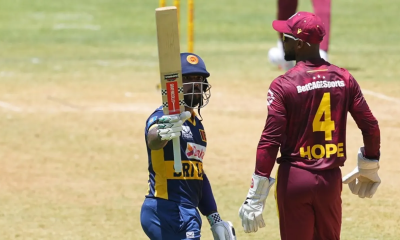
Kusal Mendis, Pathum Nissanka, bowlers put Sri Lanka 1-0 up
-
 News4 days ago
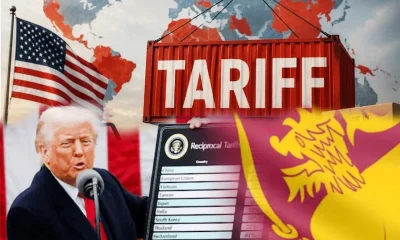
New US tariffs proposed on 60 countries, including Sri Lanka
-

 Business7 days ago
Sri Lankan scientist-innovator Milinda Edirisinghe introduces AI-integrated gem testing system to gemological world
-
 Features3 days ago
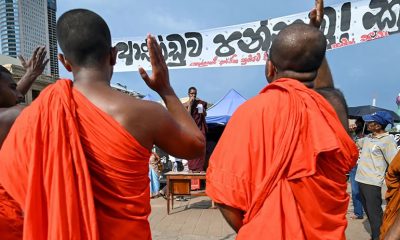
Power crept into the Sangha and is now tearing it apart
-

 News6 days ago
Sri Lankan teen killed in Chennai clash; three arrested
-
 News7 days ago
UNP challenges NPP move to amend Vihara – Devalagam Act