
Business
Pine Labs Credit+ platform powers a secure and scalable multi-currency prepaid forex instrument for Bank of Ceylon


Global fintech platform, Pine Labs Limited today announced its partnership with Bank of Ceylon in Sri Lanka. This banking-fintech partnership will enable the bank to issue and manage prepaid multi-currency travel cards to its customers. Powered by Pine Labs Limited’s Credit+ platform, the card issuance technology for the bank built on modular architecture will offer an integrated issuing stack for the bank for issuance of these cards at scale and adhere to the security requirements. This card is a physical card which is issued under the Mastercard scheme and allows Bank of Ceylon to cater to an overseas traveler’s foreign exchange requirements.
The Credit+ platform offers an API-first software solution for issuers to offer debit cards, credit cards, forex cards, prepaid cards, and manage the life cycle of their customers. The platform takes care of end-to-end issuer processing services including consumer onboarding, card issuance, transaction processing, fraud prevention, and collections.
Commenting on the partnership, B Amrish Rau, CEO, Pine Labs Limited, said, “From seamlessly managing chargeback processing to tokenisation safeguards, comprehensive authorisation rules, and more, our card issuance Credit+ technology platform for banks and financial institutions is built to comply with the stringent regulatory requirements across various jurisdictions. We are delighted to partner Bank of Ceylon, Sri Lanka’s largest state-owned commercial bank, and power a robust tech-first card issuance experience, for issuance of prepaid multi-currency travel cards to their customers.”
“Being a Bank who objectively adds values to its customers’ life, Bank of Ceylon introduced the BOC Multi-Currency Travel Card that offers the convenience and safety of carrying multiple currencies in one digital card, allowing the customer to travel overseas freely and transact with confidence at a lower expense than having to bear currency exchange loss.
“As at date we have successfully issued more than 20,000 cards and we are truly grateful for the services provided by Pine Labs as the Card Management System vendor to manage and control the card operations. Their unwavering commitment to quality and professionalism has significantly contributed to our success. We look forward to continuing this fruitful relationship to enhance the Travel Card issuance globally”, commented Mr. Upul Wijayathunga, Assistant General Manager (International), Bank of Ceylon.
Credit+ is an API-first, issuing, acquiring and processing technology infrastructure by Pine Labs Limited that serves as an open-loop solution for both issuers and acquirers. Its modern technical architecture allows Pine Labs Limited to provide a one-stop solution for issuers and acquirers to manage the complete consumer lifecycle, including effortless onboarding, smooth processing, ongoing operations management and engagement. As of December 31, 2024, 28 Issuers in 16 countries (including India, Malaysia, Australia, the Philippines, Saudi Arabia, Egypt) have used this platform to issue 71 million accounts for Credit, Debit and Prepaid.
Acting as a unified issuing platform, Credit+ platform offers processing for credit, debit, prepaid, forex and loyalty, enabling a 360-degree view of the end consumer which supports different use cases, including domestic and international cards, travel cards, corporate cards, open loop gift cards, general purpose cards, co-branded cards, and EMI plans. Credit+ enables Issuers and their partners to integrate financial services within their digital platforms to create a single smooth end-user experience to enable numerous Fintech infrastructure workflows for diverse use cases, such as expense management, credit program management, gig economy, digital wallet, rewards, fuel and fleet management, teen and campus cards, travel cards. These APIs can support the entire journey including instant digital onboarding, underwriting, KYCs, physical and virtual card issuance, transactions, card controls, risk management, rewards and customer support workflow.

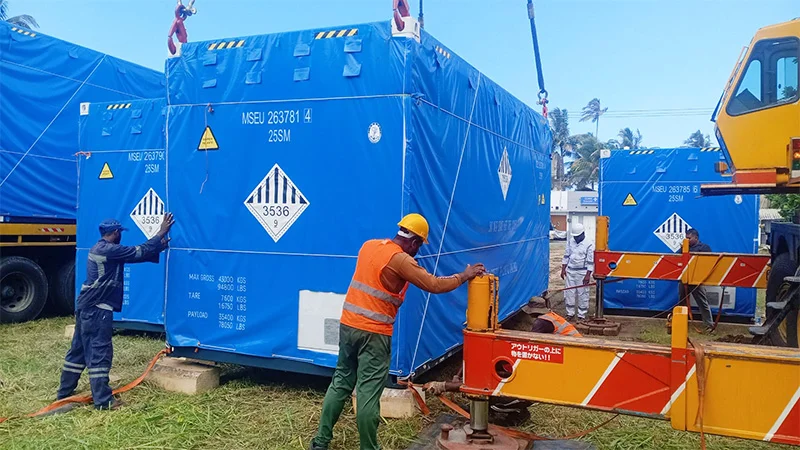
Sri Lanka has taken a major step towards modernising its power infrastructure with the arrival of the country’s first commercial-scale Battery Energy Storage System (BESS), part of a USD 50 million investment expected to transform the integration of renewable energy into the national grid.
The first shipment of battery units arrived at the Port of Colombo recently for the landmark Galle and Matara BESS projects being developed by Galilee BESS (Pvt) Ltd, a subsidiary of KHEN Energy Limited. The projects are expected to play a pivotal role in enhancing grid stability, reducing renewable energy curtailment and strengthening the country’s energy security.
The shipment comprised 25 containers, including 18 battery units weighing 42 metric tonnes each, making it one of the largest and most technically demanding renewable energy cargo movements handled in Sri Lanka to date.
Energy industry officials describe the project as a milestone investment that will help bridge one of the biggest challenges facing renewable energy development—storing electricity generated from intermittent sources such as solar and wind power for use when demand peaks.
Once operational, the BESS facilities will support the National System Operator by absorbing excess renewable energy during periods of high generation and releasing it when required, thereby improving efficiency and reliability across the power network.
The technology is being supplied by global energy storage leader Sungrow Power Supply Co., Ltd., reflecting growing international confidence in Sri Lanka’s renewable energy sector and its long-term clean energy ambitions.
Beyond its energy significance, the project also highlights the increasing scale and sophistication of infrastructure investments entering the country.
Expolanka Freight (Pvt) Ltd was entrusted with the end-to-end logistics operation, overseeing customs clearance, specialised transportation, storage, unloading and final placement of the battery units at the project sites.
Finance and Project Director Fazul Ansar said the operation required extensive engineering studies, route assessments and rigorous safety planning owing to the hazardous classification and extraordinary weight of the cargo.
Head of Project Logistics Mohamed Niyas said months of preparation had gone into route surveys, lifting studies and risk mitigation planning to ensure the successful execution of the project.
Project officials said specialised multi-axle trailers and cranes with lifting capacities ranging from 100 to 150 tonnes were deployed for the operation, while access modifications and last-mile transport solutions were implemented at both project locations.
By Ifham Nizam

The AI and Data Analytics Summit 2026 organised by the Sri Lanka Section of BCS, the Chartered Institute for IT was successfully held on 22nd May 2026 at Waters Edge, Colombo. The high-impact summit themed “Next Generation AI & Data Analytics: Skills & Thoughts for the Intelligent Future” brought together senior policymakers, global technology experts, industry leaders, academics, and innovators to explore how Artificial Intelligence (AI) and Data Analytics are reshaping the nation’s digital and economic future.
The event, endorsed by the Ministry of Digital Economy, was graced by Waruna Sri Dhanapala, Secretary to the Ministry of Digital Economy, who attended as the Guest of Honour, underscoring the government’s strong commitment to advancing AI adoption, digital innovation, and data-driven governance in support of Sri Lanka’s broader public sector transformation agenda. Dr. Sadeep Jayasumana, Chief Scientist at Octave, delivered the keynote address on Generative AI, sharing insights into its transformative potential.
Speaking on the significance of the summit, Prof. Lasith Gunawardena, Chairman the Sri Lanka Section of BCS, the Chartered Institute for IT noted that Artificial Intelligence and Data Analytics have become present-day enablers of innovation, economic growth, and societal progress. He emphasized that the summit was guided by BCS’s purpose of Making IT Good for Society and by the national need to bring together thought leaders, practitioners, policymakers, and industry experts to foster collaboration, knowledge sharing, and the responsible adoption of transformative technologies, thereby strengthening Sri Lanka’s digital readiness and supporting a resilient, inclusive, and globally competitive digital economy.
Ransith Fernando, Chair of the summit mentioned ” This year’s summit brought together 21 speakers who shared valuable insights, ideas, and experiences. We heard inspiring success stories, gained practical knowledge from industry practitioners, and explored strategic perspectives from business leaders. These conversations highlighted both the opportunity and the responsibility before us. While innovation is accelerating globally, Sri Lanka must align policy, talent, and industry readiness to truly operationalize AI at scale and ensure an inclusive and sustainable digital transformation.”
Deshan Liyanage, Co-Chair of the AI and Data Analytics Summit 2026 commented that this year’s summit was a fully sold-out event, reflecting the growing national momentum around Artificial Intelligence and Data Analytics in Sri Lanka. He extended heartfelt gratitude to all participants who joined and contributed to the success of the summit, as well as to the sponsors whose support made the event possible. Special appreciation was conveyed to Sysco LABS as the Strategic Partner, Linear Six as the Bronze Partner, InTalent Asia as the Resource Partner, and Motivista as the Event Partner. He also acknowledged the valuable collaboration of industry associations including SLASSCOM, FITIS, and CSSL, whose partnership helped strengthen and elevate the initiative.
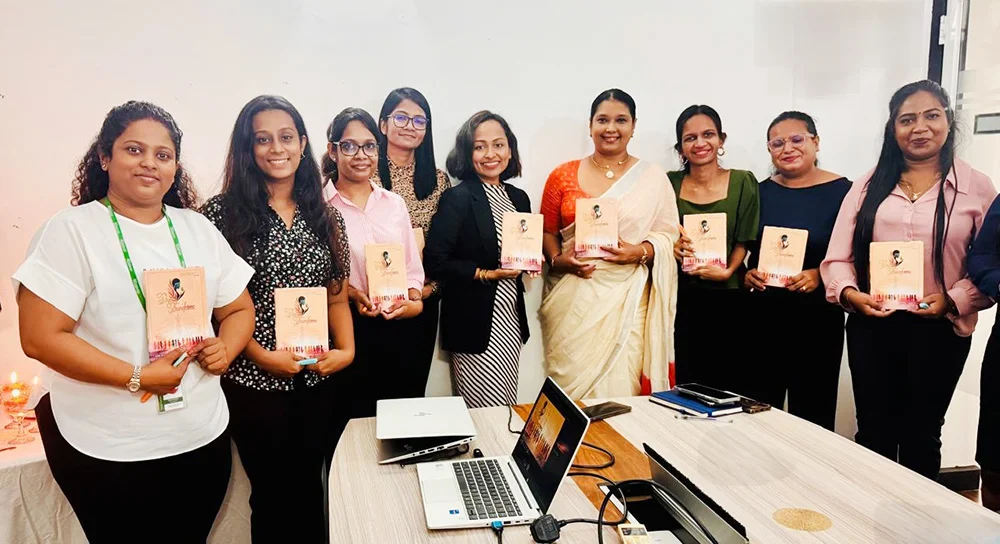
As part of its commitment to advancing women’s empowerment and building a stronger leadership pipeline, Eswaran Brothers Exports (EB), a leading tea manufacturer in Sri Lanka, launched its flagship women’s leadership initiative, She Transforms, a customized six-month leadership development journey. Developed with award-winning leadership expert Senela Jayasuriya and supported by Value for Women, the programme forms a key pillar of the Company’s wider gender agenda focused on leadership capacity building, inclusion and long-term institutional change.
Women make up 44% of Eswaran Brothers’ workforce, yet only 23% held senior roles at the time of an initial gender diagnostic conducted with Value for Women and supported by FMO, the Dutch Development Finance Bank. The assessment found that despite their potential, many women faced unclear career pathways and limited structural support at critical life stages.
In response, Eswaran Brothers introduced strategic mindset and policy interventions designed to remove barriers and create a more enabling environment for women to grow and lead. These efforts included mentorship opportunities, enhanced support for employees returning from maternity leave, coaching for managers, and initiatives aimed at strengthening inclusion and career progression across the organization.

Thailand cracks down on foreign companies using fig leaf of local ownership

US strikes Iran’s Qeshm, says Tehran attacks Kuwait, Bahrain

Heavy showers likely at some places in the Western and Sabaragamuwa provinces and in Galle, Matara, Kandy and Nuwara-Eliya districts.

Trump berated Netanyahu? Analysts question US-Israel feud rumours

India should be kept out of PC polls, matters related to 13 A – Mano

US boost for SLAF

‘Dates have the highest sugar content to fight Coronavirus’

Sunday Island 27 December – Headlines

#SundayIsland 17th December – Headlines

Sunday Island – 28th March

Sunday Island Headlines – 21 March

Sunday Island – 21st February – Headlines
-

 News4 days ago
IMF urges Lanka not to meddle with exchange rate
-
 Business5 days ago
Sri Lanka’s construction industry losing ground while no one watches
-

 Business2 days ago
IMF’s unstated rate:Sri Lanka’s $695m loan costs about 5.33% per annum
-
 News4 days ago
State of emergency extended
-

 Features5 days ago
The Division Bell Mystery
-

 News2 days ago
UNP challenges NPP move to amend Vihara – Devalagam Act
-

 News6 days ago
RTI query of Ditwah funds: Presidential Secretariat mum on key questions
-

 Features3 days ago
Are threats to Buddha Sasana external or from within?