
Latest News
Breetzke stars as South Africa seal series in five-run thriller

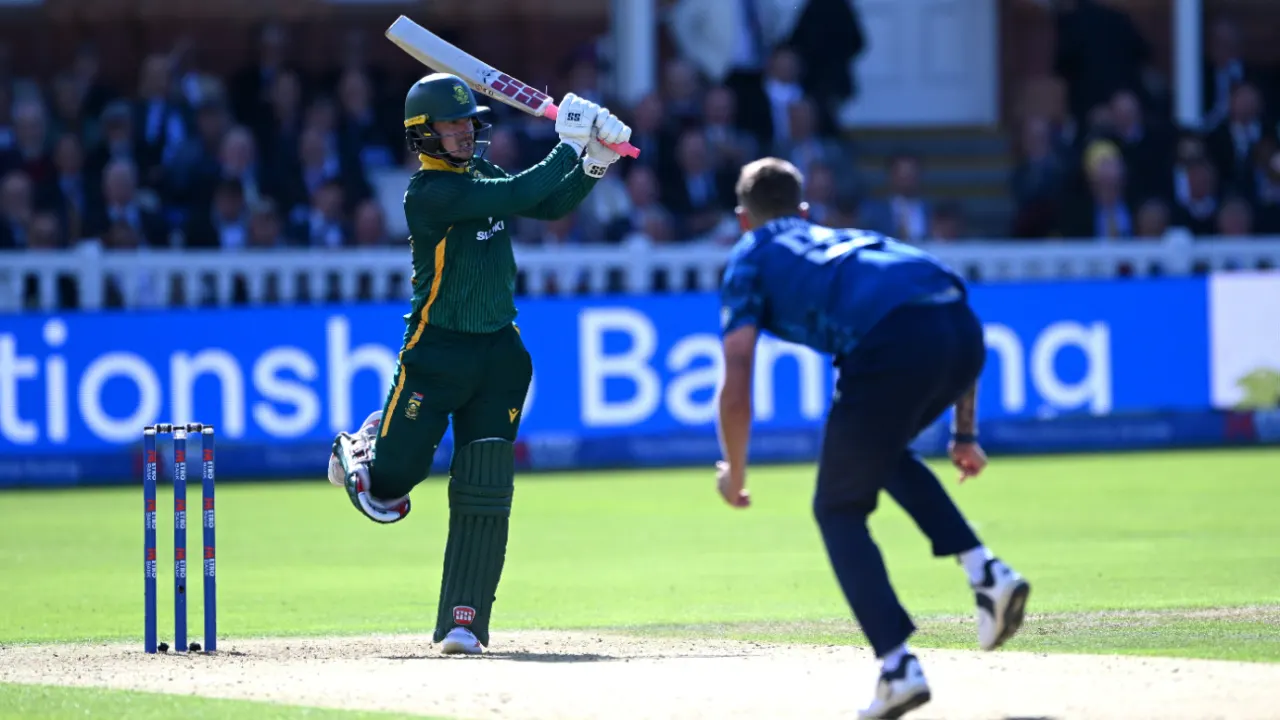
Matthew Breetzke had not been born when South Africa last won a bilateral ODI series in England. However, by extending a remarkable start to his career in the format, he helped them clinch this one with a match to spare. On his return from a hamstring injury, Breetzke hit 85 to underpin South Africa’s total of 330, before their bowlers closed out a tense final-ball win under the floodlights.
Breetzke, 26, was born five-and-a-half months after South Africa’s 2-1 triumph in th 1998 Texaco Trophy but will now lift the series trophy in Southampton on Sunday after his team took an unassailable 2-0 lead at Lord’s. Unlike in Leeds, England at least competed but none of their three half-centurions – Joe Root, Jacob Bethell and Jos Buttler – kicked on past 61.
The chase went down to the final ball, which Jofra Archer needed to hit for six to take the game into a Super Over. But his inside-edged hoick off Senuran Muthusamy brought only a single and South Africa were deserving winners, backing up the thrashing they inflicted on Tuesday with a clinical, calculated performance.
This was an eighth defeat in 11 ODIs for England in 2025, and their captain Harry Brook refused to blame fatigue after an exhausting summer. “In my eyes that’s just an excuse,” he said. We’re good enough and fit enough to be able to keep playing for the time being… Chasing 6.5 an over from ball one is a tough task. But that’s exactly why we’ve picked this side: we’ve a long batting order. To get within one blow of that score is a really good effort.”
South Africa had been stuttering at 93 for 3 after 19 overs when Tristan Stubbs joined Breetzke, but a fourth-wicket partnership of 147 off 126 balls laid a strong foundation before Dewald Brevis’ cameo launched them towards 300. They fell four runs short of the record ODI total at Lord’s, which has stood since the 1975 World Cup, but this was clearly a fighting effort.
Breetzke’s innings was the highest by a South African in an ODI at Lord’s, and he achieved the unprecedented feat of passing 50 in each of his first five innings in the format. By the time he fell 15 runs short of a second hundred, he had taken his ODI aggregate to 463 and executed South Africa’s clear plan to put England’s part-time spinners under severe pressure.
England got away with picking only four frontline bowlers in their 3-0 win against West Indies in June, but South Africa were merciless in targeting Bethell and Will Jacks, with Root curiously unused, they returned combined figures of 1 for 112 from their 10 overs. Brevis was particularly severe on Bethell, hitting him for consecutive sixes, while Stubbs laid into Jacks.
The margin of victory obscured the fact South Africa were ahead of the game from the moment Nandre Burger had Jamie Smith caught behind off the first ball of the chase. Root dominated the scoring in a second-wicket stand of 66, with Ben Duckett desperately out of form at the other end; his dismissal for 14 off 33, bowled reverse-sweeping Keshav Maharaj, was a mercy kill.
Where Duckett looked exhausted by his non-stop summer, Bethell had been short on time in the middle and was pushed up to No. 4 to take on South Africa’s two left-arm spinners. Temba Bavuma responded by bringing on Aiden Markram’s offspin, but Bethell slog-swept and pulled sixes as his two overs cost 27 runs.
He brought up a 28-ball half-century by launching Burger over mid-on, five balls after Root had cruised to his own off 57. But they fell in quick succession, too: Bethell sliced the relentless Corbin Bosch to backward point, and Root was beaten in the flight by Maharaj to be stumped in an ODI for the first time in a decade.
Brook and Buttler added 69 for the fifth wicket, launching sixes off Bosch and Muthusamy respectively. But Muthusamy found extra bounce to have Brook chipping to cover, and despite Buttler’s outrageous reverse-slap for six on his way to 50 – a landmark he celebrated with a look to the skies after his father’s recent passing – the required rate climbed past nine an over.
The game looked as good as won when Lungi Ngidi flummoxed Buttler with a dipping slower ball, and Burger removed Jacks and Brydon Carse in the same over to leave 40 required off the last three. Despite Archer’s best efforts – with two lusty sixes and a pair of reverse-slaps for four – they always looked like falling short.
It looked like an important toss when Brook put South Africa into bat, with the start delayed by 15 minutes after a morning of heavy showers. Archer and Saqib Mahmood – recalled at Sonny Baker’s expense – both found extravagant seam movement early on, but Markram and Ryan Rickelton were equal to it, adding 73 for the first wicket.
Rickelton fell for 35, top-edging Archer behind to Buttler, before Adil Rashid struck twice in quick succession, with Bavuma done on the outside edge and Markram furious with himself after chipping back a return catch on 49. But that only brought Breetzke and Stubbs together, whose partnership took the game away from England – and they never quite recovered.
Brief scores:
South Africa 330 for 8 in 50 overs (Aiden Markram 49, Ryan Rickelton 35, Matthew Breetzke 85, Tristan Stubbs 58, Dewald Brevis 42, Corbin Bosch 32*; Jofra Archer 4-62, Adil Rashid 2-33) beat England 325 for 9 in 50 overs (Joe Root 61, Jos Buttler 61, Jacob Bethell 58, Harry Brook 33, Will Jacks 39, Jofra Archer 27*; Nandre Burger 3-63, Keshav Maharaj 2-59) by five runs
[Cricinfo]

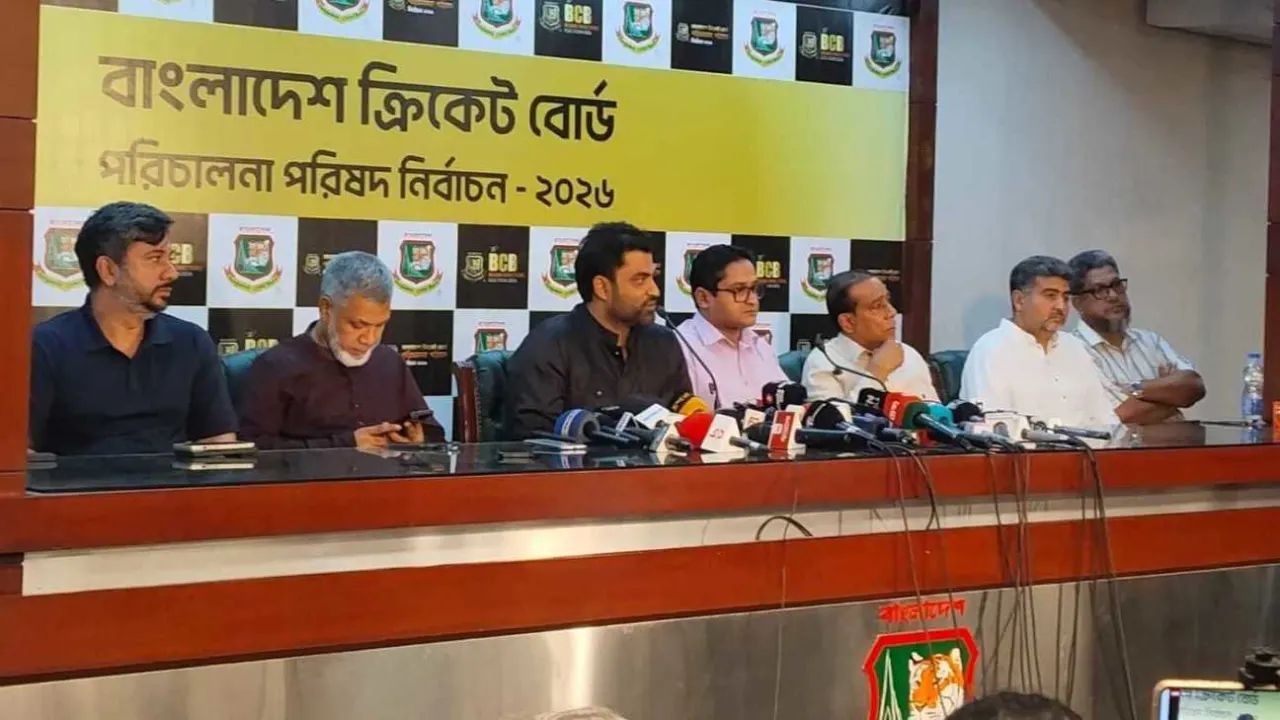
Tamim Iqbal has been elected as the new BCB president following the elections held in Dhaka on Sunday. Tamim was the only candidate, and he will serve a four-year term in total, having already completed two months as the ad-hoc committee’s head.
The Bangladesh government called for BCB elections under the interim body in April, following the dissolution of the previous elected body under Aminul Islam.
The day-long election, including physical votes and e-ballots, were held at the Shere Bangla National Stadium, which is also the board headquarters. A total of 23 directors were elected in three categories and two government representatives were announced later to form the 25-member body.
Tamim is one of the most prominent cricketers to have played for Bangladesh, having appeared in 391 internationals across three formats. He led Bangladesh to 21 wins in 38 matches across formats, including the 2-1 ODI series against South Africa in 2022. After his international retirement in early 2025, Tamim continued to play domestic tournaments but a heart attack during a Dhaka Premier League match that year put an abrupt end to his playing career.
The election commission said 88 votes were cast to elect 23 directors in two out of the three categories. The first category includes all the divisions and districts of the country, the second is the Dhaka clubs that participate in the league system, while the third consists of former cricketers, captains, education boards and others. Tamim was one of twelve directors elected from the second category.
The new 25-member body held an election among themselves to choose the president and two vice-presidents. After Tamim was elected as board president, Fahim Sinha was elected as one of the two vice-presidents. The other vice-president hasn’t been selected.
The previous board elections were held on October 6 last year. Aminul was re-elected BCB president under controversial circumstqnces when Tamim, leading one of the panels, withdrew from the polls alleging Aminul of “bias and malpractice”.
Category 1 directors: Sayeed Bin Zaman, Abdullah Al Fuad, Minhajul Abedin, Moyeen Uddin Chowdhury, Shantanu Islam, Shafiqul Alam, Mizanur Rahman, Abdul Qayyum Chowdhury, Shakrul Alam, Faisal Amin
Category 2 directors: Tamim Iqbal, Fahim Sinha, Asif Rabbani, Israfil Khasru, Dr Sarkar Mahbub Ahmed, Masuduzzaman, Rafiqul Islam, Sakeef Ahmed, Shanian Taneem, Syed Ibrahim Ahmed, Yasir Abbas, Yasir Faisal
Category 3 director: Sirajuddin Alamgir.
Government representative directors: Ruhul Amin, Sarfaraz Ahmed
[Cricinfo]
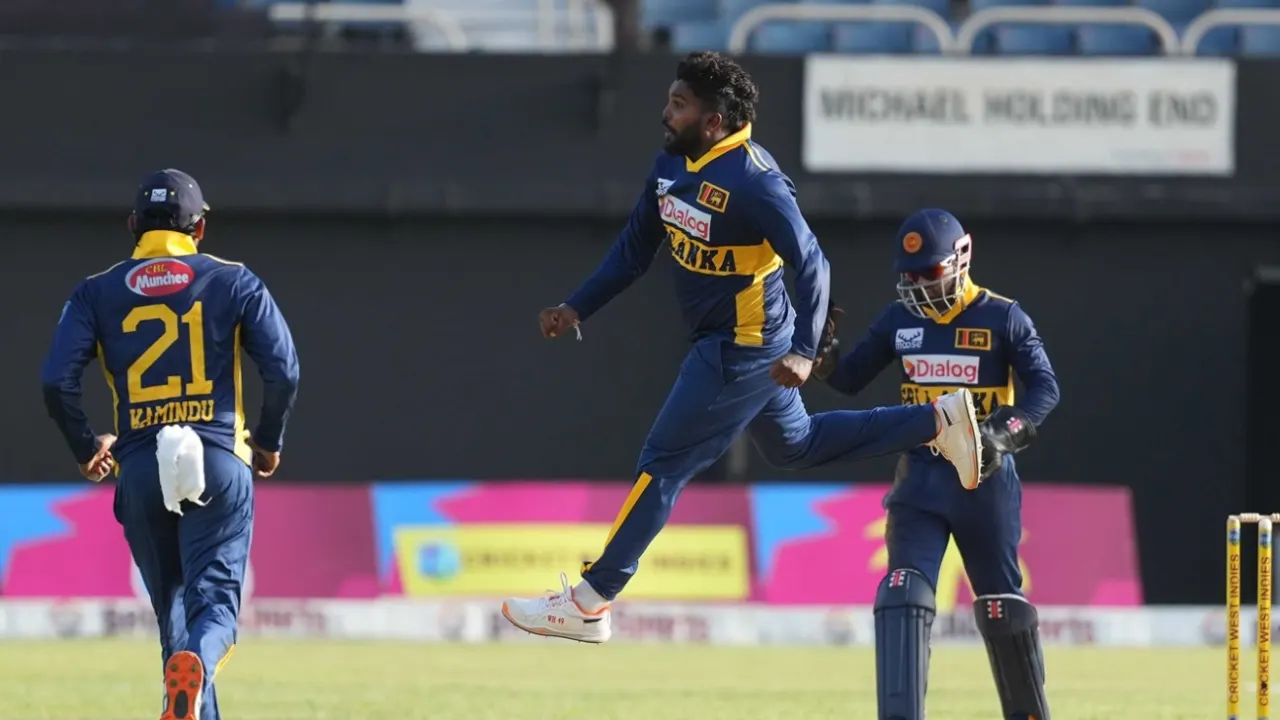
With no play possible in the second ODI, both teams go into the third game well-rested. Perhaps this is a chance for the IPL returnees in particular to have caught their breath. The rain, though, may not have cleared in Kingston completely. According to the forecast, showers are likely in the afternoon and also possible in the evening, though there may be dry spells in between. There is a chance this will be a stop-start match in which DLS calculations come into play.
With a series win now beyond them, West Indies will be especially motivated to avoid being blanked at home. There is also the matter of their current 10th-placed ranking, which is not enough for them to gain automatic qualification for the 2027 World Cup (cut-off is end of March next year). They need every ranking point they can get over the next two months. Sri Lanka are slightly more comfortable, at sixth position, and about 12 points clear of the current cut-off. But they’ll want to build more of a cushion themselves.
In the first ODI, Sri Lanka’s dominance in the middle overs is what had won them the match. Maheesh Theekshana and Wanindu Hasaranga were economical on a helpful surface, where West Indies’ frontline spinner Gudakesh Motie had been hit out of the attack. And Sri Lanka’s top six also showed serious hustle, picking up the tempo and keeping the runs flowing after Sri Lanka had had a poor powerplay with the bat.
These remain two relatively evenly-matched teams, however. With a little more discipline from their bowlers, West Indies are capable of leveling the series.
Although his Test average remains outstanding, Kamindu Mendis is yet to find a home in limited-overs cricket. Partly this is because his batting is so versatile, coaches and selectors have tended to yank him up and down the order as the team’s needs evolve. So far in ODIs, he has done his best work at No. 7 and 8, but he has now been asked to open the innings alongside Pathum Nissanka. His first innings at the top of the order brought only 12, but Sri Lanka are unlikely to ditch the strategy after one game. Can batting in the powerplay be the change he needs to kick his white ball career into high gear?
Over a fledgling international career, Keacy Carty has demonstrated promise at No. 3, where he averages 45.18. What he doesn’t have, so far, however, is the kind of body of work a long-term No. 3 should ideally built. So far, he has two tons apiece against England and Ireland, but is yet to put up serious numbers against other oppositions. Runs against an attack of Sri Lanka’s quality would add to his confidence.
Rain will potentially dictate conditions on Monday. If there’s rain around, teams tend to prefer to chase. Not only do they prefer to be batting while DLS calculations are in play, but a wetter ball is also more difficult for bowlers to grip, particularly spinners.
West Indies may think about bringing Shimron Hetmyer into the XI to shake up the batting a little.
West Indies (possible): John Campbell, Justin Greaves, Keacy Carty, Shai Hope (capt.)(wk), Shimron Hetmyer/Sherfane Rutherford, Roston Chase, Matthew Forde, Gudakesh Motie, Alzarri Joseph, Shamar Joseph, Jayden Seales
Sri Lanka may keep their winning XI, but with so many quicks to choose from, may be tempted to give Eshan Malinga a run, especially if it’s a shortened match.
Sri Lanka (possible): Pathum Nissanka, Kamindu Mendis, Kusal Mendis (capt.)(wk), Pavan Rathnayake, Charith Asalanka, Janith Liyanage, Wanindu Hasaranga, Milan Rathnayake, Dushmantha Chameera, Asitha Fernando/Eshan Malinga
[Cricinfo]

More than a million people lined the streets of Madrid on Sunday as Pope Leo XIV held an open-air mass in the Spanish capital, the Vatican said.
Crowds descended on the city as the pontiff arrived for the service on the second day of his official visit to the country at the Plaza de Cibeles, with King Felipe VI and Queen Letizia among the congregants.
The pair welcomed the pontiff to the royal palace on Saturday, as he began his trip by praising the Spanish government’s opposition to global conflicts and its support for migrants.
The Pope waved as he made his way through the city early on Sunday, where authorities mounted a major security operation for the mass and subsequent procession through central Madrid.
People waved flags and shouted “long live the Pope”, with some throwing petals as he arrived at the square.
Large crowds had similarly gathered in the city as he began his trip on Saturday. He was later joined by some 500,000 congregants – most of whom were young people – for a prayer vigil near Real Madrid’s Santiago Bernabeu stadium which stretched into the night.
“In the face of the emptiness of indifference and compliance, before the violence of war and lies, you must be the sparks of a new humanity,” he told those gathered.


His remarks echoed those he delivered during his royal reception, in which he praised Spain’s commitment to peace and its “faithful adherence to international law”.
The country’s socialist Prime Minister Pedro Sánchez has clashed with US President Donald Trump over the US and Israel’s war against Iran, and with Israel over the war in Gaza. The Chicago-born pope has also drawn criticism from the president over his anti-war views.
His trip to Spain – the first by a pope in some 15 years – will also feature an unprecedented address before the Spanish parliament and a meeting with victims of sexual abuse within the Catholic Church.
Pope Leo is also due to visit the Canary Islands with Prime Minister Sánchez later in the week, where they will honour thousands of migrants who have died trying to reach Europe.
(BBC)

Tamim Iqbal elected new BCB president

West Indies look to level series in rainy Kingston

Huge crowds throng Madrid streets for Pope’s open-air mass

Women’s T20 World Cup 2026 warm-up: Kapp, Wolvaardt take SA past Ireland

Women’s T20 World Cup 2026 warm-up: Chamari Athapaththu’s 94 helps Sri Lanka beat Pakistan

Rahul, Gill hit centuries as India dominate Afghanistan on opening day

‘Dates have the highest sugar content to fight Coronavirus’

Sunday Island 27 December – Headlines

#SundayIsland 17th December – Headlines

Sunday Island – 28th March

Sunday Island Headlines – 21 March

Sunday Island – 21st February – Headlines
-

 News6 days ago
Lankan duo emerge winners in Latin dance championship held in Blackpool, UK
-
 Business7 days ago
IMF’s unstated rate:Sri Lanka’s $695m loan costs about 5.33% per annum
-

 Latest News4 days ago
Kusal Mendis, Pathum Nissanka, bowlers put Sri Lanka 1-0 up
-
 News4 days ago
New US tariffs proposed on 60 countries, including Sri Lanka
-

 Business7 days ago
Sri Lankan scientist-innovator Milinda Edirisinghe introduces AI-integrated gem testing system to gemological world
-
 Features3 days ago
Power crept into the Sangha and is now tearing it apart
-

 News7 days ago
UNP challenges NPP move to amend Vihara – Devalagam Act
-

 News6 days ago
Sri Lankan teen killed in Chennai clash; three arrested