
News
SLIM launches the ABLE Charter

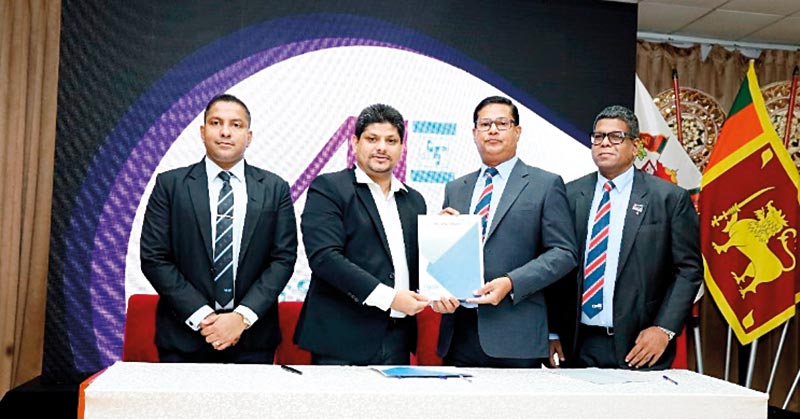
The Sri Lanka Institute of Marketing (SLIM) and the Chartered Institute of Personnel Management (CIPM) officially launched the Able Charter on 6th February at the BMICH, a landmark initiative aimed at fostering inclusivity and empowering Persons with Disabilities (PWDs) in Sri Lanka through structured employment, entrepreneurship, and awareness. The event was graced by Sugath Wasantha De Silva as the Chief Guest, a respected advocate representing the differently-abled community in Parliament. Bringing together industry leaders, policymakers, and professionals, the launch marked a powerful joint commitment by SLIM and CIPM to drive systemic change. The Charter lays out a strategic roadmap to embed inclusivity into workplace cultures, align corporate and government efforts, and recognize ability over disability across Sri Lanka’s economic landscape.
President of SLIM, Prof. Dewasiri N. Jayantha said that “The Launch of Able Charter is,a ground-breaking initiative aimed at improving Employability opportunities for individuals with Different Abilities. Through this charter, SLIM and CIPM will advocate for greater Inclusivity in the Workplace, urging Employers to provide opportunities based on individual skills and abilities. This commitment stands as a national commitment to transform inclusion from aspiration into action. At SLIM, we firmly believe that every capable individual deserves the opportunity to contribute meaningfully to our economy. This initiative goes beyond advocacy -it’s about creating practical pathways for Persons with Disabilities through structured employment, training, and recognition. With the strength of our partnership with CIPM, we’re mobilizing the full force of marketing and HR to reshape perceptions and drive real change.
Gayan Perera, Immediate Past President of SLIM, expressed his excitement for the launch of Able Charter as it marks a historic moment where two national institutions join forces for a vital national cause. At SLIM, we believe true economic prosperity is inclusive, and that includes recognizing the talents of the differently-abled community. This Charter reflects a renewed commitment — not just to awareness, but to action, employability, and policy change. With government alignment and the strength of our partnership with CIPM, we aim to embed inclusivity into organizational cultures across the country.”
Dr. Dilhan Sampath Jayatilleke, Senior Vice President – Events & Sustainability of SLIM, highlighted the broader impact of the initiative “The Able Charter is a powerful step forward, reigniting an initiative we began in 2021 with a stronger purpose and the right partner in CIPM. From day one, CIPM brought not only expertise but a deep passion for creating real impact. We’re addressing real challenges in employability, entrepreneurship, and social perception. It’s a unified effort to ensure Persons with Disabilities are empowered, included, and celebrated in our workforce. Together, we aim to make inclusivity a lived reality across corporate Sri Lanka.”
SLIM Vice President – Events and Sustainability, Enoch Perera, expressed his views and said, “The ABLE Charter is a powerful reflection of our belief that true sustainability must include social equity. By focusing on the employability and entrepreneurial potential of Persons with Disabilities, we are creating systems that uplift communities and strengthen businesses alike. This initiative brings together training, policy alignment, and organizational readiness to drive lasting, tangible change. Through the combined strengths of SLIM and CIPM, we’re not just raising awareness—we’re building a practical, scalable framework. Our goal is to foster a culture where inclusivity is measurable, meaningful, and deeply embedded in every organization.”

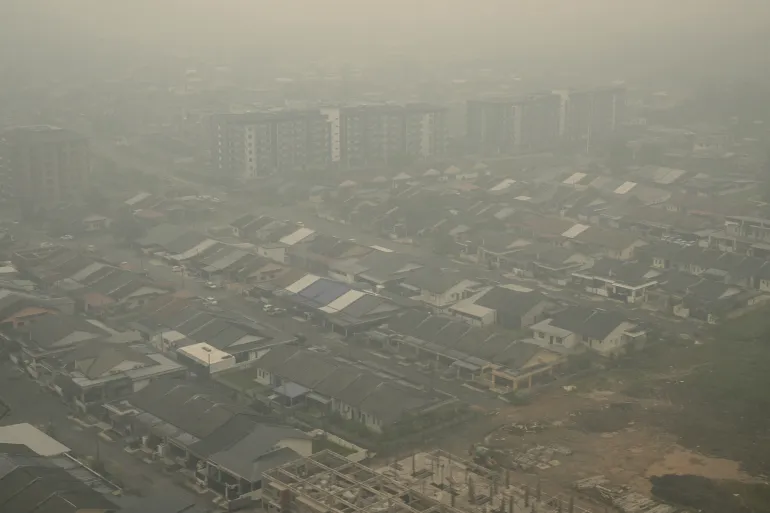
Malaysia has declared a state of emergency in a district in Sarawak state after haze caused by wildfires in neighbouring Indonesia increased air pollution to “hazardous” levels.
King Sultan Ibrahim “has consented to the declaration of emergency throughout Serian Division, Sarawak, following haze conditions that have reached air pollution levels hazardous to public health and safety”, Prime Minister Anwar Ibrahim’s office said in a statement on Thursday.
The declaration followed a formal request from the Sarawak Disaster Management Committee after the region’s Air Pollutant Index reached levels warranting consideration of a local emergency.
Under the order, 647 schools in Serian will close from Monday until at least the end of next week, alongside government and private offices, plantations, construction sites and quarries, with only essential services continuing to operate.
The state’s disaster management authorities said a three-day cloud-seeding operation launched on Thursday would be extended to at least Monday, citing forecasts of “more conducive cloud formations” during that period.
Sarawak State Disaster Management Committee chairman Douglas Uggah Embas, speaking at a news conference in Kuching, stressed that the emergency applied only to Serian, not the entire state, but urged residents there to take the situation seriously.
“Please minimise outdoor activities and avoid strenuous activities outdoors,” he said.
Sarawak, in the northern part of Borneo island, has been heavily affected by haze for weeks, as have the neighbouring states of Sabah and Peninsular Malaysia.
(Aljazeera)
Latest News
Sun directly overhead Moratuwa, Kesbewa, Handapangoda, Idalgashinna, Yudhaganawa, Kotiyagala and Panama about 12.08 noon today (05)


The sun is going to be directly over the latitudes of Sri Lanka from 28th of August to 07th of September due to its apparent southward relative motion.
The nearest places of Sri Lanka over which the sun is
overhead today (05) are Moratuwa, Kesbewa, Handapangoda, Idalgashinna, Yudhaganawa, Kotiyagala and Panama about 12.08 noon
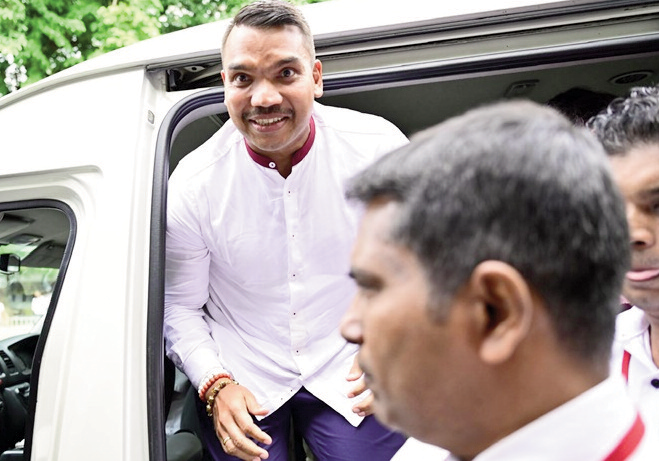
Sri Lanka Podujana Peramuna (SLPP) National Organiser and Parliamentarian Namal Rajapaksa was yesterday remanded until September 18 by the Colombo Chief Magistrate’s Court following his arrest by the Commission to Investigate Allegations of Bribery or Corruption (CIABOC) in connection with an investigation into the controversial SriLankan Airlines Airbus aircraft transaction.
Rajapaksa appeared before the CIABOC at around 9.15 am yesterday to record a statement after being summoned over the transaction. He was taken into custody following several hours of questioning and subsequently produced before the Colombo Chief Magistrate.
The investigation centres on allegations surrounding the acquisition of six Airbus A330 and eight A350 aircraft by SriLankan Airlines in 2013, in connection with an alleged USD 2 million bribe.
Former SriLankan Airlines Chief Executive Officer Kapila Chandrasena and his wife, Priyanka Niyomali Wijenayake, had previously been named in connection with the alleged bribery.
Chandrasena was arrested on March 12 as part of an investigation launched by the CIABOC under the Anti-Corruption Act and was subsequently released on bail. He was later found dead on May 8 while on bail, with police suspecting that his death was a suicide.
Open warrants have been issued for the arrest of Wijenayake, who is named as the second suspect, and Shamindra Rajapaksa, named as the third suspect, in the case pending before the Fort Magistrate’s Court in connection with the Airbus transaction.
The investigation has also received assistance from Airbus, with a delegation from the company’s parent group in France visiting Sri Lanka during the first week of August. The delegation provided statements and other assistance to the CIABOC as part of the ongoing inquiry.
Rajapaksa’s arrest and remand yesterday mark a further development in the widening investigation into the controversial aircraft deal.

Malaysia declares emergency in Sarawak as haze from Indonesia worsens

UAE keep semi-final hopes alive after convincing win over Indonesia

Sun directly overhead Moratuwa, Kesbewa, Handapangoda, Idalgashinna, Yudhaganawa, Kotiyagala and Panama about 12.08 noon today (05)

Showers above 75 mm are likely at some places in the Uva, Central and Eastern provinces and in Polonnaruwa and Mullaittivu districts after 2.00 p.m

Namal remanded until Sept. 18 over Airbus deal investigation

Dengue cases surpass 96,000 this year

‘Dates have the highest sugar content to fight Coronavirus’

Sunday Island 27 December – Headlines

#SundayIsland 17th December – Headlines

Sunday Island – 28th March

Sunday Island Headlines – 21 March

Sunday Island – 21st February – Headlines
-

 Features7 days ago
“Wrap Me Up in My Blazer”— A Gentlemanly Bradby Reminiscence
-

 Features6 days ago
When Sri Lankan stories find their own voice
-

 Features7 days ago
JVP/NPP government as seen from outside by Lionel Bopage now domiciled in Australia
-

 News6 days ago
BASL takes exception to Justice Ganepola being denied a place in SC
-
 Features7 days ago
Prof. Savitri Goonesekere: What has she done?
-

 News3 days ago
Denied of promotion to SC despite vacancies, justice Gurusinghe retires
-

 Latest News3 days ago
Grade 5 scholarship exam results released
-

 News3 days ago
22A: SC urged to suspend hearing, appoint full bench