
Sports
Deepti digs deep to deliver India’s four-wicket win

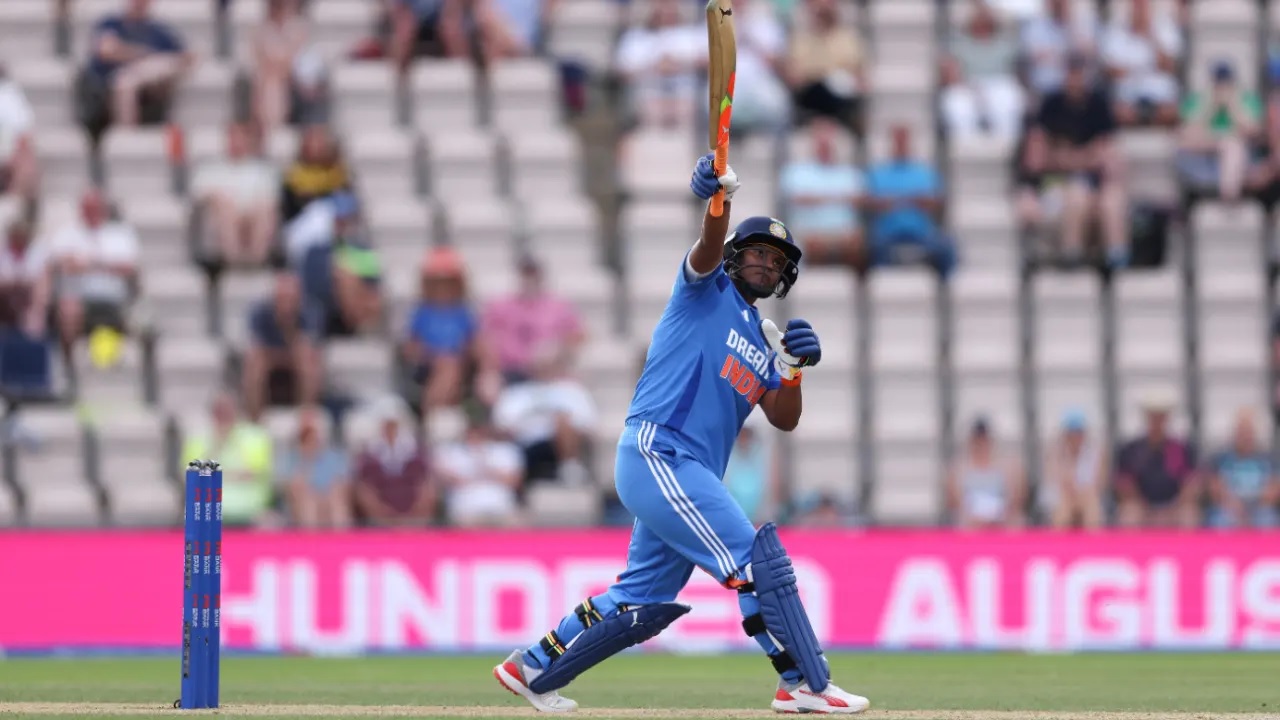
Deepti Sharma gave India the upper hand against England again, although in a more conventional style this time, with a match-winning half-century at Southampton for a 1-0 lead in their three-match ODI series.
The last time these sides met in an ODI in England, in 2022, Deepti scored an unbeaten fifty to rescue her side from an early stumble then ran out Charlie Dean while backing up on the last ball to seal a 3-0 ODI series sweep at Lord’s.
On Wednesday night, Deepti’s unbeaten 62 off 64 balls allowed India to chase down 259 to win by four wickets with 10 balls to spare. Her 90-run partnership for the fifth wicket off 86 balls with Lemimah Rodrigues trumped the corresponding century stand between Sophia Dunkley and Alice Davidson–Richards, who both passed fifty to take England to 258 for 6.
Both sides made a scrappier start than they might have liked to their build-up for the World Cup, which starts in India and Sri Lanka in 11 weeks’ time. India missed chances in the field and made hard work of their pursuit early, while England were forced to defend a modest total after suffering an early batting collapse and ultimately couldn’t take the wickets they needed.
India’s top order made starts but could not convert. Lauren Bell removed the threat of Smriti Mandhana, the leading run-scorer by some way on the T20I leg of the tour, via a faint edge to wicketkeeper Amy Jones for a 24-ball 28 in the eighth over.
Fellow opener Pratika Rawal faced 51 deliveries for her 36 before she was bowled by Sophie Ecclestone to make it 94 for 2 in the 19th.
When Harleen Deol was unnecessarily run out via a direct hit from Davidson-Richards because she left her bat hovering off the ground well beyond the crease while her foot was short of the crease, England were in the contest.
And Dean bettered the hosts’ position when she got one to grip from outside off and strike Harmanpreet Kaur on the knee-roll, England’s review bearing fruit when the ball was shown to be hitting middle stump. At that point, India needed 135 runs at just under a run a ball.
Deepti took control, striking the only six of the match when she launched Bell over deep midwicket to move into the 30s.
She was on 40 when Bell beat her attempted pull and hit the pad, the ball racing away for four leg byes when replays suggested she would have been given out lbw had England reviewed.
Rodrigues was on 48 when she messed up an attempted scoop of Lauren Filer, gloving the ball to Jones to give England another opening.
Deepti brought up her fifty off 52 balls sweeping Dean to deep square leg.
When Dean had Richa Ghosh stumped advancing down the pitch in her final over, India needed 30 runs off 33 balls but Deepti and Amanjot Kaur saw them home.
Dunkley, reprieved on 23 and 43, reached 83 off 92 deliveries before she fell on the final ball of the innings. She shared a 106-run stand for the fifth wicket with Davidson-Richards, who scored 53, to rescue England from 97 for 4.
It could have been worse for the hosts had India held their chances. Davidson-Richards was on 16 when Kranti Goud fumbled an attempted return catch and Nat Sciver-Brunt, England’s captain back from a groin injury which kept her out of the last three T20Is, was put down by Mandhana at midwicket off Sneh Rana before going on to score 41.
Off-spinner Rana went wicketless from seven overs across her four appearances in the T20Is in her comeback to the format after more than two years. But she took 2 for 31 from 10 overs to be the pick of India’s bowlers in this match, Goud the other multiple wicket-taker with 2 for 55 from nine.
Unable to reprise the success of their opening partnership which yielded 424 runs in two matches against West Indies earlier this summer, Jones and Tammy Beaumont both fell cheaply as England slumped to 20 for 1 in the first four overs.
That was thanks to Goud, the 21-year-old right-arm seamer making just her third international appearance. She started inauspiciously with a dot ball then three consecutive wides before sending down an absolute gem that nipped back off the seam, beat Jones’s bat and crashed into the top of off stump.
It took an India review to give Goud her second when she rapped Beaumont on the front pad as she strode across her stumps, with ball-tracking confirming impact on the top of middle and off.
Sciver-Brunt and Emma Lamb repaired the damage with a 71-run partnership for the third wicket. They struggled to find the boundary through overs 13-17, however, as India mixed up their bowling options and it was Rana who removed both in the space of 12 deliveries.
Lamb tried to break the shackles and picked out Harmanpreet at mid-off, and a wonderful catch by Rodrigues at short midwicket sent Sciver-Brunt on her way.
Shree Charani, Player of the Series with 10 wickets in the T20Is, broke the union between Dunkley and Davison-Richards when she had the latter stumped, despite a fumble from wicketkeeper Ghosh.
Dunkley fell on the last ball, bowled by Amanjot’s full-length cutter, a neat cameo of 23 not out from 19 balls by Sophie Ecclestone adding valuable runs but it wasn’t enough.
Brief scores:
India Women 262 for 6 in 48.2 overs (Pratika Rawal 36, Smriti Mandhana 28, Harlene Deol 27, Deepti Sharma 62*, Jemimah Rodrigues 48, Amanjot Kaur 20*; Charlie Dean 2-52) beat England Women 258 for 6 in 50 overs (Emma Lamb 39, Nat Sciver-Brunt 41, Sophia Dunkley 83, Alice Davidson-Richards 53, Sophie Ecclestone 23*; Kranti Goud 2-55, Sneh Rana 2-31) by four wickets
[Cricinfo]


by Rex Clementine
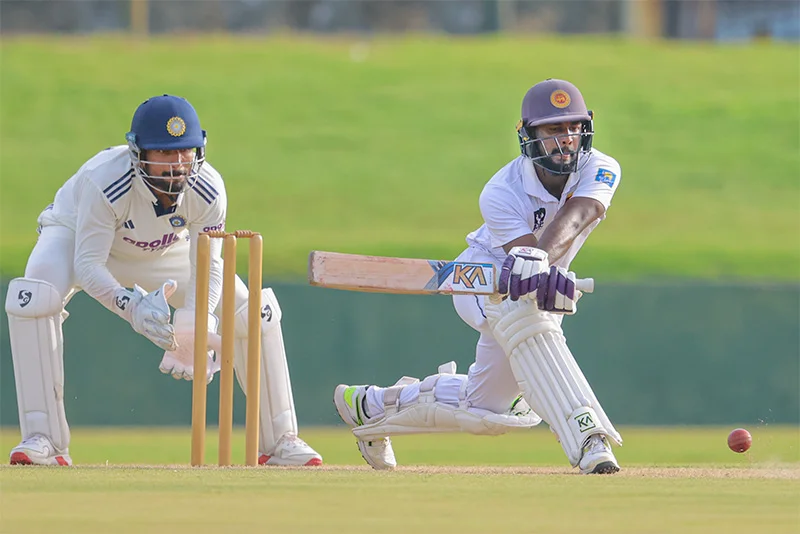
The Niroshan Dickwella experiment has proved short lived, with the national selectors deciding to move on and handing a maiden Test call up to 22-year-old Anjala Bandara, who is expected to take over the wicketkeeping duties for the two match Test series against Pakistan.
Dickwella’s recall after more than three years in the wilderness had raised quite a few eyebrows. The selectors defended their decision, arguing that he remained the finest wicketkeeper in the country. Few disputed that claim. The concerns, however, were never about his glovework but rather his ability to shut out the noise, keep his emotions in check and maintain discipline off the field. True to form, India’s fielders managed to get under his skin in the second innings of the Galle Test and the left-hander duly lost patience and threw his wicket away.
A fellow left-hander, Bandara’s journey to the national side has been anything but conventional. He first emerged from the little known Sirimavo Bandaranaike Vidyalaya in Matale before being snapped up by St. Anthony’s College, Katugastota. He eventually found his way to Mahanama College for his Under-19 cricket and now turns out for Colombo Cricket Club.
While Bandara has been prolific with the bat, boasting a formidable First Class average of 65, his work behind the stumps remains a work in progress. The selectors, however, believe he has made sufficient strides to be thrown into the deep end of Test cricket.
“We had a special programme for Anjala. In fact, we sent him to Mahesh Gunathilaka, one of the finest wicketkeepers produced by the country. He has worked on a few areas and we feel he is ready for Test match cricket,” Chairman of Selectors Kapila Wijegunawardene told The Island.
Wijegunawardene also confirmed that Pasindu Sooriyabandara would open the batting in Pakistan.
The former Royal College batter made his Test debut as a concussion substitute against India in Galle after Dinesh Chandimal was injured, but his introduction to the highest level was hardly a fairytale as he departed for a first ball duck. He made amends in the second Test, however, with impressive knocks of 80 and 92, showing that his baptism by fire had done little to dent his confidence.
Although Pathum Nissanka has been included in the squad, his availability remains subject to fitness. The prolific opener had been expected to return for the tri-nation series in Pakistan beginning later this week, but his recovery from the hamstring strain that ruled him out of the T20 series has taken longer than anticipated.
The Pakistan series will also mark Kusal Mendis’ first assignment as Test captain. His predecessor, Dhananjaya de Silva, who stepped down from the leadership, retains his place in the squad, although whether he makes the playing XI is another matter.
With competition for middle order places heating up, the former captain could find himself in a straight shootout with Kamindu Mendis for one of the remaining berths. It is an intriguing selection headache, particularly given that Dhananjaya was leading the side only a few weeks ago.
Another interesting inclusion is Eshan Malinga, who has largely been regarded as a white ball specialist. The selectors have now opened the door for him in the longest format, offering the young quick an opportunity to prove that his skills extend beyond the limited overs game.
by Reemus Fernando
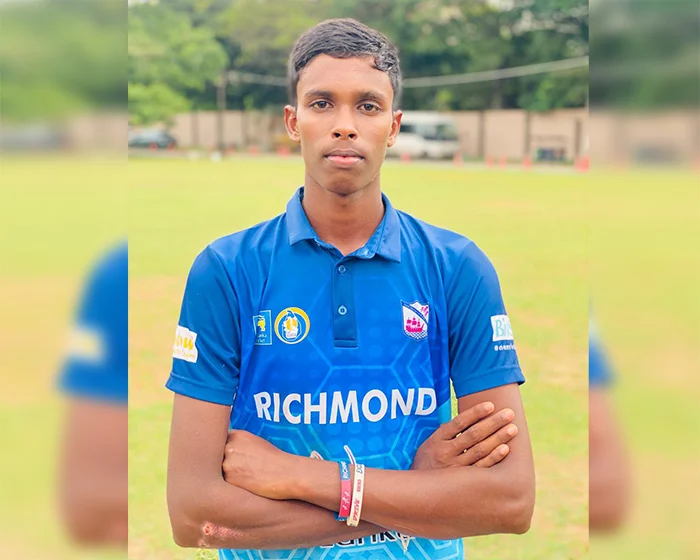
Richmond College are all but through to the quarter-finals of the Under-19 Division I Tier A Limited Overs Tournament after a nine-run win over Maris Stella College, Negombo, under the Duckworth-Lewis-Stern (DLS) method at the Army Grounds in Karandeniya on Monday.
It was Richmond’s third straight victory, and it puts them at the top of Group ‘B’ with one match remaining.
Batting first, Richmond posted 171 for nine in their allotted 50 overs, with Bevin Jayawardana top-scoring with a patient 55 off 88 balls. Punal Hansajith contributed 24 off 39 deliveries, while Risinu Rupasinghe made 22 and Ravinu Randinu added 18.
Maris Stella’s Malan Kadigamuwa led the bowling effort with three wickets for 37 runs in nine overs, while Rosel Perera claimed two wickets for 31 runs in his 10-over spell.
In reply, Maris Stella reached 127 for six in 42 overs against a revised DLS target of 136. Richmond therefore secured victory by nine runs under the method.
Punal Hansajith and Tenusha Nimsara claimed two wickets each to keep the Maris Stella batting line-up in check. Hansajith conceded just 20 runs in nine overs, while Nimsara gave away 14 runs in seven overs, with both bowlers maintaining tight control.
For Maris Stella Kavith de Silva scored 29 off 46 balls, while Gaveesha Induwara remained unbeaten on 24 off 38 deliveries. Manuja Nayanajith added 23 off 55 balls, and Yumeth Sathmira contributed 16.
In their previous encounters bowlers domnated for Richmond to beat Sri Sumangala College Panadura and St. Sebastian’s College Moratuwa comfortably.
Sri Sumangala were dismissed for 106 runs with Hiruk Akalanka, Tenusha Nimsara and Punal Hansajith claiming two wickets apiece. Akalanka returned figures of 2 for 21 in six overs, while Nimsara took 2 for 21 in five overs, including one maiden. Hansajith also claimed two wickets, conceding 24 runs in 5.3 overs. Hiruka Akalanka then lead the chase with a knock of 45run (in 46 balls with5fours and 2 sixes) to seal a six wickets win.
The match against St. Sebastian’s saw Tenusha Nimsara hog the limelight, taking a five-wicket haul to restrict the Moratuwa outfit to 115 runs.
Richmond had a few anxious moments in reply but got home with two wickets in hand.
In Group ‘A’ the contest is still open with S. Thomas’ College Mount Lavinia slightly ahead of others after Jaden Amaraweera scored a cracking 76 off 75 balls (7x4s, 4x6s) to lead them to six wickets win over Prince of Wales College, Moratuwa (153/8 in 50 overs) on Monday. S. Thomas’ (200/9 in 50 overs) had a DLS tie against Trinity (126?4 in 36) and their other match ended in a no decision.
While Mahinda were leading Group ‘C’ by Monday, Nalanda completed their quota of first round matches unbeaten in Group ‘D’.
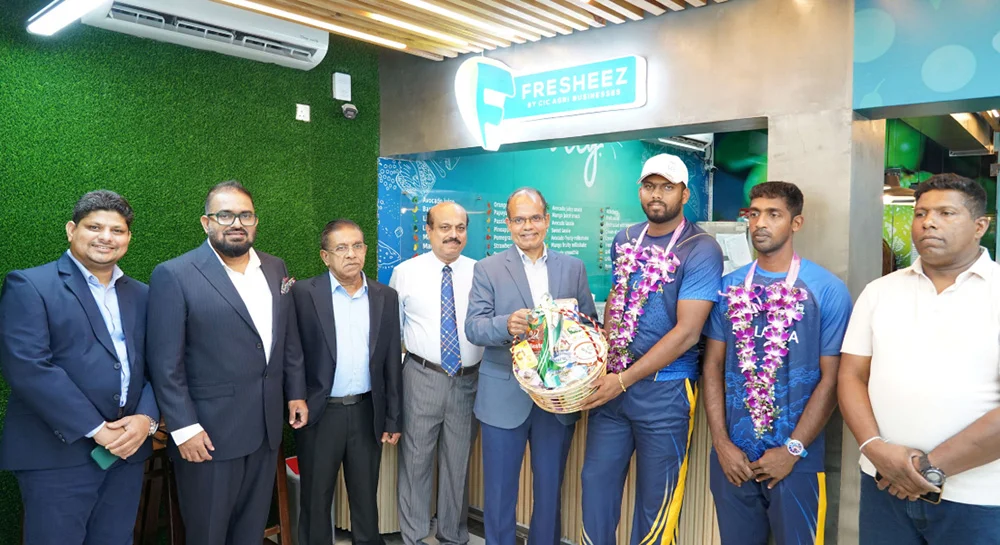
Diversified conglomerate CIC Holdings PLC (CSE: CIC) has partnered with Sri Lankan national athlete Rumesh Tharanga Pathirage as his Official Nutritional & Wellness Partner, supporting his journey towards the 2028 Olympic Games and his ambition to bring home Sri Lanka’s first ever Olympic gold medal.
The partnership reflects a shared commitment that extends beyond conventional sports sponsorship, with CIC standing alongside Rumesh through the years of preparation.
Rumesh Tharanga has established himself among the world’s leading javelin throwers following a landmark 2026 season. He set a Sri Lankan national record of 92.62 metres in Rome, claimed the Commonwealth Games title and became Sri Lanka’s first Diamond League champion. He strengthened his position as the world’s No. 1 ranked men’s javelin thrower by winning gold at the inaugural World Athletics Ultimate Championship in Budapest with a 91.09 metre final round throw. Most recently, he won Sri Lanka’s only gold medal at the Asian Games 2026 by winning the men’s javelin throw
For more than six decades, CIC has been part of the lives of Sri Lankans through its presence across agriculture, healthcare and wellness, personal care and other sectors. The partnership extends this longstanding role of nurturing Sri Lankan lives to supporting the journey of an athlete pursuing an ambition with significance for the entire nation.

Heavy showers above 100 mm are likely at some places in the Western, Sabaragamuwa, Southern, Central, and North-western provinces and in Anuradhapura district.

Sri Lanka, India caught in US-Iran ship crisis

Namal further remanded

IMF projects Lankan economic growth to moderate amidst mounting global uncertainties

Major Gen Pushpakumara assumes command of 56 Infantry Division

Dickwella axed, Bandara earns maiden Test call up

‘Dates have the highest sugar content to fight Coronavirus’

Sunday Island 27 December – Headlines

#SundayIsland 17th December – Headlines

Sunday Island – 28th March

Sunday Island Headlines – 21 March

Sunday Island – 21st February – Headlines
-

 Features7 days ago
The Sri Lankan who made Scottish history
-

 Sports7 days ago
Nissanka absence opens door for Sri Lanka’s young guns
-

 News6 days ago
NDB fraud Rs 60mn more than reported
-

 News6 days ago
Removing monk’s robes matter for Sangha to decide: Mahanayake Theras
-
 News7 days ago
Shiranthi R remanded until 13 Oct.
-

 News4 days ago
Sri Lanka escalates anti-graft drive with Shiranthi’s jailing
-

 Features7 days ago
Future of Sri Lanka’s state university system: Should it be shut down and reopened?
-

 News5 days ago
NPP govt. reminded of its responsibilities as US warship leaves Colombo