
Latest News
MLC 2025: Boult’s four-for and Monank, Pooran fifties make it a canter for MI New York

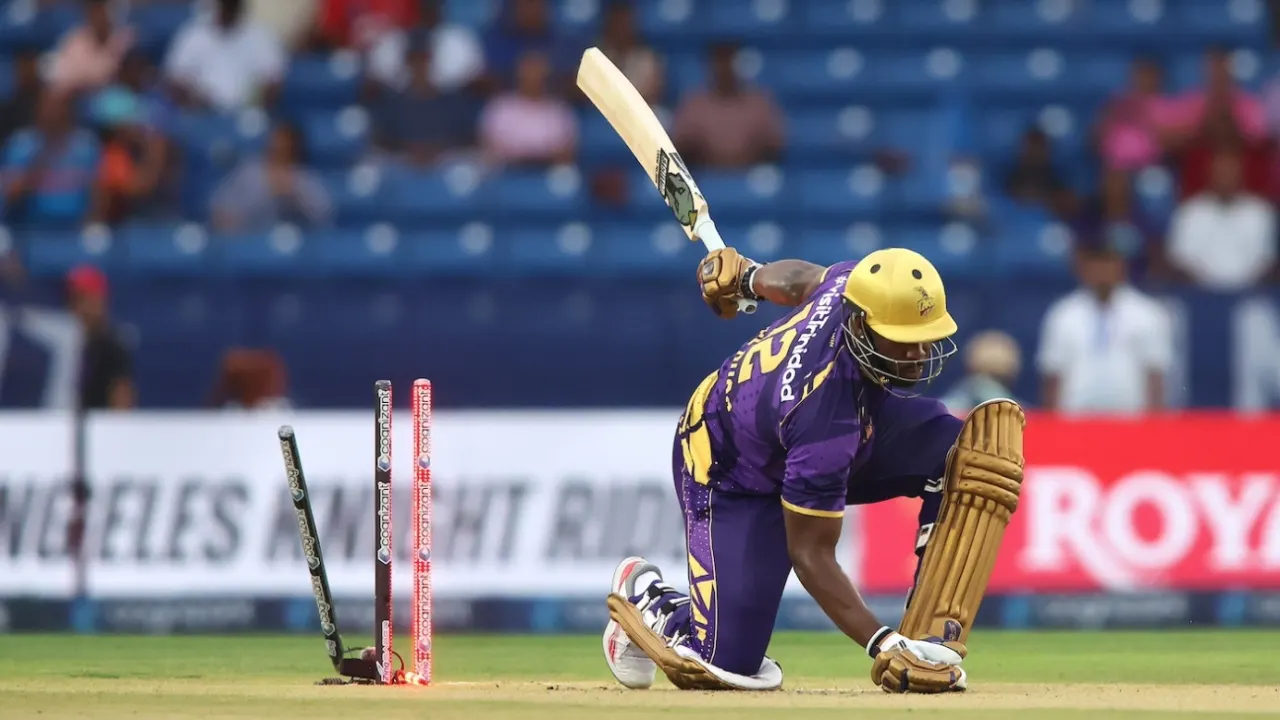
Trent Boult set up the demolition job for MI New York but Sherfane Rutherford put in a solo show to keep Los Angeles Knight Riders in the game, but their 154 for 8 was never going to be enough to test the strong MINY batting. Monak Patel and Nicholas Pooran hit half-centuries in reply, and the target was crossed with 13 balls in hand.
LAKR are now all-but out of the race to the MLC 2025 playoffs, while MINY have just about kept their flagging hopes alive.
Things happened in a bit of a rush after MINY opted to field upon winning the toss, with Boult bowling three overs inside the powerplay and picking up a wicket – all bowleds – in each of them.
The first wicket came off the first ball, with an inswinger going past Unmukt Chand’s attempted drive to hit timber. In his next over, Boult got one to shape in – and keep low – off a good length and took care of Andre Rusell. And in his third, with Andre Fletcher coming down the track, Boult sent in a cross-seam delivery on a length and got it to deviate enough to pick up his third.
Boult came back for the 19th over to remove Rutherford to complete his haul, but only after Rutherford had created a bit of a flutter in the MINY camp. Walking out with the scoreboard reading 29 for 3, Rutherford took control of the innings – with almost no support from any other batter till No. 8 Matthew Tromp got into double-digits in a stand of 30 for the seventh wicket – and dragged LAKR to a semblance of respectability. His 86 came off 44 balls, and included five fours and six sixes.
The reply was fairly straightforward. Sunil Narine removed Quinton de Kock in the third over, but then LAKR got their next wickets only after 13.4 more overs as Monank (56 in 44 balls) and Pooran, scratchy to start with before getting a move on, added 112 runs for the second wicket. The partnership lasted 84 balls, with Pooran contributing 58 off 46 balls and Monank 46 off 38.
When Russell finally removed Monank, MINY had 20 runs to get from 3.2 overs, and needed only a fraction of those as Pooran and Kieron Pollard rushed them to the target. Pooran finished on 62 not out off 47 balls with six fours and two sixes, while Pollard hit two sixes in his six-ball 14 not out.
Brief scores:
MI New York 155 for 2 in 17.5 overs (Quinton de Kock 11,Nicholas Pooran 62*, Monank Patel 56, Kierron Pollard 14*; Sunil Narine 1-26, Andre Russel 1-43) beat Los Angeles Knight Riders 154 for 8 in 20 overs (Andre Fletcher 11, Andre Rusell 15, Sherfane Rutherford 86,Mathew Tromp 10; Trent Boult 4-17, Ehsan Adil 1-39, Nosthush Kenjige 1-25, Kierron Pollard 2-15) by eight wickets
[Cricinfo]


The United States military’s Central Command (CENTCOM) said its forces conducted “self-defence” strikes on Iran’s Qeshm Island and “defeated multiple” Iranian missiles and drones as civilian vessels and regional allies Kuwait and Bahrain came under attack.
Kuwait’s military said air defence systems intercepted incoming drones and missiles, while Bahrain’s Interior Ministry said warning sirens were activated. Earlier, Iranian media reported that explosions were heard in the vicinity of Qeshm Island.
[Aljazeera]
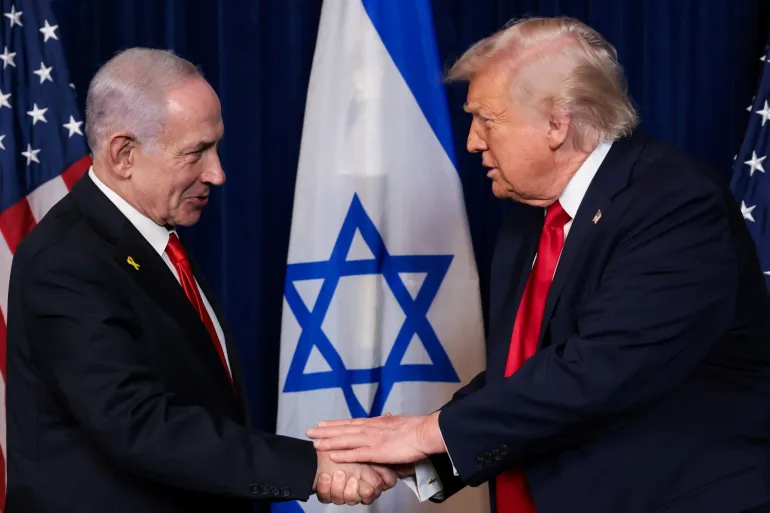
In January 2024, the publication Axios reported that the United States president at the time, Joe Biden, was “running out of patience” with Israeli Prime Minister Benjamin Netanyahu.
Israel’s genocidal war on Gaza had been raging for months by that point, and Biden was facing public backlash over US support for the conflict.
The assault would continue for the rest of Biden’s term and bleed into the first 10 months of Donald Trump’s second presidency.
Since then, media outlets have continued to publish anonymous accounts of rifts and “frustrating” calls between Trump and the Israeli prime minister. But US support for its Middle East ally has never wavered.
Another anonymously sourced report about a furious, expletive-laden call between US and Israeli leaders came out this week, and it spread rapidly across international media.
Axios reported on Monday that Trump called Netanyahu “f***ing crazy” and berated him over Israel’s escalation in Lebanon.
Around the same time, an Israeli attack killed six people, including two children, in the southern Lebanese town of al-Marwaniyah.
Experts say that despite leaks of feuds and harsh words between US leaders and Netanyahu, policies are ultimately what matters, and they have changed very little.
Ryan Costello, the policy director at the National Iranian American Council Action (NIAC), said political observers have grown to “mock” reports of closed-door anger from US presidents against Netanyahu.
“What’s really important is what actually happens in practice,” Costello told Al Jazeera.
Though there are reports of Trump giving Netanyahu a dressing-down, Isabelle Hayslip, an advocacy manager at the US-based rights group DAWN, said that US policy remains aligned with Israeli interests.
“Single-source reporting of Trump as a strongman who picks up the phone and yells at Netanyahu for undermining US policy is contradicted by the actual policy outcomes where Netanyahu gets exactly what he wants,” Hayslip told Al Jazeera.
“Trump has no final say over Israeli actions. Like his predecessors, the president has proved completely unable to prioritise American interests, instead catering to Israel’s expansionist whims.”
The latest report comes as Trump faces increasing pressure from his Democratic rivals and segments of his base over his handling of the war on Iran, which he launched jointly with Netanyahu on February 28.
The conflict, which saw Iran close the Strait of Hormuz, has sent gasoline prices soaring in the US and fuelled inflation.
Critics have accused Trump of allowing Israel to drag the US into a war that does not advance Washington’s priorities.
With negotiations to end the war stagnating, Israel’s escalation in Lebanon and its threat to bomb Beirut risks derailing the fragile truce that came into effect in April.
Iranian officials have suggested that they cut off contact with the US over the Israeli attacks in Lebanon.
Before the Axios report, Trump announced he had spoken to Netanyahu and an unidentified Hezbollah representative, and both sides agreed that “all shooting will stop”.
But Netanyahu was quick to assert that the Israeli military “will continue to operate as planned in southern Lebanon”, where it is deepening its invasion and turning entire towns into rubble.
Advocates say Israeli atrocities in Lebanon and across the region could not have happened without US backing.
Since the start of Israel’s genocidal war on Gaza in October 2023, the US has provided Israel with nearly $25bn in military aid, helped fend off retaliatory Iranian attacks against the country and vetoed several ceasefire resolutions at the United Nations Security Council.
Nonetheless, anonymous accounts that the US president is angry at Netanyahu have become a regular feature in the media.
Such reports are attributed to US officials, but it is unclear how leaks with a similar message on the same topic have continued across two administrations from different political parties.
Publicly, aides of both Biden and Trump have largely refrained from criticising Israel.
Trump has regularly praised the Israeli prime minister, arguing on more than one occasion that Israel would have ceased to exist without Netanyahu’s leadership.
In December, the US president also called the Israeli prime minister a “hero” during a meeting in Florida.
“We’re with you, and we’ll continue to be with you,” Trump told Netanyahu.
Two weeks earlier, Axios reported that the White House had “scolded” Netanyahu over Israel’s ceasefire violations in Gaza.
“The White House message to Netanyahu was: ‘If you want to ruin your reputation and show that you don’t abide by agreements, be our guest, but we won’t allow you to ruin President Trump’s reputation after he brokered the deal in Gaza,” the publication quoted a US official as saying.
Few people know the exact content of high-level calls at the White House. Sometimes, top officials, including members of the National Security Council, sit in on conversations between the president and world leaders after briefings.
Negar Mortazavi, a senior fellow at the Center for International Policy, a research nonprofit, said the leak about the tense call between Trump and Netanyahu may be aimed at making Trump look tough on Israel to quell outrage over the war.
“It could be sort of a way of moderating the anger or the blame at the US for continuing this unpopular, illegal, unnecessary war,” Mortazavi told Al Jazeera.
She added that the message it sends is, “Look, we’re very angry at Israel. We yell at them. We call them names.”
But Mortazavi stressed that policy is more important than rhetoric: “Does that change the facts on the ground?”
For his part, Costello argued that the leak was likely directed at Iran.
“I see this one primarily as a signal to the Iranians that Trump is serious, and he wants to insulate what’s happening in Lebanon and Israel’s attacks from the Iran negotiations,” Costello said.
“It remains to be seen the extent to which that excoriation has actually led to a change in Israel’s policies, and I think there is a strong incentive for continued defiance from Netanyahu.”
Axios, meanwhile, has defended its coverage.
“We stand by our reporting, which by the way noted ‘Trump and Netanyahu have had several tense calls in the past but have still coordinated closely on Iran and other issues,’” Jake Wilkins, a spokesperson for the publication, told Al Jazeera in an email.
Mortazavi warned that all sides of the war on Iran are trying to influence public perceptions of the conflict.
She pointed to recent reports that Iranian President Masoud Pezeshkian had resigned, a rumour that was promptly denied by his office.
“This is a very hybrid war. It’s a war on the battlefield. It’s an intelligence war. It’s a war of narratives,” Mortazavi told Al Jazeera. “And then there’s also an information war, which includes disinformation, half-truths and strategic leaks.”
[Aljazeera]
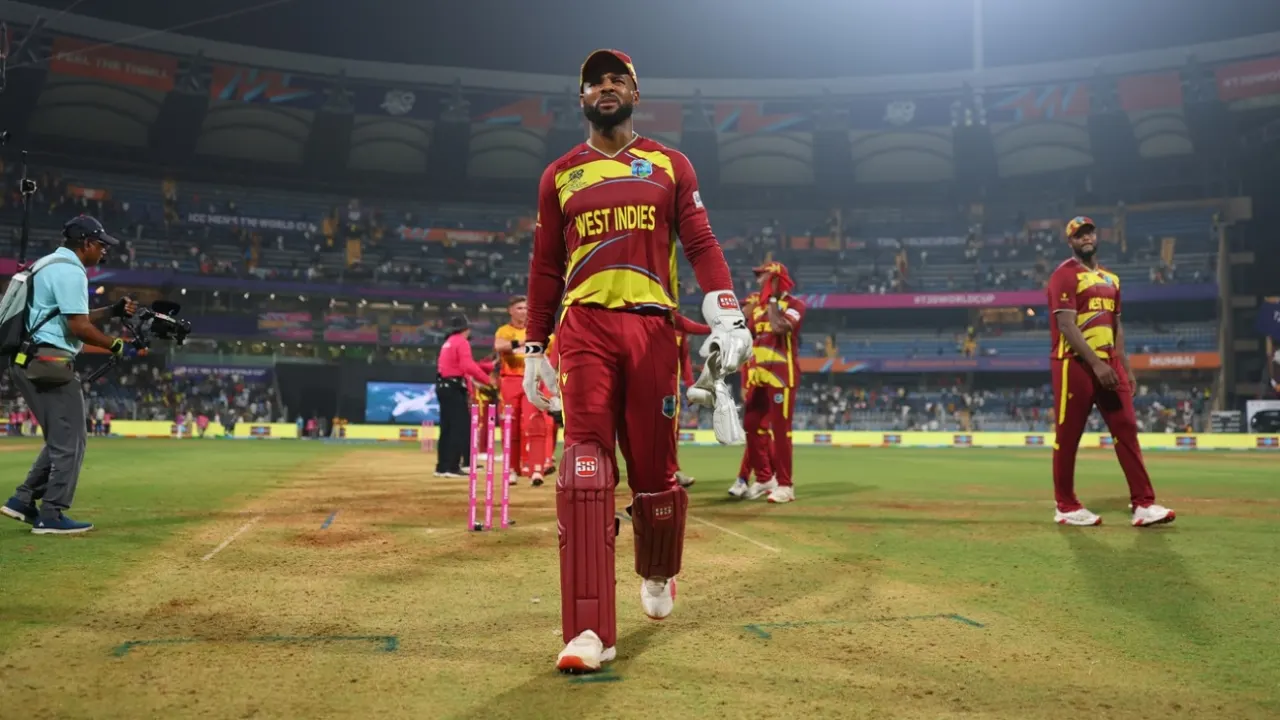
Where once ODI bilaterals could have been fairly mocked for their lack of relevance, they are played less and less, and this series has a bit of heat to it. Qualification for the 2027 ODI World Cup is on the line, and both these sides know what it’s like to be left out of a major international tournament (both were missing from the last Champions Trophy, and West Indies had also not played the 2023 World Cup).
On March 31, 2027, the eight highest-ranking teams – aside from hosts South Africa and Zimbabwe – will qualify automatically for the World Cup, and teams slightly lower will have to fight their way in through a qualifier. Currently Sri Lanka are ranked sixth in ODIs, while West Indies are ninth. Both teams could do with a rankings boost.
Sri Lanka are in slightly better shape coming into this series. They have, at the very least, played ODIs this year, losing 2-1 at home to England. West Indies have lost four of their last five ODIs, and have not played the format for six months. Both teams have more or less their regular ODI troops to pick from, however. Sri Lanka’s seam stocks are in especially good health at present.
Sri Lanka’s ODI captaincy has been one of cricket’s most-puzzling roulette wheels over the past ten years. Kusal Mendis had had the job until 2024, when he was ousted with no reason provided. He has again been put in charge, perhaps with a view to him leading Sri Lanka into that 2027 World Cup campaign. There’s been little to recommend him for the role than his own buoyant batting form, however. How will he fare this time in what has turned out to be one of cricket’s most tumultuous positions?
With an average of 50.52 and 19 hundreds in this format, West Indies captain Shai Hope is the only batter in the series who can be called a reliable run machine. Hope hasn’t played competitive cricket since the T20 World Cup, but does have a decent record against Sri Lanka, against whom he has hit two ODI hundreds and four fifties. Like his opposite wicketkeeper-batter-captain Mendis, Hope will be a key figure as West Indies begin their push towards the 2027 World Cup in earnest.
West Indies will need to find a spot for Shimron Hetmyer, who is back in the ODI format. Ackeem Auguste may make way at the top of the order to allow Hetmyer back in. Gudakesh Motie will also likely lead the spin attack.
West Indies (possible): John Campbell, Shai Hope (capt.)(wk) , Keacy Carty, Shimron Hetmyer, Sherfane Rutherford, Roston Chase, Justin Greaves, Matthew Forde, Shamar Springer, Gudakesh Motie, Jayden Seales
Sri Lanka have serious decisions to make on the bowling front. In Dushmantha Chameera, Dilshan Madushanka, and Eshan Malinga, they have three bowlers capable of breaching 140kph.
Sri Lanka (possible): Kamil Mishara, Pathum Nissanka, Kusal Mendis (capt, wk), Pavan Rathnayake, Charith Asalanka, Janith Liyanage, Kamindu Mendis, Wanindu Hasaranga, Eshan Malinga, Dushmantha Chameera, Dilshan Madushanka
[Cricinfo]

Thailand cracks down on foreign companies using fig leaf of local ownership

US strikes Iran’s Qeshm, says Tehran attacks Kuwait, Bahrain

Heavy showers likely at some places in the Western and Sabaragamuwa provinces and in Galle, Matara, Kandy and Nuwara-Eliya districts.

Trump berated Netanyahu? Analysts question US-Israel feud rumours

India should be kept out of PC polls, matters related to 13 A – Mano

US boost for SLAF

‘Dates have the highest sugar content to fight Coronavirus’

Sunday Island 27 December – Headlines

#SundayIsland 17th December – Headlines

Sunday Island – 28th March

Sunday Island Headlines – 21 March

Sunday Island – 21st February – Headlines
-
 News4 days ago
IMF urges Lanka not to meddle with exchange rate
-

 Business5 days ago
Sri Lanka’s construction industry losing ground while no one watches
-
 Business2 days ago
IMF’s unstated rate:Sri Lanka’s $695m loan costs about 5.33% per annum
-
 News4 days ago
State of emergency extended
-

 Features5 days ago
The Division Bell Mystery
-

 News2 days ago
UNP challenges NPP move to amend Vihara – Devalagam Act
-

 Features3 days ago
Are threats to Buddha Sasana external or from within?
-

 News6 days ago
RTI query of Ditwah funds: Presidential Secretariat mum on key questions