
Sports
Amanjot, Kamalini seal thriller for Mumbai Indians after Harmanpreet fifty

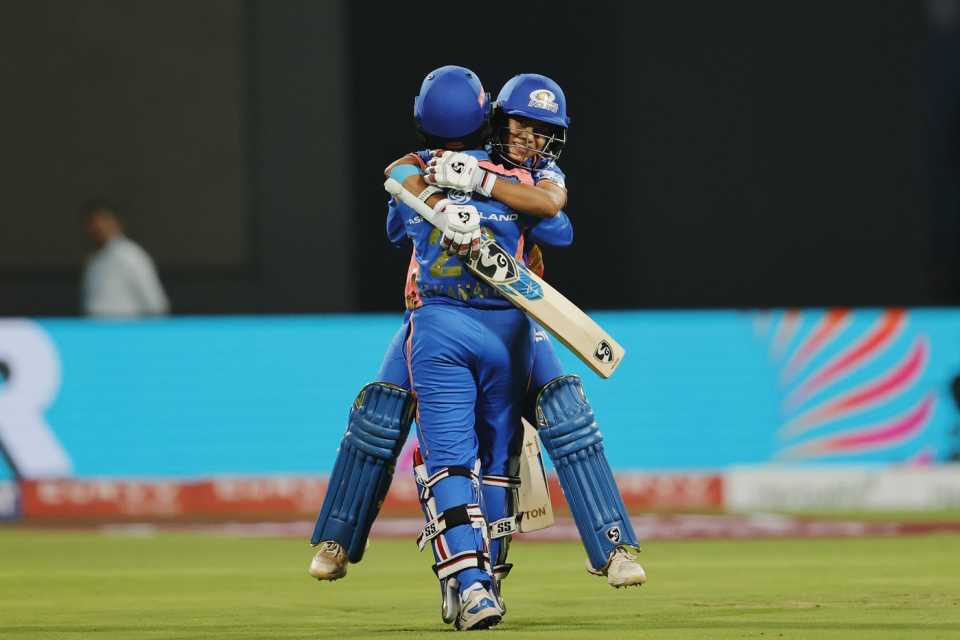
Mumbai Indians Women 170 for 6 in 19.5 overs (Harmanpreet Kaur 50, Nat Sciver-Brunt 42, Amanjot Kaur 34; Kim Garth 2-30, Georgia Wareham 3-21, EktaBisht 1-37) beat Royal Challengers Bengaluru Women 167 for 7 in 20 overs (Elysse Perry 81, Richa Ghosh 28, Smriti Mandhana 26; Amanjot Kaur 3-22, Shabnim Ismail 1-36, Nat Sciver-Brunt 1-40, Hayley Matthews 1-37, SanskritiGupta 1-03, ) by four wicket
Win the toss, field first, win the match. This has been the story of all seven games in WPL 2025 so far. Mumbai Indians (MI) were the latest benefactors of winning the toss as they beat Royal Challengers Bengaluru (RCB) by four wickets in the first game of the Bengaluru leg.
Bowling first, MI restricted RCB to 167 for 7 despite a pristine 81 off 43 balls by Elyse Perry. Then they had the joint-best powerplay of the season, cruising to 66 for 2.Harmanpreet Kaur ‘s half-century kept MI in a comfortable position until Georgia Wareham dismissed her and S Sajana off successive balls in the 18th over. Amanjo5 Kaur took over from there and, with 22 needed from 12 balls, hit Kanika Ahuja for two sixes. That brought it down to run-a-ball in the final over. Still, it came down to two needed from two balls before 16-year-old G Kamalini smashed Ekta Bisht through covers to seal the game.
Shabnim Ismail is the fastest bowler in women’s cricket and it showed immediately. Opening the bowling for MI, Ismail hurried Smriti Mandhana with a bouncer, the RCB captain’s mistimed pull falling short of mid-on. However, Mandhana took just one delivery to adjust to the pace and the bounce of the pitch. Two balls later, when Ismail hurled another short ball, Mandhana quickly got into the position and pulled it over square leg for four.
It made Ismail switch to around the wicket. For the last ball of the over, she went short again, this time trying to cramp the batter. Mandhana unfurled another four with a pull.
In her next over, Ismail erred in her line, and Mandhana duly cut her to the point boundary twice in three balls. But Ismail had the last laugh. She went short again, angling the ball on this occasion. Mandhana must have been feeling invincible by then. She attempted another pull. But this one took the top edge and Yastika Bhatia settled under it behind the stumps
Perry opened her account with a first-ball four, flicking a full delivery from Ismail over square leg. In the next over, she freed her arms and hit Sciver-Brunt over long-on. But MI pulled things back with three quick wickets. Danni Wyatt-Hodge miscued an upper cut against Sciver-Brunt to short third; Raghvi Bist hit Hayley Matthews into the hands of deep midwicket; and Ahuja chopped Sanskriti Gupta onto her stumps. After nine overs, RCB were 62 for 4.
RCB did not hit a single boundary from overs six to nine. Perry ended the drought in the tenth when she dispatched Matthews for four. She found support from Richa Ghosh, who smashed a six in the same over. The pair combined to pocket five more fours in the next three overs. By the time Amanjot bowled Ghosh for 28 off 25, the partnership had reached 50 in 38 deliveries.
From there on, Perry carried RCB almost singlehandedly. She hit Amelia Kerr inside out over extra cover to bring her fifty off 30 balls. Two balls later, she jumped out of her crease to deposit Kerr over long-on. In the next over, Matthews paid the price for bowling too short as Perry picked up two more fours. Perry eventually fell to Amanjot on the penultimate ball of the innings but not before hitting the bowler for back-to-back fours.
MI started their chase in an attacking manner, with Bhatia hitting Renuka Singh for two fours in the opening over. Even though Kim Garth trapped Bhatia for 8, there was no respite for RCB. Sciver-Brunt hit two fours off the first two balls she faced to keep the runs flowing. She took it a notch higher in Garth’s next over with three fours.
Matthews joined with back-to-back fours off Wareham. Bisht, who came in for the sixth over was not spared either. Sciver-Brunt started with a hat-trick of fours and Matthews chipped in with one. The only solace for Bisht was that she had Matthews lbw with her last ball.
Garth provided RCB with some relief when she castled Sciver-Brunt for 42 off 21 balls in the eighth over. Two overs later, Wareham bowled a maiden in which she also had Kerr slicing to backward point.
Harmanpreet had had a slow start and was on 10 off ten balls after the tenth over. But she put the chase back on track with two fours off VJ Joshitha. MI needed 54 in the last six overs but Harmanpreet was well set by then. She hit Ahuja for successive fours, slog-swept Bisht into the stands, and picked up two more fours of Renuka to make MI firm favourites.
Brief scores:
Mumbai Indians Women 170 for 6 in 19.5 overs (Harmanpreet Kaur 50, Nat Sciver-Brunt 42, Amanjot Kaur 34; Kim Garth 2-30, Georgia Wareham 3-21, EktaBisht 1-37) beat Royal Challengers Bengaluru Women 167 for 7 in 20 overs (Elysse Perry 81, Richa Ghosh 28, Smriti Mandhana 26; Amanjot Kaur 3-22, Shabnim Ismail 1-36, Nat Sciver-Brunt 1-40, Hayley Matthews 1-37, SanskritiGupta 1-03, ) by four wickets
(Cricinfo)

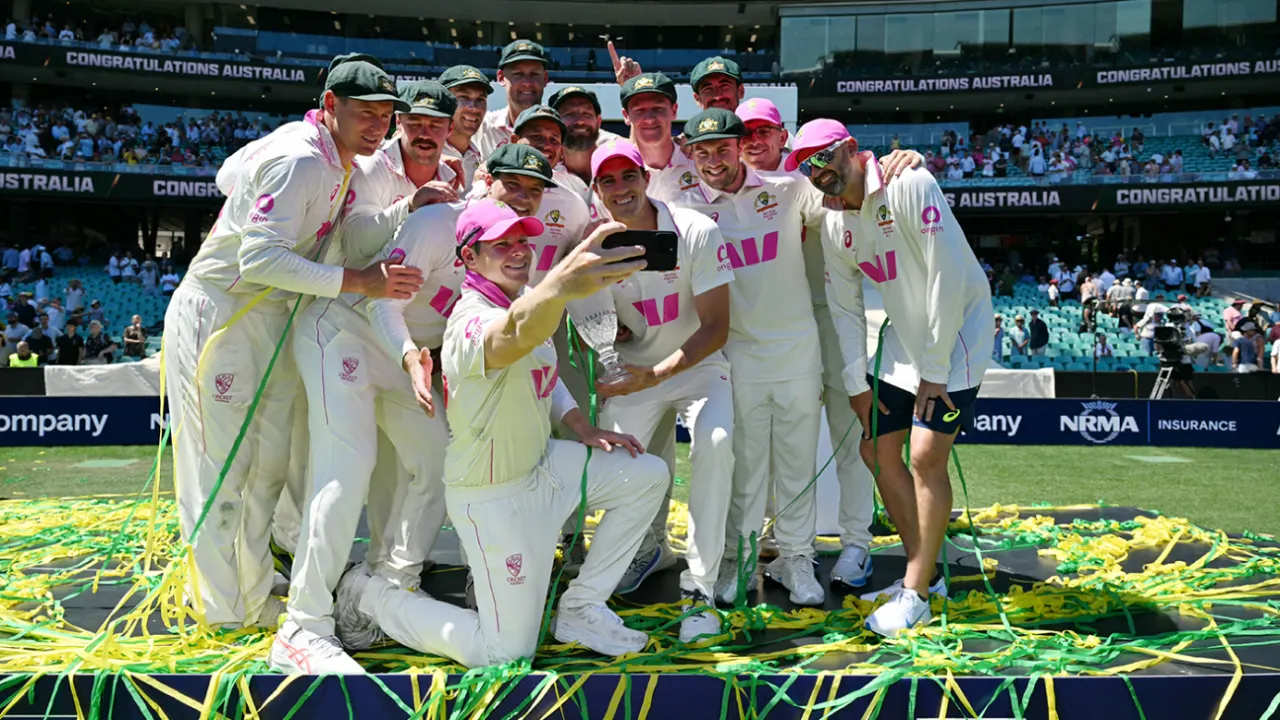
At least five senior Australia players have been left unimpressed by the initial 2026-27 Cricket Australia contract offers they have received in recent days and are yet to commit to signing them.
Meanwhile, a larger group of BBL stars are considering whether to play overseas during the summer after the stuttering BBL privatisation proposal stalled pay re-negotiations that would have redressed the fact that they have been earning between A$100-200,000 less than overseas players in the league in recent years.
First reported by Code Sports on Saturday, ESPNcricinfo understands a handful of Australian players were unimpressed by the initial CA contract offers that were tabled to them in the last week.
This follows reporting in the Age on Thursday that Test and ODI captain Pat Cummins had been offered A$4 million per year over the next three years, much of which was reported to be guaranteed money.
Under the current MoU (Australian players pay deal between CA and the Australian Cricketers Association), which runs until mid-2028, up to 24 national contracts are given out by national selectors for the 2026-27 financial year (July 1, 2026 to June 30, 2027) and those players share A$21,916,257 in the year in base salaries.
Players are ranked and receive contracts based on importance and the number of games they are likely to play in the cycle, with the lowest player earning a base of $360,645. In addition, players also earn nearly A$19,000 per Test appearance, nearly $8000 per ODI and nearly $5000 per T20I in match payments on top of the base. There are win bonuses on top, with a Test win worth roughly $30,000 per player in total. There is also a CA marketing pool, which contracted players share depending on appearances with commercial partners.
Player pay was already an issue in Australia and at the heart of the BBL privatisation debate. The rising money on offer in the franchise world has led players to consider whether locking themselves into a 12-month CA deal would cost them money over the year.
Players like Marcus Stoinis and Tim David have not had CA deals in recent years, knowing they would qualify for a base upgrade by playing the minimum number of T20Is in a year (six), whilst being able to sign franchise deals freely without the need for NOCs, to maximise earnings elsewhere.
CA got creative this year by offering contracts for only 21 players for for 2026-27 so that fewer players could share more of the unchanged pool despite Australia being set to play an unprecedented 17 Tests (possibly 18) in the financial year. They will only play nine ODIs and five T20Is in the period.
But the priority of paying Test players has been a source of tension for the white-ball players, who feel they can earn more than the offered CA deal if they went freelance. Meanwhile, there are three-format players concerned about what they are missing out on if they have to rest from certain series, or if more minor bilateral series are being played while lucrative franchise tournaments are on.
Cummins articulated this concern in March around playing two Tests against Bangladesh in August this year while letting go of the chance to earn upwards of A$675,000 (US$485,000) to play in the Hundred.
How the issue gets resolved in the short term remains unclear. Australia have two white-ball tours of Pakistan and Bangladesh coming up but they fall in the previous contract cycle. The first games of the 2026-27 cycle are the home Bangladesh Tests in August.
Meanwhile, a group of a dozen high-profile Australian BBL players are understood to be furious over the stalled privatisation proposal. The players had set up a WhatsApp group last October to discuss their long-term options after spending three years frustrated at CA over the pay disparity between them and overseas players. The introduction of the draft and the platinum signing of A$420,000 meant the likes of Luke Wood and Mohammad Rizwan were paid significantly more than Australian players with significantly better T20 records, who were on $200,000-$300,000.
CA was set to renegotiate the MOU with the ACA if they could move to the next phase of their privatisation plan but that fell over when two states did not want to proceed. A hybrid plan is now being devised but discussions with the players have been set aside for the moment.
The BBL stars are now considering their options. It is a unique season coming with the ILT20 moving to November before the BBL. There are Australian players who have been offered A$500,000 to play in the UAE.
Meanwhile, the SA20, which is seen as the major threat to the BBL, is rumoured to start on January 17.
The BBL is likely to run from mid-December until the last weekend in January, as it did last year. It does mean Australian players could play both but would need an NOC to go and would miss the first week of the SA20. It would lead to the farcical situation that happened a couple of years ago when several Australian players benefited from their BBL teams not making finals, which meant they could get to South Africa earlier and earn more money, as contracts are generally prorated on a games played basis. Australia’s Test players, however, would not be available for either as they have a five-Test tour of India that runs from mid-January to early March that immediately follows a four-Test home series against New Zealand in December and early January.
Australian players were furious when Dewald Brevis and Aiden Markram were bought for R16.5 million (A$1.3 million or US$940,000 approximately) at the SA20 auction last year, four to five times more than some of the top Australian contracts in the BBL.
It is understood that the senior BBL stars do not expect that type of money in the BBL in the short term but were hoping to close the gap significantly this year before privatisation redressed the situation in 2027-28.
It is understood that part of CA’s proposal to the states was to increase the salary cap by up to A$1.5 million. The issue for Australia’s players is that the bottom-end players in the BBL earn a minimum of A$52,000, whereas it is only roughly A$17,000 in the SA20, with the two salary caps reasonably similar at around A$3.2 million.
[Cricinfo]
Latest News
Gill, Sai Sudharsan, Rashid power Gujarat Titans to second spot with fourth straight win
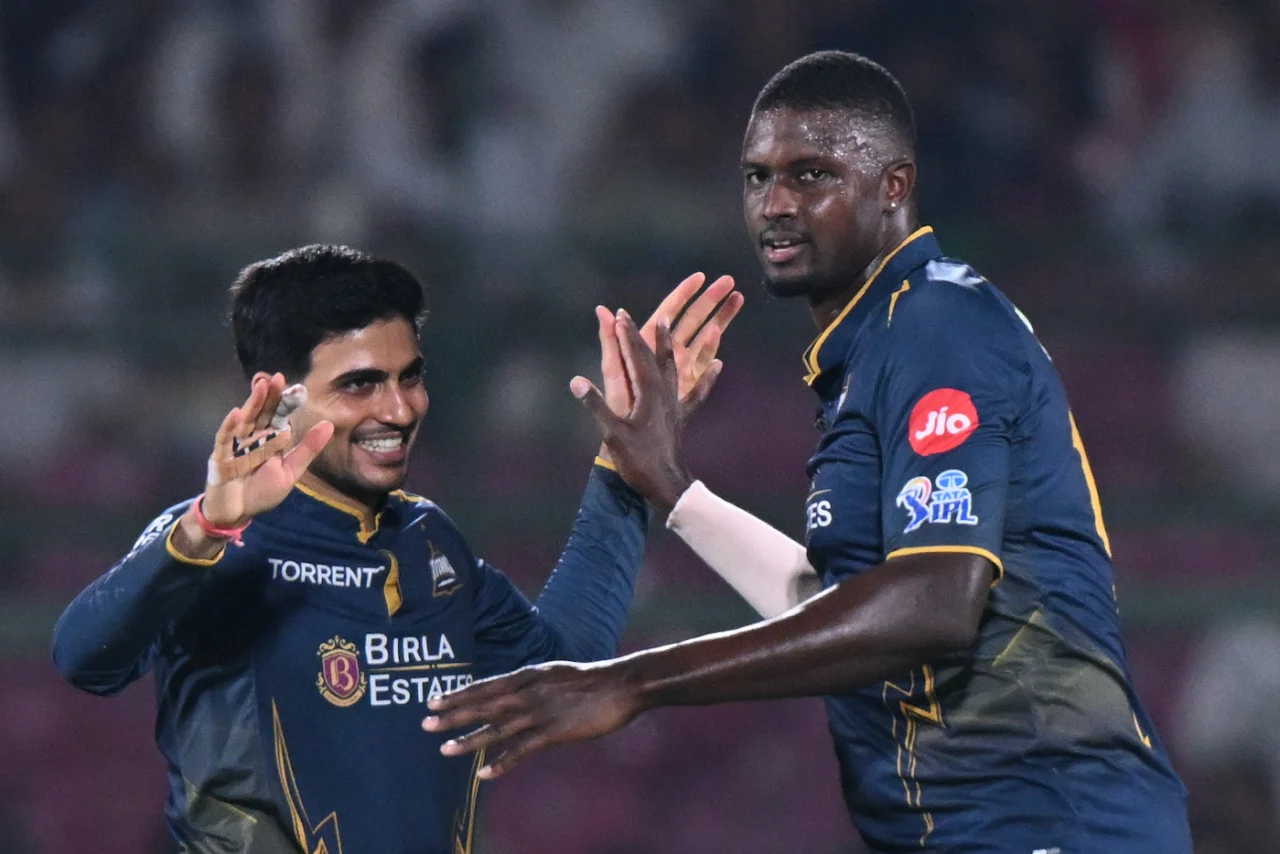
Twenty-eight overs into the contest in Jaipur, Rajasthan Royals (RR) were keeping pace with Gujarat Titans (GT). They were 86 for 3 in seven overs, chasing 230. Dhruv Jurel looked like he had excised his slow-batting demons. He was on 24 off 9 and ready to go bigger. Then, Rashid Khan spun one past Jurel’s slog to peg back his stumps. It was the first of his four wickets. On a night of spin chokeholds by both RR and GT, Rashid’s spell of 4 for 36 was the point of difference between both sides.
At the end of it all, GT zoomed up to second spot in the points table with 14 points. It was their fourth consecutive win, as they continued their late surge in this IPL.
Earlier in the evening, half-centuries from Shubman Gill and B Sai Sudarshan – and their 118-run opening partnership – headlined GT’s biggest IPL score outside Ahmedabad. They had been greeted by an all-pink Jaipur. RR’s jerseys were the same colour, in honour of their women’s empowerment movement. By the end of the powerplay, Gill and Sudharsan couldn’t have felt more at home themselves. They had raced away to 82 for 0, and alongside Rashid’s spell, they headlined a 77-run win.
Jofra Archer took 11 deliveries to get through the first over of the match. It featured nine extras and was the longest opening over in the history of the tournament. By the end of it, Gill and Sai Sudharsan – without taking any big risks – had raced away to 18 for no loss. This was the theme of the powerplay: the opening pair kept getting balls on their pads or bouncers shooting way over their heads. They played most of their shots in the ‘V’ down the ground. By the end of the first six, they were just 18 runs away from their ninth 100-plus partnership, the second-best tally in the IPL, just behind Virat Kohli and AB de Villiers.
Despite their big start, Gill and Sai Sudharsan slowed down in characteristic fashion. Both of them reached their fifties off 30 balls. Yash Raj Punja (1 for 37) and Ravindra Jadeja (1 for 34) did not find much turn off the surface, but bowling in tandem through the middle overs, they cut off the risk-free boundary options for the opening pair.
A leg injury while running between wickets affected Gill’s running as well. Punja took out Sai Sudharsan for 55 off 36, holing out to long-on, and Jadeja speared in a delivery to Jos Buttler at 107kph to rush him on a drive straight to long-off.
After GT’s whirlwind start, 220 was a base expectation from their innings. By the end of the 19th over, they were on track to finish under it, stuck on 208 for 4. Brijesh Sharma had plucked out Jason Holder’s wicket and given away just four runs in the 19th, varying his pace and bowling into the blockhole. However, his gold-dust over was reduced to a footnote when Tushar Deshpande missed his lines in the last over. Rahul Tewatia maneuvered around the crease to leather back-to-back sixes, before Washington Sundar hit one of his own to drag GT to 229 for 4.
It is the stuff of routine now. The bowler chugs in, bowls a perfectly okay delivery, and Vaibhav Sooryavanshi sends him into the stands first-ball. Saturday night was no different, as Sooryavanshi clobbered Mohammed Siraj across the line over the long-on boundary. Next ball, a Siraj yorker rifled towards the stumps, and Sooryavanshi inside-edged onto his foot and fell to the ground.
Sooryavanshi looked set for another big start, despite limping between wickets, blasting Siraj for three fours in four deliveries. On the fifth delivery, he was rushed into a hook off a fiery bouncer that carried to square leg. In the blink of an eye, Sooryavanshi went from zero to 16-ball 36, then from the middle to the dugout.
Siraj (1 for 55) and Kagiso Rabada (2 for 33) became the first pair of IPL bowlers to bowl through the powerplay four matches in a row. Jurel ventured down the track to plunder a 22-run over against Siraj before the powerplay ended. Rashid would pluck him out soon anyway.
With Sooryavanshi and Jaiswal gone, the onus was on Jurel and Ravindra Jadeja – who clobbered six and four off his first two deliveries – to play against type and shift into fifth gear. But Rashid got the ball to jag and turn off a pitch like no other spinner on the night. He also bowled more legbreaks than googlies – a rarity for him – to keep the batters guessing.
Once Jurel perished, Donovan Ferreira saw the ball turn the other way, past an innocuous front-foot defence. Harsh Dubey soon went for another missed slog, Rashid’s third consecutive dismissal to rattle the stumps. Rashid wore a wry smile when Jadeja swiped him over backward square leg for six in the 14th over. Next ball, Jadeja was trapped lbw in front of the stumps as the ball spun into his pads.
Holder soon mopped up the tail, taking the final three wickets in five deliveries and RR had lost their third game in four matches.
Brief scores:
Gujarat Titans 229 for 4 in 20 overs (Sai Sudharsan 55, Shubman Gill 84, Joss Buttler 13, Washington Sundar 37*, Rahul Tewatia 14*; Brijesh Sharma 2-47, Yash Raj Punja 1-37, Ravindra Jadeja 1-34) beat Rajasthan Royals 152/10 in 16.3 overs (Vaibhav Sooryavanshi 36, Dhruv Jurel 24, Ravindra Jadeja, 38, Shubham Dubey 15, Dasun Shanaka 16; Mohammed Siraj 1-15, KagisoRabada 2-33, Rashid Khan 4-33, Jason Holder 3-12) by 77 runs
[Cricinfo]

Spain starts evacuating virus-hit cruise ship in Tenerife

“Sri Lanka must shape the future of AI through policy, ethics, and inclusive governance, not simply adapt to it.” – Prime Minister

Bangladesh announce Women’s T20 World Cup squad, pick only two pacers

Landslide Early Warnings issued to the districts of Badulla and Monaragala

Successful Digital Education depends on strong infrastructure, quality content, and Teacher Training — PM

Navy renders assistance to bring ashore injured fisherman for urgent medical attention

‘Dates have the highest sugar content to fight Coronavirus’

Sunday Island 27 December – Headlines

#SundayIsland 17th December – Headlines

Sunday Island – 28th March

Sunday Island Headlines – 21 March

Sunday Island – 21st February – Headlines
-

 News4 days ago
MIT expert warns of catastrophic consequences of USD 2.5 mn Treasury heist
-
 News6 days ago
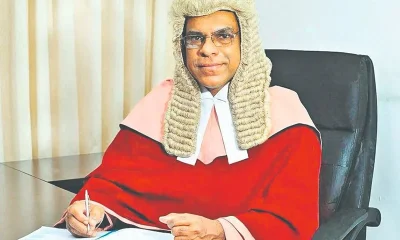
CJ urged to inquire into AKD’s remarks on May 25 court verdict
-

 News7 days ago
USD 3.7 bn H’tota refinery: China won’t launch project without bigger local market share
-

 Editorial4 days ago
Clean Sri Lanka and dirty politics
-

 Editorial7 days ago
Deliver or perish
-

 Opinion6 days ago
Security, perception, and trust: Sri Lanka’s delicate balancing act
-

 News2 days ago
SLPP expresses concern over death of former SriLankan CEO
-

 Editorial3 days ago
The Vijay factor