
Latest News
Economic stabilization process and relief packages to people to continue

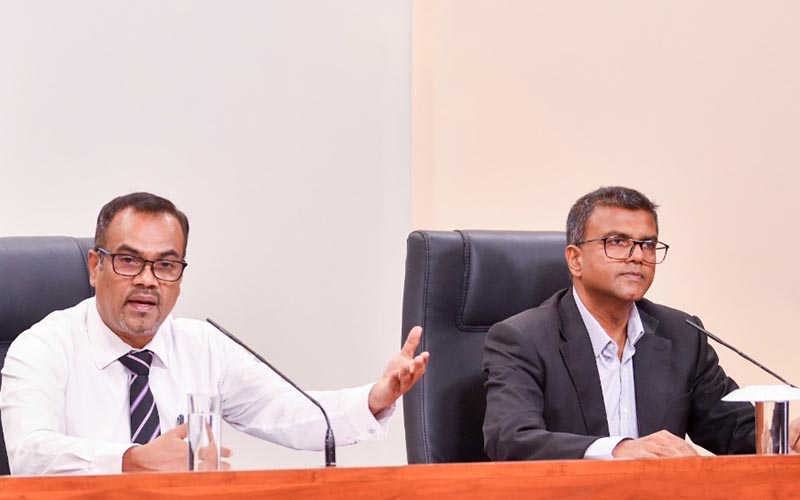
A press briefing on the economic stabilization process and the proposed relief packages for the public was held on Thursday (26) at the Presidential Media Center (PMC).
Minister of Labor and Deputy Minister of Economic Development, Dr. Anil Jayantha Fernando, along with Deputy Minister of Finance and Planning, Dr. Harshana Suriyapperuma, attended the briefing.
The media statement released during the press briefing is as follows:
Press Statement on the Economic Stabilization Process and Relief Packages to people.
1. Economic Stabilization
Economic stabilization is key to take the country out of abyss created by past regimes. At the time the government assumed office those who are responsible for the crisis had unilaterally suspended external debt servicing in April 2022, entered into IMF program for Extended fund facility (EFF) of approximately USD 3 billion over a period of 4 years to be received in 8 installments, and paddled through the IMF program and debt restructuring process in line with debt sustainability analysis connected to it. The delayed and complex nature of the debt restructuring process incurred additional costs to the country and created additional burden on the people. However after, considering both pros and cons of the context prevailed at that time in terms of social, political and economic perspective, the government proceeded with the options in the best interest of the people of the country.
Accordingly, it was possible to reach the staff-level agreement of the third review on 26th November 2024, in line with the program parameters, and government revenue measures with appropriate engagement, and timely facilitation. In the lead-up to the board approval from the IMF, the government is engaging with necessary stakeholders to obtain the next tranche of the EFF.
Debt Restructuring
It consists of both domestic and external restructuring. Domestic debt restructuring was completed in July 2023. External restructuring excludes multilateral creditors on various ground and arguments. The rest consists of official bilateral debt and private ISB holders.
Bilateral Debt
The bilateral debt is dealt with the Official Creditor Committee (OCC) co-chaired by France, India and Japan representing 17 countries, China Exim Bank, China Development bank, other official creditors (Kuwait, Saudi Arabia, Iran and Pakistan) and other commercial creditors.
OCC had agreed to the terms and conditions in June 2024 and the loans with China Exim bank had already been restructured in October 2023 within the agreed framework, ensuring comparability of treatment (CoT). Except the other official creditors (Kuwait, Saudi Arabia, Iran and Pakistan) accounting roughly USD 300 million representing about 1% total external debt subject restructuring , all other bilateral creditors have already agreed for restructuring within the agreed framework.
ISB Creditors
Much delayed ISB restructuring had passed several stages of negotiations with agreements, disagreements, changes to proposals, adjustments in line with DSA and IMF consents, had finally agreed in principle (AIP) on 19 September 2024 just two days prior to the presidential election. Ad Hoc Group (AHG) and Local banking consortium represent ISBs which account for USD 14.2 billion including a past due interest of USD 1.7 billion.
By prioritizing and facilitating actions in a timely manner, the new government has demonstrated a strong political commitment to steering the country toward economic stability. These efforts toward financial stability have been independently acknowledged by third parties, including rating agencies which have upgraded the ratings by several notches, which was only possible due to the correct prioritization and implementation of economic stabilization measures. Hence, the government continued with the restructuring process and facilitated it to ensure the successful completion of the issuance of new bonds for the exchange of existing ones on 20th December 2024 in order to achieve the critical objective of stabilizing the economy in pursue of navigating the country with the growth and development trajectory towards a thriving nation and beautiful life.
2. SME Sector Facilitation
2.a.1. Parate Extension
Instead of merely postponing the Parate execution date, the government engaged with stakeholder groups to ensure acceptable solutions was found for this long-standing issue. As a result, the Parate execution has now been extended until 31st March 2025.
2.a.2. Relief Package
The relief for businesses is not only in the form of an extension of time. Based on data provided by the Central Bank, 99% of borrowers with outstanding capital of less than 25 million rupees in restructured loans have been granted a 12-month extension to renegotiate with banks and agree on a settlement path. Borrowers with debts between 25,000,000 and 50,000,000 rupees have been granted a 9-month extension, while all other borrowers are entitled to a 6-month extension. This relief package, proposed by the government and to be implemented through the Central Bank, also includes several other important measures, such as easing the credit rating status, extending the repayment period, offering low interest rates for restructured debt, and providing a transparent mechanism to resolve valuation disputes.
This package aims to ensure that the SME sector can actively contribute to the economy.
2.b. School Stationery Assistance for School Children
2.b.1. Children in the Aswesuma Families
To ease the burden on parents from vulnerable groups in society, Rs. 6,000 per child has been allocated to purchase essential school books and stationery for the upcoming school term. Children from Aswesuma recipient families will begin receiving this benefit shortly.
2.b.2. Children Not Receiving Aswesuma
Children from families who are not currently receiving Aswesuma but are facing economic hardship will also be provided with this benefit, based on recommendations from the Ministry of Education. It is expected that the process will be finalized soon, and the disbursement scheme will start within a few days, ensuring that all deserving children facing economic hardship receive assistance.
[PMD]


No Sri Lanka Cricket (SLC) representative was invited to the ICC’s quarterly meeting in Ahmedabad over the weekend, but the fact that the ICC board has not slapped sanctions on SLC’s new Transformation Committee is being quietly celebrated by the new board in Sri Lanka, a board member said.
The Transformation Committee was appointed by the nation’s government in May, replacing the elected set of SLC office-bearers. The ICC had taken a dim view of government interference in SLC in 2023, as well as in 2015, imposing sanctions on each of those occasions.
But athough the ICC had sent deputy chair Imran Khwaja on what was effectively a fact-finding trip to Colombo in May, no sanctions attributed to government interference have followed, even after the latest ICC meeting.
“So far what we feel is that no news is good news,” said a Transformation Committee member. In late 2023, the ICC had suspended SLC from its board due to government interference. On that occasion, the country’s sports minister was accused of overreach.
The latest, sweeping administrative changes in Sri Lanka, which includes the ousting of the elected board and the installation of a committee tasked ostensibly with transforming Sri Lankan cricket, have so far only drawn ICC scrutiny rather than tangible consequences. The ICC statement said only this: “In Sri Lanka, ICC Deputy Chair Imran Khwaja and Devajit Saikia (BCCI) have visited and met with relevant stakeholders to assess ongoing developments.”
The Transformation Committee headed by Eran Wickramaratne has repeatedly expressed that its goal remains to rewrite an outdated SLC constitution, in order to better align the organisation with the requirements of Sri Lanka’s public.
“Even in the debates in parliament, which were not driven by party loyalties, it has been acknowledged that there has to be a change at Sri Lanka Cricket,” said Wickramaratne, chair of the new Transformation Committee and a former politician. “The job we have is to change the SLC constitution. The stakeholders in that change are the Sri Lankan people. The people can give their ideas. Other stakeholders can also express their ideas. We thought our first role is to listen to those ideas.”
SLC hopes Transformation Committee members will be invited to future ICC meetings.
ESPNcricinfo has reached out to the ICC for comment on SLC participation in meetings, but the ICC is yet to respond.
[Cricinfo]

Sachin Tendulkar may not be a fan of them, but impact subs are making their way into the Lanka Premier League, as is a stipulation that an Under-23 player (one born on or after July 1, 2003) has to be a part of each side’s playing XI at all times – even after the use of an impact sub. These were two key elements playing on the minds of the five franchises as the LPL draft 2026 took place on Monday in Colombo.
Both these changes ensured that squad composition – right from the four pre-signings to the 16-18 players drafted on the night – had to be fairly well thought out, with teams needing to decide which roles to entrust to a largely unproven talent while simultaneously balancing their squads for maximum impact. Complicating matters further was the relative dearth in the Under-23 category, with many of Sri Lanka’s Under-19 talents due to play India in July and thus unavailable for the tournament.
It was also revealed that Pathum Nissanka and Matheesha Pathirana are both nursing injuries, despite the former being named in the touring party for the West Indies. It is understood that his workload is being managed, with the player expected to undergo surgery in order to be fit for India’s tour of Sri Lanka later this year.
In terms of the teams, four of the five sides revealed new owners and coaching staff, with fresh team names to go with them. Only the Dambulla Sixers remained unchanged – though they had gone through a tumultuous period in 2024, with two changes in ownership prior to the start of the season. Jaffna are now the SC Jaffna Kings, Galle are the Galle Gallants, Kandy the Kandy Royals and Colombo the Colombo Kaps.
The draft itself concluded in a little under four hours, with each team tasked with drafting squads of at least 18 players, with the option of two additional signings at the end. In total there were 14 mandatory rounds of drafting, with two optional rounds for the teams that decided to participate.
Players were split into three categories – Platinum (US$ 50,000), Gold ($30,000), Classic ($20,000) – with each having a separate category for local and foreign players. There were also categories for Associate ($15,000) and Emerging Under-23 ($10,000) players.
Vijay Shankar the recently retired Indian national, IPL breakout star Eshan Malinga, fiery Pakistan opener Sahibzada Farhan, and the experienced pair of Angelo Mathews and Dinesh Chandimal were some of the notable pre-signings, while Avishka Fernando and Charith Asalanka were both first-round picks despite neither able to find a place in the Sri Lankan T20 squad. Rahmanullah Gurbaz and Mohammed Nawaz headlined the overseas picks.
The final squads are as follows:
SC Jaffna Kings: Taskin Ahmed, Dunith Wellalage, Shakib Al Hasan, Bhanuka Rajapaksa, Avishka Fernando, David Wiese, Dilshan Madushanka, Kamil Mishara, Traveen Mathews, Ibrahim Zadran, Mohommed Shiraz, Chamindu Wickramasinghe, Nuwanidu Fernando, Sandeep Lamichhane, Lizaad Williams, Dipendra Airee, Kugathas Mathulan, Praveen Manisha, Nishan Madushka
Colombo Kaps: Ben McDermott, Kamindu Mendis, Jimmy Neesham, Kusal Mendis, Binura Fernando, Mujeeb Ur Rahman, Sadeera Samarawickrama, Milan Ratnayake, Janith Liyanage, Shahnawaz Dahani, Jeffrey Vandersay, Thanuka Dabare, Movin Subasingha, Mohammed Haris, Hasan Mahmud, Kushal Bhurtel, Malsha Tharupathi, Sharujan Shanmuganathan, Wanuja Sahan, Anthony Pragasam
Kandy Royals: Vijay Shankar, Angelo Mathews, Moeen Ali, Wanindu Hasaranga, Nuwan Thushara, Rahmanullah Gurbaz, Kusal Perera, Asitha Fernando, Garuka Sanketh, Daniel Sams, Vishen Halambage, Muditha Lakshan, Lahiru Udara, Dale Phillips, Zahir Khan, Brandon McMullen, Sahan Mihira, Pawan Sandesh, Dushan Hemantha, Isitha Wijesundera
Galle Gallants: Litton Das, Eshan Malinga, Rassie Van Der Dussen, Dasun Shanaka, Charith Asalanka, Mohammad Nawaz, Pramod Madushan, Lasith Croospulle, Vijayakanth Viyaskanth, Akif Javed, Sahan Arachchige, Chamika Karunaratne, Tharindu Rathnayake, Sam Harper, Mehidy Hasan Miraz, Haider Ali, Dinura Kalupahana, Uri Koththigoda, Kasun Rajitha, Sachindu Colombage
Dambulla Sixers: Reeza Hendricks, Dinesh Chandimal, Sahibzada Farhan, Dushmantha Chameera, Maheesh Theekshana, Fazalhaq Farooqi, Niroshan Dickwella, Pavan Rathnayake, Akila Dananjaya, Mohammed Wasim, Dhananjaya Lakshan, Ramesh Mendis, Sachitha Jayatilake, Gulbadin Naib, Dian Forrester, Shadley Schalkwyk, Vishva Kumara, Gayana Weerasinghe
Pre-signings:
SC Jaffna Kings – Taskin Ahmed, Dunith Wellalage, Shakib Al Hasan, Bhanuka Rajapaksa
Galle Gallants – Litton Das, Eshan Malinga, Rassie Van Der Dussen, Dasun Shanaka
Kandy Royals – Vijay Shankar, Angelo Mathews, Moeen Ali, Wanindu Hasaranga
Colombo Kaps – Ben McDermott, Kamindu Mendis, Jimmy Neesham, Kusal Mendis
Dambulla Sixers – Reeza Hendricks, Dinesh Chandimal, Sahibzada Farhan, Dushmantha Chameera
[Cricinfo]
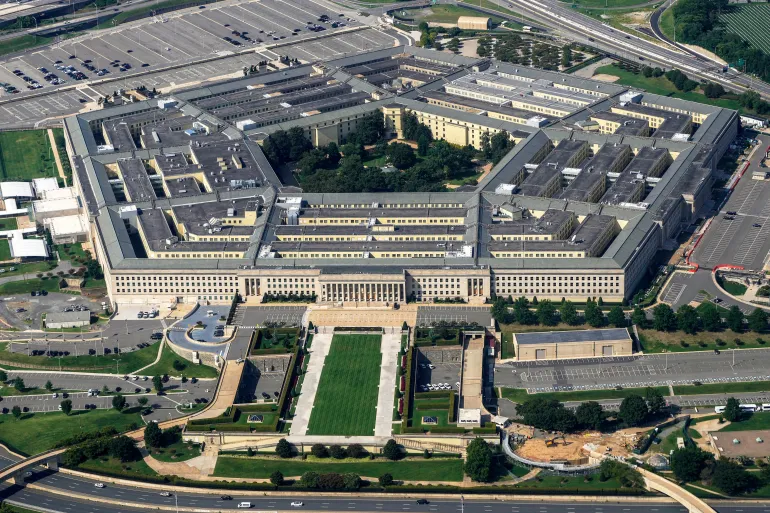
The United States Department of Defense has barred journalists from its press office, the latest move by the Pentagon to restrict media access since President Donald Trump’s return to the White House.
Acting Pentagon Press Secretary Joel Valdez said on Monday that the administration had re-designated the office as a “Sensitive Compartmented Information Facility” due to its use by speechwriters with access to classified government information.
“These speechwriters routinely handle classified material and require SIPRNet access,” Valdez said in a statement provided to Al Jazeera, referring to the secure computer network used by the Pentagon to share classified information.
“As a result, journalists will no longer be permitted to enter the office space. Access to the office of the Assistant to the Secretary of War for Public Affairs and to the Press Secretary remains available by appointment only,” Valdez added, using the Trump administration’s preferred title for Defense Secretary Pete Hegseth.
The Washington Post first reported the change.
The move follows a slew of steps by the Trump administration to curtail the ability of US media outlets to report on the military and other areas of the government.
In March, the Defense Department said it would no longer allow media outlets to maintain offices at the Pentagon after a judge sided with The New York Times in a lawsuit challenging the imposition of new rules for obtaining press credentials.
The Pentagon also announced that journalists would require an official escort while inside the complex, a policy that The New York Times is seeking to overturn in a separate lawsuit filed in May.
The National Press Club, the main professional organisation for journalists in the US, condemned the latest restrictions as a “troubling escalation” in the Trump administration’s efforts to curtail media scrutiny of the Pentagon.
“Independent reporting on the US military is not optional,” National Press Club President Mark Schoeff Jr said in a statement.
“When journalists are pushed farther from the institutions they cover, the American people are left with less information, less transparency, and less oversight. Any effort to restrict that access should alarm everyone who values a free and informed society.”
The Freedom of the Press Foundation, a nonprofit advocacy organisation, also criticised the move.
“It’s rare for anything other than disingenuous spin and outright lies to come out of the Pentagon’s press office these days, so it’s hard to imagine what basis they have to call the space classified,” Seth Stern, chief of advocacy at the organisation, told Al Jazeera.
“The only thing sensitive or confidential about the information released by Pete Hegseth’s Pentagon is that it’s not true.”
[Aljazeera]

Pakistan naval trio arrives at Colombo Port

Sri Lanka Cricket relieved at ICC’s mild response to Transformation Committee

ICC approves red-to-pink ball change to reduce bad-light impact in Test cricket

LPL introduces impact subs for 2026 season

Protesters call on Kenyan government to halt femicide crisis

US Defense Department bars journalists from its press office

‘Dates have the highest sugar content to fight Coronavirus’

Sunday Island 27 December – Headlines

#SundayIsland 17th December – Headlines

Sunday Island – 28th March

Sunday Island Headlines – 21 March

Sunday Island – 21st February – Headlines
-

 News4 days ago
IMF urges Lanka not to meddle with exchange rate
-
 Business5 days ago
Sri Lanka’s construction industry losing ground while no one watches
-
 News4 days ago
State of emergency extended
-
 Midweek Review7 days ago
Israeli-US aggression won’t go unanswered -Iranian Ambassador
-

 Features5 days ago
The Division Bell Mystery
-
 News2 days ago
UNP challenges NPP move to amend Vihara – Devalagam Act
-

 Business2 days ago
IMF’s unstated rate:Sri Lanka’s $695m loan costs about 5.33% per annum
-

 News6 days ago
RTI query of Ditwah funds: Presidential Secretariat mum on key questions