
Features
An impusive visit to George Keyt nearly 40 years ago

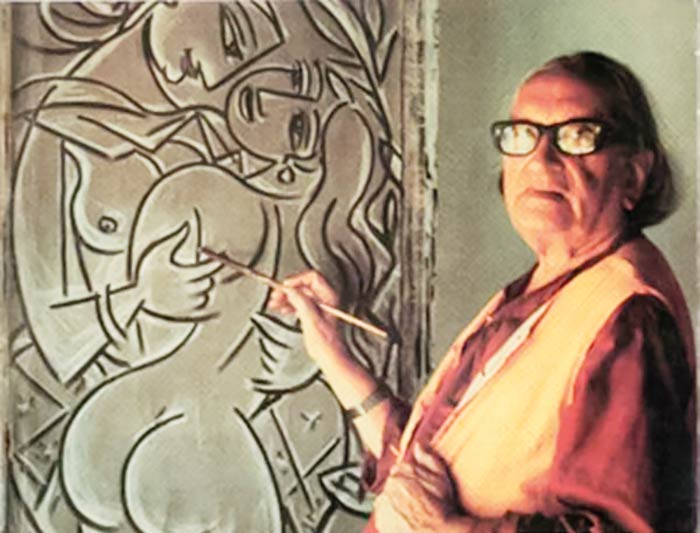
Old-world grace and charm of renown artist
By ACB Pethiyagoda
A few Sundays ago (this article was written in July 1985) I travelled through the fertile lands of the Dumbara valley and passed through Kundasale, Arangala, Gammaduwa (with its Buddhist Temple of unique design) and Sirimalwatta, to Gunnepana.
The purpose was to see, in person, George Keyt, whose great artistic achievements and invaluable contribution to art in Sri Lanka were so beautifully presented recently in a telefilm Directed by Tissa Liyanasuriya with the script by Tissa Devendra. Up to the time of this TV program it was a hope that a chance meeting would materialize, but it became an urgent need after that.
The drive was tortuous, the roads being more like gullies than even cart tracks. But what bothered me more was a faint recollection of a conversation I cannot remember where, which left with me the impression that the artist does not welcome visitors. However, since the decision had been made I kept going stopping frequently for directions.
The artists’s house was a modest, two storied building with huge windows on all sides of the house which faces a ‘yaya’ of bright green paddy. Light knocking on a window followed after a while with louder knocking did not produce results. A kind gentleman passing by and realizing for whom I was looking informed me that, ‘Keyt mahatmaya’ was with ‘Percy mahatmaya’ and gave me directions to the latter’s house.
Sarong
My desire to meet George Keyt was so great that I risked being considered a nuisance and climbed the small hill to the home of Mr. and Mrs. Percy Weerasinghe. Although a stranger to everyone seated in that enclosed verandah I was made welcome on stating the purpose of my visit and a chair beside George Keyt himself was offered to me. He was dressed in a dark brown kurta and checked brown sarong. His shoulder-length, silvery grey hair was neatly brushed and his fair cheeks and softly rounded chin had been carefully shaved.
For what seemed a long time to me he was silent, like all the others in the room, and I made no attempt to break that silence. I was enthralled by the sight of the man whose famous paintings at Gothami Vihare in Borella I had first seen while still at school and since then a large collection of his other work at occasional public exhibitions. The silence was suddenly broken with his question. ‘Are you from a newspaper?’
With my disclaiming connections with journalism the conversation started.
After some kind inquiries about me and some relations he remembered, Mr. Keyt, with old-wold grace and charm took a leisurely stroll down memory lane describing the place where he had lived after giving up urban life in Kandy. From his conversation one could not fail to realize his deep love and affection for the countryside, nature and things like the kitul jaggery we were nibbling with tea. He regretted that the quality of life in villages had changed so much, with the expansion of urban influence, since he first came to live in a rural atmosphere.
On being told that I had first seen his paintings at Gothami Vihare as a youth and thereafter on the last Sinhala New Year day he was most anxious that I make inquiries about the restoration of the paintings which he said was necessary. I had for long asked myself how the artist had come to paint at this particular temple, so far from his home at that time in Sirimalwatta, and at last had the answer.
Keyt explained that his younger sister’s husband, Mr. Harold Pieris’ grandmother, was a member of the `dayaka saba’ of the temple and she had in her piety wished to beautify the temple. George Keyt had been persuaded by his brother-in-law to undertake the work and he had agreed on the condition that
some structural alternations to the Vihara, particularly the main doorway, be carried out to improve the general appearance of the temple.
In great detail the artist went on to describe how the special plaster was prepared with finely ground sand chemically treated to preserve and prevent the murals from discolouration. With obvious sadness he said that the original colour in which he painted Yasodara Devi particularly, was not as dark as it appears today. He said that on a recent visit to the temple he was relieved to find the deterioration was not as bad as he had feared it would be although the paintings were completed 44 years ago.
George Keyt spoke of a house he had once lived in at Harispattuwa and of the overflowing well at the bottom of his compound to which the village girls used to come for water. With some diffidence I asked whether any of them were the subjects of his paintings. He said that they may have influenced his work but none had been painted in his studio.
No egoist
Who then had be painted in his studio? The question remained unanswered.
I was deeply touched by his willingness and the easy manner in which he talked to me, a stranger, which belied what I had heard: his reluctance to meet people. What impressed me even more was his utter lack of ego. He appeared surprised when I told him that on asking for directions that morning a venerable old gentleman at Arangala had told me, ‘That world famous gentleman (Lokapprasidda mahatmaya) now lived at Gunapana and no longer at Sirimalwatta’. To me it seemed as if Keyt was quite surprised that he was known outside his beloved Dumbara Valley!
In company such as George Keyt’s time passes too fast. When I realized I had been with him for one and half hours when he himself had called on a neighbour I left after farewells in Eastern fashion to him and his friends.
For a long time to come I shall cherish the memory of the meeting with this brilliant son of Lanka who has shown us and the world outside on canvas the beauty of ‘the expression and mutual attraction in the feelings and emotions of human love, and all the other subjects depicted such as dance and music’.
(This article was first published in July 1985)


 Looking back over the years since the 9/11 catastrophe, it could be said that barring former Iranian President Mohammad Khatami no world political leader of note has made an earnest effort to change the nature of global political discourse for the better. Khatami won world acclaim for his pronouncement that the time is right to launch and sustain a ‘Dialogue among Civilizations’.
This was in marked contrast to US political scientist Samuel P. Huntingdon’s epochal theses, formulated in the wake of 9/11 and other global political tumults that the Post Cold War era is essentially one of conflicts among civilizations. That is, people’s identity markers, such as culture and religion, are the prime shaping forces of international conflicts.
From a Political Realism standpoint, Huntingdon’s theory may seem to have gained in credibility over the years but it is Khatami’s pronouncement that has evoked an empathetic response in the hearts and minds of publics world wide. So much so, 2001 was proclaimed by the UN General Assembly as the ‘Year of Dialogue among Civilizations’.
It could be said that the latter proclamation was an endeavour to give back to humans their essential identity of peace-makers. It was an eschewing of the position that war and conflict are central to the human condition and amounted to upholding constructive dialogue among peoples and civilizations as a path to peace.
That things have not worked out in the world in keeping with the expectations of peace makers does not in any way invalidate the thesis that peace is the essential propensity of humans.
If peace-making is seemingly ineffective it is primarily because the path to peace is narrow, tortuous and time-consuming. On the other hand, violence usually misleadingly recommends itself to the human as the more expedient, cost-effective way out of a conflictual situation. However, the ultimate cost of the latter approach is prohibitive because it brutalizes the human beyond recognition.
Some of the evidence is before our eyes. The Trump administration, for example, has, minus much forethought, unleashed what may be described as a ‘quick-fix’ war against Iran but is now finding that it is in a veritable military quagmire in West Asia. The priority for the administration now seems to be a face-saving escape strategy. Such are the costs of the war option.
However, there is no denying that much remains to be done by the world community to bring peoples and cultures together with a view to enabling them to work as one for the cause of a less dangerous world.
Meanwhile, the broad divisions in international politics continue and past political polarities are lingering to the detriment of enhanced international understanding. The East and the West and the South and the North, for instance, are continuing to work in separate collectives, more or less, and no notable efforts are being made by the international community to bring these sides together for the purpose of united constructive action that could usher greater international well being.
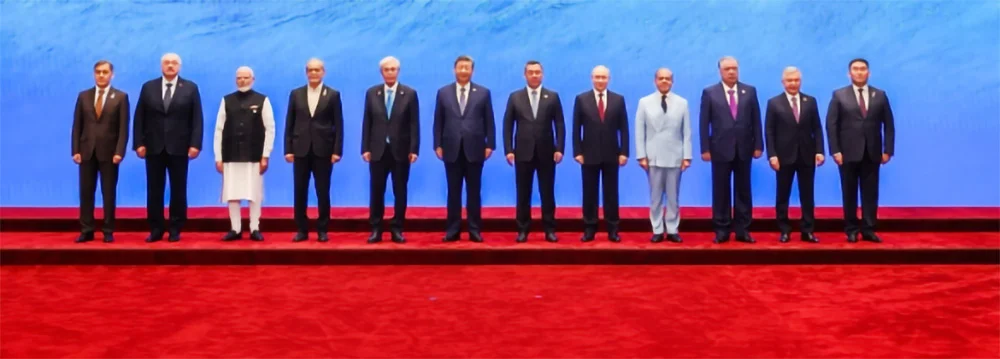
The recent Shanghai Cooperation Organization Summit, 2026, held in Kyrgyztan was a replication of the above broad trends but there were some statements at the forum by Indian Prime Minister Narendra Modi that deserve special scrutiny and comment.
Modi was quoted saying among other things: ‘The land of Gandhi and the land of Buddha share a single message: the path to peace!..We must move away from endless war towards an end to the war. This is essentially for the well being of humanity. A peaceful resolution to all issues at the earliest is the call of humanity, and this is India’s message.’
The above is the language of international peace and unity. It is such language that will help in building bridges among civilizations and advance the cause of world peace. Besides, it will help bring a measure of understanding between North and South.
In this regard, the Trump administration could take a leaf or more from the Modi government. Unless it makes a ‘U turn’, as it were, in the direction of peace and reconciliation it is very unlikely that the US and the world would experience any stability worth speaking of.
Right now the US is savaging the sovereignty of Venezuela. It is a question of the ‘Empire striking back’ but Venezuela is a far cry from Iran. Iran has outsmarted the US on the battle field and is in a position to influence broad trends in the world economy since it still has control over the Hormuz Straits. That is, Iran could exercise a determining influence over world oil, gas and energy prices. In short, the US consumer’s future peace of mind is very much in the hands of Iran.
Given the above backdrop it should have dawned on the US political leadership that working towards cordial relations with Iran is the most advisable option. The US, simply, has too much to lose otherwise.
Likewise, Russia too needs to take a leaf from India. It is plain to see that its invasion of Ukraine is proving totally ineffective. It has not brought any measure of peace for the Russian people. Russia is right now experiencing a rerun of its military misadventure in Afghanistan. On the other hand, sections of the peoples concerned have been victimized and even brutalized.
Accordingly, there needs to be a coming together of democratic opinion worldwide for a fresh consideration of the options facing humanity. There is a dire need for value-based politics to take the place of Realpolitik. Besides, the language of peace and humanity needs to replace current divisive discourse with its stress on polarities and antagonisms.
International organizations of the stature of the UN need to take the lead in spearheading the above initiatives. Right now the UN gives the impression of being a spent force. This columnist hopes that he would be proved wrong on this score because the UN remains the only hope of the poor and victimized. It will be in the interests of all peoples for the UN to rejuvenate itself and dedicate itself increasingly enthusiastically to the cause of international peace.
Whether it be the South or North, dynamic, visionary political leadership and direction emerges as essential. The need is for voices that would espouse peace and accord across boundaries and divisions. For South Asia, India and Pakistan have the potential to fill this lacuna.
by Shelton Dharmaratne
Sri Lanka has reached an important constitutional moment.
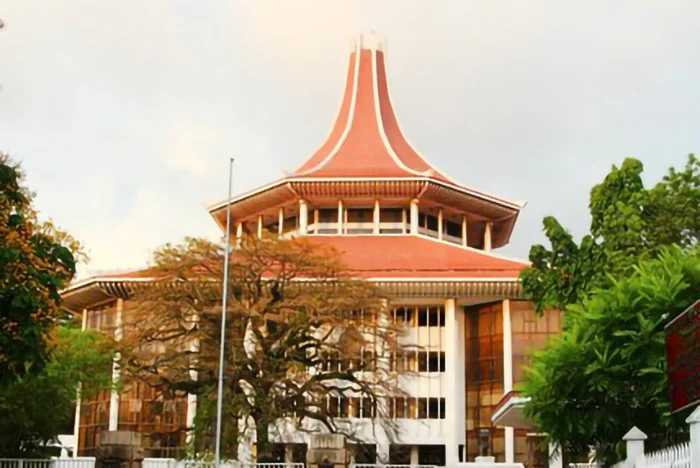
The proposed 22nd Amendment has moved beyond political debate and into the constitutional process through which its validity will be examined. That development should change the character of the national discussion.
That is understandable in a politically contested environment. But Sri Lanka should now resist reducing a question of constitutional design to a contest over political positions.
The deeper issue concerns the relationship between constitutional reform, judicial independence and public confidence in the institutions of the State.
The Supreme Court will determine the constitutional questions before it. Public commentators should therefore exercise restraint in predicting, interpreting or seeking to influence that determination. But restraint does not require silence. It requires a more rigorous discussion of the institutional principles at stake.
A narrower constitutional question than the political debate suggests
The proposed amendment principally concerns the retirement ages of judges of the Supreme Court and Court of Appeal, together with an increase in the maximum number of judges permitted on the Court of Appeal.
Under the proposal, the retirement age of Supreme Court judges would rise from 65 to 67 and that of Court of Appeal judges from 63 to 65. The maximum number of Court of Appeal judges would also increase from 19 to 24.
Other proposed changes concerning the retirement ages of judges in the lower courts arise under separate legislation. This distinction matters because the public debate has sometimes treated the wider package of judicial reform as though it formed a single constitutional proposal.
Nor should the central issue be reduced to whether retaining experienced judges is inherently good or inherently dangerous. Both propositions are too simplistic.
Sri Lanka faces a substantial burden of pending litigation, and delays in the administration of justice impose significant costs on citizens, businesses and the State. Experienced judges represent an institutional resource. Continuity, accumulated knowledge and familiarity with complex areas of law cannot always be replaced immediately.
Those are legitimate policy considerations.
But the opposing concern is equally important: judicial tenure is not merely an employment condition. It is a structural component of judicial independence.
The real question is institutional
The critical question is not whether an individual judge is capable of acting impartially. It is whether the constitutional structure provides adequate protection against circumstances in which judicial tenure could become connected, directly or indirectly, with political authority.
That is an institutional question, not an accusation against individual judges.
A judge may be entirely conscientious and independent while the institutional arrangements surrounding the judiciary nevertheless create public doubts about independence. Constitutional democracies therefore cannot depend solely on the personal integrity of office-holders. They must construct institutions capable of preserving independence even when governments, individuals and political circumstances change.
This is particularly relevant when constitutional reform concerns the tenure of serving members of the superior judiciary.
The institutional sensitivity of such a proposal should neither be exaggerated into an allegation of improper motive nor dismissed as irrelevant. The appropriate response is transparency, procedural fairness and confidence in constitutional safeguards.
Legitimate objectives do not settle constitutional questions
The government has stated that its objectives include strengthening the administration of justice, addressing delays, retaining judicial experience and increasing institutional capacity.
Those objectives deserve serious consideration. Sri Lanka needs judicial reform. Citizens waiting years for their cases to be concluded experience the justice system very differently from those discussing it in Parliament, courtrooms or universities.
A government is therefore entitled to propose reforms designed to improve judicial efficiency.
But legitimate objectives do not automatically resolve constitutional objections. The relevant question is whether the means chosen are compatible with the constitutional structure and whether sufficient safeguards exist against unintended institutional consequences.
That is precisely why constitutional scrutiny matters.
The concerns of the Bar Association of Sri Lanka (BASL) should likewise be examined without political labelling. Opposition to the proposed changes should not automatically be characterised as opposition to judicial reform or an attempt to obstruct the government. At the same time, invoking judicial independence does not place any argument beyond scrutiny.
The appropriate questions are straightforward:
Does extending judicial tenure strengthen the administration of justice?
What risks, if any, could it create for judicial independence?
Are adequate institutional safeguards in place?
Does the proposal operate prospectively, or does it affect judges already serving?
Could the same objectives be achieved by filling vacancies, increasing judicial capacity, improving court administration and strengthening case management?
These questions can be examined rationally without attributing improper motives to either side.
Judicial vacancies and institutional confidence
Recent concerns raised by the BASL regarding judicial vacancies add another dimension to the debate. The BASL has argued that vacancies in the Supreme Court contributed to the retirement of a senior Court of Appeal judge without promotion to the Supreme Court, despite vacancies having existed. It has also raised concerns regarding forthcoming judicial retirements and the need for timely consideration of appointments.
Such matters should not be treated as evidence of the motives behind the proposed amendment. They do, however, illustrate a broader principle.
Judicial independence is shaped not only by the retirement age written into the Constitution. It is also influenced by how vacancies are filled, how promotions are determined, how seniority and merit are assessed, and whether judicial officers and the public believe that institutional decisions are made according to transparent and defensible criteria.
The government has an opportunity to address these concerns constructively.
Prompt appointments based on publicly defensible principles would strengthen confidence in the judiciary irrespective of the eventual outcome of the constitutional debate.
Seniority, merit and transparent criteria
The controversy also exposes a longstanding question concerning judicial appointments.
Seniority has traditionally carried considerable weight in judicial advancement. Yet seniority alone need not be the sole measure of merit. Conversely, replacing established practices with undefined assessments of “merit” could create another institutional problem.
If governments or appointing authorities can determine which judges are sufficiently meritorious without clear and objective criteria, uncertainty itself may become a source of institutional anxiety.
Sri Lanka would therefore benefit from clearer, objective and defensible standards governing judicial appointments and promotions.
Such standards would protect judges as well as appointing authorities. They would reduce opportunities for favouritism, strengthen institutional confidence and make it harder for political actors to portray every appointment as politically motivated.
Institutional rules are stronger safeguards than assurances of good intentions.
The State is larger than any government
One principle deserves particular emphasis: a government is not the State.
Governments are temporary. The constitutional State is continuing. Political parties change, parliamentary majorities change and political priorities change. The judiciary, however, must continue to function independently of whoever occupies the government benches.
The judiciary is neither a government institution in the political sense nor an Opposition institution. It is an institution of the State whose legitimacy depends upon its independence from both.
For that reason, governments should exercise particular caution when proposing constitutional changes affecting the judiciary, even where the policy objectives are legitimate.
The stronger a government is politically, the greater its responsibility to demonstrate institutional restraint.
That is not political weakness. It is constitutional maturity.
Public confidence is a constitutional asset
The most consequential issue may ultimately be neither retirement age nor judicial capacity, but public confidence.
Courts do not possess political power in the conventional sense. Their authority rests substantially on the acceptance of their decisions as legitimate.
Citizens will sometimes disagree with judicial decisions. But where the judiciary is perceived as independent, even unpopular decisions can command respect. If judicial institutions are perceived as being shaped by political convenience, even legally sound decisions may become vulnerable to suspicion.
Constitutional reform affecting judicial tenure must therefore be evaluated not only by its immediate administrative benefits but also by its effect on institutional credibility.
A reform that produces short-term efficiency while weakening confidence in judicial independence could impose a greater long-term cost. Conversely, reform that improves efficiency while preserving independence can strengthen both justice and public trust.
The challenge is not to choose between judicial efficiency and judicial independence. It is to achieve both.
If a referendum arises …
If the constitutional process ultimately requires approval by the people at a referendum, the debate should rise above the conventional government versus Opposition contest.
The electorate should be given a clear constitutional question and sufficient information to assess it.
Citizens should understand what problem the amendment seeks to address, why the proposed mechanism is considered necessary, what institutional risks have been identified, what safeguards exist and whether alternative measures could achieve the same objectives.
A constitutional referendum deserves a higher standard of public discussion than an ordinary election campaign.
The people would not merely be choosing a political side. They would be deciding the institutional framework within which political power and judicial authority operate.
Beyond who wins
The most important question arising from the proposed Twenty-Second Amendment is therefore not simply whether the government succeeds or whether the Opposition and BASL prevail.
Nor is it ultimately whether judicial retirement ages become 67 and 65 or remain unchanged.
Those are immediate constitutional questions. The deeper issue is what Sri Lanka learns from the controversy.
If the government seeks to modernise and strengthen the justice system, that objective deserves serious consideration. If the BASL and others warn that particular reforms may affect judicial independence, those concerns deserve equally serious examination.
Neither side strengthens the country by assuming that the other is acting in bad faith.
The constitutional system is strongest when legitimate disagreements are resolved through institutions rather than political pressure.
Whatever the eventual constitutional outcome, Sri Lanka will still face the underlying challenges of judicial vacancies, case delays, institutional capacity, judicial appointments and public confidence. Those problems will not disappear with a judicial determination, nor should the national conversation end there.
Sri Lanka should instead seek a broader consensus around a fundamental proposition:
Judicial reform and judicial independence are not competing objectives.
The real challenge is to pursue reform in a manner that strengthens the judiciary without placing its independence under suspicion.
That requires sound legislation, transparent appointments, adequate resources, efficient court administration, responsible political conduct and safeguards capable of surviving changes of government.
The present controversy will eventually pass. Political arguments surrounding it will fade.
But constitutional arrangements can endure for decades.
That is why Sri Lanka must look beyond the immediate political contest.
The ultimate test is not who wins today’s constitutional argument. It is whether, when the political moment has passed, Sri Lanka has a judiciary that is more efficient, more accessible and more trusted—while remaining sufficiently independent to hold every government, including future governments, within the boundaries of the Constitution.

 Sri Lanka’s fashion world lost one of its brightest stars Monday morning – veteran model, actress, and elite pageant trainer Chulpadmendra “Chula” Kumarapathirana.
Her sudden demise has certainly come as a shock to many.
Chula had just completed a major event on Sunday (30th August), and was no more in the land of the living the following day (31st August).
Born in Colombo, she was an old girl of Buddhist Ladies’ College and later studied at the National Institute of Business Management, and has many awesome achievements to her credit.
In 2006, she won the “Miss Tourism Model of the World Press Award” in Tanzania.
She entered the entertainment industry, as an actress, and gained popularity through the teledrama “Wahinna Muthu Wessak.”
Chulpadmendra has been on TV, and many Sri Lankan hip-hop music videos, including “Hanthane” and “Heena Hirimal”, and has had several other minor acting jobs since then.
She hosted the Derana Miss Sri Lanka for Miss World 2008 and even participated in the reality TV show Sirasa Dancing Star.
For over 25 years Chula was active in local and international fashion and founded the Chulpadmendra Catwalk Studio to train young newcomers
She trained hundreds of models for runway, photoshoots, auditions, and international pageants.
She was known as a fierce mentor who believed in “not just learning to walk, but learning to command the runway”.
Many young models called graduating from her studio their “happiest moment.”

Chulpadmendra “Chula” Kumarapathirana: Many young models called graduating
from her studio their “happiest moment.” (L)/ Won the “Miss Tourism Model of the World Press Award” in Tanzania (R)
Chula was very fond of The Island newspaper and kept in touch with us on a regular basis.
Her last message to The Island was a ‘thank you’ note for the article ‘New benchmark in pageant industry’:
“Thank you, Ivan, for writing such a beautiful article about me. Your unwavering support, encouragement, and belief in me throughout my career mean more than words can express. I am truly grateful for your kindness and generosity.
“My heartfelt thanks also go to The Island newspaper for featuring the article. It is a great honour, and I sincerely appreciate the recognition and support.
“Thank you once again.”
In fact, just a couple weeks ago, she sent a photo of herself for our Glam Scene and that picture I publish today, as part of this story.
May she rest in peace. Our deepest condolences to her family, students, and all who loved her.

Sun directly overhead Madampe, Thorayaya, Thotagamuwa, Rattota and Kalavanchikudy about 12.09 noon today (03)

Afternoon thundershowers in the Northern, North-central, Eastern and Uva provinces in next few days, starting from today (03).

22A: SC urged to suspend hearing, appoint full bench

Govt. seeks NATO assistance

Recent ‘Ice’ detection at the Colombo Port made on US intelligence – Embassy

Sri Lanka launches National Food Safety Policy with support from FAO and EU

‘Dates have the highest sugar content to fight Coronavirus’

Sunday Island 27 December – Headlines

#SundayIsland 17th December – Headlines

Sunday Island – 28th March

Sunday Island Headlines – 21 March

Sunday Island – 21st February – Headlines
-

 News6 days ago
Eight politicians in drug kingpin probe
-

 Features4 days ago
“Wrap Me Up in My Blazer”— A Gentlemanly Bradby Reminiscence
-

 Business6 days ago
Sri Lanka opens up: A new season of direct connectivity
-

 Features3 days ago
When Sri Lankan stories find their own voice
-
 Latest News7 days ago
Nepal-Tibet floods: What happened, what caused them and who is missing?
-

 Features6 days ago
Redefining ageing in Sri Lanka
-

 Editorial6 days ago
The toxic legacy of two lakes
-
 Business6 days ago
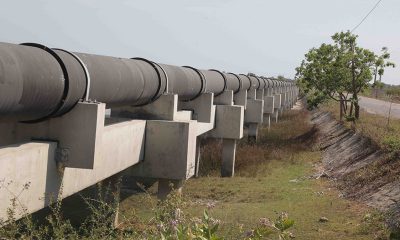
Jaffna Teaching Hospital secures lifeline water supply via ADB-funded Thalaiyadi sea water desalination plant