
Foreign News
Vietnamese tycoon in race to raise $9bn to avoid execution


Vietnamese property tycoon Truong My Lan is in a race for her life.
On Tuesday, the 68-year-old will hear the verdict in her appeal against the death sentence handed down on her in April for masterminding the world’s biggest bank fraud.
It was a rare and shocking verdict – she is one of very few women in Vietnam to be sentenced to death for a white collar crime.
The court found she had secretly controlled Saigon Commercial Bank, the country’s fifth biggest lender, and taken out loans and cash over more than 10 years through a web of shell companies, amounting to a total of $44 billion (£34.5 billion).
Of that prosecutors say $27 billion was misappropriated, and $12 billion was judged to have been embezzled, the most serious financial crime for which she was sentenced to death.
However, the law in Vietnam states that if she can pay back 75% of what she took, her sentence will be commuted to life imprisonment.
During her trial in April Truong My Lan, who had been chairwoman of the real estate firm, Van Thinh Phat Group, was sometimes defiant. But in the recent hearings for her appeal against the sentence she has been more contrite.
She has said she was embarrassed to have been such a drain on the state, and that her only thought was to pay back what she had taken.
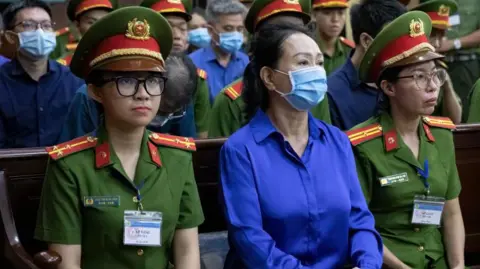
Born into a Sino-Vietnamese family in Ho Chi Minh City, Truong My Lan started as a market stall vendor, selling cosmetics with her mother. She began buying land and property after the Communist Party introduced economic reform in 1986. By the 1990s, she owned a large portfolio of hotels and restaurants.
When she was convicted and sentenced in April, she was the chairwoman of a prominent real estate firm, Van Thinh Phat Group. It was a dramatic moment in the “Blazing Furnaces” anti-corruption campaign led by then-Communist Party Secretary-General, Nguyen Phu Trong.
All of the remaining 85 defendants were convicted. Four were sentenced to life in jail, while the rest were given prison terms ranging from 20 years to three years suspended. Truong My Lan’s husband and niece received jail terms of nine and 17 years respectively.
The State Bank of Vietnam is believed to have spent many billions of dollars recapitalising Saigon Commercial Bank to prevent a wider banking panic. The prosecutors argued that her crimes were “huge and without precedent” and did not justify leniency.
Truong My Lan’s lawyers say she is working as fast as she can to find the $9 billion needed. But cashing in her assets is proving difficult.
Some are luxury properties in the Vietnamese capital, Ho Chi Minh City, which could, in theory, be sold quite quickly. Others are in the form of shares or stakes in other businesses or property projects.
In all the state has identified more than a thousand different assets linked to the fraud. These have been frozen by the authorities for now. The BBC understands the tycoon has also reached out to friends to raise loans for her to help reach the target.
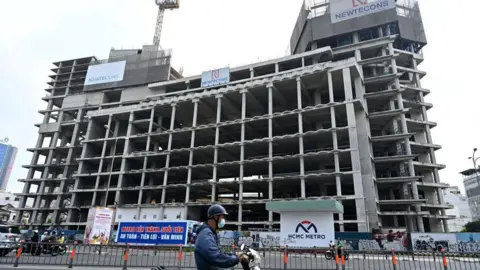
Her lawyers are arguing for leniency from the judges on financial grounds. They say that while she is under sentence of death it will be hard for her to negotiate the best price for selling her assets and investments, and so harder for her to raise $9 billion.
She can do much better if under a life sentence instead, they say. “The total value of her holdings actually exceeds the required compensation amount,” lawyer Nguyen Huy Thiep told the BBC.
“However, these require time and effort to sell, as many of the assets are real estate and take time to liquidate. Truong My Lan hopes the court can create the most favourable conditions for her to continue making compensation.”
Few expect the judges to be moved by these arguments. If, as expected, they reject her appeal, Truong My Lan will in effect be in a race with the executioner to raise the funds she needs.
Vietnam treats the death penalty as a state secret. The government does not publish how many people are on death row, though human rights groups say there are more than 1,000 and that Vietnam is one of the world’s biggest executioners.
Typically there are long delays, often many years before sentences are carried out, although prisoners are given very little notice. If Truong My Lan can recover the $9 billion before that happens, her life will most likely be spared.
[BBC]

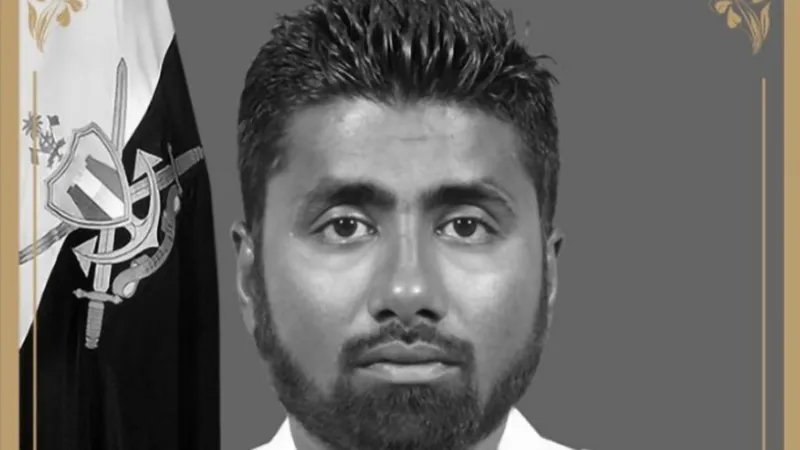
A rescue diver has died while searching for the bodies of a group of Italians who died in a scuba-diving accident in the Maldives.
Staff Sgt Mohamed Mahdhee was taken to hospital in critical condition and later succumbed to his injuries, a government spokesman told the BBC on Saturday.
Five Italians died while attempting to explore caves at a depth of around 50m (164ft) on Thursday. So far, the body of one of them is thought to have been recovered, in a cave at a depth of around 60m (197ft).
The incident is believed to be the worst single diving accident in the tiny Indian Ocean nation, a popular tourist destination because of its string of coral islands.
Maldivian President Mohamed Muizzu travelled to Vaavu Atoll on Saturday to observe the search operations.
“Eight rescue divers went into the water today. When they surfaced, they realised Mahdhee didn’t come up,” Mohamed Hossain Shareef, a Maldivian government spokesman told the BBC.
The other divers immediately went into the water again and they found Mahdhee had blacked out.
The Maldives military has described the operation as very high risk, with unfavourable weather conditions.
Italian Foreign Minister Antonio Tajani sent condolences: “These days of grief for Italy are compounded by the news that one of your brave soldiers… died while attempting to dive to reach the bodies of our fellow Italians.”
“This tragedy unites Italy and the Maldives in grief and respect for the victims,” he added.
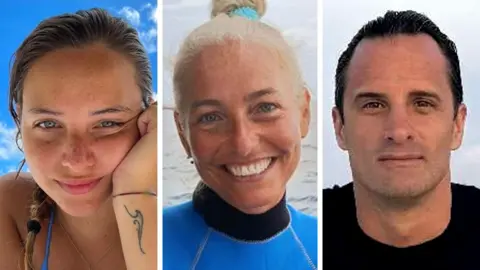
Four of the Italian divers were part of a University of Genoa team, including professor of ecology Monica Montefalcone, her daughter and two researchers. The fifth was a boat operations manager and diving instructor.
The five entered the water at Vaavu Atoll on Thursday morning, local media said, and were reported missing when they failed to resurface later on.
Police said the weather was rough in the area, about 100km (62 miles) south of the capital, Male. A yellow warning was issued for passenger boats and fishermen.
Shareef said recreational scuba divers were only allowed to dive up to a depth of 30m and it was not clear why the Italians went into a cave that’s 60m under water.
Italy’s foreign ministry said earlier that another 20 Italian nationals aboard the Duke of York yacht, from which the five divers took off, were unharmed and receiving assistance from the Embassy of Italy in Colombo, Sri Lanka
[BBC]
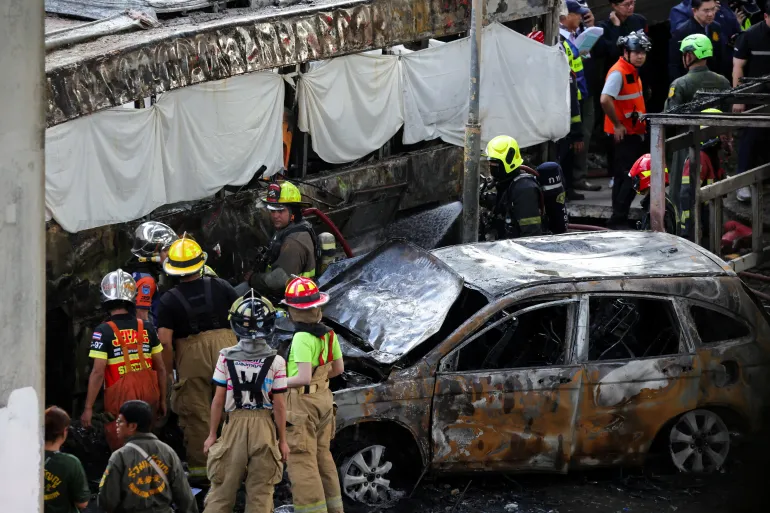
At least eight people have been killed, and dozens injured, after a freight train crashed into a public bus in Thailand’s capital.
Flames engulfed the bus and nearby vehicles near an airport rail link station in the centre of Bangkok Saturday afternoon.
The city’s emergency services Erawan Medical Center confirmed the number of deaths, while Bangkok police chief Urumporn Koondejsumrit told AFP news agency at least 35 people were injured.
Speaking to reporters at the scene, Deputy Transport Minister Siripong Angkasakulkiat said that all the bodies were found on the bus. It was not yet clear how many people were on board in total.
Prime Minister Anutin Charnvirakul ordered an investigation into the crash, according to a statement from his office.
Al Jazeera’s Tony Cheng, reporting from Bangkok, said the crash unfolded around 3:40pm local time (08:40 GMT), when the bus appeared to get stuck on an intersection with the rail line after the safety barriers descended.
As the freight train rammed into the stationary bus and continued travelling, it dragged several nearby vehicles along with it before the bus burst into flames.
Siripong would not confirm whether the bus had stopped on the railway track or discuss reports that the barriers may not have lowered properly, saying the matter still needs to be investigated.
Firefighters and rescue crews were dispatched to pull people from the wreckage and battle the flames as motorcyclists and passersby attempted to redirect traffic.
The fire has since been brought under control.
[Aljazeera]
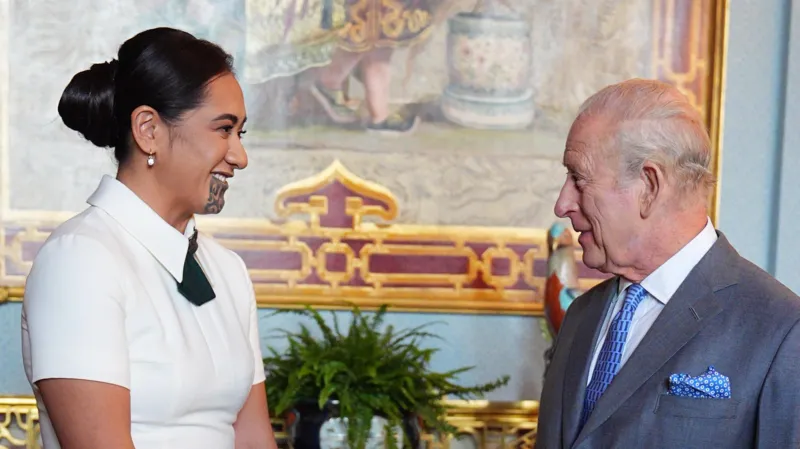
New Zealand’s Māori Queen Te Arikinui Kuini Nga Wai hono i te po has met King Charles III at Buckingham Palace.
The meeting with the British monarch was Te Arikinui’s first since she became queen in 2024, following the death of her father, Kiingi Tuheitia.
The visit marks a near 200-year relationship between the indigenous peoples of New Zealand and the crown, formalised in the Treaty of Waitangi, one of New Zealand’s founding documents.
A spokesperson for the queen says the two discussed the former king’s death in what was a “heartfelt” discussion, as well as the strengthening of their relationship.
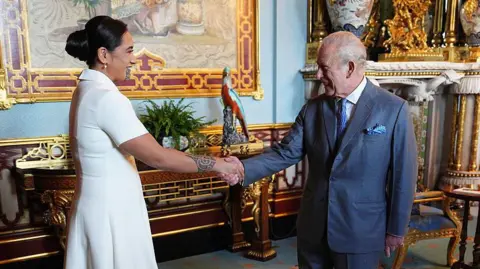
Earlier this week, the Māori queen was also welcomed by Prince William to Windsor Castle.
In a post on Instagram, Prince William acknowledged the visit, saying, “it was a pleasure to meet with the Queen.”
A statement released after the meeting from the Kīngitanga said the Māori queen discussed a range of global topics with Prince William.
“Te Arikinui affirmed her belief in the power of indigenous knowledge and intergenerational stewardship to help solve the world’s environmental and social challenges.”
Te Arikinui was crowned in 2024 after the death of her father – becoming only the second Māori queen, the first being her grandmother, Te Arikinui Dame Te Atairangikaahu.
The Māori monarchy dates back to the 19th Century, when different Māori tribes decided to create a unifying figure similar to that of a European monarch in order to try to prevent the widespread loss of land to New Zealand’s British colonisers and to preserve Māori culture. It is a largely ceremonial and symbolic role.
[BBC]

Taskin, Mehidy, Taijul, Mahmudul put Bangladesh well in front

Pakistan name Iram Javed in Womens T20 World Cup squad

Expansion of PayPal services in Sri Lanka officially announced

Showers expected in the Western, Sabaragamuwa, Central, North-western and Northern provinces and in Galle and Matara districts

Rupee slide rekindles 2022 crisis fears as inflation risks mount

Kapila Chandrasena case: GN phone records under court scrutiny

‘Dates have the highest sugar content to fight Coronavirus’

Sunday Island 27 December – Headlines

#SundayIsland 17th December – Headlines

Sunday Island – 28th March

Sunday Island Headlines – 21 March

Sunday Island – 21st February – Headlines
-
 News5 days ago
Ex-SriLankan CEO’s death: Controversy surrounds execution of bail bond
-
Features6 days ago
High Stakes in Pursuing corruption cases
-
 Features6 days ago
When University systems fail:Supreme Court’s landmark intervention in sexual harassment case
-

 Features23 hours ago
Sri Lankan Airlines Airbus Scandal and the Death of Kapila Chandrasena and my Brother Rajeewa
-
 Midweek Review5 days ago
A victory that can never be forgotten
-
 News2 days ago
Lanka’s eligibility to draw next IMF tranche of USD 700 mn hinges on ‘restoration of cost-recovery pricing for electricity and fuel’
-
 News7 days ago
150th anniversary celebrations of Ave Maria Convent, Negombo
-
 Features3 days ago
Mysterious Death of United Nations Secretary General Hammarskjöld