
Foreign News
Japan voting for new leader in shadow of scandals

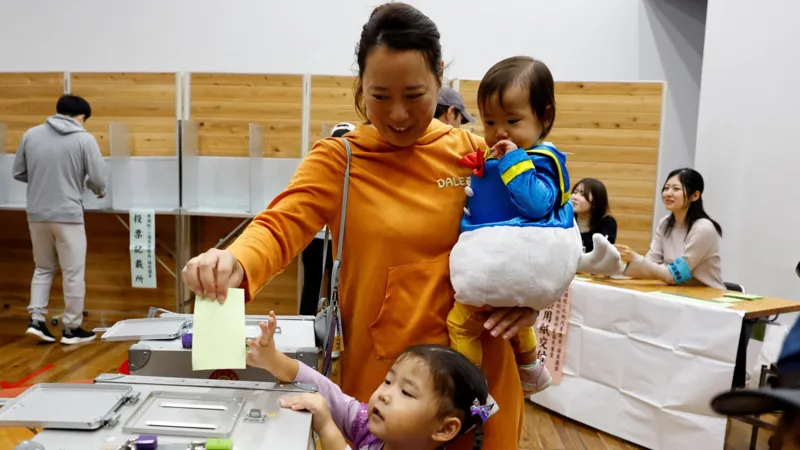
Japanese voters are today heading to the polls in a snap election, following a tumultuous few years for the ruling party which saw a “cascade” of scandals, widespread voter apathy and record-low approval ratings.
The election was announced by Shigeru Ishiba three days after he was selected as the leader of the ruling Liberal Democratic Party (LDP) – before he had been officially sworn in as prime minister.
The decision was made despite the LDP seeing approval ratings of below 20% earlier in the year, in the wake of a political fundraising corruption scandal.
Yet the LDP still remains the strongest contender against opposition parties which have failed to unite, or convince voters they are a viable option to govern.
The main opposition party had an approval rating of just 6.6% before parliament was dissolved.
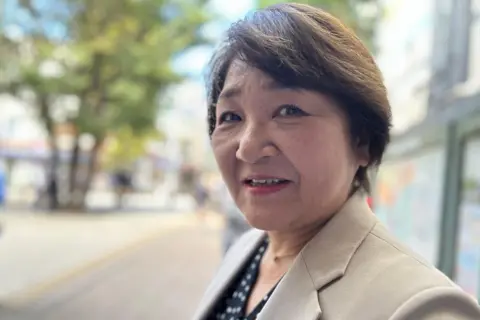
“It is so hard to make decisions to choose parties, I think people are losing interest,” Miyuki Fujisaki, a long-time LDP supporter who works in the care-home sector, told the BBC ahead of polls opening.
The LDP, she said, has its problems with alleged corruption, “but the opposition also does not stand out at all”.
“They sure complain a lot, but it’s not at all clear on what they want to do,” the 66-year-old said.
For all the apathy, politics in Japan has been moving at a fast pace in recent months.
Shigern Ishiba took over as prime minister after being voted in by the ruling party following his predecessor Fumio Kishida – who had been in the role since 2021 – making a surprise decision to step down in August.
The move to call the election came at a time when the LDP is desperate to restore its tarnished image among the public. Ishiba – a long-time politician who previously served as defence minister – has described it as the “people’s verdict”.
But whether it’s enough to restore trust in the LDP – which has been in power almost continuously since 1955 – is uncertain.
A series of scandals has tarnished the ruling party’s reputation. Chief among them is the party’s relationship with the controversial Unification Church – described by critics as a “cult” – and the level of influence it had on lawmakers.
Then came the revelations of the political funding corruption scandal. Japan’s prosecutors have been investigating dozens of LDP lawmakers accused of pocketing proceeds from political fundraising events. Those allegations – running into the millions of dollars – led to the dissolution of powerful factions, the backbone of its internal party politics.
“What a wretched state the ruling party is in,” said Michiko Hamada, who had travelled to Urawa station, on outskirts of Tokyo, for an opposition campaign rally.
“That is what I feel most. It is tax evasion and it’s unforgivable.”
It strikes her as particularly egregious at a time when people in Japan are struggling with high prices. Wages have not changed for three decades – dubbed “the lost 30 years” – but prices have risen at the fastest rate in nearly half a century in the last two years.
This month, as voters were getting ready to go to the polls, saw more price hikes on thousands of food products as well as other day-to-day provisions like mail, pharmaceuticals, electricity and gas.
“I pay 10,000 yen or 20,000 yen ($65 – $130; £50 – £100) more for the food per month than I used to,” Ms Hamada said. “And I’m not buying the things I used to buy. I am trying to save up but it still costs more. Things like fruit are very expensive.”
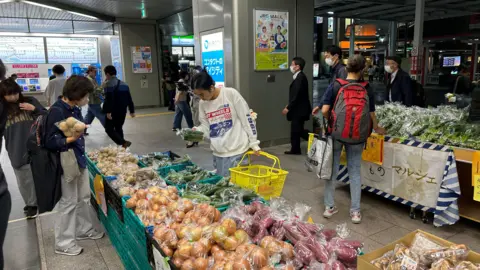
She is not the only one concerned with high prices. Pensioner Chie Shimizu says she now must work part-time to make ends meet.
“Our hourly wage has gone up a bit but it does not match the prices,” she told the BBC as she picked up some food from a stand at Urawa station. “I come to places like this to find something cheaper and good because everything in regular shops is expensive.”
Ms Shimizu has not voted for years but might this time – although she is not sure which candidate or which party to vote for.
“I can’t find anyone that I want to vote for. I feel like there’s no one who I can trust to be our leader. I wonder about those who become an MP for their own greed.”
Against this backdrop, it might look like Ishiba has taken a political gamble. His party had held 247 of 465 seats in the lower house, while its coalition partner, Komeito, had 32. A party needs 233 seats to control the house, known as the Diet.
There are now fears Komeito may fail to reach that number again, while the main opposition – which had 98 seats in the previous parliament – began to pick up momentum with voters ahead of Sunday’s election.
“I think the LDP has dug itself a very deep hole to climb out of. It does not enjoy public trust, and why should it? There’s just been a cascade of scandals,” Jeff Kingston, professor of Asian studies and history at Temple University Japan, told the BBC.
But he does not think any of this will necessarily lead to the party losing the elections.
“I think they (LDP) are worried they’re going to lose some marginal seats, and there are questions hanging over Komeito and how effective a coalition partner they will be,” Prof Kingston said.
Should they pull off a win, Miyuki Fujisaki, the care-home sector worker, warns they will have to do more than just pay lip service to change.
“I want them to show us what they are going to do so this [the scandals] doesn’t happen again,” she said. “They need to prove it – not just say it like they often do in the election time.”
[BBC]

Warning: This story contains distressing details
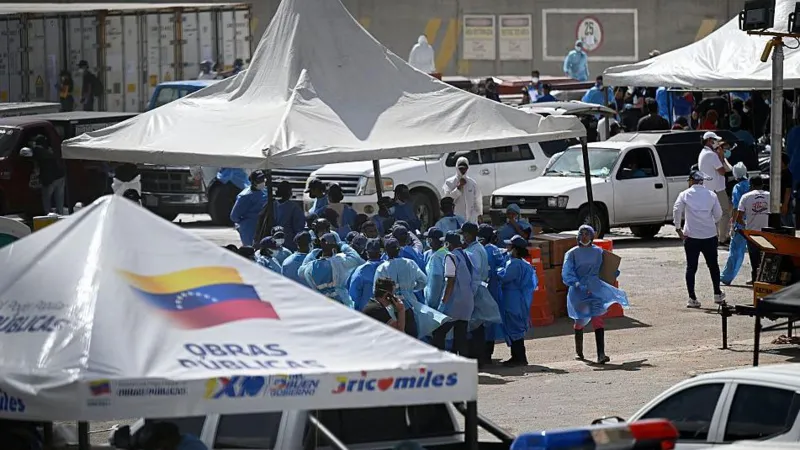
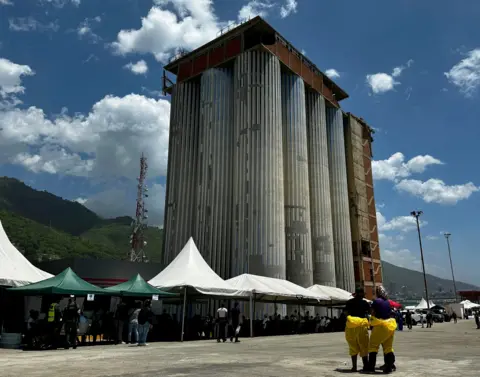
At a port storage facility transformed into a makeshift morgue in La Guaira, the same scene repeats itself again and again.
Families – many of whom have already spent days searching hospitals, shelters and rubble – wait hours to try and confirm the deaths of their loved ones.
As the death toll of Venezuela’s twin earthquakes surpasses 2,600, officials face the challenge of not only recovering victims, but identifying them.
The scale of the disaster has overwhelmed local services, forcing institutions to improvise.
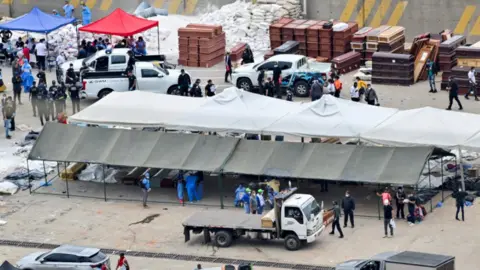
With little infrastructure left standing nine days after the tremors, bodies have been put outside or in temporary tents.
Under the blazing sun, dozens of families wait with a mixture of anguish and dread.
Rows of chairs have been placed inside and outside Los Silos, where sadness is contagious. No one speaks. Some stare blankly into space, others check their phones, reading the news or answering messages.
Just a few metres away, armed personnel from the Bolivarian Armed Forces control access to the site.
“I’m afraid of what I’m going to see in there, but it’s the only way to end this agony,” a woman says before passing through the gate. She has been searching for her nephew for nearly a week. “I’ve looked for him everywhere: in the building, in the hospitals, I’ve spoken to everyone… and no one knows anything.”
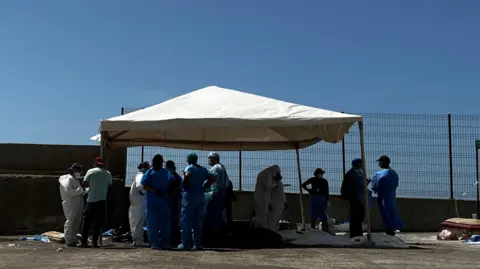
Inside, the smell of decomposition is the first thing that greets you. Some family members cover their mouths with their hands. Most wear cloth masks, which offer little relief. Within minutes, many stop reacting. They seem to grow used to it.
Nearby, hundreds of bodies lie in rows, wrapped in plastic bags and exposed to the sun. In the sweltering heat, decomposition is rapid.
The bodies are arranged according to when they were recovered.
At one end of the site, a tent offers free cremation services. At the other, forensic specialists use dental records to help identify victims whose bodies have become difficult to recognise.
Families face two options. Those who think they can identify a loved one by their clothing are taken to one area.
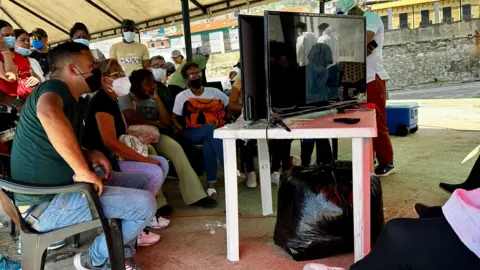
Most relatives, however, are directed to two television screens. There, a different ordeal begins.
More than 1,000 images of bodies flash across the screens in a sequence that feels endless. Many are swollen, have darkened skin or bear the marks of injuries, making identification difficult.
Families search for any trace that might help identify their loved ones – a tattoo, a bracelet, a piece of clothing, or an item from their home.
Sometimes there is a pause, a moment of hope. The two workers scrolling through the photos on an iPad zoom in on teeth, tattoos, or scars.
In front of one of the screens, a woman bursts into tears as she recognises her son thanks to a dusty blanket. Another woman, a stranger, embraces her.
A phone rings and breaks the silence. A young man whispers into the phone that he is trying to identify his mother. But he says the state of the bodies is making it difficult.
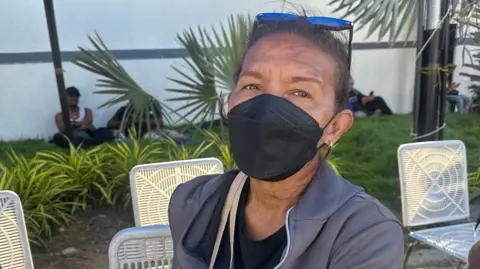
“This is like a horror movie,” Liliana González, a 60-year-old resident of Catia La Mar, says as she leaves. She had come to look for her aunt, but in the end identified her 37-year-old nephew by his tattoo. “He wasn’t on the list,” she says. “I had to look at the images.”
“I saw my mum when she died, but this… this isn’t the same.”
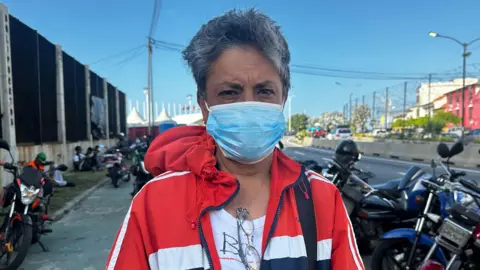
Modesta Alemán, 56, travelled from Carayaca, in western La Guaira, to look for her older sister Matilde. Her sister lived in Playa Grande – one of the hardest-hit areas.
“They told us there were no survivors,” she says. Volunteers later said they could hear voices calling from the building, “but no one could get them out”.
Modesta does not enter the makeshift morgue and waits outside while other relatives handle the identification process. Perhaps, she says, it is better this way.
The process can take hours. Once a body is identified, the arrangements to remove the remains begin. After identification, fingerprints are taken, if possible.
Then, the bodies are placed in coffins. Later, the paperwork for the death certificate begins – an essential document so funeral homes can collect the remains.
Jéssica Soto, 42, sits in a chair at the entrance to Los Silos.
For two days, she has been waiting for the remains of her 15-year-old daughter and three-year-old granddaughter, who got trapped in their apartment after the earthquakes. Their bodies were recovered on Tuesday, nearly a week later.
“They keep you waiting and waiting for the paperwork, the trucks, and who knows what else,” she tells BBC Mundo.
“They have had them there in a coffin, sitting out in the sun since yesterday. I have no choice but to wait and trust in God.”
Liliana says she panicked when she was told she would have to identify her nephew by herself. “But then, seeing me like that, two workers accompanied me to the body. They helped me find him so I wouldn’t suffer as much,” she recounts. “Thank God, because in a moment like that, it’s good to feel someone’s hand.”
Her aunt remains buried in the rubble. She fears having to return to the morgue in the coming days to repeat the process all over again.
[BBC]

Iran has begun several days of public mourning and funeral processions for its former Supreme Leader, Ayatollah Ali Khamenei, more than four months after he was killed in strikes launched by the US and Israel.
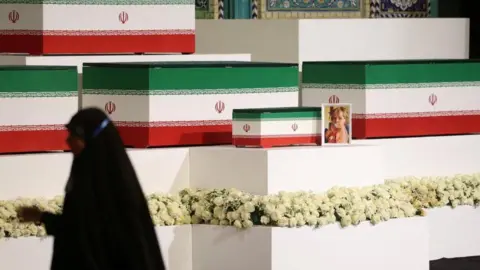
The former Ayatollah’s body will lie in state in Tehran’s Grand Mosalla from Friday, ahead of his burial in his hometown of Mashhad next Thursday.
Iranian authorities said 12 to 20 million people were expected to attend, which they are calling the “funeral of the century”.
It comes as Iran and the United States observe a fragile ceasefire after signing a preliminary deal to halt their conflict in June.
Six days of ceremonies will start at 06:00 (03:30 BST) on Saturday, at Tehran’s Imam Khomeini Mosalla, which visitors can visit to pay their respects until Sunday afternoon.
There will be an official funeral ceremony in Tehran on Saturday, which the Tehran-based Mohammad Rasulullah Corps is leading.
The group’s commander Hassan Hassanzadeh said Khamenei’s coffin would be displayed on an elevated platform, with crowd flows designed to allow visitors to enter and leave within 15 to 20 minutes.
Khamenei’s body will lie in the Grand Mosalla for three days, alongside the remains of family members who were also killed in the US and Israeli strikes in February.
Authorities have ordered public and private offices in Tehran to close from Saturday through Monday, while traffic restrictions will shut down most of the city centre to private vehicles, AFP reported. The airspace over Tehran will be partially closed from Friday and fully closed on Monday.
On Tuesday, events will move to Qom, just south of Tehran, where a senior Shia cleric will lead funeral prayers at Jamkaran – one of Iran’s most prominent and symbolic religious sites.
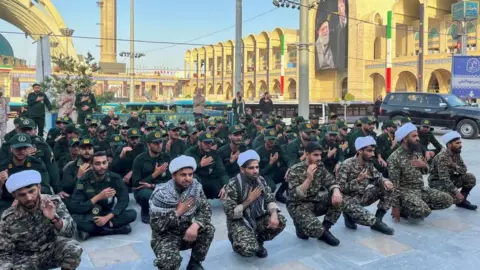
Khamenei’s body will then travel to Najaf in Iraq on Wednesday. Following a procession at the shrine of Imam Ali, Shia Islam’s first imam, ceremonies will continue in Karbala before the body returns to Iran.
Iranian officials say the Iraq events follow requests from Iraqi groups, with some analysts seeing them as representative of Khamenei’s influence across the Shia Muslim world and Iran’s religious and political ties across the region.
Iranian Foreign Minister Abbas Araghchi visited Baghdad to coordinate the arrangements, saying the funeral had a “symbolic importance”.
On Thursday, Khamenei will be buried in the city of his birth, Mashhad, at the Imam Reza Shrine, the mausoleum of Shia Islam’s eighth imam and Iran’s most important pilgrimage site, which attracts millions of visitors each year.

Representatives from multiple countries are expected to attend the ceremonies, including Pakistan’s Prime Minister Shehbaz Sharif.
Ceremonies will continue across the country for 40 days, with commemorative events planned until the first anniversary of Khamenei’s burial.
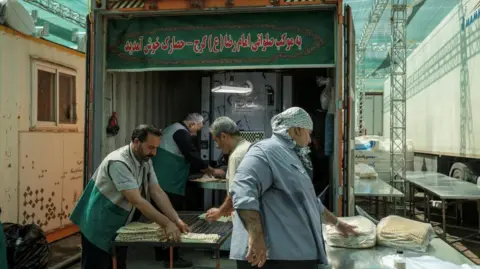
Khamenei was succeeded by his son, Mojtaba, who has not been seen in public since becoming supreme leader.
Key questions around the ceremony centre on whether Mojtaba will attend the funeral.
Last week, secretary of the organising committee, Ali Akbar Pourjamshidian, said any decision on Mojtaba’s attendance would be announced by the offices of the armed forces commander-in-chief and the supreme leader.
Questions also remain about who will lead the funeral prayer, as in Shia tradition the role carries religious and political significance.
[BBC]
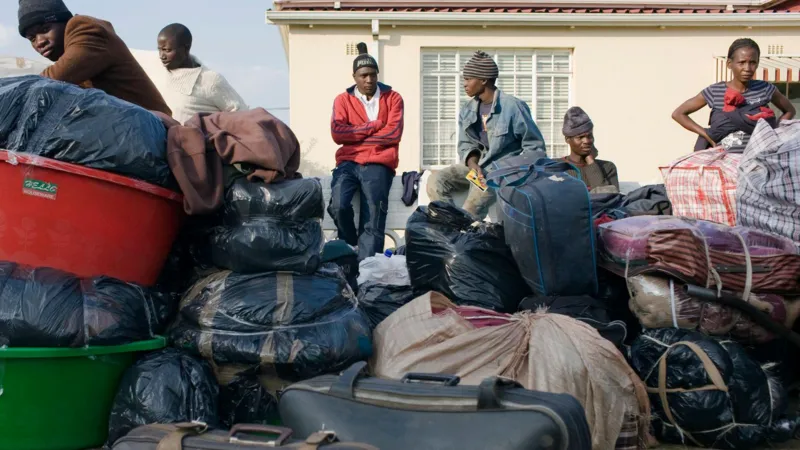
Nigeria says it will seek compensation from South Africa for its citizens who have left the country following recent protests targeting undocumented migrants.
Foreign ministry spokesperson Kimiebi Imomotimi Ebienfa told the BBC that the issue would be discussed between the two governments “at the highest levels”.
Acting High Commissioner to South Africa Alexander Ajayi said on local television on Tuesday that the government had begun documenting businesses and properties left behind by Nigerians.
One Nigerian trader waiting to be repatriated told the BBC he had lived in South Africa for nearly a decade and had abandoned his business and home because he feared for his safety.
Oghodero Erejor Wilson, 32, said he was losing “everything because of fear”.
“I left everything in my house including clothes.”
He is among hundreds of Nigerians still waiting to be evacuated from South Africa. More than 600 Nigerians have already been repatriated in recent weeks.
The South African authorities say those who have been flown home were in the country illegally – though this is disputed by Nigeria.
About 25,000 nationals of other African countries have left South Africa following a wave of protests in recent weeks by groups demanding that the government does more to curb illegal migration.
Some anti-migrant groups had given undocumented foreigners a deadline of 30 June to leave the country and organised marches attended by thousands of people on Tuesday. These were largely peaceful but there were isolated incidents of violence against foreigners.
The South African police say that about 900 people were arrested, mostly for immigration-related offences and looting.
The BBC has asked South Africa’s government for comment on Nigeria’s compensation demand.
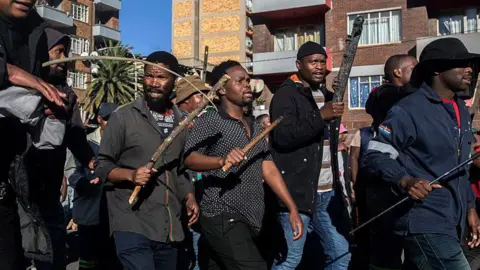
Nigeria’s acting high commissioner said he had asked all of those who had left South Africa “to document very accurately those things they were leaving behind in terms of businesses, in terms of even cars, movable and immovable properties”.
Foreign ministry spokesperson Ebienfa told the BBC that all claims would be verified before any formal request was made
“We have not severed ties with South Africa, we are still engaging them at the highest level, we will sort those details using our usual diplomatic channels,” he said.
Wilson, the trader, said he had run a clothing business in the South African city of Centurion in Gauteng province for several years.
But he said he had now closed his shop and fled to stay near the Nigeria High Commission in South Africa’s capital, Pretoria.
Scheduled to leave on the next repatriation flight to Nigeria on Friday, he estimates the goods left in his shop are worth more than 16,000 rand ($975; £735).
Wilson said his residency documents had expired in 2021 and he had been unable to renew them.
He said he was not very hopeful about the prospect of getting compensation.
“If South Africa government can compensate it, it will be nice, but I know they won’t,” he said.
(BBC)

India A grow lead after Sai Sudharsan hits 168

Boys among men – Sooryavanshi joins Tendulkar, Aaqib and Hasan Raza

Brutal heat cancels Fourth of July events, from DC to Philadelphia

Arias sends Colombia into World Cup last-16 with 1-0 win over Ghana

Messi scores again but Argentina given World Cup upset fright by Cape Verde

Anguished families left to identify Venezuela quake victims at makeshift morgue

‘Dates have the highest sugar content to fight Coronavirus’

Sunday Island 27 December – Headlines

#SundayIsland 17th December – Headlines

Sunday Island – 28th March

Sunday Island Headlines – 21 March

Sunday Island – 21st February – Headlines
-
 News6 days ago
LAWASIA warns against ad hoc initiative to increase judges’ retirement ages
-
 Features5 days ago
Climate action to bring South Asia together
-
 News5 days ago
Chamuditha to seek removal of injunction on Youtube programme
-

 News18 hours ago
Freedom 250: US Embassy celebrates America’s 250th Independence Day through magic of American cinema
-

 Features7 days ago
People’s Bank expands digital banking network with 125th cheque deposit kiosk
-
 News2 days ago
CIABOC to question Harak Kata on Rs. 200 mn bribery allegation
-
 News2 days ago
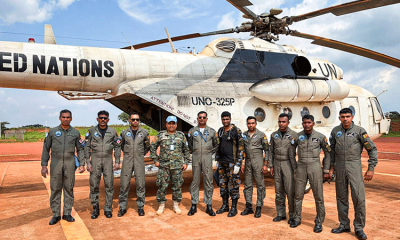
SLAF conducts successful rescue mission under UN command in Central African Republic
-
 News5 days ago
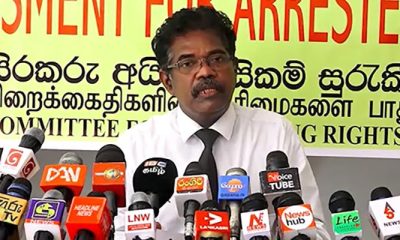
CPRP alleges another death in custody, seeks protection for witness