
Foreign News
Japan voting for new leader in shadow of scandals


Japanese voters are today heading to the polls in a snap election, following a tumultuous few years for the ruling party which saw a “cascade” of scandals, widespread voter apathy and record-low approval ratings.
The election was announced by Shigeru Ishiba three days after he was selected as the leader of the ruling Liberal Democratic Party (LDP) – before he had been officially sworn in as prime minister.
The decision was made despite the LDP seeing approval ratings of below 20% earlier in the year, in the wake of a political fundraising corruption scandal.
Yet the LDP still remains the strongest contender against opposition parties which have failed to unite, or convince voters they are a viable option to govern.
The main opposition party had an approval rating of just 6.6% before parliament was dissolved.
“It is so hard to make decisions to choose parties, I think people are losing interest,” Miyuki Fujisaki, a long-time LDP supporter who works in the care-home sector, told the BBC ahead of polls opening.
The LDP, she said, has its problems with alleged corruption, “but the opposition also does not stand out at all”.
“They sure complain a lot, but it’s not at all clear on what they want to do,” the 66-year-old said.

For all the apathy, politics in Japan has been moving at a fast pace in recent months.
Shigern Ishiba took over as prime minister after being voted in by the ruling party following his predecessor Fumio Kishida – who had been in the role since 2021 – making a surprise decision to step down in August.
The move to call the election came at a time when the LDP is desperate to restore its tarnished image among the public. Ishiba – a long-time politician who previously served as defence minister – has described it as the “people’s verdict”.
But whether it’s enough to restore trust in the LDP – which has been in power almost continuously since 1955 – is uncertain.
A series of scandals has tarnished the ruling party’s reputation. Chief among them is the party’s relationship with the controversial Unification Church – described by critics as a “cult” – and the level of influence it had on lawmakers.
Then came the revelations of the political funding corruption scandal. Japan’s prosecutors have been investigating dozens of LDP lawmakers accused of pocketing proceeds from political fundraising events. Those allegations – running into the millions of dollars – led to the dissolution of powerful factions, the backbone of its internal party politics.
“What a wretched state the ruling party is in,” said Michiko Hamada, who had travelled to Urawa station, on outskirts of Tokyo, for an opposition campaign rally.
“That is what I feel most. It is tax evasion and it’s unforgivable.”
It strikes her as particularly egregious at a time when people in Japan are struggling with high prices. Wages have not changed for three decades – dubbed “the lost 30 years” – but prices have risen at the fastest rate in nearly half a century in the last two years.

This month, as voters were getting ready to go to the polls, saw more price hikes on thousands of food products as well as other day-to-day provisions like mail, pharmaceuticals, electricity and gas.
“I pay 10,000 yen or 20,000 yen ($65 – $130; £50 – £100) more for the food per month than I used to,” Ms Hamada said. “And I’m not buying the things I used to buy. I am trying to save up but it still costs more. Things like fruit are very expensive.”
She is not the only one concerned with high prices. Pensioner Chie Shimizu says she now must work part-time to make ends meet.
“Our hourly wage has gone up a bit but it does not match the prices,” she told the BBC as she picked up some food from a stand at Urawa station. “I come to places like this to find something cheaper and good because everything in regular shops is expensive.”
Ms Shimizu has not voted for years but might this time – although she is not sure which candidate or which party to vote for.
“I can’t find anyone that I want to vote for. I feel like there’s no one who I can trust to be our leader. I wonder about those who become an MP for their own greed.”
Against this backdrop, it might look like Ishiba has taken a political gamble. His party had held 247 of 465 seats in the lower house, while its coalition partner, Komeito, had 32. A party needs 233 seats to control the house, known as the Diet.
There are now fears Komeito may fail to reach that number again, while the main opposition – which had 98 seats in the previous parliament – began to pick up momentum with voters ahead of Sunday’s election.
“I think the LDP has dug itself a very deep hole to climb out of. It does not enjoy public trust, and why should it? There’s just been a cascade of scandals,” Jeff Kingston, professor of Asian studies and history at Temple University Japan, told the BBC.
But he does not think any of this will necessarily lead to the party losing the elections.
“I think they (LDP) are worried they’re going to lose some marginal seats, and there are questions hanging over Komeito and how effective a coalition partner they will be,” Prof Kingston said.
Should they pull off a win, Miyuki Fujisaki, the care-home sector worker, warns they will have to do more than just pay lip service to change.
“I want them to show us what they are going to do so this [the scandals] doesn’t happen again,” she said. “They need to prove it – not just say it like they often do in the election time.”
[BBC]


United States President Donald Trump said that Russia has agreed to supply 300,000 tonnes of diesel fuel to global markets amid discussions with Russian President Vladimir Putin.
“I have just concluded a highly successful discussion with President Vladimir Putin, of Russia, wherein it was agreed that Russia will immediately supply over 300,000 Tons of Diesel Fuel to the American and Global Marketplace, another 500,000 Tons during the month of November, and 1,000,000 Tons immediately thereafter,” Trump said in a post on his Truth Social platform.
The president added that Russia would deliver an additional 3 million tonnes of fuel “within a short period of time”. He said that the country would supply 500,000 tonnes in November.
An envoy for Russian President Vladimir Putin, Kirill Dmitriev, praised cooperation between Russia and the United States on diesel and energy in a post on X shortly after.
“Russia-US cooperation on diesel and energy will benefit the world,” Dmitriev wrote on X.
Petrol price pressures
The deal comes despite Ukrainian air strikes, which have taken more than half of the country’s oil refining capacity offline, according to claims made by Ukraine’s Ministry of Defence on Sunday.
The latest announcement comes a week after the G7 countries agreed to release 100 million barrels amid pressure from the White House.
Diesel prices have been elevated in recent months but have started to decline. The average price for a gallon is $6.27 ($1.66 per litre), according to the American Automobile Association (AAA), which tracks daily petrol prices. That’s down $0.10 from this time last week, but up $5.94 from this time one month ago.
[Aljazeera]

United States President Donald Trump has said the US will not attack Iran before the November 3 midterm elections.
The US president said late on Thursday: “we are having productive discussions with the Islamic Republic of Iran,” in a post on Truth Social. “We will not be attacking Iran at any time prior to the midterm elections to be held in the United States on November 3rd.”
Oil prices fell early on Friday as Middle East supply concerns eased somewhat after tensions in the energy-rich Gulf region had mounted in recent weeks.
The possibility of renewed fighting had appeared to drive up oil prices in trading on Thursday. Some analysts believe Trump’s comments were an attempt to try and bring prices back down.
Iran’s Foreign Minister Abbas Araghchi said Tehran is reviewing the US response to its seven day plan to reopen the Strait of Hormuz, and that Iran will respond within the “next few days”.
He added that negotiations are continuing through mediators, Iran’s Tasnim news agency reported.
Iranian media reported “massive explosions” in the southern Strait of Hormuz on Friday, with Fars citing unnamed military sources as saying tankers using “unauthorised” routes may have struck sea mines.
On Tuesday, US Vice President JD Vance said Iran must make a “meaningful” reduction in its uranium enrichment capacity as part of an agreement to end the war. Experts say this demand may signal a softening of Washington’s earlier insistence that Tehran abandon enrichment altogether.
On Monday, Iranian President Masoud Pezeshkian said negotiations with Washington were “futile”, accusing the US of using negotiations to attack Iran.
Russian President Vladimir Putin told Pezeshkian that Russia will “do everything” to help end the US-led war on Iran, Russian news agencies reported on Thursday.
[Aljazeera]
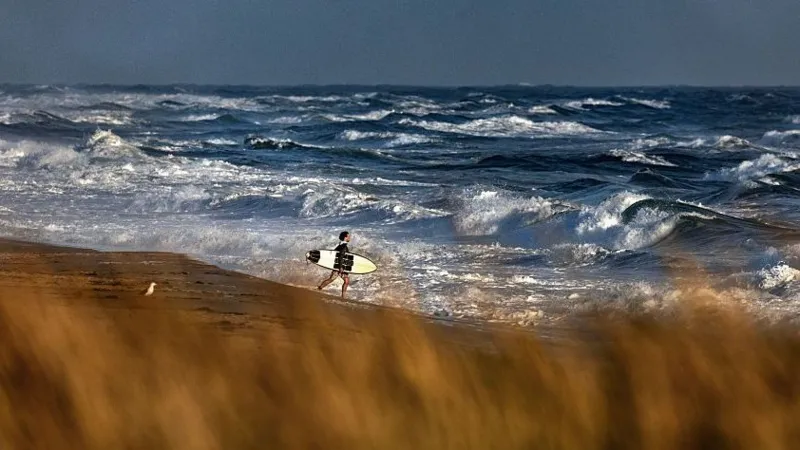
US authorities have found debris from a medical transport aircraft that went missing with six people on board.
The Federal Aviation Administration told the BBC it had lost contact with the Gulfstream G-100 plane just after 01:00 local time (05:00 GMT) on Saturday, while it was travelling from Bermuda to Boston, Massachusetts.
The search for survivors continues off the coast of Nantucket, a Massachusetts island, the US Coast Guard said.
Authorities have notified the next of kin of those on the flight, four Canadian nationals and two Bermudian nationals.
“Search crews located a debris field confirmed to be from the aircraft off the coast of Nantucket,” the US Coast Guard said in an update on Saturday night. It added that ships, helicopters and planes were involved in searches that would through continue the night.
The plane departed from Bermuda’s L.F. Wade International Airport at 23:40 local time, according to flight data from FlightAware, and was due to land at Boston’s Logan International at 01:30 EDT (05:30 GMT).
According to the tail number released by the Coast Guard, the plane belonged to Latitude Air Ambulances, a company that provides international medical flights for patients returning home.
Among those on board were two pilots and two medical staff, both Canadian, Clarence Togeretz, director of flight operations at Latitude, told CBC News.
The crew flew to Bermuda to collect a patient and their relative, who are not Canadian, Togeretz said.
FlightAware’s tracker shows the aircraft significantly dropped in altitude before its communications went dark, plummeting from around 7,300m (24,000ft) to 3,300m (11,000ft).
Radio transmissions shows trouble with communications between the air traffic controller and the pilot, the Boston Globe reported based on transmissions provided by LiveATC.net.
“You’re coming in blind? Is that what you said?,” the air traffic controller asked. “Are you declaring an emergency, or no?”
The pilot’s response was inaudible.
“You’re coming in a little weak so I didn’t hear what your response was, if you were declaring an emergency or not,” the air traffic controller said, according to the Globe.
The air traffic controller later confirmed the pilot had declared an emergency.
An area fire dispatcher asked emergency crews just after 01:00 EDT to prepare to meet a plane with an “electrical issue”.
The dispatcher later said “the aircraft has lost radio and radar”.
The Coast Guard said it would provide an update on Sunday morning local time.
[BBC]

Sri Lanka ITEC Alumni Association formally launched

Measures underway to protect Diyagama Forest as a Reserve — Deputy Minister of Environment

Showers or thundershowers will occur in most parts of the island after 1.00 p.m.

NPP govt. reminded of its responsibilities as US warship leaves Colombo

CERT: Beware of foreign Uni. scams on social media

Shiranthi receives treatment at National Eye Hospital

‘Dates have the highest sugar content to fight Coronavirus’

Sunday Island 27 December – Headlines

#SundayIsland 17th December – Headlines

Sunday Island – 28th March

Sunday Island Headlines – 21 March

Sunday Island – 21st February – Headlines
-

 Features6 days ago
The first woman in the foreign service or Ceylon Overseas Service it was then called
-

 News5 days ago
Geneva takes up Sallay’s case and govt. ignores opportunity to answer accusations
-

 Foreign News7 days ago
Ten injured after car crashes into rugby supporters in Australia
-
 News6 days ago
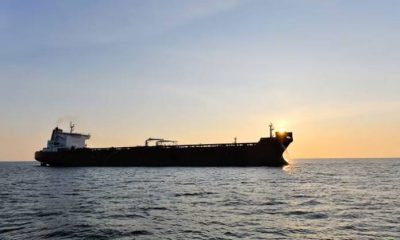
Nearly 20 Iranian tankers stranded off Lanka amid US sanctions
-

 Features4 days ago
Preventing grievances from becoming communal
-

 Sports2 days ago
Nissanka absence opens door for Sri Lanka’s young guns
-

 Features5 days ago
Sri Lanka Cricket Bill: Governance reform is not yet a cricket strategy
-

 News3 days ago
Gnansara Thera to be assigned to prison printing section: Officials