
Latest News
Sri Lanka charge towards fourth-innings target after seamers fight back

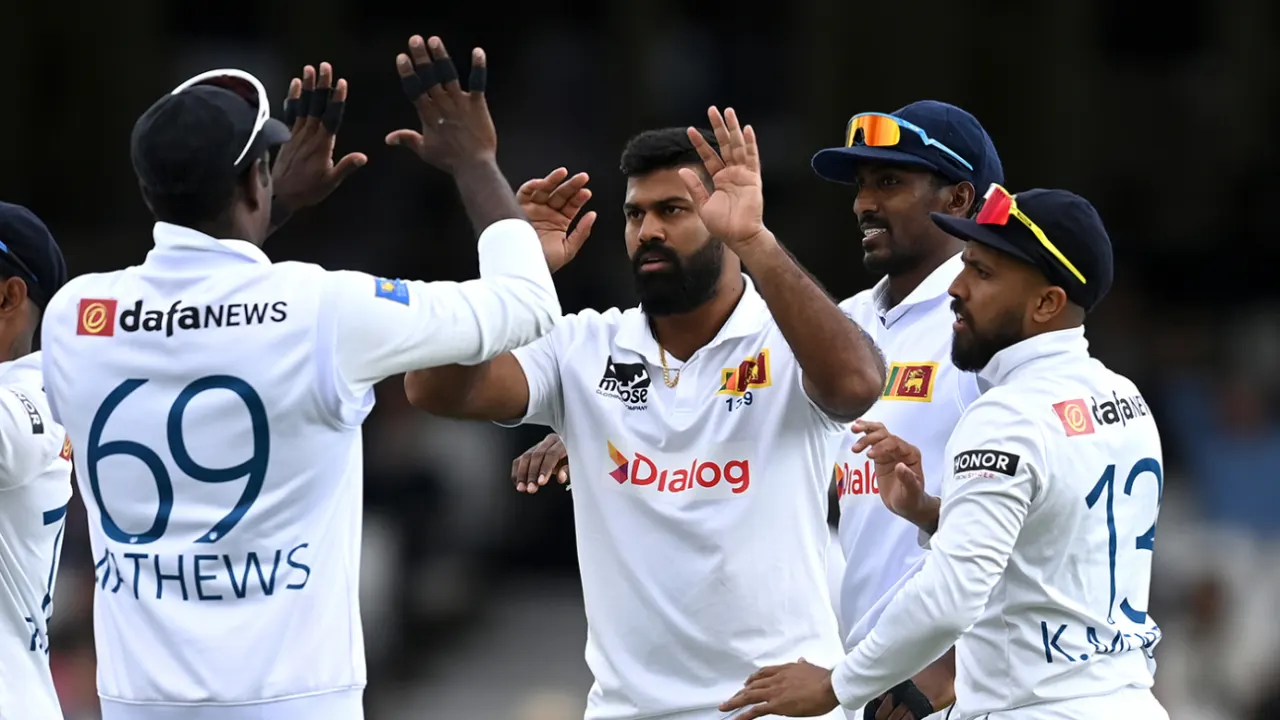
In a match as changeable as the weather in south London, Sri Lanka took control of the third and final Test against England on the third day at The Oval.
After an abject performance on the opening day when their bowlers failed to capitalise in prime conditions upon winning the toss, Sri Lanka had to watch Ollie Pope and Ben Duckett shine through the overhead gloom.
Then, two incisive passages of swing bowling – on a dark second day, then under bright skies on the third – had the tourists back in contention, but not before Jamie Smith had bludgeoned England out of dire trouble. Still, by the time bad light stopped play just before quarter to seven on Sunday evening, the match was Sri Lanka’s to lose.
But it is the detail around those key moments that tell the story of where this Test sits heading into the final day.
Apart from Pope and Duckett, no England batter passed 20 in their first innings, as they were bowled out for an unremarkable 325. Despite Dhananjaya de Silva, Kamindu Mendis and Pathum Nissanka all passing fifty, no one pressed onto a big score that would have taken Sri Lanka past England, who led by 62 runs on first innings.
Then a struggling Dan Lawrence looked like top-scoring for England’s second innings with his series-best 35 before Smith’s brutal 67 off 50 balls made them the only home batters to pass 12 on the third day as Lahiru Kumara and Vishwa Fernando – with his devastating inswingers – kept them in check.
And so, when bad light brought another early close, Sri Lanka were 94 for 1 and needing 125 more for a consolation win. Chris Woakes’ superb return catch removed Dimuth Karunaratne for just 8, but that was the only wicket to fall in Sri Lanka’s free-scoring fourth innings.
Nissanka reached his second half-century of the match from just 42 balls by crunching a Josh Hull delivery to the rope wide of mid-off just before the light intervened, leaving him unbeaten on 53 with Kusal Mendis 30 not out.
Sri Lanka’s bowlers, led by Vishwa, were making the ball move in what were by far the brightest conditions of the match so far, despite a couple of short interruptions for what amounted to sun-showers.
But then Smith pummelled 52 runs off the last 19 balls he faced, helping himself to 20 runs off one Milan Rathnayake over to lead England’s second-innings recovery from 82 for 7 to 140 for 8.
By the time Olly Stone fell to give Kumara his fourth wicket and Asitha Fernando had Shoaib Bashir also caught behind by Nishan Madushka – standing in for the injured Dinesh Chandimal – England had stretched their advantage to 218.
Two early strikes had given Sri Lanka hope during a morning session extended because of bad weather over the first two days as Duckett and Pope fell cheaply.
Lawrence smashed Asitha for six over long-off and, two balls later, carved deftly through point for four. But, having bettered his previous series best by one run, he was brought undone by a Kumara delivery that moved away late and kissed the edge of the bat before landing in Chandimal’s gloves.
Vishwa entered the attack in the 15th over and he struck third ball with a superb inswinging yorker that hit Joe Root on the boot directly in front.
Harry Brook had come under fire for his petulant reaction to Sri Lanka’s successful bid to frustrate him by bowling outside off stump in the first innings. This time, he succumbed to another late inswinger which nailed the front pad with pin-point accuracy on leg stump in Vishwa’s next over.
Kumara had Woakes caught behind for a six-ball duck but then Chandimal had to be helped off the field after diving stop a wayward Kumara delivery down the leg side to Gus Atkinson, hurting his lower back in the process. Atkinson was trapped lbw by Rathnayake, having faced 14 balls for his 1 before Smith got stuck in.
Earlier, Hull and Stone had preserved England’s advantage after Sri Lanka resumed for the day on 211 for 5, trailing by 114. Hull made amends for dropping Dhananjaya on the second evening when he had the Sri Lanka skipper caught for 69 with his 11th ball of the day, an attempted pull looping off the top edge to deep backward square.
That sparked a procession of five wickets for 52 runs in 13.3 overs, Hull, Stone and Woakes sharing four of the five wickets to fall with Atkinson off the field nursing a thigh problem from which he recovered sufficiently to bowl in the fourth innings.
Brief scores:
Sri Lanka 263 (Dhananjaya de Silva 69, Kamindu Mendis 64, Pathum Nissanka 64; Josh Hull 3-53, Olly Stone 3-35) and 94 for 1 in 15 overs (Pathum Nissanka 53*, Kusal Mendis 30*)need 125 more runs to beat England 325 and 156 in 34 overs (Dan Lawrence 35, Jamie Smith 67; Lahiru Kumara 4-21, Vishwa Fernando 3-40, Asitha Fernando 2-49)
[Cricinfo]



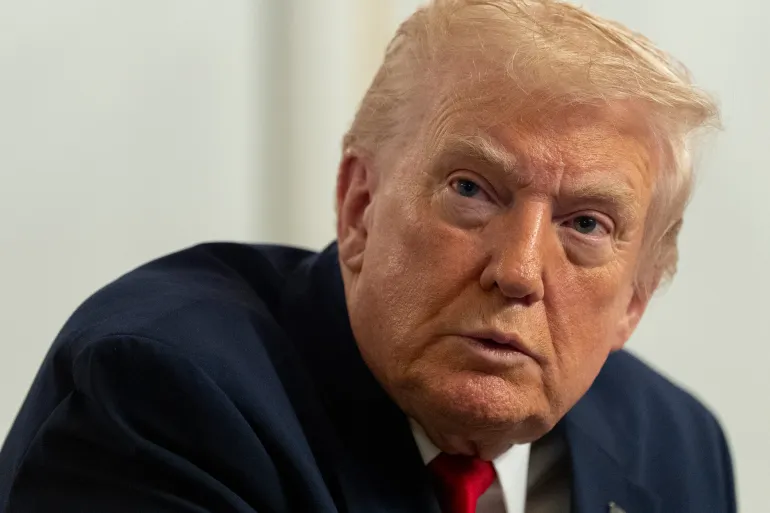
US President Donald Trump has imposed a new 10% global tariff to replace ones struck down by the Supreme Court, calling the ruling “terrible” and lambasting the justices who rejected his trade policy as “fools”.
The president unveiled the plan shortly after the justices outlawed most of the global tariffs the White House announced last year.
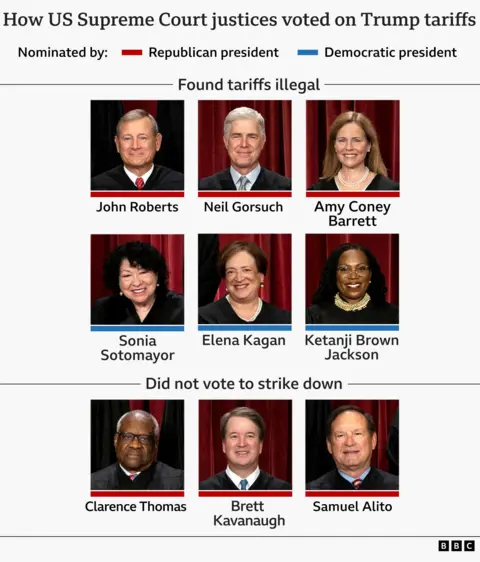
In a 6-3 decision, the court held that the president had overstepped his powers.
The decision was a major victory for businesses and US states that had challenged the duties, opening the door to potentially billions of dollars in tariff refunds, while also injecting new uncertainty into the global trade landscape.
Speaking from the White House on Friday, Trump indicated that refunds would not come without a legal battle, saying he expected the matter to be tied up in court for years.
He also said he would turn to other laws to press ahead with his tariffs, which he has argued encourage investment and manufacturing in the US.
“We have alternatives – great alternatives and we’ll be a lot stronger for it,” he said.
The court battle was focused on import taxes that Trump unveiled last year on goods from nearly every country in the world.
The tariffs initially targeted Mexico, Canada and China, before expanding dramatically to dozens of trade partners on what the president billed as “Liberation Day” last April.
The White House had cited a 1977 law, the International Emergency Economic Powers Act (IEEPA), which gives the president power to “regulate” trade in response to an emergency.
But the measures sparked outcry at home and abroad from firms facing an abrupt rise in taxes on shipments entering the US, and fuelled worries that the levies would lead to higher prices.
Arguing before the court last year, lawyers for the challenging states and small businesses said that the law used by the president to impose the levies made no mention of the word “tariffs”.
They said that Congress did not intend to hand off its power to tax or give the president an “open-ended power to junk” other existing trade deals and tariff rules.
In his opinion, Chief Justice John Roberts, a conservative, sided with that view.
“When Congress has delegated its tariff powers, it has done so in explicit terms and subject to strict limits,” he wrote.
“Had Congress intended to convey the distinct and extraordinary power to impose tariffs, it would have done so expressly, as it consistently has in other tariff statutes.”
The decision to strike down the tariffs was joined by the court’s three liberal justices, as well as two justices nominated by Trump: Amy Coney Barrett and Neil Gorsuch.
Three conservative justices, Clarence Thomas, Brett Kavanaugh and Samuel Alito, dissented.
At the White House, Trump said he was “absolutely ashamed” of the Republican appointees on the court who voted against his trade policy.
He said they were “just being fools and lap dogs” and were “very unpatriotic and disloyal to our Constitution”.
Shares on Wall Street rose after the announcement, with the S&P 500 closing up about 0.7%, as businesses across the US cautiously welcomed the ruling.
“I feel… like a thousand-pound weight has been lifted off my chest,” said Beth Benike, the owner of Busy Baby products in Minnesota, which manufactures products in China.
Nik Holm, chief executive of Terry Precision Cycling, one of the small businesses involved in the case, called the ruling a “relief”.
“Though it will be many months before our supply chain is back up and running as normal, we look forward to the government’s refund of these improperly-collected duties,” he said.
The anticipated refunds and relief from tariff costs may prove elusive, however.
On Friday, Trump imposed the new 10% tariff under a never-used law known as Section 122, which gives the power to put in place tariffs up to 15% for 150 days, at which point Congress must step in.
Analysts expect the White House to consider other tools, such as Section 232 and Section 301, which allow import taxes to address national security risks and unfair trade practices.
Trump has previously used those tools for tariffs, including some announced last year on sectors such as steel, aluminium and cars. Those were untouched by the court ruling.
A White House official said countries that struck trade deals with the US, including the UK, India and the EU, will now face the global 10% tariff under Section 122 rather than the tariff rate they had previously negotiated.
The Trump administration expects those countries to keep abiding by the concessions they had agreed to under the trade deals, the official added.
“Things have only gotten more complicated and more messy today,” said Geoffrey Gertz, senior fellow at the Center for a New American Security in Washington.
Reaction by major trade partners was relatively muted.
“We take note of the ruling by the U.S. Supreme Court and are analysing it carefully,” European Commission spokesman Olof Gill wrote on social media.
The US has already collected at least $130bn in tariffs using the IEEPA law, according to the most recent government data.
In recent weeks, hundreds of firms, including retailer Costco, aluminium giant Alcoa and food importers like tuna fish brand Bumble Bee, have filed lawsuits contesting the tariffs, in a bid to get in line for a refund.
But the decision by the majority does not directly mention refunds, likely handing back the question of how that process might work to the Court of International Trade.
In his dissent, Justice Brett Kavanaugh warned the situation would be a “mess”.
Diane Swonk, chief economist at KPMG US, warned that the cost of litigation could make recouping funds difficult for smaller firms.
“Unfortunately, I’d say curb your enthusiasm, although I understand the desire for relief,” she said.
Steve Becker, head of the law firm Pillsbury, said the “best thing” for businesses would be if the government created a procedure that did not require filing a lawsuit.
[BBC]
“I think companies can be fairly confident that they’ll get their money back eventually,” he added. “How long it will take really is up to the government.”
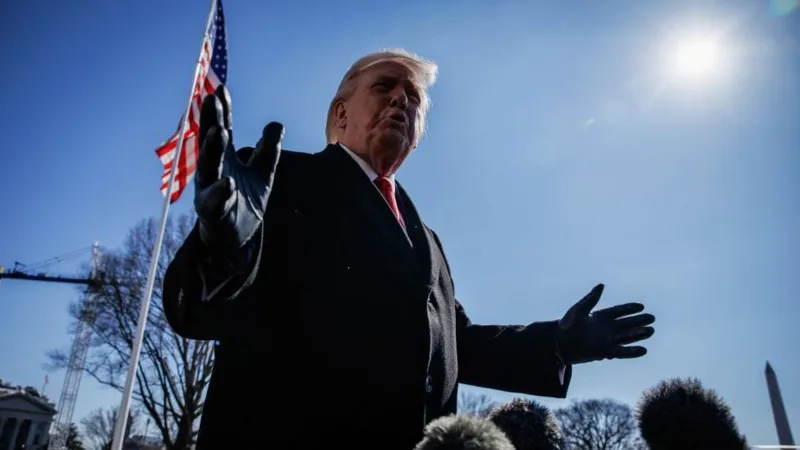
Donald Trump had been warning for months that a Supreme Court decision like this would be catastrophic.
If the court curtailed his ability to impose these tariffs, he had said, it would be an “economic and national security disaster”.
A six-justice majority of the Supreme Court, in ruling against the president on Friday, didn’t care much about his concerns.
Congress, not the president, has the power to impose tariffs, the justices ruled. And nothing in the law that the president based his tariffs on, the Emergency Economic Powers Act of 1977, delegated such sweeping powers to Trump.
The court’s decision represents a rare check on this president’s broad use of executive authority.
A majority of the justices over the past year have shown a willingness to allow Trump to press ahead with his agenda, particularly on immigration and reshaping the federal government, even as legal challenges work their way through the court system.
This case, which was fast-tracked through the court system as an emergency, slams the door on one such expansive use of presidential authority.
With several other major cases involving controversial uses of executive power, such as efforts to end birthright citizenship and to dismiss a Federal Reserve governor based on alleged improprieties, this may not be Trump’s only setback in the coming months.
At the very least, this decision weakens Trump’s hand when trying to force other nations to make concessions to the US and tarnishes his veneer of invincibility.
Weakness begets weakness, and America’s trading partners may be emboldened to take a tougher line with the US now that the president’s tariff powers have been curtailed.
It also opens up the possibility that the Trump administration may have to give back much of the tariff revenue it collected over the past year.
While the justices left this thorny issue to be decided by a lower court, Brett Kavanaugh in his dissent warned that the process is likely to be a “mess”.
The Trump administration had plenty of time to prepare for Friday’s decision.
Supreme Court precedent, and the attitude of many of the justices when the case was argued in court last November, indicated that an adverse outcome for the president was quite possible.
Jamieson Greer, Trump’s top trade adviser, said last month that the White House has “a lot of different options” on how to proceed if the tariffs were struck down.
“The reality,” he said, “is the president is going to have tariffs as part of his trade policy going forward.”
The other options that could be at Trump’s disposal are more limited, however.
They require government agencies to produce detailed reports to justify imposing tariffs, and they have limits on their scope and duration.
Gone are the days when the president could threaten, or enact, triple-digit tariffs with the wave of a pen or the click of a Truth Social post.
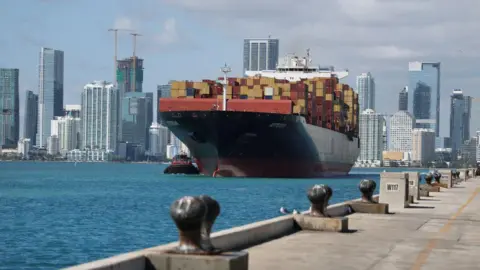
New tariffs will require a longer lead-in time before they are imposed.
That could limit the kind of economic disruption that took place when the president announced his expansive “Liberation Day” tariffs last year, and would give other nations more time to prepare their responses.
If Trump wants to restore his free hand to impose new tariffs, he could always ask Congress for the kind of explicit authorisation that the Supreme Court has said is necessary. But with narrow Republican majorities in the House and Senate, and midterm elections looming, the success of such a move seems unlikely.
In fact, some of Trump’s conservative allies in Congress may be breathing somewhat easier with this decision.
The president’s tariffs – and the costs they have imposed on consumers – have been unpopular among many Americans. Republican candidates in battleground states and congressional districts would have been open to Democratic attacks for supporting Trump’s policies.
That area of vulnerability has been reduced for now.
Friday’s decision will set up an awkward moment on Tuesday, when Trump delivers his annual State of the Union Address to a joint session of Congress. Traditionally, many of the Supreme Court justices sit in the front row of the chamber.
The president, after spending months issuing dire warnings against the court, could stand eye-to-eye with the justices who eroded one of the key pillars of Trump’s second-term agenda.
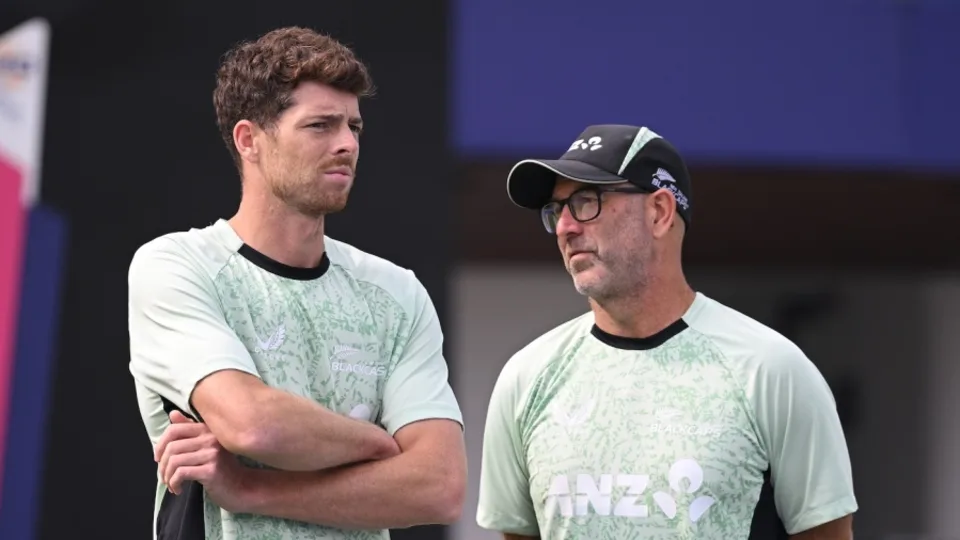
41: That’s the number of times New Zealand and Pakistan faced each other across formats in a 30-month period between October 2022 and April 2025. Twenty four of those meetings came in T20Is, with the sides compensating for a tour which New Zealand abandoned in 2021, citing security concerns by piling on as many bilateral engagements as is it was possible to fit in a calendar.
Aside from a T20 World Cup semi-final in Sydney in 2022, none of those games mattered as much as the one in Colombo on February 21. Both sides have much convincing to do as credible title-contenders after a group stage which saw them ease past lower-ranked teams while getting thumped by the one powerhouse they played. In New Zealand’s case, it was South Africa who gave them a battering, while Pakistan were left similarly bruised by an Indian side that has otherwise not quite hit its straps.
For New Zealand, the biggest challenge is the switch of venue. They played all of their games in Chennai and Ahmedabad, and relied on a balance between seam and spin that leaned towards the former, with Mitchell Santner the only frontline spinner and Rachin Ravindra or Glenn Phillips chipping in with the odd over. In Colombo, that balance is likely to reverse as the slower bowlers take centre stage, something Pakistan have deployed so effectively in most of their matches.
Santner’s men have not tinkered much with the batting order, which has held up remarkably well for the most part. Against weaker oppositions, some combination of openers Finn Allen and Tim Seifert, or top order batters Ravindra and Phillips, have showcased enough firepower to ease home. Opposition attacks have also struggled to puncture their way through, with New Zealand losing just 14 wickets in four games, the second fewest for any side in this tournament.
Unlike New Zealand, Pakistan know this city intimately well by now. Three of their four games may have been played at the SSC – the other Colombo ground – but their match against India here at the RPS was, like Saturday’s contest, also an evening game, giving them a valuable read into the pitch and conditions. It is the venue they used more spin on than any other, with captain Salman Ali Agha suggesting that would only continue in the Super Eight.
Pakistan’s top order has the explosiveness to blow teams away, even if they have struggled to translate that potential with form for Saim Ayub. Sahibzada Farhan at the other end has taken on the mantle for powerplay run-scoring as runs for Agha having dried up before the game against Namibia, and Babar Azam no nearer to maximising his ability. That fragility too quickly brings up a middle order comprising too many bowling allrounders or the untested Khawaja Nafay, a situation that led to a near-defeat against the Netherlands and a decisive defeat against India.
This is two teams situated among the middle powers of this World Cup, eager to demonstrate they’re better than what they managed against true superpowers like India and South Africa. What matters, ultimately, is which of them can show they’re better than the middle power they face off against on Saturday.
Jacob Duffy takes a wicket against Pakistan every 10.5 deliveries. Among bowlers with at least 15 scalps against Pakistan, no one in the world matches that strike rate. Eighteen of his 62 wickets have come against Saturday’s opponents, at an average of 12.77, comfortably the best amongst teams he has played more than five games against. The catch, however, is that all but one of those wickets have come in New Zealand, in conditions very different to what’ll be in front of him at the Premadasa in Colombo. But Hardik Pandya, who boasts an almost equally impressive record against Pakistan, did not find this very venue an impediment against bowling effectiveness against Pakistan. Duffy will hope to have similar success.
Abrar Ahmed was, arguably harshly, dropped against Namibia after an off-day against India. But his longer-term form makes it unlikely he will stay out of the side again in the raised stakes of the Super Eight. He was Pakistan’s second-highest wicket-taker in 2025, and at the Asia Cup last year, his economy rate of 5.36 in spin-friendly conditions was by far the most miserly in the tournament. All of that points to the India game being an aberration, with Pakistan needing him at his best for the business stages. He was Pakistan’s best bowler in the two series against Sri Lanka and Australia prior to this World Cup, and how he responds to the wake-up call of his axing may go some distance to determining the fate of Saturday’s game.
Abrar Ahmed is expected to come back into the side, but Pakistan will not want to make wholesale changes to a team that delivered so handsomely in their must-win game against Namibia.
Pakistan: Sahibzada Farhan, Saim Ayub, Salman Ali Agha (capt) Babar Azam, Khawaja Nafay, Shadab Khan, Usman Khan (wk) Mohammad Nawaz/Faheem Ashraf, Salman Mirza, Usman Tariq, Abrar Ahmed
New Zealand will take a late call on Lockie Ferguson, who gets into Sri Lanka on Friday night after being granted paternity leave. It will be interesting to see how New Zealand manage to incorporate more spin into their XI to reconcile with Sri Lankan conditions. That might bring Ish Sodhi in for his first game this World Cup.
New Zealand: Tim Seifert (wk), Finn Allen, Rachin Ravindra, Glenn Phillips, Mark Chapman, Daryl Mitchell, Mitchell Santner (capt), Jimmy Neesham, Matt Henry, Ish Sodhi Jacob Duffy
[Cricinfo]

Atmospheric conditions are favorable for thundershowers over most parts of the island

Trump brings in new 10% tariff as Supreme Court rejects his global import taxes

Ravi demands full disclosure on Lanka’s usable reserves, flags forex leakages

Sajith exposes highly questionable coal imports from South Africa in 25 vessels; calls for independent probe

Ex-TRCSL Chairman Palpita enlarged on bail

NWSDB GM, two others granted bail in corruption case

‘Dates have the highest sugar content to fight Coronavirus’

Sunday Island 27 December – Headlines

#SundayIsland 17th December – Headlines

Sunday Island – 28th March

Sunday Island Headlines – 21 March

Sunday Island – 21st February – Headlines
-
 Life style6 days ago
Marriot new GM Suranga
-

 Business5 days ago
Ministry of Brands to launch Sri Lanka’s first off-price retail destination
-

 Features6 days ago
Monks’ march, in America and Sri Lanka
-
 Features6 days ago
The Rise of Takaichi
-

 Features6 days ago
Wetlands of Sri Lanka:
-

 News6 days ago
Thailand to recruit 10,000 Lankans under new labour pact
-
 News6 days ago
Massive Sangha confab to address alleged injustices against monks
-
 Sports2 days ago
Old and new at the SSC, just like Pakistan