
News
TISL: Govt. sidesteps RTI queries pertaining to Adani operation

Transparency International Sri Lanka (TISL) complains that the relevant authorities are reluctant to respond to Right to Information (RTI) queries sent in respect of Sri Lanka’s agreements with Adani Green Energy (Sri Lanka) Ltd.
The following is the text of statement issued by TISL yesterday: Transparency International Sri Lanka (TISL) has filed a series of Right to Information (RTI) requests with public authorities seeking crucial information regarding the transparency, legality, evaluation process, pricing, government involvement, and the Environmental Impact Assessment (EIA) related to the Wind Power Project in Mannar and Pooneryn, involving India’s Adani Group.
Earlier this year, Adani Green Energy (Sri Lanka) Ltd. was provisionally approved for two wind power plants of 250 MW in Mannar and 234 MW in Pooneryn. TISL is deeply concerned about the lack of transparency surrounding this project, which has raised significant economic and ecological concerns.
Recently it was reported that Sri Lanka will be paying a fixed price of 8.26 US cents per KW (subject to payment in Sri Lankan Rupees as per the actual foreign exchange rate) generated from wind power over the next 20 years. The relevant proposal forwarded by the Power and Energy Minister received the Cabinet approval on May 6, 2024. This unit price contrasts starkly with the current global price, and the continuously decreasing costs associated with wind power generation. According to the statistics of the International Renewable Energy Agency (IRENA), the global weighted average levelized cost of electricity (LCOE) of onshore wind fell by 56%, from 8 US cents to 3 US cents per KW between 2010 and 2022.
Additionally, senior environmentalists have warned about irreversible ecological damage to the Mannar Corridor, one of the world’s critical migratory bird corridors, due to the installation of wind turbines in the area. Concerns have also been raised about the credibility of the Environmental Impact Assessment (EIA) process.
In light of these serious concerns, TISL has filed a total of 11 Right to Information (RTI) requests with key government bodies, including the Office of the Cabinet of Ministers, Power and Energy Ministry, Finance Ministry, Sustainable Energy Authority, Central Environmental Authority (CEA), Ceylon Electricity Board (CEB), and Ministry of Tourism and Land. These requests primarily seek information on:
1. Transparency and legality of the bidding process: Details on whether the Government of Sri Lanka called for bids and if all the bids/proposals were received.
2. Evaluation and selection process: Criteria and indicators used to award the Project to Adani Green Energy Ltd, individuals involved in the bid evaluation and winner selection process, and clarification on whether the Wind Power Project is a government-to-government arrangement.
3. Pricing and cost benefits: Documentation demonstrating energy and cost benefits for Sri Lanka, unit price decided for the Project, and justification for any pricing higher than market rates.
4. Need and risk assessments: Details about need assessment and risk assessment conducted for the Project, and mitigation methods outlined for potential risks.
5. Decision-making process: Information regarding Cabinet approval for unsolicited proposals, responses to Request for Proposals, and certified copies of all documentation, communications, analyses, assessments, and reports/minutes related to the decision-making process.
6. EIA: Documentation detailing the analysis and decision of the Central Environment Authority to grant approval based on the EIA.
7. Land Acquisition: Whether the land acquisition in Mannar and Pooneryn was approved by Cabinet, whether the procedure laid out in the Land Acquisition Act is being followed, and documents detailing the locations, extent and the demarcation of the lands approved for acquisition.
TISL notes that it has not received comprehensive and timely responses to most of these queries so far, and therefore has resorted to the next step of appealing to relevant designated officers of the authorities.
TISL urges the government to commit to upholding transparency of this crucial project and to address the concerns raised, for the greater good of the country and its people, as the trustees of our nation’s public resources.







News
Sun directly overhead Galle, Angulugaha, Imaduwa, Telijjawila, Yatiyana and Tangalle about 12.08 noon today (07)


The sun is going to be directly over the latitudes of Sri Lanka from 28th of August to 07th of September due to its apparent southward relative motion.
The nearest places of Sri Lanka over which the sun is overhead today (07) are Galle, Angulugaha, Imaduwa, Telijjawila, Yatiyana and Tangalle about 12.08 noon.


By Norman Palihawadane
The CID recently found that former SLPP Deputy Minister Premalal Jayasekara, better known as ‘Choka Malli’, had left for Thailand when the Supreme Court imposed an overseas travel ban on him last Friday.
The CID discovered that Jayasekara had left Sri Lanka on August 31, while authorities were taking steps to enforce the travel restriction imposed by the Supreme Court. The Department has subsequently informed the Attorney General’s Department of the development.
The Supreme Court last Friday ordered Jayasekara, and two other men, to appear before court on October 21, and imposed a ban on their overseas travel.
The orders were made as the Supreme Court considered an appeal challenging the acquittal of the three men in connection with the 2015 murder of Shantha Dodangoda, also known as D.G. Sunil Perera.
The appeal was filed by Dodangoda’s wife against a decision of the Court of Appeal to acquit and release Jayasekara and the two other accused, who had previously been convicted and sentenced to death by the Ratnapura High Court.
Dodangoda was killed in a shooting in Kahawatta town, in the early hours of January 5, 2015, while a group of people were putting up decorations for an election rally in support of then common Opposition presidential candidate Maithripala Sirisena.
Two others, Karunadasa Weerasinghe and Mohamed Ilfan, were seriously injured in the shooting.
Following the incident, the Ratnapura High Court convicted Jayasekara, former Chairman of the Kahawatta Pradeshiya Sabha Wajira Darshana de Silva, and former Sabaragamuwa Provincial Council member Nilanta Jayakody, sentencing all three to death.
The Court of Appeal subsequently acquitted the three men and ordered their release.
The victim’s wife later challenged the acquittal before the Supreme Court.
The appeal was taken up before a Supreme Court bench, comprising Justice Preethi Padman Surasena and Justices Achala Wengappuli and Gihan Kulatunga.
During the proceedings, Deputy Solicitor General Janaka Bandara requested that the court impose overseas travel restrictions on Jayasekara and the other respondents.
The Supreme Court subsequently ordered all three to appear before the court on October 21 and imposed travel bans on them.
President’s Counsel Nalin Ladduwahetty, President’s Counsel U.R. de Silva and President’s Counsel Anuja Premaratne appeared for the respondents. President’s Counsel Saliya Peiris represented the aggrieved party.
Police sources said that the discovery that Jayasekara had already left for Thailand, on August 31, has raised concerns over the timing and enforcement of the travel ban.
Sources said that the CID had notified the Attorney General’s Department and was taking further action in relation to the development.
By Pradeep Prasanna Samarakoon
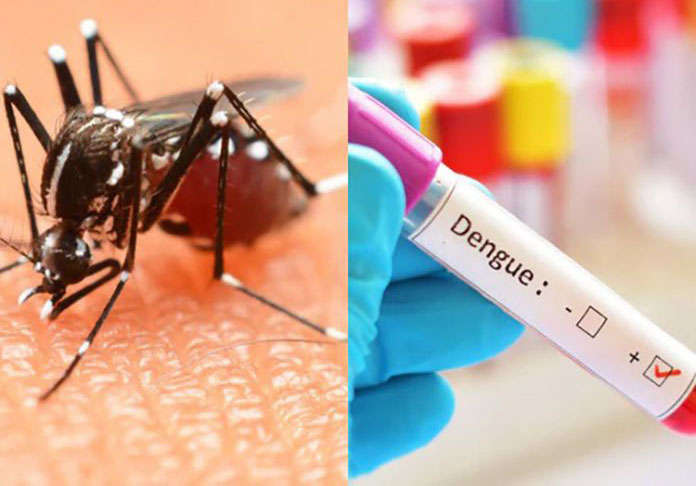
The number of deaths from dengue fever in Sri Lanka has risen to 73 this year, with 96,228 cases reported across the country so far, according to the Dengue Control Unit.
The latest figures indicate that dengue continues to pose a significant public health concern, with 737 new cases recorded during the first four days of September alone.
Dengue infections peaked in July, when 29,964 cases were reported, according to the latest data. June recorded the second-highest monthly total, with 21,533 cases, while 10,155 cases were reported in August.
Earlier in the year, 8,590 cases were recorded in May and 7,866 cases in January.The Western Province remains the worst-affected area, accounting for more than half of all dengue cases reported nationwide. A total of 50,851 cases have been recorded in the province, representing 52.84% of the country’s total.
The Southern Province has recorded 13,950 cases, followed by the Central Province with 8,818 cases and Sabaragamuwa Province with 7,925 cases.

Sun directly overhead Galle, Angulugaha, Imaduwa, Telijjawila, Yatiyana and Tangalle about 12.08 noon today (07)

Showers above 50 mm are likely at some places in the Uva and Eastern provinces.

Harshitha’s composed knock seals Sri Lanka’s semi-final berth

‘Choka Malli’ slips out of country before travel ban

Dengue death toll rises to 73

Ranil accuses govt. of undermining democracy

‘Dates have the highest sugar content to fight Coronavirus’

Sunday Island 27 December – Headlines

#SundayIsland 17th December – Headlines

Sunday Island – 28th March

Sunday Island Headlines – 21 March

Sunday Island – 21st February – Headlines
-

 News5 days ago
Denied of promotion to SC despite vacancies, justice Gurusinghe retires
-

 Latest News5 days ago
Grade 5 scholarship exam results released
-

 News5 days ago
22A: SC urged to suspend hearing, appoint full bench
-

 Midweek Review6 days ago
The local and global dynamics of Sri Lanka’s 22nd Amendment
-

 News3 days ago
Namal remanded until Sept. 18 over Airbus deal investigation
-

 News5 days ago
Govt. seeks NATO assistance
-

 Latest News2 days ago
Tharanga creates history with Diamond League crown in Brussels
-

 News6 days ago
40 professional organisations and TU oppose proposed 22A