
Business
Sri Lanka Tourism performs a successful stint at the Arabian Travel Market – 2024 in Dubai, UAE

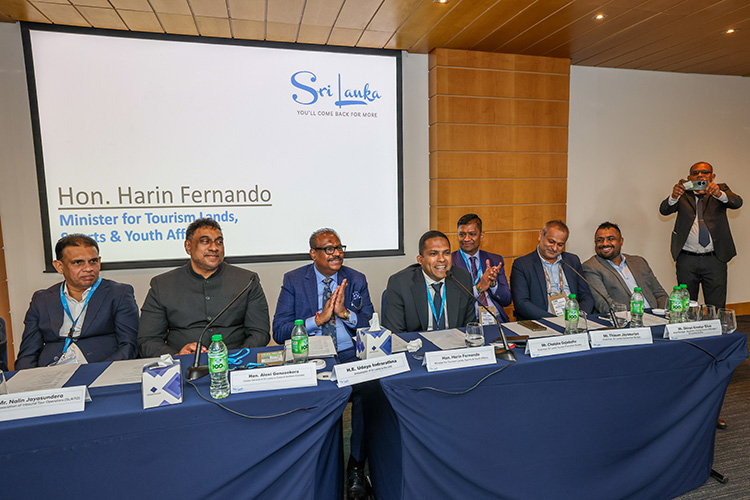
Sri Lanka Tourism made headlines at the 31st edition of the Arabian Travel Market (ATM) which was held from 6th May to 9th May 2024 in Dubai, UAE. The travel fair was held at the Dubai World Trade Center (DWTC) in line with the theme of empowering innovation – transforming travel through entrepreneurship. This is the largest tourism event in Middle East which provides global exposure, business & travel opportunities for the tourism sector.
Sri Lanka Tourism Promotion Bureau (SLTPB) has been participating at this event since 2003 along with the members of the travel and tourism industry in Sri Lanka and this year SLTPB has vibrant and elegant stand with more than 60 participants from the travel and tourism industry.
The opening of the Sri Lanka Tourism pavilion at ATM took place at the Sri Lanka Stand with the participation of the Udaya Indrarathana -Ambassador of Sri Lanka in UAE, Alexi Gunasekera- Sri Lanka Consul General in Dubai, Chalaka Gajabahu-Chairman SLTPB, Dushan Wickramasuriya – Director Marketing SLTPB, and other official members of SLTPB & Missions. The colorful Sri Lanka pavilion was included with rich cultural heritage, pristine beaches, stunning landscapes and abundance of wildlife.
A press conference was organized by SLTPB on the 2nd day of the Travel show which was 7th May 2024 with the presence of large number of international journalists and TV channels. Speaking at the press conference, the Minister of Tourism, Harin Fernando, highlighted country’s vision on the idea of the new logo and the unforgettable experience which travelers could get from Sri Lanka. Chairman SLTPB, Chalaka Gajabahu highlighted the importance UAE tourists to boost the total tourist arrivals to the country and invited all participants to experience the country offering the best holiday choices for an interested traveler.
SLTPB & Emirates renewed its commitment in promoting tourism in Sri Lanka through a Memorandum of Understanding (MoU) that includes of indicatives designed to promote and play a major role in reviving the tourism and trade sectors in the country. Chalaka Gajabahu-Chairman of SLTPB signed the MOU from the Sri Lanka Tourism while Ahmed Khoory Senior Vice President, Commercial Operations West Asia & Indian Ocean, signed from Emirates. The agreement was signed in the presence of Minister of Tourism, Lands, Sports and Youth Affairs- Harin Fernando, Ambassador of Sri Lanka to the United Arab Emirates-Udaya Indrarathna, Consul General of Sri Lanka to Dubai & Northern Emirates- Alexi Gunasekera, Emirates Executive Vice President, Passenger Sales and Country Management-Nabil Sultan Al Murr, Emirates Country Manager to Sri Lanka & Maldives- Rashid Al Ardha, and Emirates Manager Government Liaison – Chandana de Silva.
ATM concluded successfully creating excellent platform to Sri Lanka Tourism to showcase its tourism offering and created new partnership with travel professionals and business stake holders in the Middle East region.










By Ifham Nizam
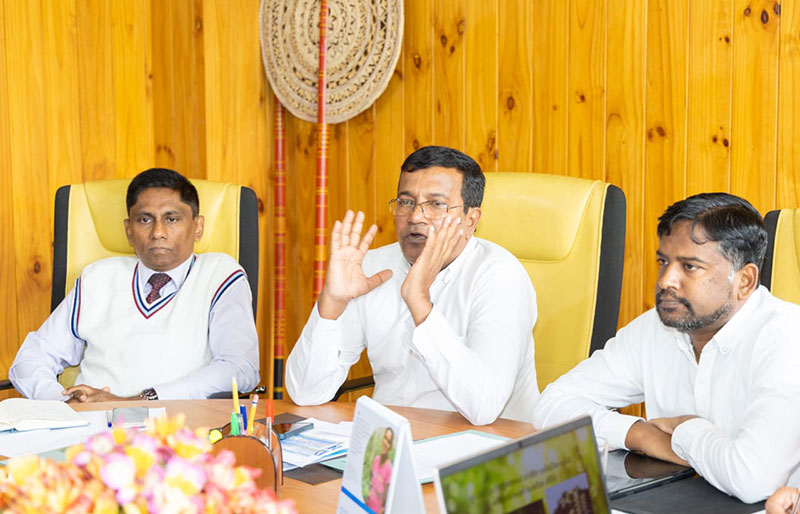
An urgent joint action plan is to be implemented to tackle the worsening water pollution threatening the environmental health and tourism value of Lake Gregory in Nuwara Eliya, following a special inspection and high-level discussion held yesterday.
The inspection and subsequent discussion were led by Deputy Minister of Environment Anton Jayakody, who stressed the need for immediate and coordinated intervention to address the emerging pollution problem before it causes further ecological damage to the iconic lake.
The meeting, held at the Nuwara Eliya District Secretariat, brought together Deputy Minister of Education Dr. Madhura Seneviratne, Chairman of the Nuwara Eliya District Coordinating Committee Manjula, District Secretary Nandana Jayakody, Secretary to the Ministry of Environment K. R. Uduwawala, the Central Environmental Authority’s District Director and senior officials representing the Irrigation Department, National Water Supply and Drainage Board and Urban Development Authority.
A key decision was to establish a special Management Committee comprising representatives of the Sri Lanka Navy, Central Environmental Authority, Nuwara Eliya Municipal Council and District Secretariat to formulate and implement an immediate action programme.
The committee is expected to identify practical short-term measures while accelerating longer-term interventions aimed at preventing pollutants from reaching the lake.
One of the immediate priorities will be the reactivation of the 13-pond natural treatment system, which was designed to naturally filter agricultural runoff and urban wastewater before such pollutants enter Lake Gregory.
Officials also discussed strengthening natural aeration and introducing natural filtration methods to tackle foul odours and improve the quality of the lake water.
Particular attention will be given to reducing nitrogen and phosphorus concentrations, which can contribute to excessive nutrient enrichment and deterioration of aquatic ecosystems.
The meeting further emphasised the urgent need to prevent wastewater from the Nuwara Eliya municipal sewerage network and other sources of waste from being discharged into the lake.
Long-term project proposals aimed at providing a sustainable solution to wastewater and pollution entering Lake Gregory will also be expedited.
The authorities recognised that protecting Gregory Lake is not merely an environmental obligation but is also critical to safeguarding Nuwara Eliya’s tourism economy. The lake remains one of the town’s most prominent attractions, drawing large numbers of domestic and foreign visitors.
The Government therefore intends to coordinate the efforts of all relevant institutions to implement both immediate remedial measures and long-term pollution-control projects.
The latest initiative comes amid growing concern over the condition of the lake, highlighting the need for a comprehensive approach that addresses pollution at its sources rather than relying solely on periodic clean-up operations.
Authorities said prompt implementation of the agreed measures would be essential to restore and protect the ecological health of Gregory Lake while preserving its scenic value and appeal as one of Nuwara Eliya’s major tourist attractions.
By SB Seker, Head of APAC, Binance
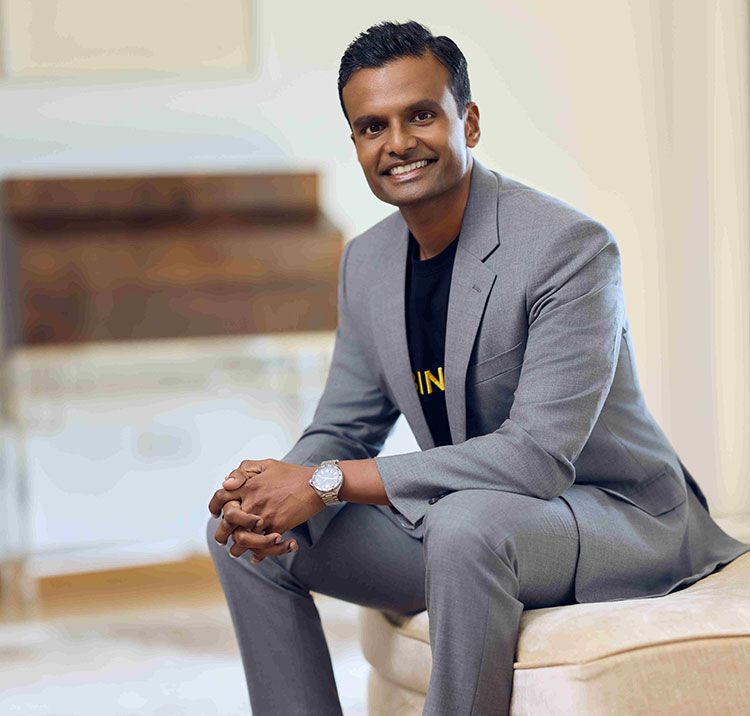
Sri Lanka’s economic rebound over the past four years is a testament to national resilience. The World Bank’s recent upgrade of Sri Lanka to an upper-middle-income economy, alongside significant improvements on the Global Peace Index, marks a definitive turning point. The nation has successfully moved past acute crisis management and is now laying the groundwork for long-term stability.
Sustained economic recovery requires more than traditional macroeconomic rebuilding, it demands a future-proof financial ecosystem. As commerce, capital flows, and consumer behavior increasingly digitize, governments worldwide are recognizing that emerging technologies cannot remain in a regulatory vacuum.
This is precisely why the Sri Lankan government’s recent decision to empower the Securities and Exchange Commission (SEC) as the official regulator for Virtual Assets and Virtual Asset Service Providers (VASPs) is a landmark policy move. Sri Lanka is signaling that it is serious about holistic financial modernization. Protecting retail investors from spurious platforms, encouraging accountability, and embracing structural reform are the hallmarks of an economy looking confidently toward a secure digital future.
For an island nation with an estimated 420,000 digital asset users – a population that is young, highly literate, and tech-savvy – establishing a clear regulatory perimeter is important. The absence of formal frameworks means retail participants may navigate unmonitored digital spaces without regulatory recourse, facing elevated risks from opaque operators and platforms lacking essential consumer safeguards. That gap is exactly where bad actors thrive. By bringing VASPs under structured oversight, aligned with robust Anti-Money Laundering (AML) standards, Sri Lanka is prioritizing market integrity and user protection.
Crucially, this regulatory clarity empowers everyday citizens. A functioning VASP framework closes it. Clear rules draw a bright line between deceptive actors and transparent, Tier-1 compliant platforms that adhere to rigorous standards. When compliance becomes the baseline, users gain access to critical transparency measures. Simple things like proof-of-reserves audits, independent confirmation that customer funds are actually there, stop being a nice-to-have and start being table stakes.
The legislation still has to be drafted and passed, and effective implementation will be the key part. Licensing timelines need to be realistic, compliance requirements need to make sense for both global exchanges and smaller local players, and the dialogue between regulators and industry needs to continue past the Cabinet approval. Get that right, and Sri Lanka won’t just have caught up with global standards, it will have shown other emerging economies a workable path for doing the same.

By Hiran H. Senewiratne
CSE trading yesterday reflected positive sentiments due to reducing tensions in the West Asian region following Iran’s positive reactions to peace overtures.
The All Share Price Index went up by 43.21 points, while the S and P SL20 rose by 20.37 points.
Turnover stood at Rs 2.2 billion with three crossings. Those crossings were; Softlogic Capital 6.7 million shares crossed to the tune of Rs 73 million; its shares traded at Rs 11, HNB 176,000 shares crossed for Rs 67 million; its shares traded at Rs 380 and JKH 1 million shares crossed for Rs 20 million; its shares sold at Rs 19.70.
In the retail market companies that mainly contributed to the turnover were; WindForce Rs 495 million (12.7 million shares traded), Digital Mobility Solutions Rs 258 million (1.6 million shares traded), Sierra Cables Rs 246 million (6.9 million shares traded), Haycarb Rs 90 million (457,000 shares traded),Commercial Credit and Finance Rs 79 million (733,000 shares traded), HNB Rs 74 million (195,000 shares traded) and CCS Rs 57 million (548,000 shares traded). During the day 66.4 million share volumes changed hands in 17017 transactions.
It is said that the banking sector, especially HNB, and manufacturing sectors performed well, while the renewable energy sector, especially WindForce, traded well at the floor.
Meanwhile, Arcasia Investment & Trading and ATX Partners announced the conversion of their voluntary offer to a mandatory offer for Industrial Asphalts (Ceylon) under the Company Takeovers and Mergers Code.
The offers received acceptances totaling 1,880,693,010 shares (50.16% shareholding), including 48.03% from Ramanan Govindasamy and 2.13 percent from Srikumar Balasubramaniyam on August 24, 2026
Yesterday the rupee was quoted at Rs 328.00/05 to the US dollar in the spot market stronger from Rs 328.50/60 Tuesday, while bond yields were steady to lower on select tenors, dealers said.

Thirty-six naval personnel pass out on successful completion of Marine training

Ex-White House teleprompter operator ordered to pay $172,000 for Trump speech bets

Rescuers on high alert for signs of secondary landslides

More than 600 killed in Nepal flood as search for survivors enters fourth day

Norway mourns King Harald as Haakon VIII ascends throne

Trump announces ‘biggest oil deal in world history’ with Venezuela

‘Dates have the highest sugar content to fight Coronavirus’

Sunday Island 27 December – Headlines

#SundayIsland 17th December – Headlines

Sunday Island – 28th March

Sunday Island Headlines – 21 March

Sunday Island – 21st February – Headlines
-

 Features7 days ago
My secondary schooling after Royal Primary
-

 Features7 days ago
From the First to the 22nd: A short history of Amendment Politics and Reform Frustrations
-

 News5 days ago
Missing doctor’s body found in Mahiyanganaya
-

 Features7 days ago
How Shelton Kodikara became first Professor of International Relations
-
 Features7 days ago
How St. John’s College Shaped Panadura for 150 Years
-
 News5 days ago
Australia declines to release Finance Secy Suriyapperuma’s citizenship details
-
 News7 days ago
Ex- Atamasthanadhipathi uses Magistrate’s gate to enter court
-

 News5 days ago
22A: BASL suggests CJ recuse himself from hearing petitions