
Foreign News
Sudan catastrophe must not be allowed to continue- UN rights chief Türk


A full year of conflict in Sudan has already caused immense suffering and death but the situation could easily worsen with the news that the warring parties are arming civilians, UN rights chief Volker Türk said on Monday.
A year to the day since heavy fighting erupted between Sudan’s rival militaries, the UN High Commissioner for Human Rights warned of a further escalation, including an imminent attack on El-Fasher in North Darfur.
“The Sudanese people have been subjected to untold suffering during the conflict which has been marked by indiscriminate attacks in densely populated areas, ethnically-motivated attacks, and a high incidence of conflict-related sexual violence. The recruitment and use of children by parties to the conflict are also deeply concerning,” said Mr. Türk.
And as an international donor conference for the Sudan emergency began in Paris on Monday, the UN rights chief underscored the potential for further bloodshed, as three armed groups announced that they were joining the Sudanese Armed Forces in their fight against the Rapid Support Forces and “arming civilians”.
Since fighting erupted on 15 April 2023, more than eight million people have been displaced, including at least two million to neighbouring countries.
“Nearly 18 million people face acute food insecurity, 14 million of them children, and over 70 per cent of hospitals are no longer functional amid a rise in infectious diseases – this catastrophic situation must not be allowed to continue,” said High Commissioner Türk.
Acute hunger danger
Echoing those concerns, the UN Children’s Fund (UNICEF) said that some 8.9 million children are suffering from acute food insecurity; this includes 4.9 million at emergency levels.
“Almost four million children under five are projected to suffer from acute malnutrition this year”, including 730,000 from life-threatening severe acute malnutrition, UNICEF said in a statement on Sunday. “Almost half of the children suffering from severe acute malnutrition are in areas that are hard to access” and where there is ongoing fighting, noted UNICEF Deputy Executive Director, Ted Chaiban. “This is all avoidable, and we can save lives if all parties to the conflict allow us to access communities in need and to fulfil our humanitarian mandate – without politicizing aid.”
Civilian rule targeted
Top UN rights official Türk also expressed deep concern that arrest warrants had been issued against former Prime Minister Abdallah Hamdok and others on apparently unsubstantiated charges.
“The Sudanese authorities must immediately revoke the arrest warrant and prioritize confidence-building measures towards a ceasefire as a first step, followed by a comprehensive resolution of the conflict and the restoration of a civilian government,” Mr. Türk insisted.
UN humanitarians meanwhile have reiterated that chronic hunger and malnutrition continue to make children “much more vulnerable to disease and death”.
Conflict has also disrupted vaccination coverage in Sudan and safe access to drinking water, UNICEF explained, meaning that ongoing disease outbreaks such as cholera, measles, malaria and dengue now threaten the lives of hundreds of thousands of children.
“Spikes in mortality, especially among internally displaced children, are a forewarning of a possible huge loss of life, as the country enters the annual lean season,” the UN agency said, as it underlined the need for predictable and sustained international aid access.
“Basic systems and social services in Sudan are on the brink of collapse, with frontline workers not being paid for a year, vital supplies depleted, and infrastructure, including hospitals and schools, still under attack.”
Schools shuttered
And in a warning that the whole country could be engulfed in fighting that has left half of Sudan’s population in need of humanitarian relief, the global fund for education in emergencies, Education Cannot Wait, underscored that four of the eight million people uprooted by the violence are children.
The conflict “continues to take innocent lives, with over 14,000 children, women and men reportedly killed already,” said Yasmine Sherif, Executive Director of Education Cannot Wait.
Ms. Sherif echoed deep concerns that Sudan now has one of the worst education crises in the world, with more than 90 per cent of the country’s 19 million school-age children unable to access formal education.
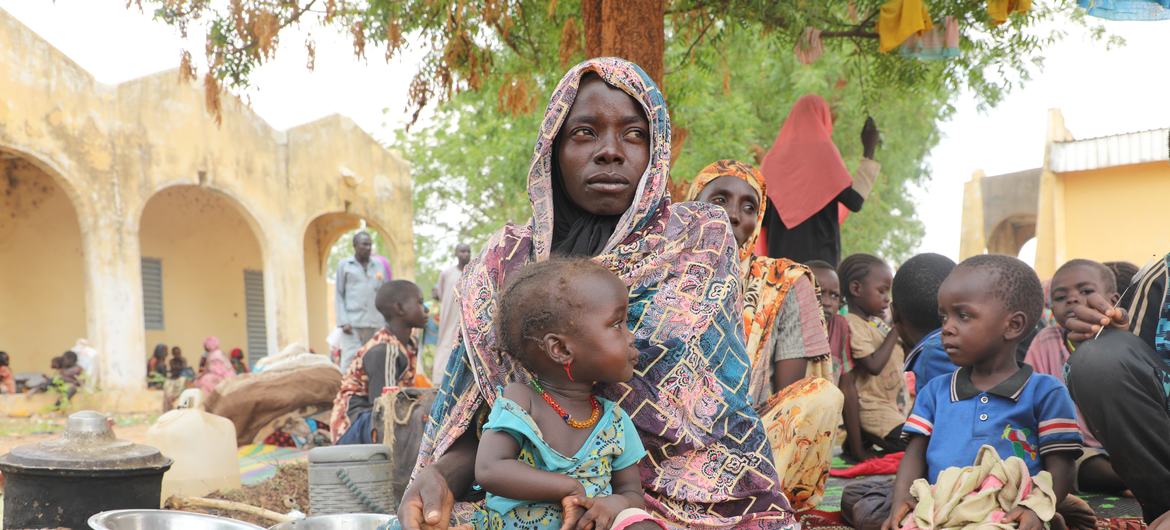
Mariam Djimé Adam, 33, is sitting in the yard of Adre’s secondary school in Chad. She arrived from Sudan with her 8 children. (UNICEF)
“Most schools are shuttered or are struggling to re-open across the country, leaving nearly 19 million school-aged children at risk of losing out on their education,” she said.
To date, the global fund has provided nearly $40 million to support education for victims of the crisis in Sudan and beyond, in the Central African Republic, Chad, Egypt, Ethiopia and South Sudan.
“Without urgent international action, this catastrophe could engulf the entire country and have even more devastating impacts on neighbouring countries, as refugees flee across borders into neighbouring States,” Ms. Sherif said.
(UN News)







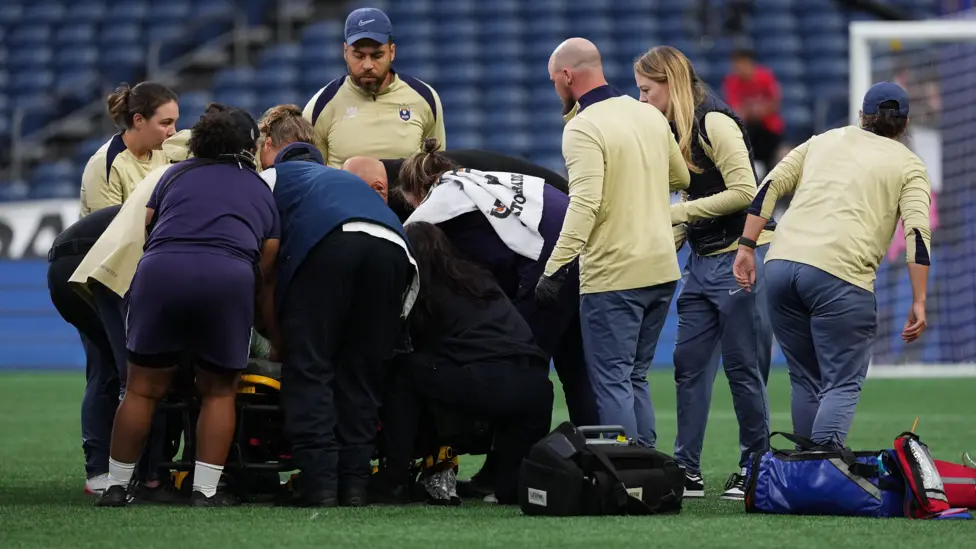
United States women’s national team player Savannah DeMelo is suing a hospital and two doctors after she suffered a cardiac arrest on the pitch last year.
Midfielder DeMelo, who has seven senior caps for the USA, has filed a lawsuit against University of Louisville Health (UofL Health) for negligence.
The 28-year-old, who plays for Racing Louisville, collapsed in the first half of a National Women’s Soccer League (NWSL) match on 14 September 2025.
According to documents seen by BBC Sport, the case was filed on Tuesday morning with Jefferson Circuit Court in Kentucky, where her club is based – a year and a day after her on-field collapse.
DeMelo’s filing claims UofL Health and two doctors, Dr Sarabjeet Suri and Dr Jennifer Daily, “failed to act as a reasonably prudent and competent medical practice, and such negligence was a substantial factor in causing DeMelo to suffer severe physical injuries, including, but not limited to, her cardiac arrest”.
Dr Daily, according to her online UofL biography, is Racing Louisville’s chief medical officer. The lawsuit states DeMelo was under the care of Dr Daily from January 2024 to July 2026.
It states that in March 2025, Dr Daily referred DeMelo to Dr Suri for “evaluation and treatment” after she had been complaining of chest pain, dizziness and shortness of air; Dr Suri obtained a history, performed a physical examination and ordered diagnostic tests.
Nearly six months later, DeMelo suffered the cardiac arrest.
“She was subsequently diagnosed and treated for ventricular tachycardia [an abnormal heart rhythm],” the suit states.
DeMelo, who has spent her entire professional career with Racing Louisville, has not played since her collapse.
In a post to her instagram page on Tuesday, De Melo – who was picked in the USA squad for the 2023 Women’s World Cup and started their first two games – marked the anniversary of the incident.
“A year ago today, while playing soccer, I collapsed due to an undiagnosed cardiac arrhythmia, that caused me to go into cardiac arrest,” she wrote.
“I respect and appreciate the privacy everyone has met me with while going through everything I have this year. I’ll never be able to fully put into words how emotionally hard this year has been. There has been a lot of uncertainty and emotions intertwined with it all.”
[BBC]

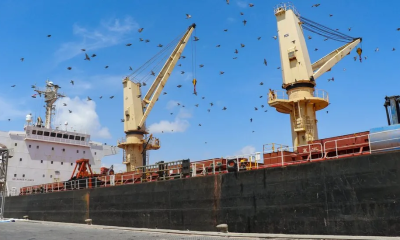
The Philippine Coast Guard says it has recovered 41 bodies from the wreckage of a ferry that caught fire this week, bringing the total death toll to 76.
More than 130 people were on board the MV June Aster when the blaze erupted on Wednesday as it neared its destination at the tourist hotspot of Coron, after departing from Manila.
The coast guard said on Saturday the number of survivors remained 43, with many receiving treatment in hospital, but 13 people remain unaccounted for.
Recovery of bodies had been hampered due to toxic fumes and lingering heat, which meant authorities were unable to board until Friday.
Geronimo Tuvilla, an official for the Philippine Coast Guard, said the priority was identifying victims and determining the cause of the blaze.
Kristine Ablana, a tourism official in Coron, said relatives were being asked to help identify family members through personal items and DNA testing.
“Once someone is able to verify that this photo or these belongings are indeed those of their relative, they will be asked to provide a DNA sample,” she said.
Coast Guard spokesperson Commodore Noemie Cayabyab said the fire began in a cargo hold before spreading.
She said survivors had described hearing a loud explosion, “the appearance of smoke and then fire. It spread very quickly”. She added that those who had made it off the ship did not have time to put on lifejackets.
A survivor who was hauled to safety on a rescue boat told the BBC he had heard frantic cries onboard when the fire erupted, and was trampled by panicked people as he tried to escape.
The ferry, built in 2002, held valid safety certificates and passed an enforcement inspection in March, but investigators are looking into potential manifest discrepancies, cargo loading integrity, and crew emergency response protocols, the Palawan Daily reported.
The vessel was carrying 117 passengers and 17 crew members.
Atienza Interisland Ferries, the vessel’s operator, has pledged full co-operation with the inquiry.
[BBC]
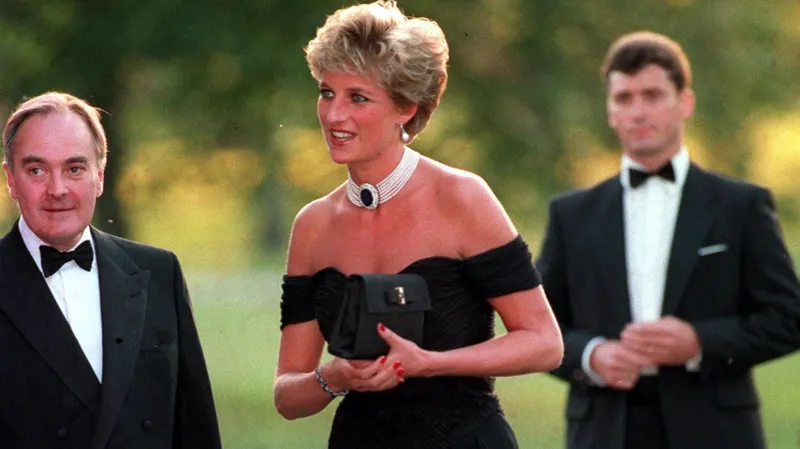
A dress worn by Princess Diana to a party in London hours after a documentary was televised in which the then-Prince Charles admitted to committing adultery during their marriage is going up for auction.
Her dramatic arrival at the Serpentine Gallery in 1994 in a custom-made black silk evening dress by designer Christina Stambolian became an iconic pop-culture moment.
The media dubbed her outfit the “revenge dress”.
Auction house Sotheby’s expects the dress to sell for up to £220,000 ($300,000) when it goes under the hammer on 9 December.
A press release from Sotheby’s said it is the first time the dress has been offered at auction since 1997, when the late princess sold 79 of her dresses to raise money for charities.
Morgane Halimi, Sotheby’s Global Head of Handbags and Fashion, said in a statement that Princess Diana “understood instinctively” that fashion can be a language in its own right.
“On her own terms, Princess Diana turned the dress into one of the most powerful messages she ever made, during one of the most scrutinised and emotionally charged episodes of her life,” Halimi said.
“She walked into a moment in which so much of her story was being told for her and, through what she chose to wear, reclaimed the narrative for herself.”

According to Sotheby’s, Anna Harvey, her stylist at the time, said Diana “wanted to look a million dollars”.
The princess made a last-minute wardrobe change for the fundraising dinner and chose the strapless evening dress by the Greek designer Christina Stambolian – which she accessorised with a royal jewel, a black clutch and black heels.
The vintage Jaguar XJ40 car that Diana arrived in at the event was sold at auction earlier this year for £66,250.
The revenge dress is expected to fetch a considerably higher price.
If it does, it will not be the first time an item from the princess’s wardrobe has sold for a significant sum.
Princess Diana’s sweater featuring a black sheep among rows of white ones was sold for £920,000 at an auction by Sotheby’s in New York in 2023.
[BBC]

Advisory for strong winds and rough seas for Multi-day boats in the Bay of Bengal

Showers in the Western, Sabaragamuwa and North-western provinces and in Galle, Matara, Kandy and Nuwara-Eliya Districts

Some NPP manifesto promises may be difficult to fulfil – CIABOC DG

Yoshitha and ex-Navy chief Karannagoda’s case fixed for PTC

Court orders probe into Wimal’s rally speech

Court to rule on Dilith’s writ petition on September 30

‘Dates have the highest sugar content to fight Coronavirus’

Sunday Island 27 December – Headlines

#SundayIsland 17th December – Headlines

Sunday Island – 28th March

Sunday Island Headlines – 21 March

Sunday Island – 21st February – Headlines
-

 News7 days ago
Gnanasara Thero absconding after SC ruling
-

 Opinion6 days ago
From Galkissa (Mount Lavinia) to Tambuttegama
-

 Business7 days ago
HNB Finance strengthens Board with four independent directors
-

 News3 days ago
US embassy won’t comment on IGP’s probe into joint drug raid
-

 Sports7 days ago
Culture within cricket team worrying authorities
-

 Features6 days ago
Sri Lanka’s university crisis: Brain drain and union action demand urgent reform
-

 Features5 days ago
The emptying university: why are academics leaving?
-

 News7 days ago
House to debate 22A, Judicature Bill next week