
Latest News
IPL 2025: Mumbai Indians survive Nair storm, snap Delhi Capital’s winning run in a thriller

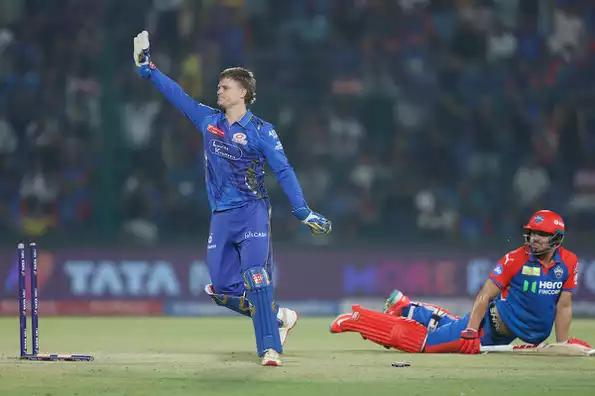
Mumbai Indians snapped back to form with a thrilling 12-run win defending 205 against Delhi Capitals. Karun Nair’s 40-ball 89 had threatened to take the game away from MI after Tilak Varma’s 59 had headlined their innings. But the bowlers pulled things back dramatically in the second half of the defence to pocket a memorable win and clip the Capitals’ four-game winning start to IPL 2025
Where was the game won?
MI managed to keep their nerve even after the blistering assault upfront from Karun Nair. Through the second half of the innings, they kept striking in every over bar two to drag the game back in their favour. MI got the ball changed after the 13th over and it helped their two key architects of the win – Karn Sharma and left-arm spinner Mitchell Santner, who picked four of the five wickets when Delhi collapsed from 119/1 to 160/6. They capped off that good work by three run outs in the penultimate over.
MUMBAI INDIANS
Powerplay – MI show intent but DC keep them in check
Phase Score – 59/1 (RR: 9.83; 4s/6s: 7/3)
A score of 59 was the result of a couple of big overs inside the PowerPlay for Mumbai Indians. Mitchell Starc, searching for swing, erred on the fuller lengths and was hit away for 30 runs in his first couple of overs by Ryan Rickelton and Rohit Sharma. The former was adept at covering for the swing and launched a couple of eye-catching shots – a flick and a cover drive – to get going. Sharma, meanwhile, hit Starc through the offside and even attempted a lap which was a top-edge that went for a six. Mukesh Kumar, in comparison, was more difficult to put away from the hard lengths for MI and conceded 27 in his three overs in the PowerPlay. Additionally, legspinner Vipraj Nigam struck gold, getting Rohit Sharma LBW in his first over which went for just two. But Suryakumar Yadav, coming in at No 3 for this game, announced his intentions with a six off the first ball he faced complementing the aggressive Rickelton.
Middle overs – Tilak, Suryakumar keep MI going
Phase Score – 87/3 (RR:9.66; 4s/6s: 8/5)
Delhi threatened to come back into the game with the spinners coming into play. Kuldeep Yadav got the better of Rickelton with a googly, dismissing him for a 21-ball 45 soon after the PowerPlay was done. With the turn on offer, Delhi had a chance to squeeze MI more. But Tilak, like Suryakumar, got going with a boundary off his first ball. The duo managed to get at least one boundary in every over of their partnership – 60 off 33 balls. While Suryakumar struggled with the momentum initially, getting to 29 off 24 at one stage, he managed to up his strike-rate with a six and four off Nigam to get into the forties. But just as he was getting into the groove, Kuldeep Yadav hit back for Delhi getting Suryakumar caught at long off. Delhi had it even better when Nigam got Hardik Pandya similarly in the following over even as Tilak kept going strong at one end.
Death overs – Naman Dhir provides the finishing touches
Phase Score – 59/1 (RR: 11.8; 4s/6s: 6/2)
Kuldeep finished with exceptional figures of 4-0-23-2 and started the last five overs with a tight one giving away only eight. But Tilak got to his fifty – his eighth in the IPL – off just 26 balls and looked set to shift gears. However, it was his partner Naman Dhir that proved to be the biggest thorn in Delhi’s flesh. In a 62-run stand with Tilak, Naman Dhir was the aggressor hitting a 17-ball 38 that took MI past the 200-run mark. The young batter used the angles well, picking up useful boundaries with the lap shot as well to provide MI a good finish.
DELHI CAPITALS
Powerplay – Karun Nair makes a stunning appearance
Phase Score – 72/1 (RR: 12; 4s/6s: 10/2)
Playing the match as an Impact Sub after Faf du Plessis’ injury, Karun Nair, who had not played an IPL game since 2022, was required to come in just after the first ball of the innings. Jake Fraser-McGurk had chipped the first ball from Deepak Chahar straight to cover and Nair had to dig out a big inswinging yorker from Chahar first-up. He dealt with that and then proceeded to unleash a stunning attack on Mumbai’s No. 1 bowler Jasprit Bumrah. Nair got to a 22-ball fifty hitting eight fours and two sixes. 26 off his first 50 runs had come off just Bumrah whom he toyed with on both sides of the pitch. He started off getting three fours off Trent Boult, but the assault on Bumrah turned the PowerPlay on its head and left MI scampering.
Middle Overs – Nair explodes but MI’s spinners hit back
Phase Score: 86/4 (RR: 9.55; 4s/6s: 8/4)
Abhishek Porel provided an ideal foil, but he was only second-fiddle to Nair who found answers in boundaries to every question posed by Mumbai Indians. Against the spinners who came into play in the middle overs, Nair brought out a variety of sweeps to keep the momentum going in the chase. The 119-run stand for the second wicket appeared to have turned the game decisively in DC’s favour. They had notched up half of the target in half the overs with plenty of wickets in hand still. But Karn Sharma, MI’s Impact Sub, brought an end to it when he had Porel caught in the deep going for a second consecutive six. Inbetween, Nair continued to keep the heat on, hitting Karn for back-to-back boundaries and picking one of Mitchell Santner in the following over. However, against the run of play, Santner got one to turn big and past Nair’s bat ending a sensational 40-ball 89. Axar Patel got going with a couple of boundaries but he got a leading edge off Bumrah to give MI their third wicket in as many overs. It turned out to be four in four as Sharma got Stubbs to get a top-edge in the following over. Despite the clump of wickets, DC were still in the chase needing 47 from the last five overs with the in-form KL Rahul still in the middle.
Death Overs – Hat-trick of run-outs seal thriller
Phase Score: 35/5 (RR 8.75, 4s/6s: 3/1)
Karn Sharma had an outing to remember finishing with 4-0-36-3 with the last of those wickets being the big one of Rahul in the 16th over. Rahul top-edged a slog-sweep offering a simple return catch to Karn, who had now turned the game back on its head, leaving a tight chase for DC’s finishers against MI’s experienced attack. Trent Boult backed this up with six yorkers in the 17th over giving away only three runs leaving DC needing 39 off 18. DC managed 16 off the next over with Vipraj Nigam striking Santner for a six first ball. But the spinner hit back, getting the batter stumped to keep DC in check. The penultimate over bowled by Bumrah started off on a good note with Ashutosh Sharma squeezing two boundaries off Bumrah. But in a desperate attempt to keep strike, Ashutosh was run out going for the second run. Similar desperation for a second saw Kuldeep Yadav too run out off the next ball. MI capped this off with Santner’s glorious pick-up and throw from mid wicket off the final ball to have three run outs in as many balls and clinch MI a come-from-behind win.
Brief Scores:
Mumbai Indians 205/5 in 20 overs (Tilak Varma 59, Ryan Rickelton 41, Rohit Sharma 18, Suryakumar Yadav 40, Naman Dhir 38*; Mukesh Kumar 1-38, Vipraj Nigam 2-41, Kuldeep Yadav 2-23) beat Delhi Capitals 193 in 19 overs (Abhishek Porel 33, Karun Nair 89, KL Rahul 15, Ashutosh Sharma 17, Vipraj Nigam 14; Deepak Chahar 1-24, Jasprit Bumrah 1-44, Mitchell Santner 2-43, Karn Sharma 3-36) by 12 runs
What next?
Mumbai Indians have a three-day gap after this game before they host the imperious Sunrisers Hyderabad while Delhi Capitals host Rajasthan Royals a day earlier on April 16.

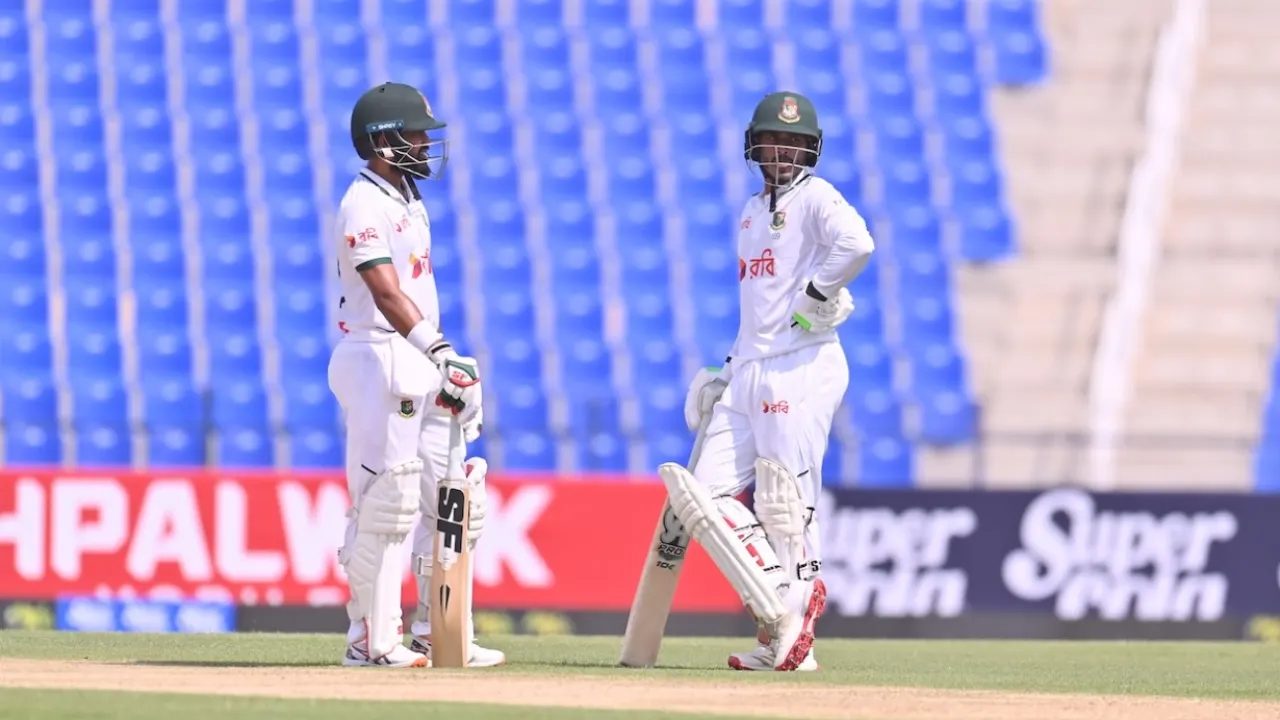
Afghanistan’s pace attack fought back late in the day as Bangladesh went to stumps on 317 for eight on day one in Abu Dhabi.
Mohammad Saleem, Yamin Ahmadzai and Ismat Alam combined to take seven out of the eight wickets that fell on the day. For Bangladesh, Shadman Islam, Tanzid Hassan and Litton Das made fifties.
Saleem targeted the shorter length after lunch, while Ahmadzai found success pitching the ball fuller. Ismat, meanwhile, bowled within himself and was rewarded with the wickets of both set batters Tanzid and Mehidy Hasan Miraz as he drew errors from each.
Tanzid was Bangladesh’s enforcer earlier in the day, hitting eight fours and four sixes in his 71-ball 83 in the first session. He looked set to get to a century in the first session, only for Ismat to thwart his charge.
Later, Shadman Islam and Litton Das struck fifties on either side of Bangladesh’s mini collapse. They lost three wickets for just four runs after they were 221 for two in the second session.
Bangladesh 317 for 8 in 84 overs (Shadman Islam 67, Tanzid Hasan 83, Litton Das 53; Yahmin Ahmadzal 2-62 , Mohmmad Saleem 3-70, Ismat Alam 2-20) vs Afghanistan
[Cricinfo]

Sri Lanka won the toss and chose to bat first in the first T20I against Pakistan being played in Rawalpindi.
Sri Lanka XI: Kusal Mendis (capt & wk), Lahiru Udara (wk), Kamil Mishara, Kamindu Mendis, Sahan Arachchige, Dasun Shanaka, Dunith Wellalage, Maheesh Theekshana, Dushmantha Chameera, Eshan Malinga, Nuwan Thushara
Pakistan XI: Sahibzada Farhan (capt), Saim Ayub, Maaz Sadaqat, Fakhar Zaman, Hasan Nawaz, Khawaja Nafay (wk), Shadab Khan, Muhammed Imran, Razaullah, Naseem Shah, Abrar Ahmed
Latest News
Sutherland and Litchfield lead Australia to quick and convincing win in ODI series opener
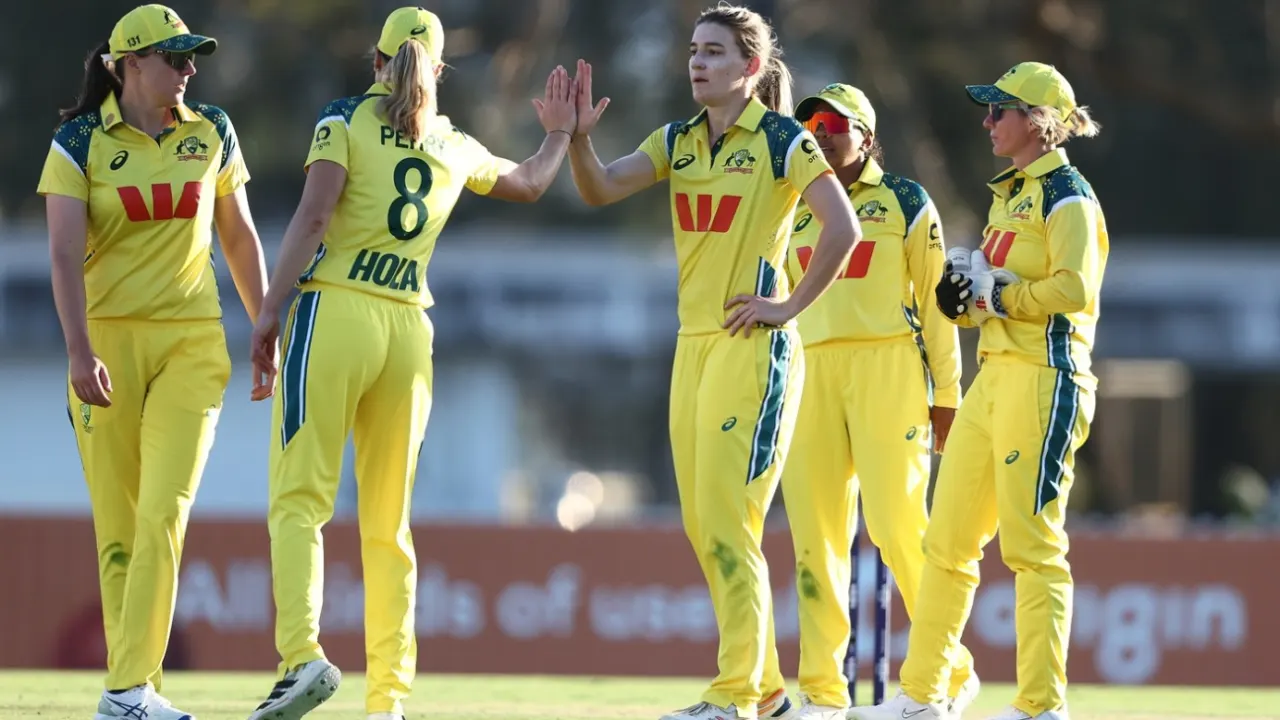
Bangladesh’s second visit to Australia and their first women’s ODI in the country began on a disappointing note as Australia ran out quick and convincing victors.
Annabel Sutherland showed why she is regarded as one of the most versatile fast-bowling allrounders in the world by taking 4 for 30. She kept the batters on their toes by varying the lengths and speeds as Bangladesh were bowled out for 166. Phoebe Litchfield’s swift 77 helped Australia canter home with 24.2 overs and seven wickets to spare to take a 1-0 lead in the three-match series.
The win meant Australia extended their unbeaten record in ODIs at the Allan Border Field in Brisbane to 22 games.
Bangladesh might have put up an even lower total if not for an intent-filled innings from Ritu Moni. Batting at No. 7, she hit two fours in her first four balls following a phase where Bangladesh scored only 35 in about 15 overs.
Asked to bat first, Bangladesh were stung first ball when Megan Schutt got one off a length to hoop in big to have Fargana Hoque caught at slip. In her next over, Schutt trapped the other opener Sarmin Sultana lbw to become only the third Australia woman to 150 ODI wickets.
When Sutherland’s bouncer cramped Sharmin Akhter for room, leaving her unable to get any control on the pull, Bangladesh were truly under the cosh, having lost three wickets inside the first powerplay.
That soon became 48 for 4, which prompted captain Nigar Sultana, perhaps Bangladesh’s best batter, to go into a shell. She hardly looked to score from that point and was happy to defend and merely prevent further wickets from falling.
The ploy was evident from the fact that Nigar didn’t put Sutherland under pressure when she bowled three successive no-balls in the 12th over. What’s more, unaware of the free hit on offer, she ducked under a short ball as well. Shorna Akter, too, curtailed her aggressive instincts to support her captain.
Bangladesh crawled at three runs per over through the middle phase before Tahlia McGrath had Nigar caught behind for 29 off 83 balls. Nigar perhaps half-referred to her own innings when, after the game, she said that Bangladesh “need to be cautious against the new ball and get the intent right”.
As soon as she fell, Moni and Shorna started to put back the pressure on Australia’s spinners. Moni fetched a couple of sweeps from outside off to hit them through midwicket. Shorna also used her feet more frequently.
Moni looked good to score her second half-century in ODIs but was hampered by cramps. That hindered her running, and eventually she was run-out for 45 off 63 balls. Sutherland was generous with her use of the back-of-the-hand slower ones from then on to keep the rest of the batters on a leash.
Australia were never going to be challenged in a paltry chase of 167, and Georgia Voll and Litchfield hit five fours in the first five overs of the chase to get them going.
That is when Bangladesh found another performer of note. Seventeen-year-old Habiba Islam, on ODI debut, bowled a sharp bouncer which got rid of Voll. Habiba, who made her T20I debut against India in 2024 as a 15-year-old, got the ball to nibble around at high pace. While her first spell was expensive, she returned in the middle overs to get Beth Mooney caught brilliantly at midwicket. She bowled the length ball outside leg and got it to move in late, and Mooney could only spoon it to Fargana, who ran in from the circle and completed a diving catch.
But between these two bits of celebration for Habiba and Bangladesh, Litchfield had almost killed the chase. She moved around the crease to hit Marufa Aklter for three successive fours in the seventh over of the chase, and then muscled Habiba over mid-on for the only six in the match.
She played her trademark reverse sweep off Nahida Akter and soon got to fifty off just 35 balls. Her second-wicket stand with Ellyse Perry was worth 89 off 67 balls with Perry contributing only 15 off 23. Until the time Litchfield stepped out and drove Rabeya Khan straight to cover, it looked as if she would complete a century even with so few runs to get.
Scores:
Australia Women 168 for 3 in 25.4 overs (Phoebe Litchfield 77, Ellyse Perry 26*, Annabel Sutherland 25*; Habiba Islam 2-36) beat Bangladesh Women 166 in 49.4 overs (Sharmin Akhter 24, Nigar Sultana 29, Shorna Akter 21, Ritu Moni 45; Megan Schutt 2-19, Ammabel Sutherland 4-30) by seven wickets
[Cricinfo]

Afghanistan fast bowlers hit back after Bangladesh’s strong start

Sri Lanka chose to bat first in Rawalpindi

Sutherland and Litchfield lead Australia to quick and convincing win in ODI series opener

USS Tulsa departs Colombo

Appointments for 1,540 Grama Niladhari Officers

Trump says US will not strike Iran before midterm elections

‘Dates have the highest sugar content to fight Coronavirus’

Sunday Island 27 December – Headlines

#SundayIsland 17th December – Headlines

Sunday Island – 28th March

Sunday Island Headlines – 21 March

Sunday Island – 21st February – Headlines
-

 Features6 days ago
The first woman in the foreign service or Ceylon Overseas Service it was then called
-

 News5 days ago
Geneva takes up Sallay’s case and govt. ignores opportunity to answer accusations
-

 Editorial7 days ago
Fuelling discontent and protest
-

 Foreign News6 days ago
Ten injured after car crashes into rugby supporters in Australia
-

 News6 days ago
Nearly 20 Iranian tankers stranded off Lanka amid US sanctions
-

 Latest News6 days ago
Tharindu Rathnayake, bowlers secure Asian Games Bronze for Sri Lanka
-

 Features5 days ago
Sri Lanka Cricket Bill: Governance reform is not yet a cricket strategy
-

 Features4 days ago
Preventing grievances from becoming communal