
News
India, Sri Lanka going ahead with Modi-Ranil ‘vision document’

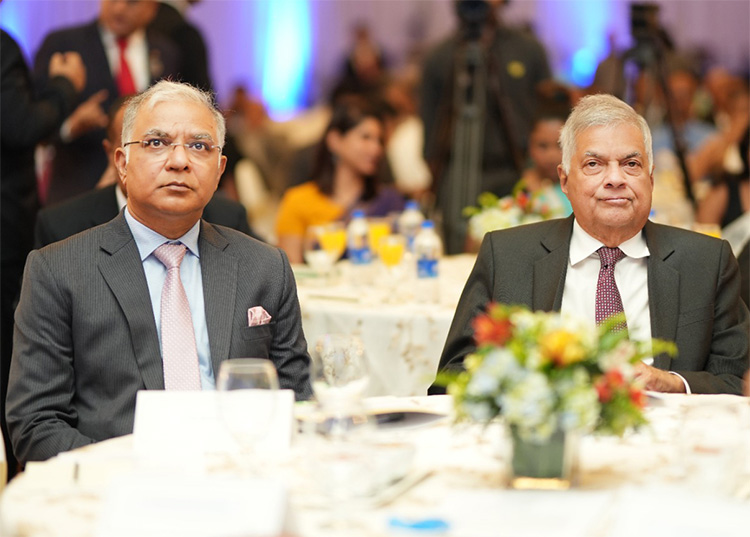
Santosh Jha stresses importance of Unique Digital Identity project
Indian High Commissioner Santosh Jha has said that India is working with Sri Lanka to roll out the Unique Digital Identity (UDI) Project based on modular micro service based architecture aka MOSIP architecture. He has said they strongly believe that as in the case of India this UDI will be the beginning of digital magic for Sri Lanka.
Jha made the announcement at the inauguration of a conference at the Taj where experts explored the immense potential for Digital Public Infrastructure (DPI) for Sri Lanka. Among the invitees were President Ranil Wickremesinghe and senior government officials.
Jha said that the high profile project was in line with the India-Sri Lanka Vision Document, adopted by Indian Premier Narendra Modi and President Ranil Wickremesinghe, in New Delhi, in July 2023, where they agreed to leverage India’s DPI in accordance with Sri Lanka’s requirements and priorities towards effective and efficient delivery of citizen-centric services to the people of Sri Lanka.
The Indian High Commission quoted Jha as having told the conference that the value proposition of DPI is the combination of three components—technology, governance and markets—to achieve sustainable and robust digital transformation. “It is not about one-off technology solutions but about incorporating a wider theory of change that brings about digitisation across domains.
This is the very premise of the Conference.”
The conference consisted of three sessions and what the IHC called breakout meetings which explored the transformative potential of DPI for enabling service delivery, empowering communities by fostering inclusivity and enriching the economy by driving innovation.
Having underlined DPI as a vital enabler for the digitisation of the Sri Lankan economy, President Wickremesinghe emphasised the need for collaboration with India in this domain, highlighting the potential of fast-tracking growth by adapting India’s successful strategies domestically. India’s digital transformation and the significance of DPI and India Stack was elaborated upon by Jha and Dr. Pramod Varma, Co-Chair, Centre for Digital Public Infrastructure (CDPI) in his presentation during the opening plenary.
The other two sessions saw discussions amongst experts from India, Sri Lanka and the region, on the themes of Accelerating Digital Sri Lanka and Unlocking the Digital Stack, respectively. The former focused on roadmap for adoption of DPI in Sri Lanka and the resultant acceleration towards e-governance across the board, with the opening remarks by Kanaka Herath, State Minister of Technology. The latter went beyond foundational DPI to discuss use cases marrying technology, markets and governance with a special focus on the positive externalities in the startups domain. This session was opened by MP Dr. Harsha de Silva.The conference was particularly enriched with several breakout meetings between visiting experts from India and their Sri Lankan counterparts as well as other stakeholders. A key highlight of these was an interaction of the visiting senior officials from Government of India’s Ministries handling Digital India and Startup India programmes with Senior Officials who are leading the six Working Groups of Government of Sri Lanka on digital economy.
Futuristic linkages were also initiated in the startup and IT industries domain on the side-lines of the conference. In the afternoon Startup India’s team held a capacity building workshop for startups in Sri Lanka, including sessions by Indian experts on the art of pitching and effective marketing. The Chief of IIT Chennai’s Incubator ‘Parvartak’ interacted with key startup incubators in Sri Lanka. Chairman NASSCOM called on President of Sri Lanka.
Jha explained how DPI project changed India. Jha said: “India’s own journey stands as testimony to the power of DPI. The digital transformation in India over the last decade or so has been driven by these interoperable and open protocols of DPI. India’s DPI journey started with the basic need to provide direct access to public services and Government benefits to our citizens. This is what gave birth to India’s Digital Identity Number AADHAAR- and the Unique Identification Authority of India in 2016. This became the foundational building block of DPI … and the magic began.
At the heart of this magic is what we call India Stack: government-backed APIs, or Application Programming Interfaces, upon which third parties can build software with access to government IDs, payment networks and data. This digital infrastructure is interoperable and “stacked” together – meaning that private companies can build apps integrated with state services to provide consumers with seamless access to everything from welfare payments to loan applications and making investments.
Probably even the architects of AADHAAR didn’t envisage that India was on path to finding a world-beating solution for building out and regulating the online commons that is more equitable than the laissez-faire approach, more transparent and more innovative than some of the regulation-heavy models. “




… others acquitted and ordered to be released
2019 Easter Sunday carnage:
By Nishan S. Priyantha
The Colombo High Court Trial-at-Bar yesterday (22) found 15 out of 24 accused in the high profile 2019 Easter Sunday massacres case guilty. Among them was Mohamed Ibrahim Mohamed Naufer aka Naufer Moulavi, the alleged mastermind of near simultaneous suicide attacks blamed on the National Thowheed Jamaath (NTJ).
The remaining nine accused were acquitted and ordered to be released by the Trial-at-Bar comprising Navaratne Marasinghe (Chair Judge), Ramanathan Kannan, and Sujeewa Nissanka. The 17th defendant died in custody.
The court held that all charges against those found guilty had been proved beyond reasonable doubt.
Suicide bombers struck three luxury hotels and three churches on April 21, 2019, killing 279 people, including 45 foreigners, and wounding about 500 others.
The delivery of the verdict began at about 12.30pm yesterday (22). The process resumed at 2 pm, following lunch break taken at about 1 pm.
Prosecutors filed more than 23,270 charges under the Prevention of Terrorism Act (PTA) against the accused individuals (initially 25 indicted, with 24 standing trial after one died in custody).
The charges included murder, conspiracy to commit terrorism and possessing firearms and explosives.
The 24 accused are (1)Mohamed Ibrahim Mohamed Naufer aka Naufer Moulavi (2)Mohamad Saripu Adam Lebbe alias Gafoor Maama (3) Hayathu Mohamadu Ahamadu Milhan (4) Mohamad Ibrahim Sadik Abdulla (5) Mohamad Ibrahim Sahid Abdul Hak (6) Mohamad Anwar Mohamad Riskan (7) Mohamad Mansoor Mohamad Sanasdeen (8) Abdul Manaf Mohamad Fridawwos (9) Mohamad Ramees Mohamad Sarik (10) Abdul Lathif Mohamad Safi (11) Husenool Riswi Kalid Sameer (12) Mohamad Sawaheer Mohamad Hassan (13) Mohamad Ifthikar Mohamad Insaf (14) Rashid Mohamad Ibrahim (15) Mohamadhu Hanifa Seinul Abdeen (16) Mohamad Musthapha Mohamad Harees (17) Kadchi Mohamadhu Jesmin (18) Seunil Abdeen Mohamad Jaseen (19) Mohammed Musthapha Mohamad Riswan (20) Meera Sahed Mohamad Nafli (21) Mohamad Ameer Mohamadu Ayathulla (22) Mohamad Ansadeen Hilmi (23) Mohamad Illi alias Illmi and (24) Mohamad Akrak Ahakkam.
Of them 1, 2, 3, 4, 5, 6, 7, 8, 9, 10, 11, 15, 16, 18 and 19 accused were found guilty.
A total of 2,309 prosecution witnesses testified during the trial.
The recording of evidence for both the prosecution and defence concluded on August 24, 2026, following daily hearings.
Fight now moves to the streets with Opposition expected to gather at Polduwa Junction tomorrow
By Saman Indrajith
The Supreme Court (SC) has determined that the proposed 22nd Amendment to the Constitution does not require approval at a referendum and may be enacted with a special two-thirds majority in Parliament. Speaker Dr. Jagath Wickramaratne announced the SC determination in the House yesterday.
The determination, delivered to the Speaker following the hearing of 67 petitions challenging the constitutionality of the Bill, clears the way for Parliament to take up the proposed constitutional changes during a two-day debate beginning Thursday (24).
Announcing the determination, Speaker Wickramaratne said the Supreme Court had held that the provisions of the 22nd Amendment Bill, or any part of it, did not require approval by the people at a referendum under Article 83 of the Constitution.
The Court, however, has directed specific changes to the wording of Clause 2 of the Bill concerning the retirement of the Chief Justice.
According to the Speaker, the phrase referring to the date on which the Chief Justice “reaches 67” is to be replaced with wording referring to the date on which the Chief Justice “completes 67 years”.
The Court has further directed that a second proviso be added to Clause 2 stipulating that the six-year term limit proposed for the office of Chief Justice will not apply to a person holding that office on the date the amendment comes into operation.
The Supreme Court has also determined that certain provisions of the 22nd Amendment can be passed by a simple majority of Parliament, while the Bill as a whole, insofar as it requires a constitutional amendment, can proceed without a referendum on the basis of the required special majority.
The Supreme Court separately determined that the provisions of the Judicature (Amendment) Bill are not inconsistent with the Constitution and may be passed by a simple majority in Parliament.
The Judicature Bill is linked to the Government’s wider judicial reform programme and proposes changes to the retirement ages and composition of the lower judiciary.
The two Bills were presented to Parliament on August 18 by Minister of Justice and National Integration Harshana Nanayakkara.
The 22nd Amendment Bill proposes to increase the retirement age of Supreme Court judges from 65 to 67 and that of Court of Appeal judges from 63 to 65. It also seeks to increase the maximum number of Court of Appeal judges from 19 to 24.
The Judicature (Amendment) Bill proposes to increase the retirement age of High Court judges from 61 to 63 and establish 62 as the compulsory retirement age for other judges and magistrates. It also seeks to increase the maximum number of High Court judges from 110 to 120.
The constitutional challenge to the 22nd Amendment generated one of the more extensive challenges to a Bill in recent years, with 67 petitions filed before the Supreme Court.
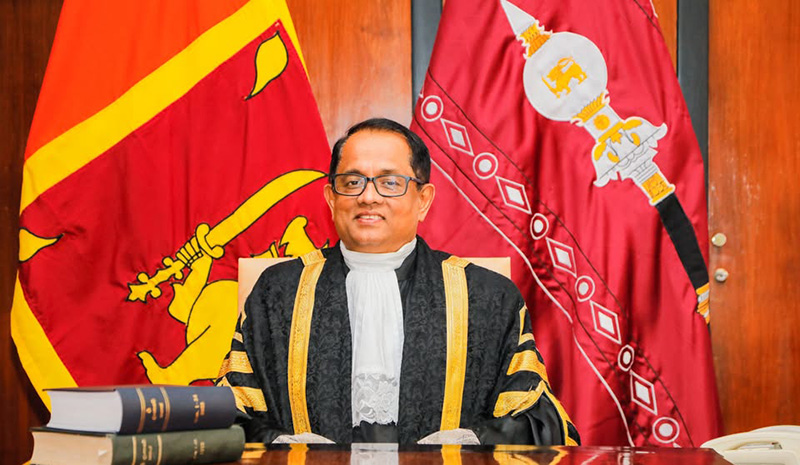
The petitions were heard on September 1 and 2 by a five-member bench comprising Chief Justice Preethi Padman Surasena and Justices Achala Wengappuli, Arjuna Obeyesekere, Sampath Abeykoon and Gihan Kulatunga. A request for the matter to be considered by a full bench was rejected.
The hearing concluded on September 2, after which the bench informed the parties that its confidential determination would be forwarded to the Speaker.
Among the principal constitutional questions raised before the Court was whether extending the tenure of judges would affect constitutional provisions relating to sovereignty and judicial independence, thereby requiring approval by the people at a referendum in addition to a two-thirds parliamentary majority.
The Centre for Policy Alternatives and its Executive Director Dr. Paikiasothy Saravanamuttu were among those who challenged the Bill, arguing that its provisions concerning judicial retirement ages were inconsistent with Article 3 of the Constitution and therefore required approval at a referendum.
The Court’s determination, communicated through the Speaker, has now settled the constitutional procedure required for the Bill to proceed.
The Committee on Parliamentary Business had already scheduled the second-reading debate on the 22nd Amendment and the Judicature (Amendment) Bill for September 24 and 25.
Parliament is scheduled to debate the two Bills from 11.30 am to 7 pm on both days. The vote is expected to follow the conclusion of the second-reading debate on Friday.
The Supreme Court’s determination therefore comes just two days before the commencement of the parliamentary debate, with the Government now able to proceed without having to prepare for a referendum.
The Opposition, however, has indicated that it will continue its campaign against the proposed amendment despite the Court’s determination on the referendum requirement.
The SJB has organised a protest at Polduwa Junction near Parliament on Thursday, coinciding with the opening day of the debate. The protest is scheduled for 9 am and has been organised under the patronage of Opposition Leader Sajith Premadasa, with other Opposition parties invited to participate.
Opposition parties and civil society groups had earlier signed a joint declaration opposing the Bill and announced plans for a broader mobilisation against it. Their objections have centred particularly on the potential implications of the proposed changes for judicial independence.
The Government, meanwhile, has maintained that the proposed changes form part of a broader effort to reform the judicial system and address delays in the administration of justice. The proposed increase in the retirement ages of judges has been presented as one component of that reform programme.
With the Supreme Court having ruled that no referendum is necessary, the immediate constitutional hurdle has therefore shifted from determining the Bill’s eligibility for a public vote to whether the Government can secure the required parliamentary majority.
The decisive stage will come on September 24 and 25, when MPs take up the proposed constitutional and judicial changes for debate and eventual voting.
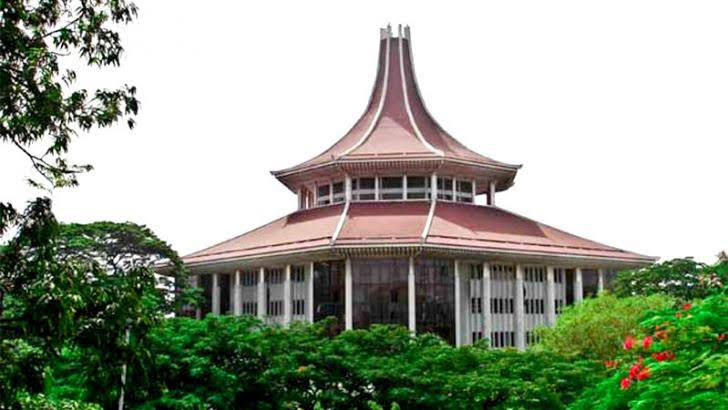
By Saman Indrajith
Speaker Dr Jagath Wickramarate yesterday informed Parliament that the Supreme Court had determined that several provisions of the Anti-Corruption Amendment Bill could be passed by a simple majority, while key clauses required a special majority and one provision required approval at a referendum.
The Speaker said the Court’s determination on the Bill, which had been challenged under Article 121(1) of the Constitution, had been received and formally communicated to the House.
According to the determination, Clauses 3, 4, 6(0) and 6(5) are not inconsistent with the Constitution and may therefore be passed by a simple majority in Parliament.
However, the Court has held that Clauses 6 and 7 are inconsistent with Articles 12(1) and 14 (1)(a) of the Constitution and can be enacted only with the special majority required under Article 84(2).
The Court further determined that Clause 7, in its present form, is inconsistent with Article 12(1). It therefore directed that the proposed repeal of Section 81 be withdrawn.
Should the government proceed with Clause 7, it must be approved by the special majority prescribed under Article 84(2), read with Article 82(5), according to the determination.
The SC has found that Clause 11(1), which seeks to introduce Section 88(1)(f), is not inconsistent with the Constitution and can be passed by a simple majority.
Similarly, Clause 11(2), as proposed to be amended at the committee stage, was found not to be inconsistent with Articles 10, 12(1), 14(1)(a) and 14(a), and may also be passed by a simple majority.
The most significant finding concerns Clause 17.
The Supreme Court determined that Clause 17 is inconsistent with Article 4(c), read with Article 3, with Article 13(2) also supporting that conclusion.
As a result, Clause 17 can become law only if it receives the special majority required under Article 84(2) and is subsequently approved by the people at a referendum under Article 83.
The determination thus places different constitutional thresholds on the Bill’s provisions, ranging from a simple parliamentary majority to a two-thirds majority and, in the case of Clause 17, a two-thirds majority followed by a referendum.

Showers above 100 mm are likely in the Western, Sabaragamuwa, Central and North-western provinces and in Galle and Matara Districts

Mastermind Naufer Moulavi among 15 found guilty

No referendum needed for passage of 22 A: SC

One clause in Anti-Corruption (Amendment) Bill requires referendu: SC

NSC issues humanitarian appeal on behalf of Sri Lankan facing death sentence in Saudi Arabia

Vote on 22 A on Friday

‘Dates have the highest sugar content to fight Coronavirus’

Sunday Island 27 December – Headlines

#SundayIsland 17th December – Headlines

Sunday Island – 28th March

Sunday Island Headlines – 21 March

Sunday Island – 21st February – Headlines
-

 News6 days ago
US embassy won’t comment on IGP’s probe into joint drug raid
-

 News5 days ago
Bid for Basil’s extradition nears final stage: Police
-

 News4 days ago
Shanakiyan urges urgent action over reported death sentence for Lankan in Saudi Arabia
-

 Business6 days ago
All-new Bolero MaXX unveiled in Sri Lanka
-

 News3 days ago
Namal Rajapaksa Buddhist gambit fails, bail denied
-

 Opinion6 days ago
A journalist who wrote across the divide
-

 Features3 days ago
Why the spelling Sri Lankan names in English vary
-

 Features3 days ago
Three bands, a new identity: Sri Lankan wolf snake recognised as distinct species