
News
Estate workers sought a wage increase for their survival, not to lead a luxurious life –Sathasivam


by Douglas Nanayakkara in Nuwara Eliya
The purchasing power of plantation workers should be pushed up if they are to be healthy to work hard by eating a balanced diet at least once a day. This is the reason they are demanding a daily wage of Rs.1,000 so that they could fulfill their basic need to be healthy to work hard, said S. Sathasivam, president/general secretary of Ceylon Workers’ Alliance
He commended the Prime Minister cum Finance Minister for proposing a salary hike of Rs. 1,000 for estate workers in the budget for the first time in the history of Sri Lanka.
When tea estates were managed especially by the British, the workers had the privilege of enjoying a string of welfare measures such as the infrastructure, dry rations and so many other benefits that enabled the then estate owners to enhance
production and promote Ceylon tea to the entire world and earn substantial foreign exchange, he told a media conference at Cooperative Holiday Home in Nuwara Eliya last week.
“It is the tea industry that has been contributing to the GDP during and after the departure of the British. It should not be forgotten that our country was first popular for its finest tea the world over before it became famous for anything else”, he stressed.
After the government take-over of the tea estates soon after independence, they were handed over to the Sri Lanka State Plantation Corporation (SLSPC), Janatha Estate Development Board (JEDB) and USAWASAMA for management and administration. Even during the management of the estates by the government, securing wage hikes and welfare benefits were possible through trade union activities such as ‘work to rule’ or strikes, the former provincial councilor noted.
The Srima Shasthri Pact was in force during the 1960s. There was a decline in all aspects of the plantation industry. Everything came to a standstill as there was a scarcity of male workers as most of them left Ceylon for good. Some men were sent/transferred to other estates where there was an acute scarcity. This situation disrupted the unity that existed among the plantation community, Sathasivam asserted.
In 1992, the estates were handed over to private companies on lease while the government retained ownership. The estates were leased out with the intention of promoting the tea industry in the country as the management and maintenance of the estates were costly. The expectation was that the companies will look into the welfare and the other necessities and wages of the workers while earning profits, he explained.
The earlier practice to increase the wages was based on the cost of living index, as this was no other effective method. The companies urged the trade unions to enter into a Collective Agreement, and as a result, it was decided to increase the salaries/wages of the workers every two years, he further said.
Subsequently, the estates were not properly managed; there was no weeding, proper manuring, pruning, road maintenance and development carried out by these private companies. Consequently, the wonderful tea estates that brought immense foreign exchange turned into jungles and forests. Some of the estates were abandoned resulting in an increase in the breeding of leopards, wasps, snakes and bees , Sathasivam continued.
“We hear about deaths of leopard and snakes and wasp attacks. It is evident that the workers are faced with untold hardships but despite their suffering, the estate management continue to insist on 18kg of tea leaf for a day’s pay/wage”, he said.
Based on the cost of living index and commodity prices five years ago, the workers demanded a salary of Rs. 1,000 per day based on the then prices of coconut, sugar and flour. There were no luxury items included. Considering the skyrocketing prices of these commodities the government has decided to increase the salaries of estate workers through the budget by asking the private management companies to pay Rs. 1,000 per day, he added.
“We cannot compare the estate sector to any other labour related industrial sector as this requires very hard labour and lot of energy working under climatically adverse conditions whereas others don’t suffer as much. The estate management demanding higher performance without considering the adversities faced by the plantations workers is inhuman”, he noted.
Welfare activities beneficial to estate workers are not implemented by the companies. Recruitment is always done on a hire and fire policy. Most infrastructure and welfare facilities are provided by the government now and the money saved could be utilized to maintain estate fields that will give a good yield and minimize mortality by wild animal attacks, he suggested.
“Unattended tea estates can also be converted into profitable cash crop plantations”, he said.
“We insist that the companies should focus more on productive estates and fields that are managed properly for a good yield while protecting the workers by looking into their needs and welfare as they asked for a wage increase only for survival and not to lead a life of luxury”, Sathasivam added.


The National Business Facilitation Centre (NBFC), which is being established under the Presidential Secretariat with the aim of removing administrative and regulatory barriers that exist among government institutions in relation to investment and industry and expediting these processes, will be opened tomorrow (22).
The centre is being established on the President’s initiative with the aim of bringing about a positive transformation in the industrial sector. The centre will provide solutions to issues that arise in dealing with the government machinery when starting and operating a business, while also coordinating with the relevant government institutions to provide the necessary facilities.
The “ViYASA” National Business Facilitation Centre (NBFC) has been established at Building C-80, Hector Kobbekaduwa Mawatha, Colombo 07, and is headed by Senior Additional( Secretary to the President, Seevali Arukgoda.
The centre will be opened under the patronage of Minister of Labour and Deputy Minister of Finance and Planning Dr Anil Jayantha Fernando and Minister of Industry and Entrepreneurship Development Sunil Handunnetti, with the participation of Secretary to the President Dr Nandika Sanath Kumanayake.
The website https://nbfc.presidentsoffice.gov.lk is also scheduled to be officially launched on the occasion.
President’s Media Division)
Latest News
Court of Appeal Judge M. Sri Mevan Anthony Edirimannasuriya Corea appointed as Acting President of the Court of Appeal

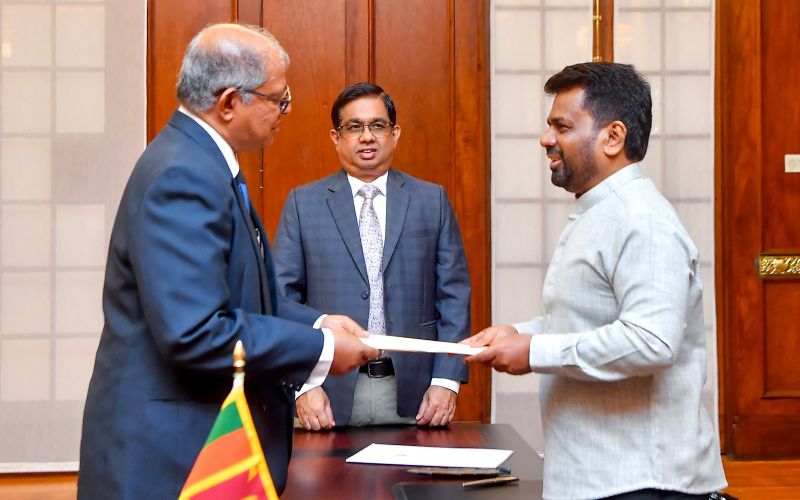
President Anura Kumara Dissanayake has appointed Court of Appeal Judge Mayadunna Sri Mevan Anthony Edirimannasuriya Corea as the Acting President of the Court of Appeal.
The appointment has been made as President’s Counsel Nalin Rohantha Abeysuriya, who currently serves as President of the Court of Appeal, will be overseas until the 24th.
Accordingly Judge Mayadunna Corea was sworn in as Acting President of the Court of Appeal before President Anura Kumara Dissanayake at the Presidential secretariat this morning (21).
Secretary to the President Dr Nandika Sanath Kumanayake was also present at the occasion.
(President’s Media Division)
Latest News
President instructs expediting further measures concerning Sivarasa Anojan, sentenced to death in Saudi Arabia
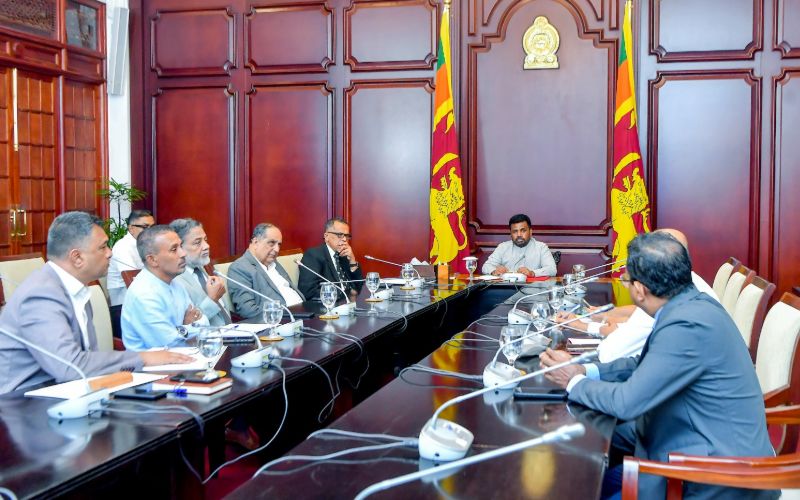
A discussion to review the further measures that could be taken regarding Sivarasa Anojan, a young Sri Lankan national who has been sentenced to death in Saudi Arabia, was held at the Presidential Secretariat this afternoon (21), under the patronage of President Anura Kumara Dissanayake.
The discussion focused on the measures taken to date concerning Sivaraasa Anojan and the further diplomatic and legal steps that could be pursued. Attention was also given to expediting the necessary further measures that could be taken to secure his release.
President Anura Kumara Dissanayake instructed officials to continue the necessary diplomatic engagement with the relevant authorities in Saudi Arabia and to maintain close and continuous involvement in all further measures concerning the case.
Reaffirming the Government’s continued attention to the safety and welfare of Sri Lankans living and working overseas, the President also stressed the need for the relevant ministries and institutions to work in close coordination and pursue all possible measures that could be taken in connection with the case.
Deputy Speaker Rizvie Salih, Deputy Minister of Religious and Cultural Affairs Muneer Mulaffer, Governor of the Western Province Hanif Yusoof, Secretary – Ministry of Foreign Affairs, Foreign Employment and Tourism Aruni Ranaraja, Secretary to the Ministry of Defence Air Vice Marshal Sampath Thuyacontha (Retd), Attorney General Parinda Ranasinghe and officials of the Ministry of Foreign Affairs, Foreign Employment and Tourism were also present at the discussion.
(President’s Media Division)

“ViYASA” National Business Facilitation Centre (NBFC) to be opened tomorrow (22)

Court of Appeal Judge M. Sri Mevan Anthony Edirimannasuriya Corea appointed as Acting President of the Court of Appeal

President instructs expediting further measures concerning Sivarasa Anojan, sentenced to death in Saudi Arabia

It’s Shafali vs Athapaththu as Sri Lanka seek to stop India juggernaut

Trophy row unlikely to repeat in Japan

Powerful explosions at Syrian army site near Aleppo injure at least four

‘Dates have the highest sugar content to fight Coronavirus’

Sunday Island 27 December – Headlines

#SundayIsland 17th December – Headlines

Sunday Island – 28th March

Sunday Island Headlines – 21 March

Sunday Island – 21st February – Headlines
-

 News5 days ago
US embassy won’t comment on IGP’s probe into joint drug raid
-

 News4 days ago
Bid for Basil’s extradition nears final stage: Police
-

 Features7 days ago
The emptying university: why are academics leaving?
-

 News3 days ago
Shanakiyan urges urgent action over reported death sentence for Lankan in Saudi Arabia
-

 Business5 days ago
All-new Bolero MaXX unveiled in Sri Lanka
-

 Opinion7 days ago
Who committed genocide and created mass graves in Sri Lanka?
-

 News2 days ago
Namal Rajapaksa Buddhist gambit fails, bail denied
-

 Opinion5 days ago
A journalist who wrote across the divide