
Business
Positive outlook on post COVID-19 economic recovery

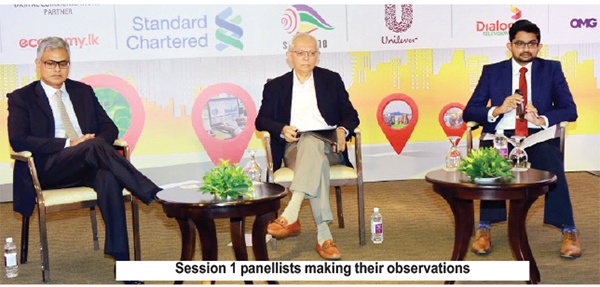
Top economists and business leaders discussed the outlook for the global and local economy during the first session of the Sri Lanka Economic Summit 2020 organised by The Ceylon Chamber of Commerce (CCC). Eric Robertsen – Global Head, Research and Chief Strategist, Standard Chartered Bank and Deshamanya Prof W D Lakshman – Governor, Central Bank of Sri Lanka (CBSL) were the two speakers at the session while Deshamanya Mahesh Amalean – chairman, MAS Holdings and Krishan Balendra – chairman, John Keells Holdings PLC joined the panel discussion moderated by Shiran Fernando – Chief Economist, CCC.
Despite the impact of the pandemic, Eric highlighted in his speech several positive global developments to take note of. He stated that export levels of emerging markets in Asia had rebounded to pre COVID levels. The recovery in global trade was recorded in two quarters compared to 6-7 quarters in the period post the global financial crisis. Further, he highlighted that a combination of monetary policy support, low level of interest rates and inflation would create a platform for a better economic narrative in 2021.The continuation of a weaker dollar would also be favourable for emerging market assets. Eric stated that according to their research they believe that the recovery of 2021 will look almost like the post war economic recovery with similar economic destruction as a result of the health crisis due to COVID-19.
Central Bank Governor Prof W D Lakshman highlighted that with National Budget 2021 and the policy measures put in place by CBSL and the government, Sri Lanka possesses the potential to emerge as a stronger and more resilient economy in 2021. The focus was in developing the real sector in reviving industries and expanding business opportunities through encouraging home-grown industries, large as well as Small and Medium Enterprises (SMEs).
Addressing the fiscal and debt concerns the Governor highlighted that high levels of debt could be sustainable when domestic debt was the predominant component in the debt portfolio. He went on to state that the ratio of government’s foreign non-concessional debt to GDP was around 23 per cent, and the remainder was either domestic debt that can be rolled over or long-term concessional financing. The annual foreign debt service payments as a percentage of export earnings and remittances stood around 12 per cent in ‘business-as-usual’ years such as 2018. The Governor highlight that public debt will be managed in such a way the domestic to foreign component of the debt will adjust from 55:45 in 2020 to 60:40 in 2021. This and the stated policy of not pursuing foreign debt-creating public investments will make government debt more manageable.
In the panel discussion, Mahesh highlighted that exports should be the key element in the roadmap for economic recovery of Sri Lanka. In terms of the apparel sector, he highlighted two trends which Sri Lankan businesses must focus on which were that customers were increasingly looking vertically in their sourcing and the rapid growth of digitalisation in the value chain. Krishan highlighted the setback due to COVID-19 for the domestic economy but was optimistic in a rebound during 2021. Citing one example in tourism, he highlighted that their resorts in Maldives has seen higher forward bookings for March-April 2021 compared to previous year’s.
Responding to questions by the participants on the potential for low global interest rates driving capital inflow into markets like Sri Lanka, Eric noted that initially investments would flow to the largest and most liquid markets but could later expand to other diversified investment portfolios with higher risks and returns. In closing Mahesh highlighted three areas for businesses to focus on: operate close to the customer and understand the expectations, understand the capabilities required by companies to operate in this challenging environment and strive for operational excellence in terms of manufacturing competitively and agile. (CCC)



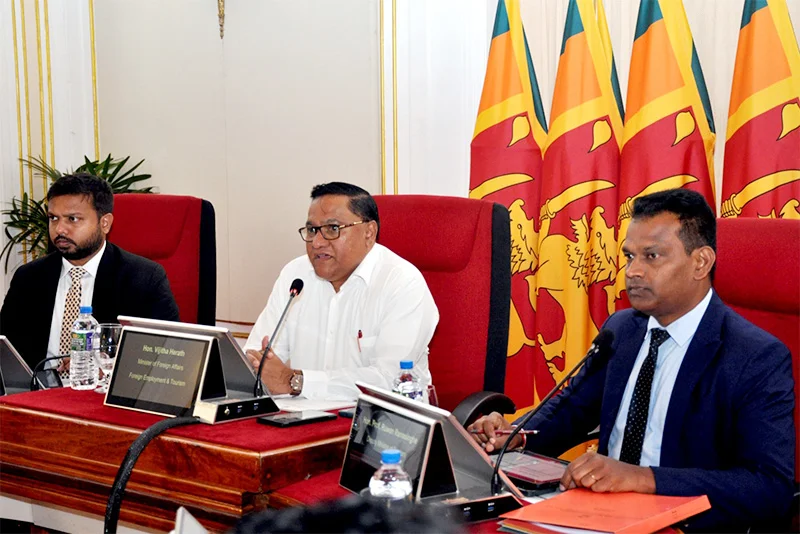
In a press conference marked by both clarity and pointed omission, Foreign Affairs and Tourism Minister Vijitha Herath, yesterday offered a robust defence of two controversial bilateral agreements with India but conspicuously avoided committing to tabling their full texts in Parliament.
The minister’s appearance, billed as a year-opening briefing, took a sharp turn when questioned on the strategic implications of the India-Sri Lanka Defence Cooperation Agreement and Sri Lanka’s acceptance of the Indian Pharmacopoeia.
“No Indian military camps on our soil”
Responding in Sinhala to a question posed in English, Minister Herath moved first to allay what he suggested were widespread misapprehensions about the defence pact.
“This agreement is especially for data and information exchange purposes regarding drug trafficking, drug mafias, human trafficking, and any terrorist activities that could threaten regional security and peace,” Herath stated.
He emphasised that it would also facilitate “various support related to the defence sector.”
In his most definitive assertion, aimed at quieting a persistent national anxiety, the Minister declared: “We must clearly say that there is no plan or possibility of setting up Indian defence camps on Sri Lankan soil.” He categorised the pact not as a “defence agreement” but a “defence cooperation agreement in its real sense,” claiming it creates an “advantageous position” for Sri Lanka.
He linked recent post-‘Ditwah’ cyclone disaster support from India, as well as U.S. aerial support during recovery efforts, to the frameworks established by such cooperation agreements, arguing they have proven beneficial.
Indian Pharmacopoeia: A reputation-based advantage
On the equally contentious acceptance of the Indian Pharmacopoeia – a standard synopsis for drug manufacturing – Minister Herath framed it as a logical step that formalises existing practice.
“We already import a significant share of medicines from India,” he noted. The agreement, he explained, signifies the acceptance of medicines exported by a “reputed Indian pharmaceutical company” approved by its national regulators.
He assured the public that Sri Lanka’s National Medicine Regulatory Authority (NMRA) will continue to remain the monitor. “By entering into this, no disadvantage will happen to us. Only an advantage will happen… it will only be beneficial to us,” he emphasised.
The unanswered question
Despite the detailed assurances, the Minister pointedly ignored the final and arguably most critical part of the question posed by The Island Financial Review : whether the government would table the full text of the two agreements in Parliament for transparent debate and discussion.
This omission is likely to fuel further controversy, as opposition parties, civil society groups, and independent analysts have repeatedly demanded full parliamentary scrutiny, arguing that agreements touching on sovereignty and public health mandate the highest level of public transparency.
Tourism Pride
Shifting to his tourism portfolio, Minister Herath struck an optimistic note, citing record tourist arrivals and foreign remittances in 2025 as a sign of resilient recovery post-Ditwah.
The conference also touched on global affairs. When asked about the U.S. arrest of Venezuelan President Nicolás Maduro, Herath presented a nuanced governmental position. He stated that while his party, the JVP, condemns the action, the government’s official stance is to urge respect for national sovereignty in line with the UN Charter – a reflection of the coalition’s delicate balancing act between ideological roots and diplomatic pragmatism once in governance.
Minister Herath’s explanations provide the government’s clearest public rationale yet for the India agreements, directly confronting fears over militarisation and pharmaceutical quality. However, the deliberate sidestepping of the transparency query left a communication deficit at the heart of the press conference.
High-stakes diplomacy
It reflected a perception that while the administration is willing to defend its policy outcomes, it remains reluctant to subject the processes of high-stakes diplomacy to the full glare of parliamentary and public scrutiny. As these agreements continue to shape Sri Lanka’s strategic and health landscape, the call for their full disclosure is now accompanied by a louder question about the government’s commitment to open governance.
by Sanath Nanayakkare
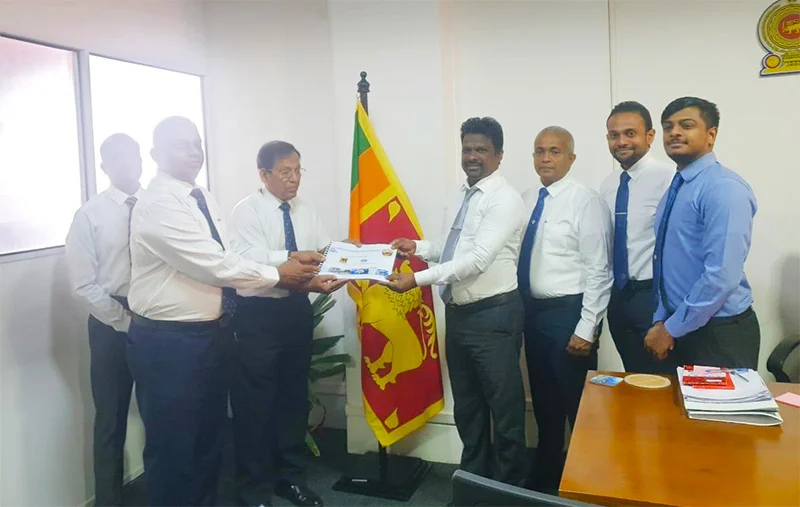
Automobile Association of Ceylon (AAC), in collaboration with the Federation Internationale de L’ Automobile (FIA) and under the UN Decade of Action for Road Safety has been consistently engaging in road safety enhancement programs for all citizens of Sri Lanka.
Current data indicates that while over 08 million vehicles are registered in the country, only heavy vehicles (less than 20% of the vehicle population) are subjected to compulsory road-worthiness tests.
Fatal accidents due to technical failures in vehicles are on the rise and the damage to lives and property is severe.
We also understand that there is a death every three hours and eight deaths per day in road accidents. This amounts to nearly 3000 deaths in road accidents per year.
AA of Ceylon has launched the “Vehicle Testing can Save Lives” project with the advice and support given to execute our campaign by the Minister of Transport, chairman, National Council for Road Safety (NCRC), Deputy Inspector General of Police (Traffic Division), Dr. Indika Jagoda, Deputy Director (Accident Service), National Hospital, president, Lions Club of Boralasgamuwa, Metro(Lions Club International – District 306 D 2) and other stake-holders to find a workable, low / cost solution for mandatory vehicle testing in Sri Lanka.
Therefore, this project aims to educate the public on the necessity of checking essential safety features in all vehicles and the benefits of same to all road users.
AAC has therefore respectfully requested Anura Kumara Dissanayake, President of the Democratic Socialist Republic of Sri Lanka, to consider implementing the proposal we have submitted to him, to minimize fatal accidents, injuries to people and damage to vehicles and property due to road accidents and to also implement a rule to have compulsorily road-worthiness checking of all vehicles. (AAC)
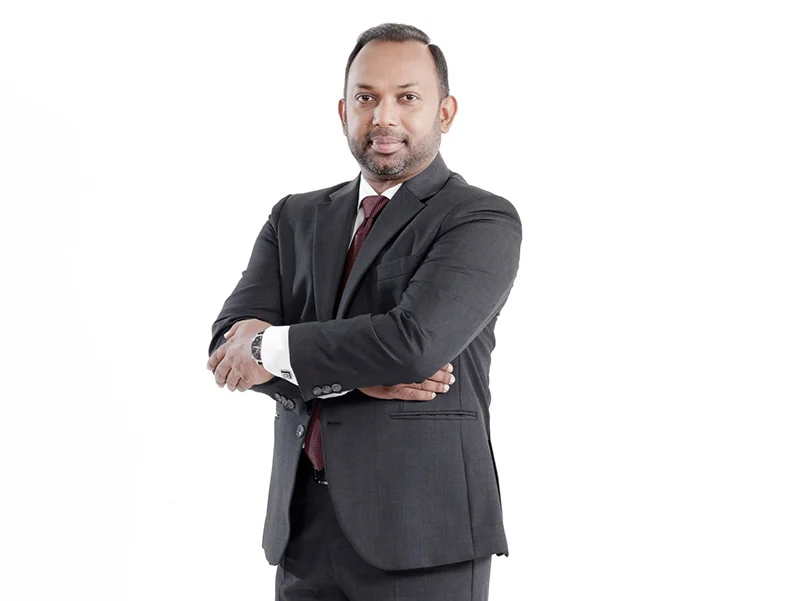
Siam City Cement (Lanka) Limited (INSEE Lanka) has announced the appointment of Eng. Thusith C. Gunawarnasuriya as its new Chief Executive Officer, effective 01 January 2026. He succeeds Nandana Ekanayake, who will continue to serve as Chairman, ensuring leadership continuity and strategic stability for the organisation.
A long-standing contributor to INSEE’s journey, Thusith has worked with the company through its evolution under Holcim (Lanka) Ltd, LafargeHolcim and INSEE, playing pivotal roles that influenced both operational progress and strategic direction.
Rejoining INSEE Lanka in January 2025 as Chief Operating Officer, he has since demonstrated exceptional leadership, driving topline growth, improving EBITDA performance, and strengthening talent development initiatives that enhanced organisational capability and business outcomes.
His expertise in business strategy, operations excellence, and supply chain transformation is well-recognised, supported by over 25 years of multi-industry and multi-country leadership experience. His career includes senior positions at Lion Brewery (Ceylon) PLC, Hemas Manufacturing, Fonterra Brands Lanka, GlaxoSmithKline, MAS Active, and DMS Software Engineering. His international exposure spans India, Bangladesh, and Thailand.
Thusith is a proud alumnus of Dharmaraja College, Kandy, and holds a BSc (Hons) in Electrical & Electronic Engineering from the University of Peradeniya, an MBA from the University of Colombo, and an MSc in Business & Organizational Psychology from Coventry University, UK. He has completed executive leadership programs at IMD (Switzerland) and the National University of Singapore. He is also a member of IEEE (US), CILT (UK), ISMM (Sri Lanka), and IESL (Sri Lanka).
Chairman’s Quote – Nandana Ekanayake:
“Thusith’s deep understanding of our business, strong operational mindset, and proven leadership make him the ideal successor to lead INSEE Lanka into the next phase of growth. His experience within INSEE and across multiple industries, positions him well to deliver on our long-term ambitions and uphold the values that define the organisation.”

Selfies and smiles: South Korea seeks ‘new phase’ in ties with China

Nestle issues global recall of some baby formula products over toxin fears

M/s South Asian Technologies awarded contract to supply vehicle number plates

A new act for National Lotteries Board to be introduced
Motor Vehicles (Driving License Levy) Regulations No. 3 of 2022 to be amended
Mrs. P. K. L. S. Panduwawala appointed to the post of Surveyor General

‘Dates have the highest sugar content to fight Coronavirus’

Sunday Island 27 December – Headlines

#SundayIsland 17th December – Headlines

Sunday Island – 28th March

Sunday Island Headlines – 21 March

Sunday Island – 21st February – Headlines
-
 News15 hours ago
Broad support emerges for Faiszer’s sweeping proposals on long- delayed divorce and personal law reforms
-

 News2 days ago
Private airline crew member nabbed with contraband gold
-

 News4 days ago
Health Minister sends letter of demand for one billion rupees in damages
-

 Opinion6 days ago
Remembering Douglas Devananda on New Year’s Day 2026
-
 News7 days ago
Leading the Nation’s Connectivity Recovery Amid Unprecedented Challenges
-

 Features2 days ago
Pharmaceuticals, deaths, and work ethics
-

 Latest News2 days ago
Curran, bowlers lead Desert Vipers to maiden ILT20 title
-

 News15 hours ago
Interception of SL fishing craft by Seychelles: Trawler owners demand international investigation