
News
Indian-American Gitanjali Rao named first-ever TIME ‘Kid of the Year’


bY S VENKAT NARAYAN,
Our Special Correspondent
NEW DELHI, December 4: Fifteen-year-old Indian-American Gitanjali Rao, a “brilliant” young scientist and inventor, has been named by TIME magazine as the first-ever ‘Kid of the Year’ for her “astonishing work using technology to tackle issues ranging from contaminated drinking water to opioid addiction and cyberbullying.”
“The world belongs to those who shape it. And however uncertain that world may feel at a given moment, the reassuring reality seems to be that each new generation produces more of what these kids have already achieved: positive impact, in all sizes,” TIME said.
Ms Rao, 15, was selected from a field of more than 5,000 nominees as TIME’s first-ever Kid of the Year. She was interviewed by actor and activist Angelina Jolie for the TIME special.
“Observe, brainstorm, research, build and communicate,” Ms Rao told about her process during a virtual talk with Ms Jolie from her home in Colorado.
She spoke about her astonishing work using technology to tackle issues ranging from contaminated drinking water to opioid addiction and cyberbullying, and about her mission to create a global community of young innovators to solve problems the world over.
“Even over video chat, her brilliant mind and generous spirit shone through, along with her inspiring message to other young people: don’t try to fix every problem, just focus on one that excites you,” TIME said.
“If I can do it,” she said in the interview, “anybody can do it.”
Ms Rao said her generation is facing many problems that they have never seen before.
“But then at the same time, we’re facing old problems that still exist. Like, we’re sitting here in the middle of a new global pandemic, and we’re also like still facing human-rights issues. There are problems that we did not create but that we now have to solve, like climate change and cyberbullying with the introduction of technology,” she said.
“I think more than anything right now, we just need to find that one thing we’re passionate about and solve it. Even if it’s something as small as, I want to find an easy way to pick up litter. Everything makes a difference. Don’t feel pressured to come up with something big,” she said.
“When asked when she knew that science was her passion,” Ms Rao said she always wanted to put a smile on someone’s face. “That was my everyday goal, just to make someone happy. And it soon turned into How can we bring positivity and community to the place we live?”
Ms Rao added that she doesn’t look like “your typical scientist.”
“Everything I see on TV is that it’s an older, usually white man as a scientist. It’s weird to me that it was almost like people had assigned roles, regarding like their gender, their age, the colour of their skin. My goal has really shifted not only from creating my own devices to solve the world’s problems, but inspiring others to do the same as well. Because, from personal experience, it’s not easy when you don’t see anyone else like you. So, I really want to put out that message: If I can do it, you can do it, and anyone can do it,” she said.
She said when she was in second or third grade, she started thinking about how she can use science and technology to create social change. She said she was 10 when she told her parents that she wanted to research carbon nanotube sensor technology at the Denver Water Quality Research Lab.
When asked by Ms Jolie if Ms Rao does things that kids her age do, she said: “actually I spend more time doing 15-year-old things during the quarantine. I bake an ungodly amount. It’s not good, but it’s baking. And, like, it’s science too!”



A discussion on the functioning of the Internal Affairs Units established within state institutions and the implementation of the National Anti-Corruption Action Plan 2025–2029 was held at the Presidential Secretariat on 29 May under the patronage of the Secretary to the President Dr Nandika Sanath Kumanayake. The meeting focused on advancing Sri Lanka’s anti-corruption efforts, particularly within key revenue-generating and revenue-collecting institutions, namely the Sri Lanka Customs, the Inland Revenue Department, and the Department of Excise.
During the discussion, the measures currently being implemented to strengthen anti-corruption initiatives and foster a culture of integrity within these institutions were reviewed. Attention was also given to future initiatives aimed at further reinforcing ethical governance and promoting a stronger culture of integrity across these organisations.
The meeting was attended by Additional Secretary to the President Ms Chandima Wickramasinghe, Director General of Customs W. S. K. Liyanagama, Commissioner General of Inland Revenue R. P. H. Fernando, and Commissioner General of Excise M. B. N. A. Pemarathna, together with the heads of the Internal Affairs Units of the respective institutions.
(PMD)
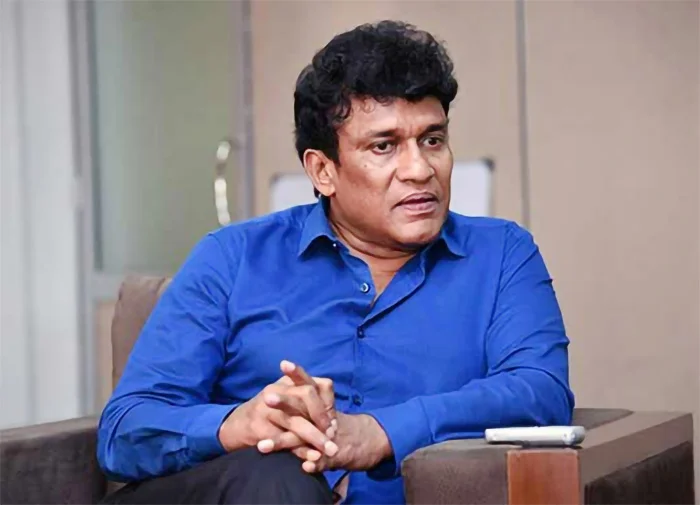
Leader of the Tamil Progressive Alliance (TPA), Mano Ganeshan, MP, said that India shouldn’t intervene here regarding the long-delayed Provincial Council polls.
The former Yahapalana Minister of National Co-existence, Dialogue and Official Languages (2015-2018), Ganeshan, who represents the main Opposition Samagi Jana Balawegaya (SJB) in the current Parliament, stressed that New Delhi’s intervention wouldn’t do any good for them or for us.
Lawmaker Ganeshan said so when The Island asked him whether the TPA would ask India to pressure the NPP government to conduct PC polls, last held in 2014, during Mahinda Rajapaksa’s second term. Ganeshan said: “India shouldn’t get involved in the issue at hand . Such a strategy is also in their interest, particularly in the context of the evolving global order. India should not be perceived as a pro-Tamil state, but rather as a state that supports Sri Lanka as a whole.”
Ganeshan said that the Indian state bears a moral responsibility in this matter. “That responsibility arises from the fact that India’s diplomacy and military intervention played a decisive role in neutralising the Tamil armed struggle in Sri Lanka. Although India’s mission remained unfinished, it nevertheless lost nearly two thousand soldiers in the process. There was also a prelude to this involvement, when Tamil militant groups received training in India. Consequently, the Indian connection became a sensitive issue for both the Sinhalese and Tamils of Sri Lanka.”
But, whatever had happened, the national issue should be settled among us. ” The solution must be found and settled within Sri Lanka itself. We do not need Western interventions in this regard.”
” In recent years, whenever we in the Tamil Progressive Alliance (TPA) have met Indian dignitaries—including the Prime Minister, the External Affairs Minister, and, most recently, the Vice President—the subjects of the 13th Amendment and Provincial Councils have never featured on our agenda.”
The 13th Amendment is part of Sri Lanka’s Constitution. Therefore, it is for Sri Lankans themselves to decide whether to retain, improve, fully implement, reform, or even repeal it, Ganeshan said.
MP Ganeshan found fault with those who represented the Northern and Eastern provinces for failing to utilise the goodwill and influence India enjoyed with successive Governments of Sri Lanka to pursue an amicable political settlement. The parliamentarian said that they should acted after the end of the war in May, 2009. Unfortunately, they failed to effectively use the Provincial Council framework to consolidate their political position and advance further, thereby earning the confidence of both India and successive Sinhala-majority governments, MP Ganeshan said.
Responding to another query, MP Ganeshan said: “
We should keep the ethnic issue separate from bilateral relations with India, while deepening economic connectivity and cooperation on the basis of mutual benefit and a win-win partnership.”
By Shamindra Ferdinando

Sri Lanka has taken delivery of 10 TH-57 ‘Sea Ranger’ multi-role helicopters provided by the United States of America to the Sri Lanka Air Force. Air Forces headquarters said that the helicopters arrived here by sea.
The SLAF has said: “The arrival of these aircraft marks a significant milestone in the longstanding defence cooperation between Sri Lanka and the United States and represents a valuable contribution towards enhancing the operational and training capabilities of the Sri Lanka Air Force.
“The helicopters are currently undergoing configurations and technical preparations at SLAF Base Ratmalana. Following the completion of requisite inspections, acceptance procedures and test flights, the aircraft will be inducted into service and deployed for operational duties.
“The TH-57 fleet is expected to significantly strengthen the Air Force’s aviation training capacity while enhancing the ability to support a broad spectrum of national requirements. The aircraft will primarily be employed for pilot training, humanitarian assistance and disaster response (HADR) operations, search and rescue (SAR) missions and other public service commitments undertaken by the Sri Lanka Air Force.”

Ukraine’s Kostyuk blasts Russia stars in French Open outburst over war

Iran armed forces vow to fight ‘to the death’ on Khomeini death anniversary

Urgent meeting called for amid BBL chaos; ACA says merger has caused ‘anxiety’

Measures taken to promote integrity in State Revenue Collection Institutions reviewed

Thailand cracks down on foreign companies using fig leaf of local ownership

US strikes Iran’s Qeshm, says Tehran attacks Kuwait, Bahrain

‘Dates have the highest sugar content to fight Coronavirus’

Sunday Island 27 December – Headlines

#SundayIsland 17th December – Headlines

Sunday Island – 28th March

Sunday Island Headlines – 21 March

Sunday Island – 21st February – Headlines
-

 News4 days ago
IMF urges Lanka not to meddle with exchange rate
-
 Business5 days ago
Sri Lanka’s construction industry losing ground while no one watches
-

 Business2 days ago
IMF’s unstated rate:Sri Lanka’s $695m loan costs about 5.33% per annum
-
 News4 days ago
State of emergency extended
-

 Features5 days ago
The Division Bell Mystery
-

 News2 days ago
UNP challenges NPP move to amend Vihara – Devalagam Act
-

 News1 day ago
Lankan duo emerge winners in Latin dance championship held in Blackpool, UK
-

 Features3 days ago
Are threats to Buddha Sasana external or from within?