
News
20 new Superior Court judges sworn in – six to SC and 14 to CA


President Gotabaya Rajapaksa yesterday (1) pledged to guarantee judicial independence. Marking a new milestone in the judicial system of the country, 20 new superior court judges were sworn in before President Gotabaya Rajapaksa at the Presidential Secretariat.
They comprised six new Judges of the Supreme Court and 14 new Judges of the Court of Appeal
President Gotabaya Rajapaksa, addressing the gathering, pledged to support the independence of the judiciary and ensure its functioning is free of politicization and other forms of interference.
“The judicial cadre of both the Supreme Court and the Court of Appeal has remained static since 1978. Although the necessity of increasing the number of judges in the superior courts has been mooted several times in the past, the number of judges in both courts has remained the same for over 40 years. There have been many an advancement in the law and litigation has increased exponentially in this time. However, there has not been a corresponding increase in the number of judges”.
The efficient administration of justice is not only important in terms of upholding the rule of law, it is also vital to the economic development of this nation, President said adding that reliable, efficient and effective dispute resolution through the justice system will foster the nation’s progress.
Chief Justice Jayantha C Jayasuriya, Secretary to the President P.B. Jayasundera and Principal Advisor to the President Lalith Weeratunga were also present.
Judges appointed to the Supreme Court:
1. Justice A. H. M. Dilip Nawaz
2. Justice Kumudini Wickremasinghe
3. Justice Anthony Lalith Shiran Gooneratne
4. Justice Janak de Silva
5. Justice Arachchige Achala Uthpalavarna Wengappuli
6. Justice Mahinda Abeysinghe Samayawardhena
Justice Arjuna Obeysekara was sworn in as the President of the Court of Appeal.
Judges appointed to the Court of Appeal
1.Justice Menaka Wijesundera
2.Justice D.N. Samarakoon
3.Justice M Prasantha de Silva
4.Justice M.T.M. Laffar
5.Justice C. Pradeep Keerthisinghe
6.Justice Sampath B. Abayakoon
7.Justice M. S. K. B. Wijeratne
8.Justice S. U. B. Karalliyadde
9.Justice R. Gurusinghe
10.Justice G. A. D. Ganepola
11.Justice K. K. A. V. Swarnadhipathi
12.Justice Mayadunne Corea
13. Justice Prabaharan Kumararatnam
14. Justice W. N. N. P. Iddawala

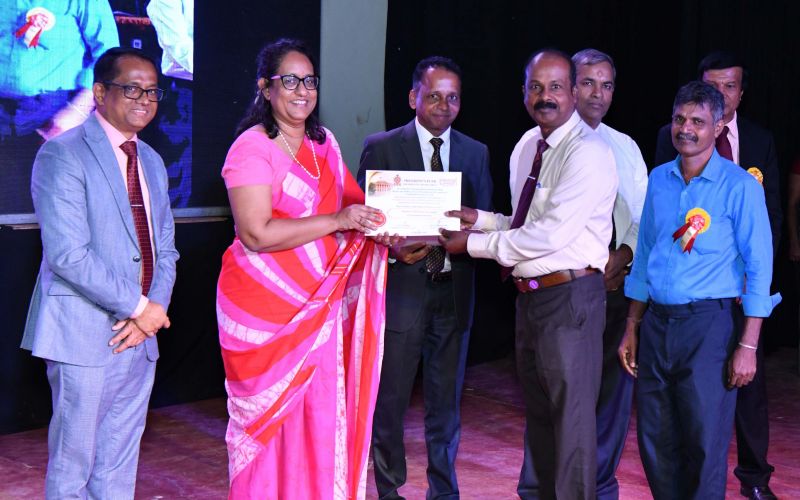
The “Mehewara Pasasum” programme to recognise Divisional Secretariats in the Eastern Province that demonstrated the highest level of performance in 2025 was held recently at the Swami Vipulananda Institute of Aesthetic Studies of the Eastern University, under the patronage of Prime Minister Dr Harini Amarasuriya. The programme was held as part of the initiative to decentralise President’s Fund services to the Divisional Secretariat level, with the aim of providing the public with a more efficient and prompt service.
Of the Divisional Secretariats in the three districts of Ampara, Batticaloa and Trincomalee, nine Divisional Secretariats, three from each district, were selected for recognition based on their efficiency in receiving President’s Fund applications and responding to them promptly.
Accordingly, the Sammanthurai Divisional Secretariat secured first place in the Ampara District, while the Addalachchenai Divisional Secretariat secured second place and the Kalmunai Divisional Secretariat third place.
In the Batticaloa District, first place was secured by the Kattankudy Divisional Secretariat, second place by the Manmunai North Divisional Secretariat and third place by the Koralaipattu Central Divisional Secretariat.
In the Trincomalee District, first place was secured by the Trincomalee Town and Gravets Divisional Secretariat, second place by the Kinniya Divisional Secretariat and third place by the Muttur Divisional Secretariat.
The first “Mehewara Pasasum” programme was held in Colombo, the second in Batticaloa, and this was the third programme.
Speaker Dr Jagath Wickramaratne, Minister of Industry and Entrepreneurship Development Sunil Handunnetti, Senior Additional Secretary to the President and Secretary to the President’s Fund Roshan Gamage, and a number of government officials and others were present at the occasion.
(PMD)
News
Students of Rahmaniya Maha Vidyalaya Eravur visit Presidential Secretariat and President’s House

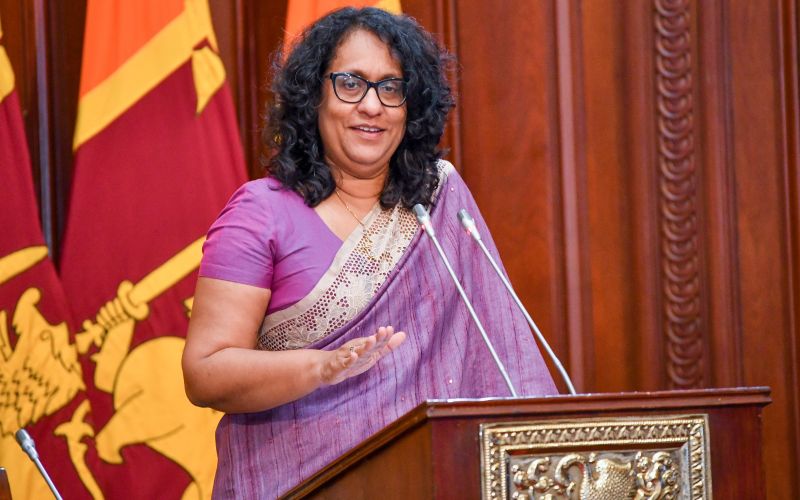
A group of students from Rahmaniya Maha Vidyalaya, Eravur, Batticaloa visited the Presidential Secretariat and President’s House on Monday (14) afternoon .
The students were given this opportunity as part of the “Vision” programme series, jointly implemented by the Presidential Secretariat, the Ministry of Education and the Communication Division of the Parliament of Sri Lanka for schoolchildren.
Prime Minister Dr Harini Amarasuriya stated that nurturing a future generation capable of providing leadership to society and committed to bringing about positive change in the world was an urgent need of the present day. She further stated that the Government’s objective in introducing the new education reforms was to prepare children to acquire knowledge from around the world while nurturing a confident and empowered generation capable of making a meaningful contribution to the country.
Following a visit to the former Parliament building at the Presidential Secretariat, the students were briefed on the history of Parliament.
Senior Additional Secretary to the President Roshan Gamage briefed the students on the role of the President’s Fund and the benefits available to schoolchildren through the Fund.
As part of the programme, valuable plants were also presented to the school as a symbolic gesture highlighting the importance of environmental conservation.
The Director and Assistant Director of the Tri-Forces Security Coordination Unit, the Principal and teachers of Rahmaniya Maha Vidyalaya Eravur and several others were present on the occasion.
(PMD)
By Shamindra Ferdinando
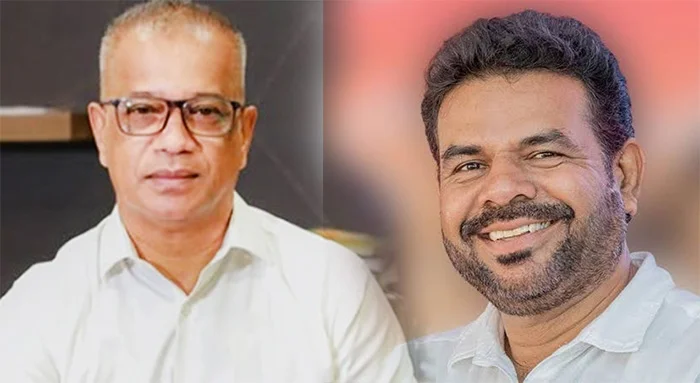
The absence of Agriculture Minister Lal Kantha and his Deputy Namal Karunaratne at the NPP’s farmers’ rally at Polonnaruwa, on Saturday (12) revealed the government’s failure to address the problems faced by the farming community, the SLPP says.
Former Kalutara District SLPP MP Sanjeewa Edirimanna said that politburo member Lal Kantha, who represented the NPP’s highest decision-making body, and his Deputy, Karunaratne, couldn’t face the farmers, and hence their absence at Saturday’s rally. Their absence underscored the gravity of the situation, Edirimanna said, thanking the NPP for openly acknowledging the crisis in the agricultural sector.
Kandy District MP Lal Kantha was not immediately available for comment. When The Island sought an explanation from Deputy Minister Karunaratne regarding their absence, he said that there was no need for all of them to attend each and every NPP rally.
President Anura Kumara Dissanayake addressed Saturday’s gathering on behalf of the party and there shouldn’t be any issue over their absence, MP Karunaratne said.
Karunaratne said so when The Island pointed out that their presence mattered as it was the inaugural farmers’ rally held almost two years after the last presidential election.
MP Karunaratne claimed that the Polonnaruwa rally was not on his schedule for 12 Sept.
Ex-MP Edirimanna pointed out that Minister Lal Kantha had addressed both the Bulathsinhala and Beruwala rallies, held on 6 Sept., which marked the commencement of the NPP propaganda campaign, launched amidst growing dissent over the way the government sought to enact the 22nd Amendment to the Constitution.
Edirimanna said that the NPP couldn’t justify both Ministers in charge of agriculture skipping the Polonnaruwa rally. Responding to another query, Edirimanna said that he wouldn’t attribute their absence to any internal conflict but the NPP’s overall failure to address the growing grievances of the farming community.
Edirimanna said that in spite of promises, the NPP had pathetically failed to ensure a reasonable pricing formula for paddy. The President again promised to implement an efficient paddy purchasing scheme at the next harvesting season, the ex-MP said, adding that the government should be ashamed and accept responsibility.
Edirimanna stressed that the government’s vow to implement a mandatory price for different varieties of paddy remained just a promise.

Eastern Province Divisional Secretariats recognized for outstanding performance

Students of Rahmaniya Maha Vidyalaya Eravur visit Presidential Secretariat and President’s House

Showers above 100 mm expected at times in the Western, Sabaragamuwa, Central, Uva and Southern provinces, and in Ampara and Batticaloa districts

Controversy over absence of Agriculture Minister, Deputy at NPP’s inaugural farmers’ rally

Thousands march in Jaffna demanding international investigation into Chemmani

FAC that sank last month recovered in salvage operation

‘Dates have the highest sugar content to fight Coronavirus’

Sunday Island 27 December – Headlines

#SundayIsland 17th December – Headlines

Sunday Island – 28th March

Sunday Island Headlines – 21 March

Sunday Island – 21st February – Headlines
-

 Sports4 days ago
DDS set to lose Test captaincy
-

 News4 days ago
Sri Lanka faces new grid challenge as rooftop solar surges: former CEB GM
-

 Latest News4 days ago
Shafali, Deepti power India into sixth T20 Asia Cup final
-

 Latest News3 days ago
Sri Lanka thwart Fatima Sana challenge to secure Asia Cup final spot
-
 Opinion6 days ago
Navigating Sri Lanka’s Israeli Dilemma
-
 Features5 days ago
Lost for 90 years: Rare Goby resurfaces in Jaffna
-

 News2 days ago
Gnanasara Thero absconding after SC ruling
-

 News3 days ago
Ammunition cache found in old Kandy bungalow