
News
Public officials have the responsibility to see whether budget promises are fulfilled – Eran

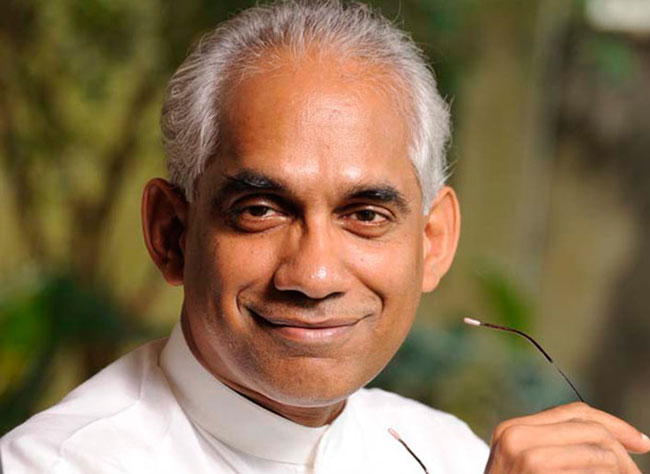
Sri Lanka, as a debt-ridden and bankrupt country, it is upon the Public Officials to ensure that budget promises are fulfilled, stated Eran Wickramaratne MP. As the month-long Budget debate came to an end, a reality check of the Budget proposals is a necessity. He emphasised that all heads of ministries and departments should fulfill their accountability and responsibility in this regard.
In general, governments in this country do not attain state revenue presented by budgets. The revenue forecast in the Budget of 2023 will decrease by about 15%. It has been estimated that the state income in 2024 will increase by 45% over the actual income in 2023. It can be said right now, that this is not achievable. But this should be analyzed.
State revenue in 2024 is projected to be about Rs. 4 trillion and expenditure about Rs. 8 trillion, a deficit nearing Rs. 4 trillion. Country’s debt is 128% of GDP, with plans to bring it down to 95% by 2032. Debt restructuring is essential, without which the goal to bring down debt to 95% by 2032 will not be attainable. We are happy that the International Monetary Fund has approved the second loan tranche and the agreement of the lending countries to restructure debt.
Wickramaratne, focusing on large-scale foreign funded projects of which there are approx. 116, said that 61 are underperforming and funding has been suspended for 31. He emphasised the importance of adopting methodology to assess for appraisal performance and progress, driving implementation.
The Budget proposes the establishment of new investment zones. There were such proposals since 2017 but none have come to fruition to date. The Auditor General himself had stated that albeit budget allocations, investment zones have not been set up.
In this Budget, there is emphasis on a National Artificial Intelligence Centre with a budget allocation of Rs. 3 Billion. Wickramaratne queried if there had been an appraisal done to this proposed investment with a projected ROI. Access to information on government projects on appraisal and performance is minimal. Inability to obtain information about government projects has increased from 12% in 2016 to 97% by 2023.
We must move away from our set mindset on ownership. Assets/resources belong to the people of a nation and not to a ministry/department or its workers. Assets/resources are of no use to its people, if not utilised and utilised at the right time. Assets/resources must generate financial and economic return to its people. Ownership alone is of no benefit to a nation or its people.
Government owned land is of no use if they do not generate benefit to the people of the country. Resources are of no use if they do not generate benefit to the people of the country. Wickramaratne made reference to a visit he made to Eppawala 20 years ago as the head of National Development Bank. There was resistance to bring in new investment for value addition. To date, Eppawala has not developed to its potential.
If the Middle Eastern countries held on to ownership of its oil resources, rejecting foreign investment, they’d still be Bedouin communities in the desert. These countries have economically advanced in the past 40 years and are now moving into new areas of development. Ironically, with the progression towards green energy, oil as a resource will continue to lose its value over time. In the same light, Sri Lanka has high quality graphene – it must be utilised in a timely manner. If not, with the advancement of science, artificial graphene being developed by China may reduce our potential gains.
The need of the hour is an independent Parliamentary Budget Office for which an allocation is set aside. Initially, the expressway from Colombo to Matara was built. Subsequently, the extension of the expressway from Matara to Hambantota was executed without an assessment of an ROI. Many government projects do not generate benefits to the people because of the absence of proper evaluation.
The MP insisted that we must move away from politicised decision-making to rational policy and managerial decision-making based on economic and financial assessments.
The establishment of an independent Parliamentary Budget Office must be based on a few fundamental principles; – the formation of a budgeting system, the development and execution of a budget based on scientific principles. We have a six-month process for a budget, which should not be the case and inadequate – budgets must be a continuous development – financial management, including that of the executing ministries/agencies performance must be monitored – compliance with law and regulations must be monitored – executive orders must be evaluated and endorsed prior to promulgation.
A clear example of this is the more recent decision to ban chemical fertiliser instantly, for organic fertiliser. Had there been an assessment of this directive by an independent body, it would have been evident that it is an initiative to be rolled out over a 10-15 year period and not one that should be attempted overnight. We would have avoided a catastrophic disaster to the farming industry and to the country in general.
Wickramaratne reiterated that critical decisions made in the recent past and that of the current Budget, should have been vetted by an independent body such as a Parliamentary Budget Office. Personal income tax, defence and welfare expenditure are among the expenditures that need continuous monitoring and are high. Wickramaratne urged the government to set up the independent Parliamentary Budget Office with immediate effect based on critical principles which include procurement, privacy policy and information policy, use of technology, coordination and review of all significant regulations.
In conclusion, Wickramaratne urged the public officials to take it upon themselves to ensure that the Budget is executed and in doing so ensure evaluation of decision-making and monitoring of the progress.






Latest News
Sun directly overhead Kalpitiya, Talawa, Sinharagama, Galkadawala, Nachchaduwa, Padikaramaduwa, Gomarankalla and Verugal about 12.10 noon today (01)


The sun is going to be directly over the latitudes of Sri Lanka from 28th of August to 07th of September due to its apparent southward relative motion.
The nearest places of Sri Lanka over which the sun is overhead today (01) are Kalpitiya, Talawa, Sinharagama, Galkadawala,
Nachchaduwa, Padikaramaduwa, Gomarankalla and Verugal about 12.10 noon.

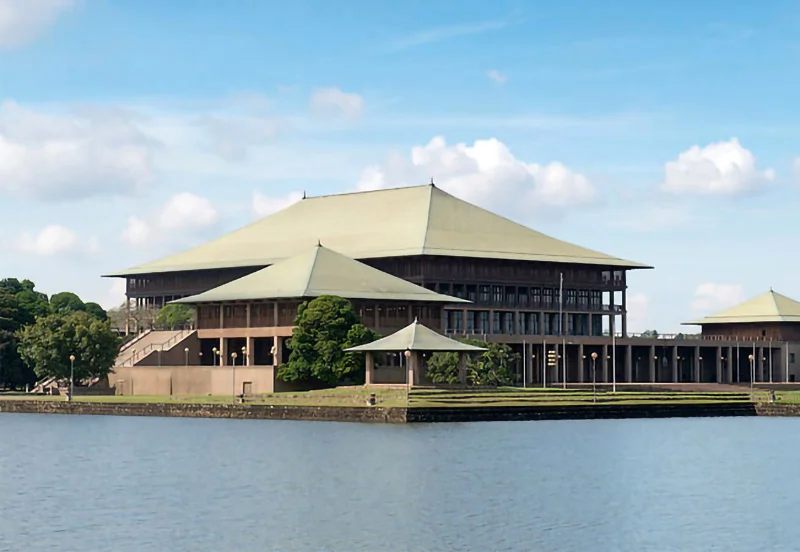
… stresses need for action if claims were proved false
Samagi Jana Balawegaya (SJB) MP Dayasiri Jayasekera has sought a clarification from Speaker Dr. Jagath Wickremaratne regarding several allegations against Chief Justice Preethi Padman Surasena, in Parliament, recently.
In a letter dated 31 August, Jayasekera has asked the Speaker whether he received any documentary evidence from MPs in support of the allegations at issue. The SJB MP has also inquired about the steps taken by the Speaker regarding the allegations and whether the issue had been taken up with the relevant agencies authorised to probe the assets of the CJ and members of his family.
MP Jayasekera confirmed that he had raised the issue with the Speaker, following the accusations relating to the high profile X-Press Pearl case, which received significant public attention in the recent past.
The Kurunegala District MP has also asked the Speaker whether the latter contemplated taking action in case the allegations were proved false to ensure that the dignity of the Chief Justice and the judiciary was safeguarded.
Among the issues raised by MP Jayasekera are the acquisition of valuable property in Colombo by the CJ’s son, the circumstances in which he was able to procure the property, as well as accusations regarding the CJ’s birth certificate, marriage certificate and birth certificates of his children.
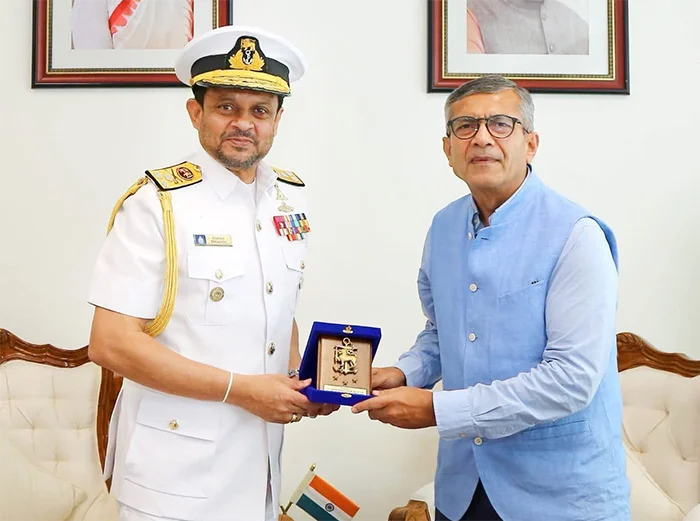
Navy Chief Vice Admiral Damian Fernando held a series of strategic-level discussions with senior Indian defence and military officials during a three-day official visit to New Delhi. He returned on Sunday (30).
Navy Headquarters said that the two sides discussed ways to further strengthen maritime security cooperation between the two Navies in support of security in the Indian Ocean region. They also exchanged views on expanding training opportunities and capacity-building programmes, as well as other areas of bilateral importance.
During his visit to New Delhi, Vice Admiral Fernando also held official discussions with India’s Chief of Defence Staff, General N.S. Raja Subramani, Defence Secretary Rajesh Kumar Singh and Vice Chief of the Air Staff, Air Marshal Ashutosh Dixit and defence industry representatives. Discussions at these meetings focused on bilateral defence cooperation, joint training programmes, and opportunities to enhance air and maritime cooperation in the Indian Ocean Region.
As part of efforts to further expand cooperation in naval training and professional development, Vice Admiral Fernando also met Vice Admiral Sameer Saxena, Flag Officer Commanding-in-Chief of India’s Southern Naval Command, at its headquarters in Kochi, Kerala. The two sides discussed existing naval training exchange programmes and opportunities for introducing and expanding further training initiatives. The meeting followed the Commander of the Sri Lanka Navy’s visit to INS Dronacharya, the Indian Navy’s training establishment where he previously completed the Long Gunnery and Missile Course.

Nahida, Marufa help Bangladesh brush aside Indonesia

Showers will occur in the Western, Sabaragamuwa, Southern and Uva provinces and in Kandy and Nuwara-Eliya districts

Sun directly overhead Kalpitiya, Talawa, Sinharagama, Galkadawala, Nachchaduwa, Padikaramaduwa, Gomarankalla and Verugal about 12.10 noon today (01)

SJB asks what Speaker intended to do about allegations against CJ

Navy Chief attends strategic-level discussions in Delhi

ICRS: Sustained and collective efforts critical to address issue of missing persons

‘Dates have the highest sugar content to fight Coronavirus’

Sunday Island 27 December – Headlines

#SundayIsland 17th December – Headlines

Sunday Island – 28th March

Sunday Island Headlines – 21 March

Sunday Island – 21st February – Headlines
-

 News4 days ago
Eight politicians in drug kingpin probe
-

 Features2 days ago
“Wrap Me Up in My Blazer”— A Gentlemanly Bradby Reminiscence
-

 Business4 days ago
Sri Lanka opens up: A new season of direct connectivity
-

 Features4 days ago
Redefining ageing in Sri Lanka
-
 Features6 days ago
Insights from Chieftains of Uva: Genealogy of two Kandyan Families – Part II
-
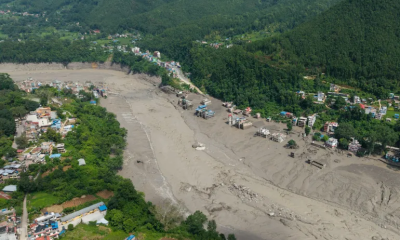
 Latest News5 days ago
Nepal-Tibet floods: What happened, what caused them and who is missing?
-

 Editorial6 days ago
Warning of power cuts: El Niño and corruption
-

 Features6 days ago
Export diversification: Missing the wood for the trees – Part I