
Foreign News
Key wins boost Indian PM Modi’s re-election bid

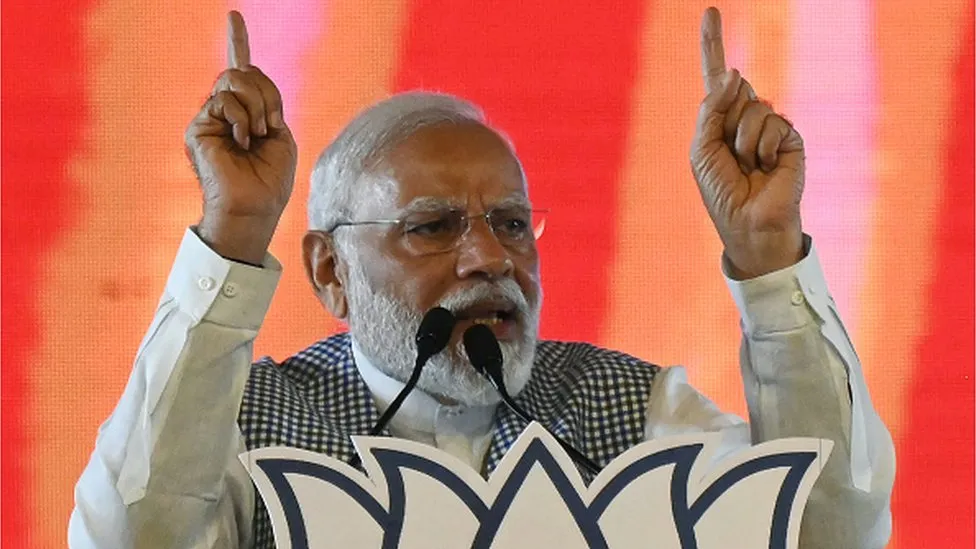
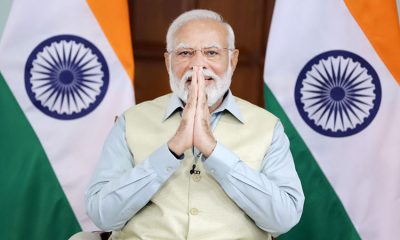
Narendra Modi’s Bharatiya Janata Party (BJP) is poised to win three of the four key state elections in India ahead of the crucial general elections next year.
The BJP has a commanding lead in the states of Madhya Pradesh, Rajasthan and Chhattisgarh. The Congress is comfortably ahead in the southern state of Telangana.
More than 160 million people or a sixth of India’s electorate were eligible to vote in the polls held in November. Counting of votes for a fifth state, Mizoram, is due on Monday.
Did these elections serve a litmus test for Mr Modi’s prospects in securing a historic third term in the upcoming general elections next year? In simpler terms, would a stronger performance by the Congress have indicated a potential setback for the BJP?
Not quite. In 2018, the Congress won three key state elections – Rajasthan, Madhya Pradesh and Chhattisgarh. Three months later BJP swept the general elections nationally and in all the three states. State elections in India are fought over state or region specific concerns, while general elections revolve around more national-level issues.
Despite this dynamic, Sunday’s results come as a significant boost for PM Modi, who is already setting his sights on a record third term next year. The win is also significant because the BJP has frequently fallen short in state elections. Until today, the party – which enjoys a comfortable majority in parliament – governed 15 of India’s 28 states – and only nine of them directly. The rest were in coalition with smaller partners.

Regaining control of Rajasthan and Chhattisgarh from the Congress and retaining Madhya Pradesh for a record fifth term means that the BJP is looking virtually unassailable in the “Hindi heartland” of northern and central India. Ten states in this Hindi-speaking belt send 225 MPs to the parliament – and BJP won 177 of the seats in 2019.
On the other hand, the elections were more important for the Congress.
An improved performance would have come as a huge morale booster and positioned the party as the natural leader of a fledgling alliance comprising 28 opposition parties, collectively known as INDIA. At one point, the party appeared to be leading in the race to win Madhya Pradesh and subsequently lost momentum as the BJP gained ground. The party has struggled to convert state victories into success in national elections in the past, and now it is failing to retain its state governments as well. Anti-incumbency is harsher on Congress.
But there is one silver lining. The Congress managed to wrest the southern state of Telangana, where the regional BRS party suffered from anti-incumbency. After a resounding win in Karnataka in May, it continues to make inroads into southern India.
So what were the factors that shaped voting behaviour in the recent polls? Beyond a track record of governance, considerations such as caste, identity, and the allure of BJP’s Hindu nationalism, welfare promises also seem to exert influence on voting patterns.

During his campaign, PM Modi announced that a scheme to provide 5kg of free grain a month to 800 million of India’s poorest people would continue for the next five years. The resurgence of his party in Madhya Pradesh was also credited to a programme offering a monthly stipend of 1,250 rupees [$16; £12] to eligible women from poorer families – women comprise some 47% of the 50 million voters in the state.
Many commentators called such welfarism by all parties competitive populism, but in reality it also underscored the vulnerable lives of millions of Indians who depend on state handouts to eke a decent living.
A nationwide poll by India Today magazine survey in August showed Mr Modi’s popularity remained intact after a decade in power: more than half of the respondents felt he should continue to lead India.
Adding to the BJP’s formidable arsenal are its massive resources, a mammoth 24/7 party organisation, governance anchored in a robust welfare architecture, and a largely supportive media. It’s hardly surprising that Mr Modi and his party appear to be in a pole position to win a stunning third term next year.
(BBC)



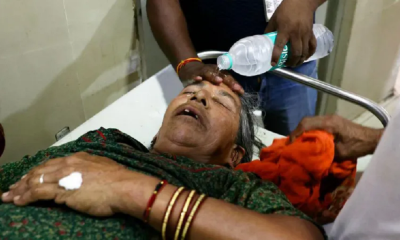






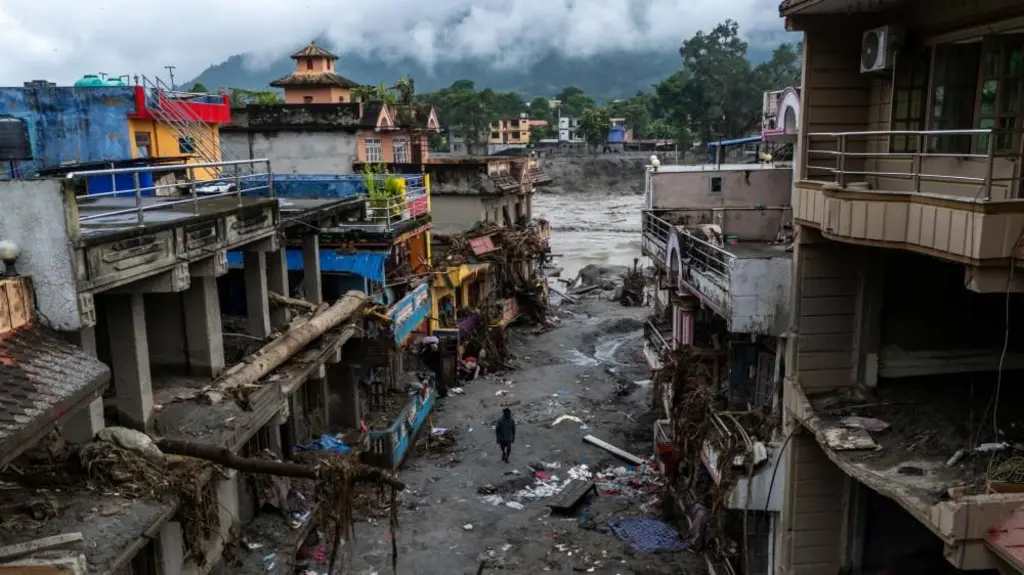
A head teacher’s quick decision to evacuate his school saved 900 pupils from deadly flash floods along the Nepal-Tibet border
Rajendra Dawadi tells the BBC he was tipped off about incoming flood waters and moved students to higher ground with just minutes to spare. One pupil says she and her friends survived by just 10 seconds and watched as a nearby bazaar was swept away
Wednesday’s disaster has killed at least 794 people and more than 2,500 people are missing in Nepal, local officials say
In Tibet, the official death toll is 16, with 546 reported to be missing, according to Chinese state media –
[BBC]

A ferry carrying around 260 people has capsized off the coast of northern Cyprus with a search underway for survivors, according to local media.
The catamaran-style boat was travelling from the port of Kyrenia, also known as Girne, and started sinking a few kilometres off the coast of the island state on Sunday.
There were no immediate reports of casualties.
[Aljazeera]
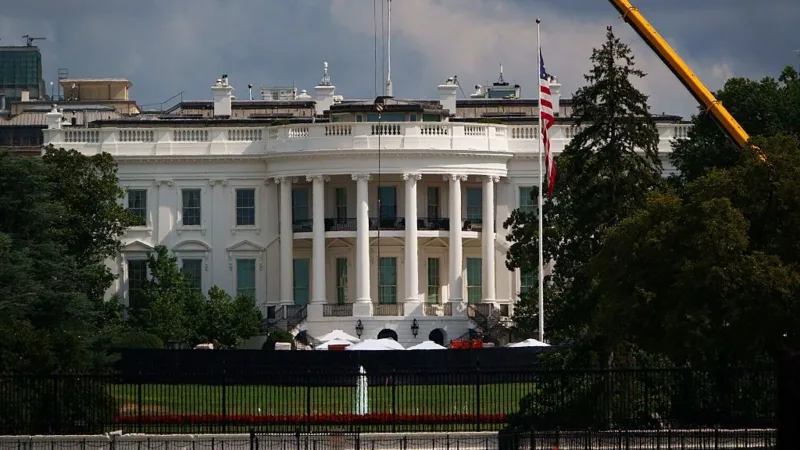
A former White House teleprompter operator has been ordered to pay more than $172,000 (£127,000) for using inside information to bet on US President Donald Trump’s speeches.
Gabriel Perez was found to have made trades on what the president would say during addresses between December 2025 and February 2026 on Kalshi – a prediction markets platform where users can bet on real-world events.
Its regulator, the Commodity Futures Trading Commission (CFTC), said Perez would have to surrender profits of $107,539.02 (£79,452) and pay a civil penalty of $65,000 (£48,000).
The White House has not yet commented. In July then press secretary Karoline Leavitt said Perez was on unpaid leave and would not return to his post.
Announcing the settlement on Friday, the CFTC said Perez had “misappropriated” his prior knowledge of Trump’s speeches to place bets “in breach of his duty of trust and confidence”.
It said his civil penalty had been reduced due to his “exemplary co-operation” with the investigation.
Perez has also been banned from trading for three years.
Writing on X, Kalshi’s lead lawyer Bobby DeNault welcomed the decision: “It doesn’t matter who you are: violate our rules or federal law and you will face the consequences.”
(BBC)

Showers will occur in the Western, Sabaragamuwa, Southern and Uva provinces and in Kandy and Nuwara-Eliya districts

Sun directly overhead Kalpitiya, Talawa, Sinharagama, Galkadawala, Nachchaduwa, Padikaramaduwa, Gomarankalla and Verugal about 12.10 noon today (01)

SJB asks what Speaker intended to do about allegations against CJ

Navy Chief attends strategic-level discussions in Delhi

ICRS: Sustained and collective efforts critical to address issue of missing persons

US, SL military exercise underway here

‘Dates have the highest sugar content to fight Coronavirus’

Sunday Island 27 December – Headlines

#SundayIsland 17th December – Headlines

Sunday Island – 28th March

Sunday Island Headlines – 21 March

Sunday Island – 21st February – Headlines
-

 News4 days ago
Eight politicians in drug kingpin probe
-

 Features2 days ago
“Wrap Me Up in My Blazer”— A Gentlemanly Bradby Reminiscence
-

 Business4 days ago
Sri Lanka opens up: A new season of direct connectivity
-

 Features4 days ago
Redefining ageing in Sri Lanka
-
 Features6 days ago
Insights from Chieftains of Uva: Genealogy of two Kandyan Families – Part II
-
 Latest News5 days ago
Nepal-Tibet floods: What happened, what caused them and who is missing?
-

 Editorial6 days ago
Warning of power cuts: El Niño and corruption
-

 Features6 days ago
Export diversification: Missing the wood for the trees – Part I