
Business
Empowering Sri Lankan women: Highlights from the National Policy Conference on Women’s Access to Decent Work in Sri Lanka

By Kimuthu Kiringoda and Himani Vithanage
(Continued from Yesterday)
Additionally, households with male members in formal work increase prospects for women to enter decent work. Unfortunately, the presence of school-going children decreases their chances of decent work, as women shoulder increased responsibility for their children’s education.
Outdated labour laws still retain provisions that are discriminatory to women. The lack of female representation in decision-making committees further compounds the challenges faced by women seeking decent work.
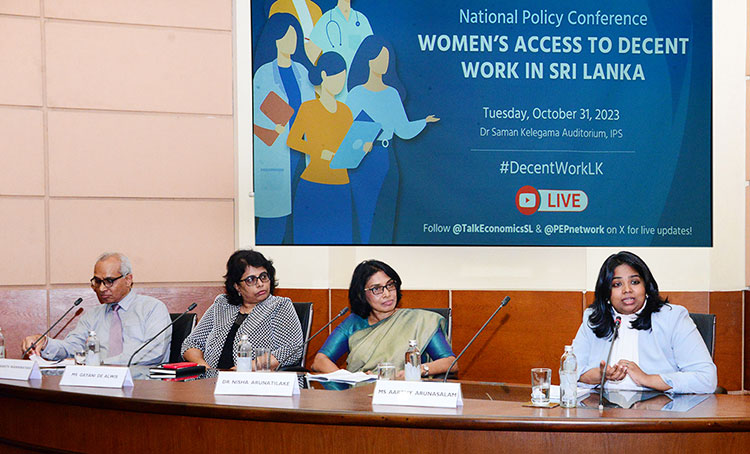
In light of these challenges, the Institute of Policy Studies of Sri Lanka (IPS), in collaboration with Partnership for Economic Policy (PEP) and Co-Impact, hosted the National Policy Conference on Women’s Access to Decent Work in Sri Lanka on 31st October 2023. The conference served as a platform for policymakers and key stakeholders to discuss means of improving women’s access to decent work in the country, focusing on two main aspects: the importance of creating decent jobs for women and the role of childcare facilities in enhancing women’s access to decent work in Sri Lanka.
Creating Decent Jobs for Women
In the discussion on the importance of creating decent jobs, Neelakanth Wanninayake, Executive Director at the Industrial Service Bureau, brought to light that the majority of the Small and Medium-sized Enterprises (SMEs) in Sri Lanka struggle with issues like poor quality consciousness, low productivity, limited innovation, and diversification. Some of the major barriers to industrialisation, including policy issues, lack of access to finance and credit, inefficient infrastructure, lack of innovation and technology transfer, and poor entrepreneurial culture, need to be addressed to generate decent job opportunities in the country.
Transforming precarious jobs to decent jobs in addition to the creation of decent jobs was also a point that received attention. As access to decent work significantly differs at the regional level, implementing policies at the regional level was emphasised.
Gender segregation in the labour market in Sri Lanka was another prominent issue, with women often confined to certain types of professions, such as teaching and low-skilled service sector jobs. As stated by Ms Gayani Herath de Alwis, First Vice Chairperson of the Women’s Chamber of Industry and Commerce (WCIC), in the transport and logistics sector in Sri Lanka, female representation is only 3.4% compared to 96.6% of male representation. A significant factor contributing to this is the limited awareness of job prospects within specific industries that offer decent job opportunities. As such, Ms De Alwis emphasised the importance of raising awareness to attract women to decent jobs and ensuring their retainment in the workforce once entered. Further, the significance of having strong male advocates to promote women’s engagement in decent work, access to financial and non-financial services, and strengthening the linkages in the supply chain while integrating women into the entire value chain are some critical points highlighted by Ms Aarthy Arunasalam, Programme Manager, Gender and Economic Inclusion, International Finance Corporation Sri Lanka (IFC).
Women’s Access to Decent Work and Childcare Services
Ms Thanuja Jayawardene, General Manager, Women’s Empowerment, Advocacy and Code of Conduct at MAS Holdings, highlighted the challenges faced by the private sector in implementing childcare policies in the absence of a coherent National Policy. All panellists agreed it is a societal responsibility to protect children and ensure their sound development in their early years. The two issues that Ms Jayawardene mentioned regarding creches at the workplace are the cost for the business and the different requirements of varied classes of employees. In the apparel sector, the factory floor and office cadre have different requirements and shifts. But it was reiterated that the apparent sector was built on the backbone of women to whom extensive care and attention should be given.
Another point that the panellist stressed is parental responsibility and parental care. All the experts agreed that child-rearing responsibility should shift from the mother to both parents, reaffirming the need for provisions for paternal leave. Taking steps to reduce crimes committed against children was also discussed by Ms Gayani Gomes, Project Manager of Women’s Centre Sri Lanka, citing examples from the free trade zones.
Ms Shanika Malalgoda, Director (Planning and Information), Child Protection Authority, highlighted the National Guidelines for Day Care Centres in the discussion as a sound tool to maintain standards of care, along with the five-year action plan introduced by the Ministry of Women’s Affairs. Arguments were raised by the audience against the policy, stating that there are too many bodies involved, making the implementation complex. Ms Malalgoda said they cannot avoid multi-sectoral engagement and are working with limited resources in the Ministry.
Many experts in labour and gender-related work participated in the event, and the audience contributed to the discussion with important insights.
Watch the full discussion on IPS’ YouTube channel: https://www.youtube.com/watch?v=cZu7RNj698U




SpaceX has debuted on US markets with a market valuation of more than $2 trillion, minting CEO Elon Musk as the world’s first trillionaire.
Shares opened on Friday at $150 per share, marking a 11 percent increase from the initial public offering (IPO) price of $135, valuing the company at $1.96 trillion and putting the aerospace company on track to become the sixth-largest company in the United States.
The stock surged 18 percent to $159 per share, up from the $135 it had been priced at, as the trading day came to a close.
Markets more broadly ticked higher amid a possible interim peace deal between the United States and Iran that could open the Strait of Hormuz. The Dow Jones Industrial Average is up 0.6 percent, the Nasdaq is up 0.2 percent, and the S&P 500 is up 0.35 percent as trading wraps up for the week.
The company sold $75bn in shares, immediately valuing it at $1.77 trillion. The IPO was oversubscribed four times higher than was otherwise expected, according to the Reuters news agency.
Of the institutional investors allocated, according to Bloomberg News, as much as 70 percent went to what are called long-only investments — a strategy in which holders buy assets based on the expectation that their value will grow over time — and sovereign wealth funds, including those from Saudi Arabia and Kuwait as well.
SpaceX President Gwynne Shotwell and Chief Financial Officer Bret Johnsen rang the opening bell at Nasdaq MarketSite in New York City at 9:30am local time as US markets opened.
On Thursday, protesters gathered outside the MarketSite to protest the IPO amid continued allegations that Grok, part of xAI, a subsidiary of SpaceX, allowed users to create non-consensual deepfake sexualised images before the IPO debut.
Shares of SpaceX did not trade until the middle of the trading day as the exchange collected buy and sell orders and underwriters delayed trading until supply and demand were balanced.
“We would expect SpaceX to see an immediate pop in trading due to the hype around the deal, north of 20 percent perhaps,” said Samuel Kerr, global head of equity capital markets at Mergermarket. “Anything lower would actually make me nervous.”
Exchanges and trading firms are eager to avoid the technical mishaps that marred Meta’s 2012 debut. With SpaceX widely viewed as a dress rehearsal for a new generation of mega-listings, market participants will also be watching for signals on investor appetite in advance of forthcoming IPOs for AI heavyweights Anthropic and OpenAI.
The landmark listing cemented Musk’s status as the first trillionaire ever and propelled SpaceX into the ranks of the world’s most valuable companies — even though the firm posted a loss of nearly $5bn last year and generated only a fraction of the revenue brought in by similarly valued tech giants.
The surge comes amid growth driven by its Starlink subsidiary, which drives as much as 80 percent of its revenue.
On Friday, SpaceX launched its Falcon 9 rocket with 29 satellites into space from Cape Canaveral in Florida.
[Aljazeera]

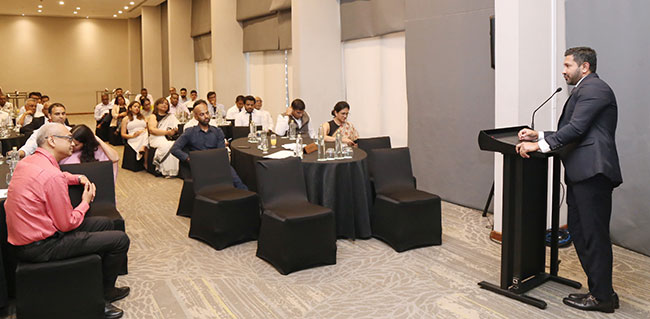
The Indo-Lanka Chamber of Commerce & Industry (ILCCI), affiliated to The Ceylon Chamber of Commerce, hosted an interactive session on Sri Lanka’s Investment Future: Policy, Opportunity & Growth at Jetwing Colombo Seven. The session was attended by Dr. Satyanjal Pandey as Chief Guest, while Aritha Wickramasinghe delivered the keynote address in his capacity as Chief of Staff to the Office of the Presidential Special Envoy on Foreign Investment, Hanif Yusoof.
ILCCI President M. Raghuraman, in his remarks, expressed appreciation to Dr. Pandey for his service during his tenure in Sri Lanka and underscored the timeliness and importance of the session topic in the context of the current global economic and geopolitical climate.
Addressing the gathering, Dr. Pandey observed that in a period marked by geopolitical and economic turbulence – reliability, trustworthiness, and secure supply chains have become increasingly important. He also highlighted the strong and growing economic partnership between India and Sri Lanka, noting several significant Indian investments in Sri Lanka, including those by ITC Limited and CEAT Limited, while indicating that further investments are expected in the future.
As a representative of the state, Aritha Wickramasinghe stated that it is the responsibility of the government to ensure that, even amid global turbulence, Sri Lanka remains stable in its policy direction, credible in its economic management, and consistent in its engagement with investors. He also emphasised the opportunities available to the Sri Lankan economy through deeper engagement with India’s fast-growing economy, noting that while India and Sri Lanka are neighbours, the relationship is regarded as one of family rather than mere proximity.
The session which included a highly engaging and interactive Q&A session with the audience, concluded with a productive exchange of views between the distinguished guests, speakers and participants, reaffirming the importance of continued dialogue and collaboration in strengthening investment and economic ties between Sri Lanka and India.
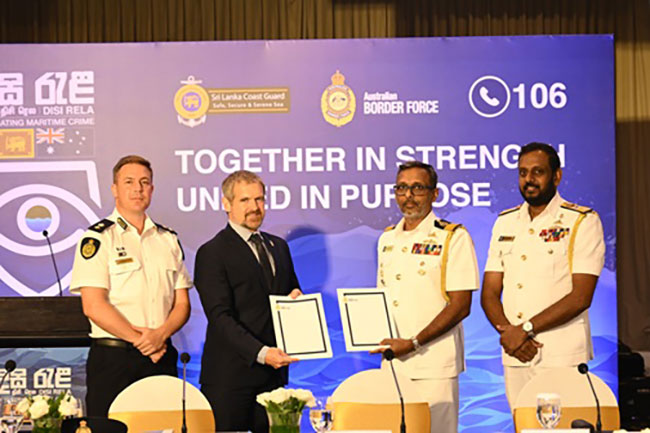
The Australian Border Force and Sri Lanka Coast Guard have launched Disi Rela 2026, marking the third consecutive year of the joint maritime security initiative aimed at strengthening maritime surveillance, operational capability, and public awareness across Sri Lanka’s coastal regions.
This year, Disi Rela 2026 expands its community engagement and public awareness activities to Sri Lanka’s Eastern Province, following successful activations conducted in the Western and Southern Provinces in previous years.
Meaning “keeping a watchful eye over the maritime environment,” Disi Rela reflects the continued partnership between Australia and Sri Lanka to strengthen maritime security, combat transnational maritime crime, and promote safer seas across the region. Through intelligence sharing, operational cooperation, advanced equipment support, and public awareness initiatives, both countries continue to work together to address threats including people smuggling, drug trafficking, illegal fishing, and other unlawful maritime activities.
Over the past three years, the Australian Government has supported Sri Lanka’s maritime security efforts under the Disi Rela initiative through the donation of 24 surveillance drones, three all-terrain vehicles (ATVs), three Stabicraft patrol vessels, and the establishment of a dedicated 24/7 hotline number — 106.
Further strengthening Sri Lanka Coast Guard’s operational capability, the Australian Government will donate an additional five all-terrain vehicles (ATVs) under Disi Rela 2026 to support coastal surveillance and rapid response operations.
In reflecting upon the continued partnership and shared commitment of both nations to safeguard Sri Lanka’s maritime boundaries and coastal communities, the Director General of the Sri Lanka Coast Guard,

Special Dengue Prevention Week declared in Colombo District from June 15 to 21

The leader of the indigenous Vedda community Uru Warige Wannila Aththo Meets Prime Minister Dr. Harini Amarasuriya

SpaceX IPO debuts in US markets, Musk becomes world’s first trillionaire

Fans on concourses instead of in seats, claims FIFA

Co-hosts Canada begin 2026 World Cup campaign with a draw against Bosnia-Herzegovina.

Showers will occur at times in the Western, Sabaragamuwa and North-western provinces and in Galle, Matara, Kandy and Nuwara-Eliya districts

‘Dates have the highest sugar content to fight Coronavirus’

Sunday Island 27 December – Headlines

#SundayIsland 17th December – Headlines

Sunday Island – 28th March

Sunday Island Headlines – 21 March

Sunday Island – 21st February – Headlines
-

 News6 days ago
Women’s T20 World Cup 2026 warm-up: Chamari Athapaththu’s 94 helps Sri Lanka beat Pakistan
-

 News6 days ago
Lankan-Canadian inducted to Toronto Sports Hall of Fame
-

 Editorial5 days ago
Probe Sallay’s complaint
-
 News3 days ago
Local firms move millions of dollars overseas for phantom imports: Govt.
-

 Editorial6 days ago
Prez in the dock
-

 Features6 days ago
Entering MIT for my Ph.D program, coping with harsh Boston winter and breasting the tape
-
 Midweek Review3 days ago
July 09: An inexcusable overall security failure and exceptional contingency plan
-

 Opinion4 days ago
Could Sri Lanka once again face an economic crisis similar to 2022?