
News
Human Rights Watch calls for systemic reforms at IMF, World Bank


Releases globally new video featuring Sri Lanka’s poor to illustrate impact of flawed approach on rights
Discussions at the International Monetary Fund (IMF) and World Bank Annual Meetings that open in Marrakesh, Morocco, on 9 October 2023, should prioritise systemic reforms to align policies with human rights, Human Rights Watch said yesterday, releasing a video to illustrate the concerns. The changes are needed because current policies are compounding poverty and inequality.
The five-minute video (Sri Lanka: IMF loan programs makes life harder – YouTube) features Shanthi, a woman living in Sri Lanka, struggling to cope with both the economic crisis in the country and the loan conditions attached to a $3 billion bailout from the IMF that increased the cost of fuel and electricity and doubled value-added taxes. Sri Lanka, which defaulted on its debt in 2022, is the canary in the coal mine as dozens of governments are in or near debt distress, the IMF has said.
“Millions upon millions of people around the world have stories like Shanthi,” said Sarah Saadoun, senior economic justice researcher and advocate at Human Rights Watch. “IMF bailout conditions make lives already upended by global inflation and other economic challenges even harder.”
Shanthi’s electricity was cut when she was no longer able to pay her bill and she now relies entirely on others for food and basic necessities. She lost critical income from a government social protection program that had been providing benefits since 1994 after the government overhauled it in line with a requirement in the IMF program, with World Bank support. She has yet to receive a response to her application for the new program that she submitted in July.
Shanthi’s story is an example of how IMF loans to dozens of countries, affecting over one billion people, frequently push governments to cut spending and raise regressive taxes in ways that harm rights, as a new Human Rights Watch report has documented. Human Rights Watch also found that the IMF’s efforts to address these impacts are largely ineffective.
To ensure economic recovery that best advances rights in the short and long term, the IMF and governments should halt austerity policies that threaten rights. They should ensure that spending on health, education, and social security meet, at a minimum international benchmarks as a percentage of GDP and national budgets.
The video also demonstrates the shortcomings of the World Bank’s approach to social security, which in many cases, including Sri Lanka, works in tandem with IMF programs with the intention of cushioning their impact. Despite a commitment to promote universal social protection, the World Bank often funds programs that are means-tested, for which eligibility hinges on income, assets, or narrow poverty indicators. Research shows that these programs suffer from high error rates, corruption, and social mistrust, while missing the chance to build social cohesion and new social contracts anchored in solidarity and rights.
On 4 October, 43 human rights and economic justice organisations began an initiative, under the hashtags #RightToSocialSecurity and #UniversalSocialSecurity, urging governments and international financial institutions to commit to universal social security, which provides benefits to everyone at various times in their life course as part of a human rights approach to the economy, and end policies that have been failing hundreds of millions of people.
“The IMF and World Bank recognise that people need support, but then they promote narrow means-tested programs that, both by design and due to chronically high error rates, exclude many people who are struggling,” Saadoun said. “The IMF and World Bank need to revise their policies to support universal social security,” she added.







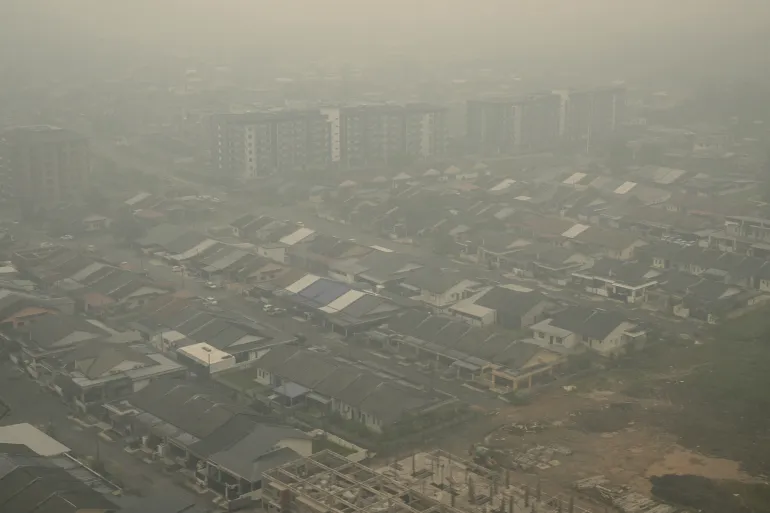
Malaysia has declared a state of emergency in a district in Sarawak state after haze caused by wildfires in neighbouring Indonesia increased air pollution to “hazardous” levels.
King Sultan Ibrahim “has consented to the declaration of emergency throughout Serian Division, Sarawak, following haze conditions that have reached air pollution levels hazardous to public health and safety”, Prime Minister Anwar Ibrahim’s office said in a statement on Thursday.
The declaration followed a formal request from the Sarawak Disaster Management Committee after the region’s Air Pollutant Index reached levels warranting consideration of a local emergency.
Under the order, 647 schools in Serian will close from Monday until at least the end of next week, alongside government and private offices, plantations, construction sites and quarries, with only essential services continuing to operate.
The state’s disaster management authorities said a three-day cloud-seeding operation launched on Thursday would be extended to at least Monday, citing forecasts of “more conducive cloud formations” during that period.
Sarawak State Disaster Management Committee chairman Douglas Uggah Embas, speaking at a news conference in Kuching, stressed that the emergency applied only to Serian, not the entire state, but urged residents there to take the situation seriously.
“Please minimise outdoor activities and avoid strenuous activities outdoors,” he said.
Sarawak, in the northern part of Borneo island, has been heavily affected by haze for weeks, as have the neighbouring states of Sabah and Peninsular Malaysia.
(Aljazeera)
Latest News
Sun directly overhead Moratuwa, Kesbewa, Handapangoda, Idalgashinna, Yudhaganawa, Kotiyagala and Panama about 12.08 noon today (05)


The sun is going to be directly over the latitudes of Sri Lanka from 28th of August to 07th of September due to its apparent southward relative motion.
The nearest places of Sri Lanka over which the sun is
overhead today (05) are Moratuwa, Kesbewa, Handapangoda, Idalgashinna, Yudhaganawa, Kotiyagala and Panama about 12.08 noon
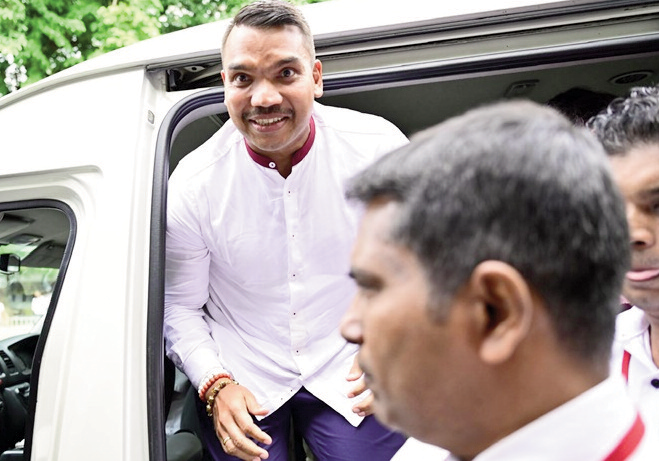
Sri Lanka Podujana Peramuna (SLPP) National Organiser and Parliamentarian Namal Rajapaksa was yesterday remanded until September 18 by the Colombo Chief Magistrate’s Court following his arrest by the Commission to Investigate Allegations of Bribery or Corruption (CIABOC) in connection with an investigation into the controversial SriLankan Airlines Airbus aircraft transaction.
Rajapaksa appeared before the CIABOC at around 9.15 am yesterday to record a statement after being summoned over the transaction. He was taken into custody following several hours of questioning and subsequently produced before the Colombo Chief Magistrate.
The investigation centres on allegations surrounding the acquisition of six Airbus A330 and eight A350 aircraft by SriLankan Airlines in 2013, in connection with an alleged USD 2 million bribe.
Former SriLankan Airlines Chief Executive Officer Kapila Chandrasena and his wife, Priyanka Niyomali Wijenayake, had previously been named in connection with the alleged bribery.
Chandrasena was arrested on March 12 as part of an investigation launched by the CIABOC under the Anti-Corruption Act and was subsequently released on bail. He was later found dead on May 8 while on bail, with police suspecting that his death was a suicide.
Open warrants have been issued for the arrest of Wijenayake, who is named as the second suspect, and Shamindra Rajapaksa, named as the third suspect, in the case pending before the Fort Magistrate’s Court in connection with the Airbus transaction.
The investigation has also received assistance from Airbus, with a delegation from the company’s parent group in France visiting Sri Lanka during the first week of August. The delegation provided statements and other assistance to the CIABOC as part of the ongoing inquiry.
Rajapaksa’s arrest and remand yesterday mark a further development in the widening investigation into the controversial aircraft deal.

Malaysia declares emergency in Sarawak as haze from Indonesia worsens

UAE keep semi-final hopes alive after convincing win over Indonesia

Sun directly overhead Moratuwa, Kesbewa, Handapangoda, Idalgashinna, Yudhaganawa, Kotiyagala and Panama about 12.08 noon today (05)

Showers above 75 mm are likely at some places in the Uva, Central and Eastern provinces and in Polonnaruwa and Mullaittivu districts after 2.00 p.m

Namal remanded until Sept. 18 over Airbus deal investigation

Dengue cases surpass 96,000 this year

‘Dates have the highest sugar content to fight Coronavirus’

Sunday Island 27 December – Headlines

#SundayIsland 17th December – Headlines

Sunday Island – 28th March

Sunday Island Headlines – 21 March

Sunday Island – 21st February – Headlines
-

 Features6 days ago
“Wrap Me Up in My Blazer”— A Gentlemanly Bradby Reminiscence
-

 Features5 days ago
When Sri Lankan stories find their own voice
-

 Features6 days ago
JVP/NPP government as seen from outside by Lionel Bopage now domiciled in Australia
-
 News5 days ago
BASL takes exception to Justice Ganepola being denied a place in SC
-
 Features6 days ago
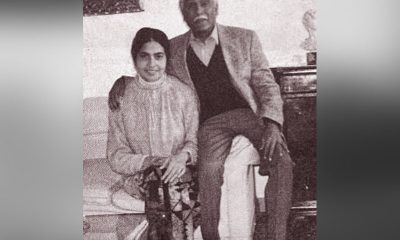
Prof. Savitri Goonesekere: What has she done?
-

 News2 days ago
Denied of promotion to SC despite vacancies, justice Gurusinghe retires
-
 Latest News3 days ago
Grade 5 scholarship exam results released
-

 News2 days ago
22A: SC urged to suspend hearing, appoint full bench