
Life style
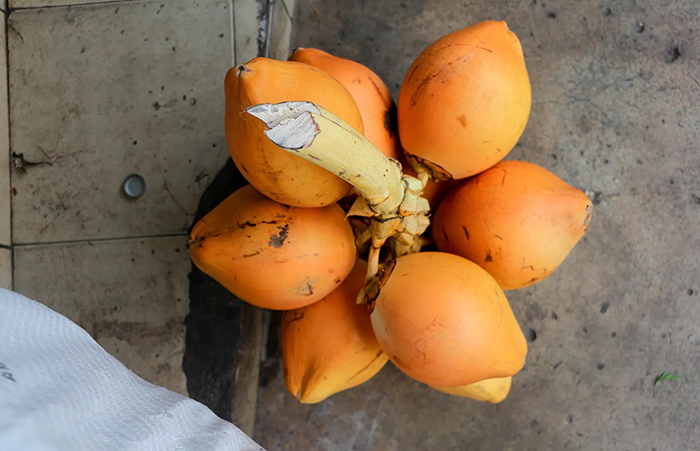
Thambili : the king of all coconuts

By Zinara Rathnayake
“Those who know, know,” Sudath Fernando tells me, cutting a tender, young thambili at his makeshift kiosk on Galle Road in Colombo. Sudath has been selling thambili – often called ‘king coconuts’ in English – in Colombo since 1991. Some customers come to him as soon as he starts his business at six in the morning. “For them, it’s medicine. They have it daily before their morning tea,” he says.
Sudath is one of the many thambili vendors lining the streets of Colombo who pile up orange-coloured coconuts by the crowded highways and privy alleys. Food often represents one’s class and race in Sri Lanka. Long basmati rice, more expensive than other rice varieties, is cooked in wealthy households. My Sinhalese parents prepare abundant dishes of dry fish and my partner’s Tamil family roll out atta (wholemeal wheat flour) dough into chapatis for dinner. But thambili is neutral. It knows no class, race or religion. As the temperatures have risen in recent years, thambili vendors have sprouted up on the island streets. They often go unappreciated by the locals, but they are the true lifeline of the public on hot Sri Lankan afternoons.
Sri Lankan cuisine is dominated by the coconut. We cook chicken into a fiery red curry using coconut oil. We use coconut milk in the hopper batter, their fluffy meaty centres tapering off into a lacy crisp. We make sambal with scraped coconut and add grated coconut to our mallung, a uniquely Sri Lankan green leafy salad stir-fried in a dry skillet. Some Sri Lankans like to keep their sliced bitter gourd in coconut water until the bitterness dissipates, and in the morning we eat diya bath (leftover rice soaked overnight in water) with kiri hodi, a saute of onions and spices simmered in coconut milk; a hearty breakfast of humble rice meeting rich, creamy kiri hodi sprinkled with salt and lime juice.
But, nothing quite comes close to the joy of sipping a thambili. Slurp it once and you would know; it is truly the king of all coconuts. There were days I begged my mother for thambili. I followed my mother from room to room, and into the garden when she raked fallen leaves.
“Amma, when can I have thambili?”
Every week in the searing hot months, my mother would call the coconut plucker in our village. Bare-chested, his sarong folded into half above his knees, this forty-something man climbed the thambili tree in our garden. He plucked a few nuts which would last the whole week.
To me they were happiness encased in a giant nut. When prepared correctly they could quench thirsts that dried up my scaly lips? my mother would scrape the meat from inside the thambili and mix it with the rich coconut water, adding a tablespoonful of sugar before I gulped it down in the humid afternoons at home.
Coconut trees dot the landscape in Sri Lanka; swaying palms equally fringe the rugged coastline and silvery-silky beaches. But not all of them, or even most of them, are thambili. Thambili directly translates to orange (an apt name due to their bright orange husks, which mark them out as a native Sri Lankan variation from regular green coconuts) and they thrive within the stretching coconut triangle between the capital city, Colombo, and the towns of Kurunegala and Chilaw.
I spent my early childhood years in my mother’s village in Kurunegala falling within this luscious coconut triangle. When I was eight, we relocated to my father’s village near Kandy. Within the first month, my father had planted five coconut trees in our 15-perch garden ? two of them were king coconuts. On blazing hot afternoons, my father, using a blade tied to a long bamboo stick, would pluck thambili for me. It’s this fresh thambili water that puts an end to my afternoon sourpuss. On a steamy, tropical afternoon, there is nothing like thambili water to refresh and rejuvenate, even compared to regular coconut water. It is this quality that makes them the king of all coconuts.
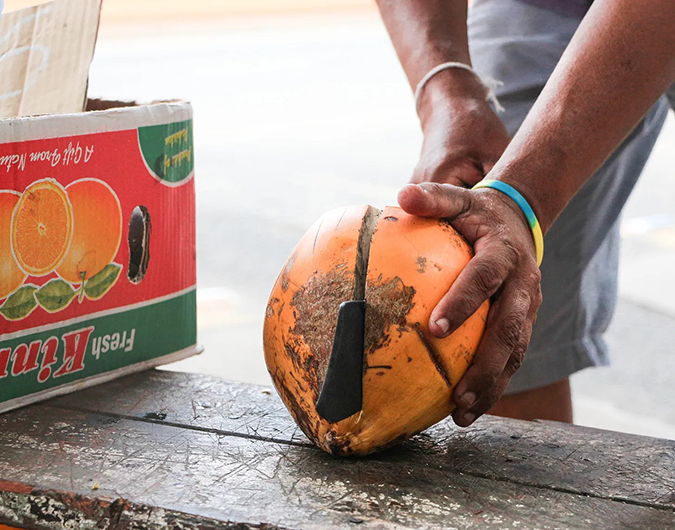
King coconuts take anywhere between 8-14 months to fully mature. “Tender nuts are full of water,” Sudath tells me, noting that these small, tender coconuts have a lighter orange shade. When they grow older and larger in size, they acquire a darker shade of orange. “Older coconuts sell fast because of their sheer size and the attractive colour,” Sudath says, “But it’s the young, small ones that have more water. They are healthier,” he chuckles.
The local palate prefers everything sweet. It is another reason many customers pick large coconuts, as their water contains a distinctive saccharine taste. Oftentimes, Sudath advises his customers to choose a tender coconut. But they seldom listen to him. Sudath’s coconut business is the only income for his family. Dreading customer disapproval and losing his income, he sticks to piles of matured thambili and stocks only a few tender nuts for the connoisseurs, those who, in his words, ‘know’.
Our love for thambili stems from living every day in the year-long tropical climate. While I love walking, it is often a challenge in Sri Lanka. Walking merely a mile in Colombo is exerting. Sweat drips down your forehead after five minutes in the harsh sun. Your cotton shirt is soaked in sweat as if you accidentally passed by a quick rain shower. When we exert and sweat, we lose electrolytes, minerals such as potassium, sodium and magnesium, resulting in fatigue and dehydration. Thambili is packed with these electrolytes: it is nature’s Lucozade. So when we see piles of golden orange lining the pavements from a distance, we know that it is not just another coconut: in Sri Lanka, thambili is happiness.
Thambili is also more than a simple thirst-quencher; it has both culinary and wellness uses. Diwani Welitharage is a pharmacist by profession and explains to me how thambili water helps digestion and metabolism. “Drinking thambili water on an empty stomach early in the morning boosts your energy,” she tells me over the phone. Thambili is not only rich in vitamins but has been credited with everything from anti-aging properties to treating urinary tract infections in Ayurvedic medicine. “Some people drink it with sandalwood powder to help nourish their skin,” Diwani explains.
In her spare time, Diwani loves to study traditional Sri Lankan cuisine and experiments with thambili water, often combining it with lime, rambutan and chia seeds, or cooking baby jackfruit and marshy herbs directly in the water, the acidity softening the starch. But “for health benefits,” Diwani says, “just drink it as it is.”
Given its myriad properties, it’s no surprise that there is now a lot of money to be made from thambili. Thambili water is now packaged and exported globally; famous exporters like Eliya, based in New York, supply it across the globe to the Fairmont chain’s hotels in Dubai and Taj group hotels in New York, promising a taste of “the paradise island” for $60 for a 12-pack. This humble coconut now features in cocktails and trendy drinks in bars, high-end hotels and chic cafés in both Sri Lanka and abroad. A luxe beach resort in Sri Lanka once welcomed me with a chilled thambili mixed with Sri Lankan arrack (a local alcohol made from the fermented sap of coconut flowers) and lime juice. In the scorching heat, I couldn’t have asked for a better welcome drink.
Apinash Sivagumaaran, CEO at the popular Isso restaurants in Colombo and the Maldives, tells me that thambili is a popular item on their drink menus. Apinash and his team studied the market and customer preferences before they opened their first restaurant in 2017. He wanted to incorporate bits and pieces of Sri Lankan coconut culture at Isso in a more luxurious way. Instead of extracting the water into a glass, the giant nut comes to your table, refrigerated and chilled, in homage to the surrounding crowded streets hemmed in with piles of thambili. “It is much more personal,” Apinash says.
None of this, however, really captures the experience of buying thambili from a roadside vendor. A quick thambili stopover on the streets in Sri Lanka often turns into friendly banter with fellow customers and vendors. I fear the water dripping down my clothes, so I would use a straw to sip my thambili. But others, like my father, would keep his mouth pressed to the nut, and gulp it down without a straw. It’s a skill to master.
When Sri Lanka went on a strict, police-managed curfew to control the spread of COVID-19, roadside thambili vendors like Sudath belong to the country’s ‘informal sector’, which contributes to about 40% of the nation’s GDP, took a heavy blow. During the pandemic, thambili sellers, street food vendors and porters have been the worst hit among all of us. People like Sudath, who stand long hours in the sun to quench our thirst, are also the least supported by the government or the authorities.
Sudath tells me that the initial days in the lockdown were very hard. He tried his best to obtain a permit. After a couple of weeks, having contacted a police officer he knew, his permit arrived. He hired a truck, wore a mask and went door to door selling thambili. Business was slow. “I was scared too. I am 50 now and I was scared of bringing the virus home,” he tells me. “But without the business, my family would go hungry.” BBC








As the world celebrates the 100th birthday of Sir David Attenborough, tributes continue to pour in from scientists, conservationists, filmmakers, and millions of admirers whose lives were shaped by the legendary natural historian’s work.
But among the many messages shared this week, one deeply personal reflection from renowned Sri Lankan-born scientist Dr. Ruchira Somaweera has captured the true essence of the man behind the iconic voice.
“We all have people we look up to and hope to be like one day,” Dr. Somaweera wrote in a moving tribute marking Attenborough’s centenary. “For me, one of those people has always been Sir David Attenborough.”
The story dates back to 2013, when a BBC documentary crew visited to explore Dr. Somaweera’s pioneering work on freshwater crocodiles for a potential wildlife series. Although his research ultimately did not make it into the final production, the encounter led to something far more meaningful.
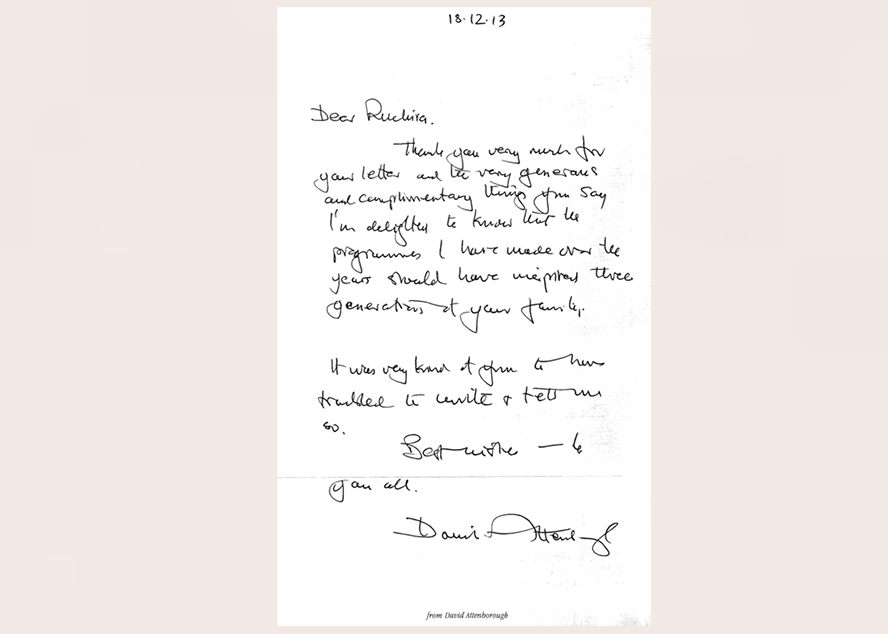
Through members of the crew, Dr. Somaweera sent Attenborough a card expressing gratitude for the profound influence he had on three generations of his family.
“What I never expected,” he recalled, “was to receive a handwritten letter from him just two weeks later, thanking me for the kind words.”
For Dr. Somaweera, the gesture revealed something extraordinary about Attenborough — not merely the global icon known to billions, but a deeply gracious and humble human being who still took time to personally respond to admirers, despite decades of worldwide fame.
“It said so much about the man behind the legend,” he reflected.
That quiet act of kindness perhaps explains why Attenborough’s influence extends far beyond television screens. Across nearly eight decades, he has become not only the world’s most recognisable natural history broadcaster, but also one of the most trusted voices in science communication and conservation advocacy.
From Life on Earth to Planet Earth, Blue Planet and countless other landmark productions, Attenborough transformed the way humanity sees the natural world.
He brought remote rainforests, coral reefs, deserts, mountains, and deep oceans into living rooms around the globe, inspiring generations to care about ecosystems they might never physically encounter.
Few communicators have bridged science and emotion with such extraordinary power.
For Sri Lankan scientists and conservationists, Attenborough’s impact has been especially profound. Many grew up watching his documentaries, developing an early fascination with wildlife through his storytelling.
Dr. Somaweera’s own career reflects that inspiration. Widely respected for his work on crocodilians, reptiles, and conservation biology, he has become an internationally recognised scientist whose research has contributed significantly to understanding freshwater ecosystems and reptile conservation.
Yet even accomplished scientists, it seems, can remain awestruck by the people who first ignited their curiosity.
The timing of Dr. Somaweera’s tribute also resonates strongly, following recent screenings of Attenborough’s powerful documentary Ocean, including an exclusive showing hosted by Spa Ceylon at SCOPE Cinema.
In the film, Attenborough reflects on humanity’s relationship with the sea with a sense of urgency sharpened by a lifetime of observation.
“After living for nearly 100 years on this planet,” he says, “I now understand the most important place on Earth is not on land, but at sea.”
The documentary explores the astonishing biodiversity of oceans while warning against destructive practices, such as industrial bottom trawling, climate change, and marine habitat destruction. But even amid alarming realities, Attenborough continues to offer hope grounded in science and collective action.
That enduring optimism may be one reason why his influence spans generations.
“Happy 100th birthday to a true giant of science communication, storytelling and conservation advocacy,” Dr. Somaweera wrote in his tribute. “The impact you have had on the world, and on countless young minds, is immeasurable.”
Indeed, for millions around the world, Attenborough’s voice became synonymous with wonder itself.
He taught humanity that the planet is not merely scenery, but a living system of intricate relationships — forests breathing for oceans, coral reefs feeding fisheries, plankton generating oxygen, predators maintaining balance, and every species playing a role in the fragile architecture of life.
At 100, Sir David Attenborough remains more than a broadcaster.
He is a witness to a changing planet. A storyteller for the natural world. And for many scientists like Dr. Ruchira Somaweera, a lifelong inspiration whose greatest legacy may lie not only in the documentaries he created, but in the curiosity, compassion, and responsibility he awakened in others.
By Ifham Nizam
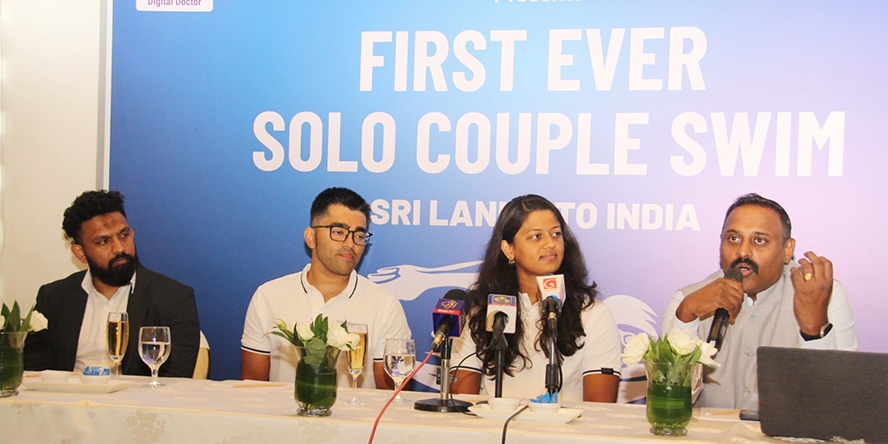
The first Lanka-India swim by a couple
Bengali couple,Vrushali Prasade and Danish Abdi, created history by undertaking the first ever Sri Lanka-India Ocean Water Swim, reflecting not only athlete excellence and endurance but also the deep rooted cultural and historical connection between India and Sri Lanka.
Sharing their thoughts, before the event, Vrushali Prasade and Danish Abdi expressed enthusiasm about their challenges. “We are excited to take this unique expedition and are proud to align it with a message of health and wellness. This expedition stands as a powerful symbol of unity.
The first ever Sri Lanka-India Ocean Water Swim, presented by Manipal Hospitals, is not just another event, it is a bold endurance crossing of geography, grit and shared history between Sri Lanka and India.
This message was unfolded at a press conference held at the Kingsbury Hotel, before the event, by the officials of the giant Manipal Hospitals. The spotlight, however, firmly rested on the two swimmers, a couple, who brought this vision to life.
Vrushali Prasade and her husband Danish Abdi, in their 30s from Bangalore are working in the IT industry. They learnt swimming only about four years ago, after first taking to waters during a holiday in the Maldives. The Island met them before their historic attempt.
Poised yet quietly determined, the swimmers embodied the spirit of the challenges ahead, At the press conference they spoke on true discipline, preparations and mental strength required to take on such a historic crossing.
Manipal Hospitals, India’s largest Pan Multi Speciality Hospital, are the main sponsors , symbolically connecting the two nations, India and Sri Lanka, through sport, healthcare and shared ambition.
The couple had previously swam the Indian Ocean as part of the rally but the recent Indian Ocean swim is their first solo couple effort and the longest. They were assisted by multiple boats, alongside paramedics and coast guards.
The Chief Operating Officer, Manipal Health Enterprise Karthik Rajagopal said this historic swim reflects not only athlete excellence and endurance, but also the deep rooted cultural and historical connection between the two countries, The swimmers Vrushali and Danish Abdi said, before the event: ” Swimming is for all ages whether you are a kid or a matured person, it is never too late to start for any age group. When asked about their challenges of undertaking such a historic feat, they said. “The Palk Strait is no gentle stretch of water, its currents are unpredictable, its tides restless . Unlike the the controlled calm of a swimming pool, the sea offers no guarantee, one moment they may bring a steady rhythm, the next, a surge that breaks it entirely. But we are excited to take on this unique expedition and proud to resonate the message of health and wellness to the world’
Fatigue, inevitably becomes a companion and also long hours in open water test not just muscle strength but mental resilience. Jellyfish often drift with currents making the calm swim into a painful endurance test.
“With limited visibility, we can suddenly brush against tentacles, turning a steady rhythm into a moment of sharp pain. In the vast unpredictability of the ocean, we have to chose whatever the sea offers.”

Vrushali Prasade and Danish Abdi: The young Bengali couple who conquered the ocean
They also said the route across the Palk Strait is deceptively complex. Though relatively shallow, those waters are known for shifting currents, strong tidal pulls and unpredictable winds. We cannot rely on a straight path, we move guided by pilots on escort boats who constantly adjust the direction based on the sea conditions. Then we have the unpredictability of the sea itself. Floating debris, sudden weather shifts and there is no wall to hold onto, no pause button only the rhythm of our stroke and breath. Vrushali and Danish expressed enthusiasm about these challenges . We are very excited to overcome all these challenges.’
‘Our decision, however, to take on the challenging stretch across the Palk strait is rooted in more than a personal achievement, said the couple. They spoke of the partnership aspect of the swim calling it both their biggest strength and unique challenge.
Behind the drama of the sea and the determination of the swimmers, lies a quieter crucial force,the medical backbone. As title sponsor, Manipal Hospitals was not merely lending its name to this event. They actively shaped the safety framework that make such a ambitious feat possible.
Manipal Hospitals is the largest Pan India Speciality Hospital network by bed capacity, boasting over 12,300. It is known for its expert medical expertise multi speciality care and commitment to patient centric care and also well connected to Sri Lanka’s medical and patient community especially for spine and oncology services.
Medical teams were stationed on escort boats equipped to respond instantly to issues ranging from hydration and hypothermia to jellyfish stings or muscle cramps. All in all the hospital’s participation underscores a broader message, promoting health, endurance sports and cross border collaboration.
In the end what the couple did places them in the same conversation as some of the world’s most daring open water swimmers, those who have conquered icy channels relentless tides and vast strong winds.
As the couple moved through the waters of the Palk Strait, their journey becomes a powerful metaphor for the relationship between Sri Lanka and India, two neighbours bound by history, culture and shared oceans. It is a quiet but powerful gesture of goodwill, reminding that while seas may separate lands, they can also bring them together.
By Zanita Careem
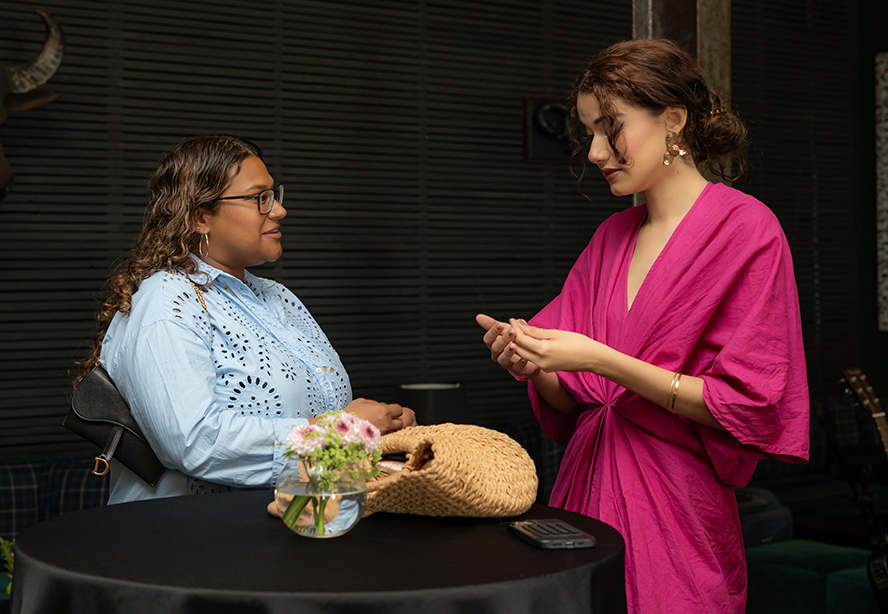
Limited-Time Saturday Brunch at 1864 Limited Edition
The spirit of leisurely weekend dining came alive recently as La Sérénité Saturday Brunch unfolded in elegant style at 1864 Limited Edition at the iconic Galle Face Hotel.Set against the timeless charm of Colombo’s most historic seaside hotel. guests were treated to an indulgent culinary afternoon where sophistication, flavour and oceanfront glamour blended seamlessly.
The heritage charm of Galle Face Hotel, with its polished floors, high ceilings and whisper of history, created a backdrop that is both grand and intimate.Within this setting the brunch emerges not just as a culinary offering but as a carefully orchestrated experience. At the heart of this orchestration was the vision of the General Manager Suresh Abbas. A veteran in the hotel industry, under his leadership, the culinary team delivered a menu for selected invitees, a menu that balanced European finess with contemporary flair .
From gourmet seafood and international delicacies to locally inspired creations and decadent desserts, the spread offered a luxurious journey for discerning brunch lovers.
The GM’s influence is most visible in the intangible details, The curated menu, personalised service and elegant ambience all echoed the hotel’s dedication to offering memorable gastronic experience.The brunch remained international in character while still grounded in place.
La Sérénité, a thoughtfully conceived brunch experience, at 1864 Limited Edition, brings together a sense of calm, continuity, and culinary storytelling within one of the city’s most enduring landmarks.
Set against the pace of a restless world, La Sérénité is designed as a quiet counterpoint, an invitation to pause, to gather, and to ease into the weekend with intention. Since 1864, Galle Face Hotel has existed within this paradox, offering a sense of stillness and reassurance even as the world around it has continually evolved. This brunch extends that legacy, creating a space where time softens, conversation flows unhurriedly, and presence takes precedence.
At its core, La Sérénité is not only about the experience of slowing down, but also about the stories we return to through food. The menu is conceived as a subtle journey through culinary history, drawing from moments across continents and generations, where dishes have been shaped by instinct, refinement, and time.
There is a quiet familiarity in this approach. Classics are not reimagined for novelty, but carefully refined, preserving their essence while elevating their form. The experience moves between contrast and balance, simplicity and indulgence, tradition and gentle reinterpretation. In doing so, it offers something both recognised and rediscovered.
In this way, La Sérénité becomes more than a brunch. It is a curated timeline of taste, an experience that brings together memory, familiarity, and thoughtful refinement within a setting that invites calm.
Presented as a limited-time experience, La Sérénité commenced on 2nd May and takes place every Saturday at 1864 Limited Edition.
-
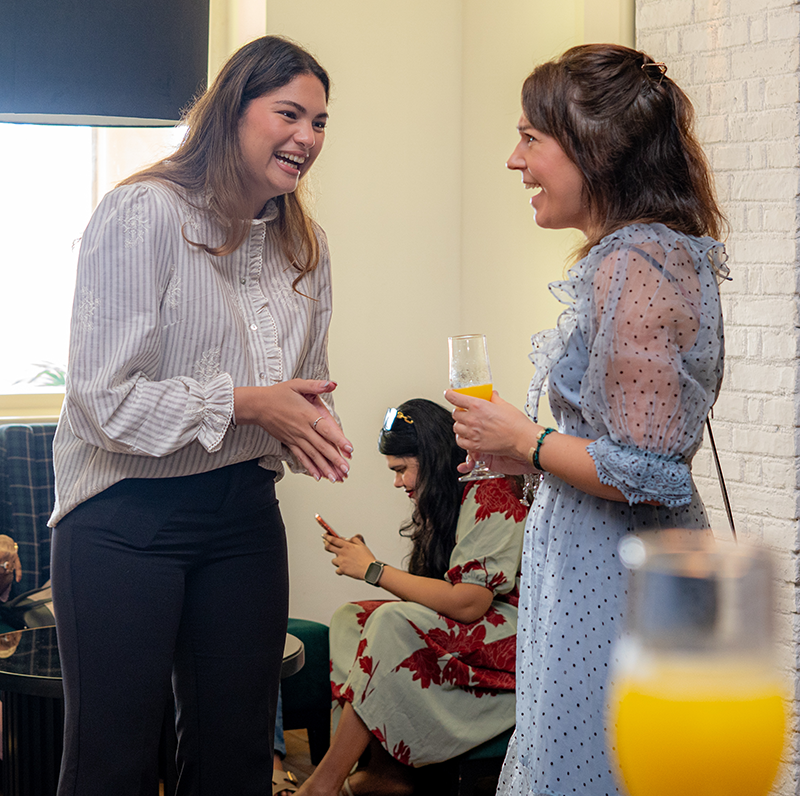
- Sheana Gardiner – where guests become part of the experience
-
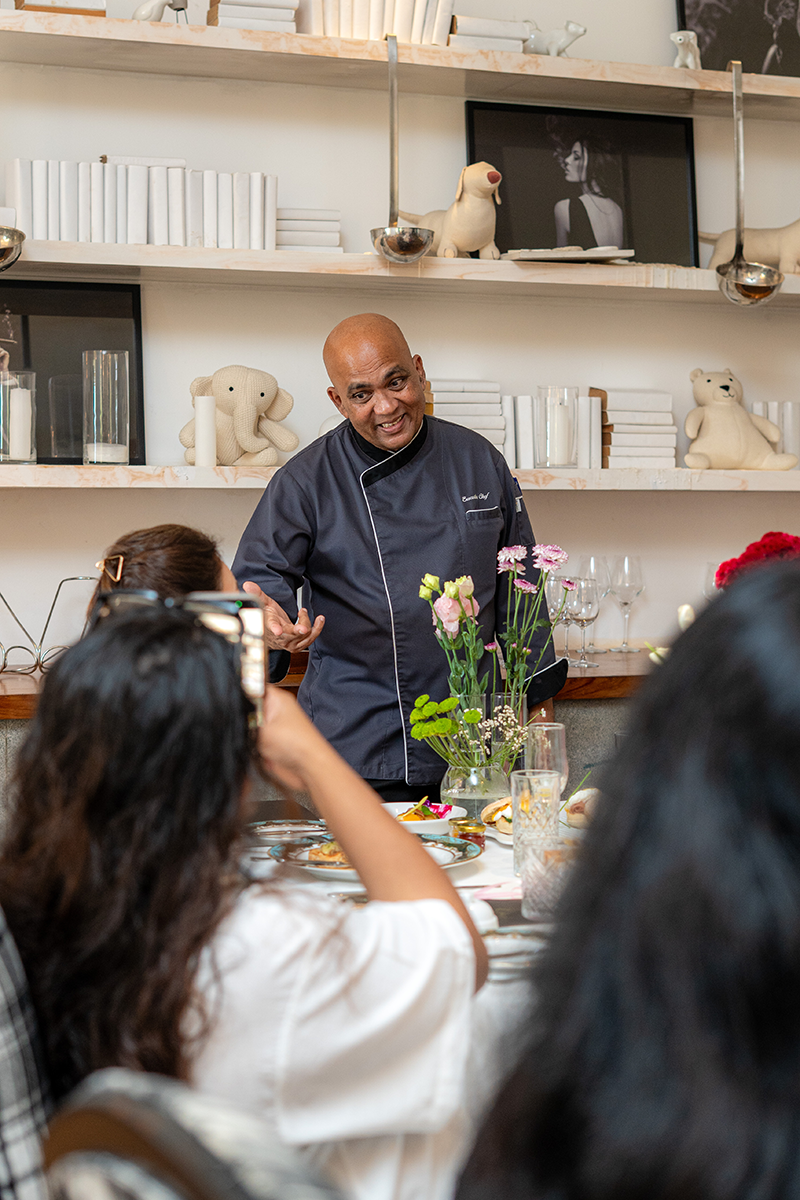
- Chef curating best menu
-
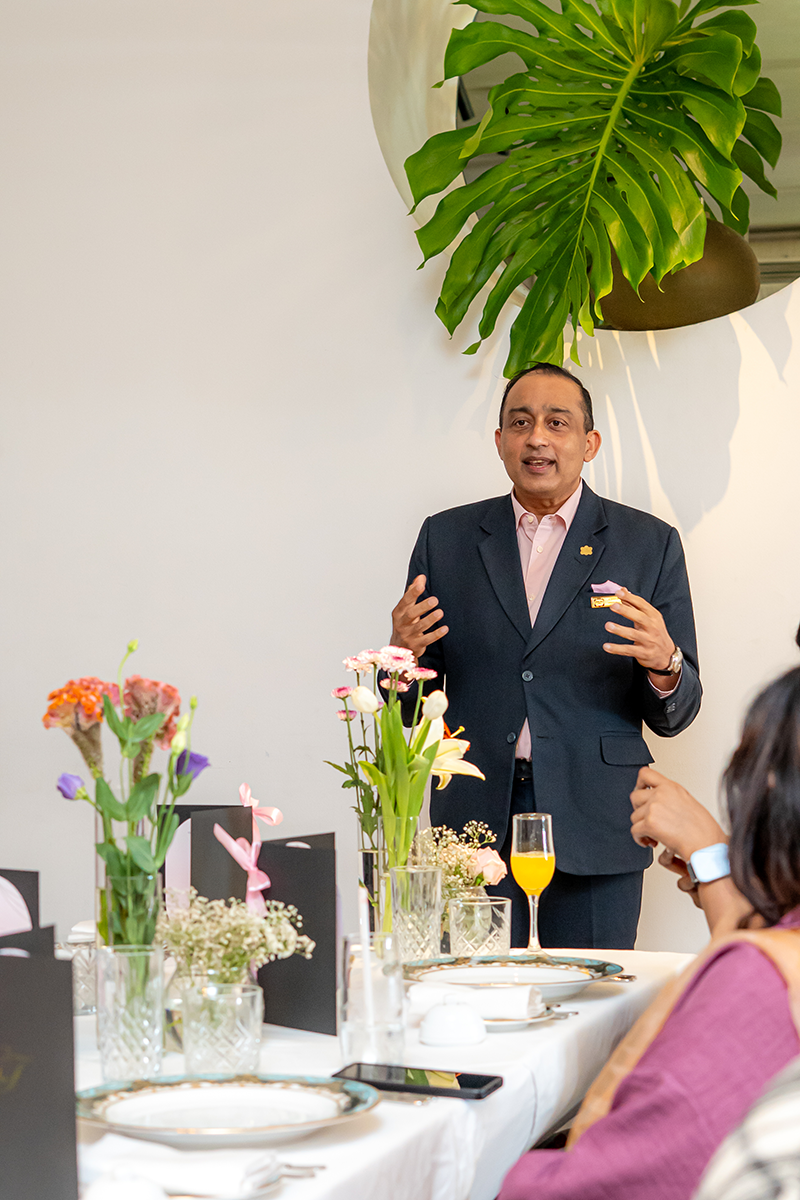
- GM’s vision in every detail
-
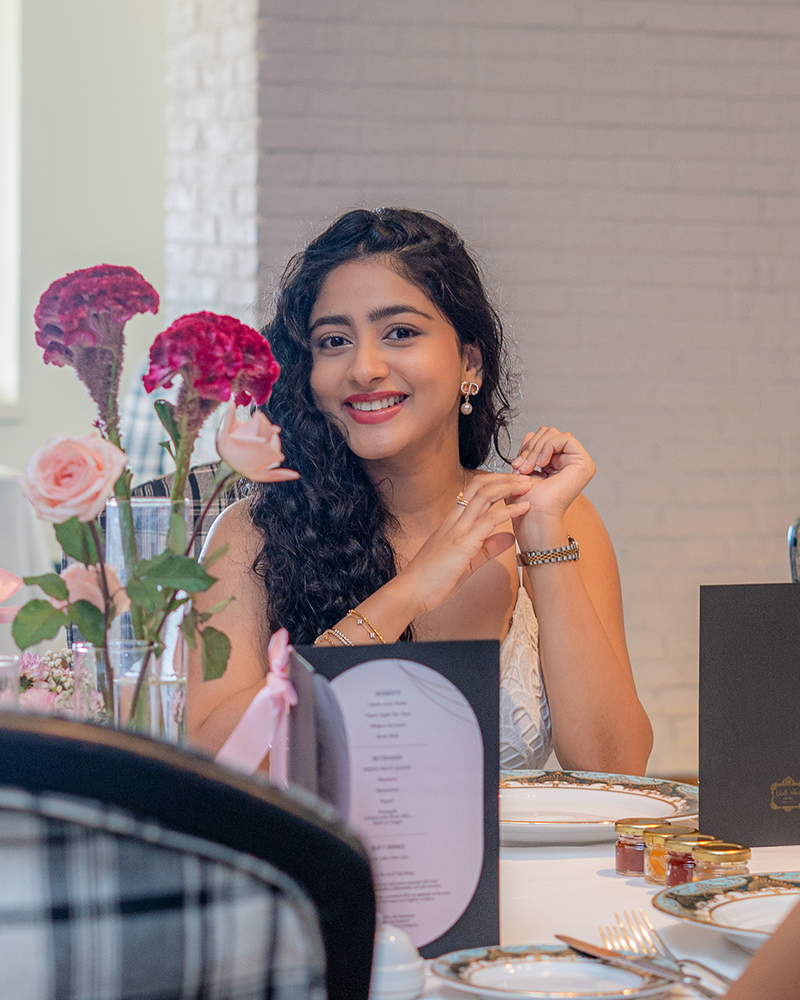
- Young invitee embracing timeless hospitality
-
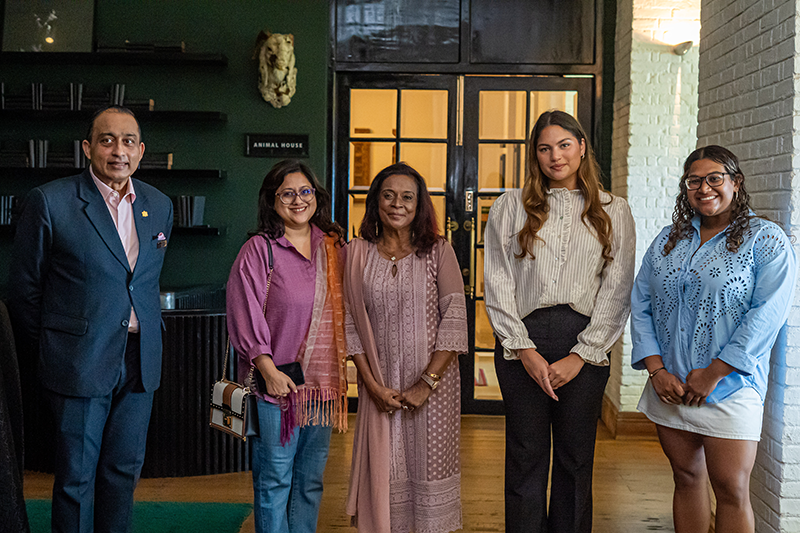
- Smiles, conversations, and exquisite plates … La Serenite brings people together

Complete all projects funded under the LKR. 500 bllion allocation for Ditwah within this year – President

Development projects should be carried out in line with the practical needs of the people – PM

Ayesha Zafar’s rapid ton crushes Zimbabwe

Donald Trump lands in China for high-stakes meeting with Xi Jinping

Gujarat Titans go No.1 after Rabada and Holder rout Sunrisers Hyderabad

Showers will occur in the Western, Sabaragamuwa, Central, North-western and Northern provinces and in Anuradhapura, Trincomalee, Galle and Matara districts

‘Dates have the highest sugar content to fight Coronavirus’

Sunday Island 27 December – Headlines

#SundayIsland 17th December – Headlines

Sunday Island – 28th March

Sunday Island Headlines – 21 March

Sunday Island – 21st February – Headlines
-

 News7 days ago
MIT expert warns of catastrophic consequences of USD 2.5 mn Treasury heist
-

 News4 days ago
Lanka Port City officials to meet investors in Dubai
-

 Editorial7 days ago
Clean Sri Lanka and dirty politics
-
 News17 hours ago
Ex-SriLankan CEO’s death: Controversy surrounds execution of bail bond
-

 Editorial6 days ago
The Vijay factor
-

 News5 days ago
SLPP expresses concern over death of former SriLankan CEO
-

 News5 days ago
Police inform Fort Magistrate’s Court of finding ex-CEO of SriLankan dead under suspicious circumstances
-

 Features6 days ago
Palm leaf manuscripts of Sri Lanka – 1