
News
National Security House Committee head asks why Diaspora doesn’t want India and TNA investigated

By Shamindra Ferdinando
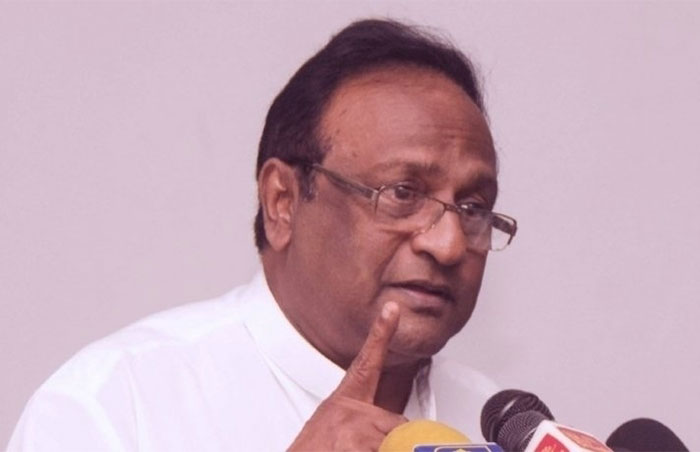
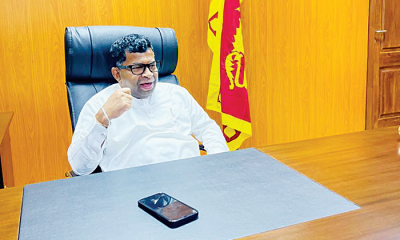
Chairman of the Sectoral Oversight Committee on National Security, Rear Admiral (retd.) Sarath Weerasekera, MP, yesterday (15) asked whether a comprehensive international investigation into accountability issues here could be conducted unless India, too, was subjected to the same.
The former Public Security Minister was responding to the Global Tamil Forum (GTF) declaration that India and Sri Lanka Core Group at the ongoing 54 session of the UN Human Rights Council in Geneva, emphasised Sri Lanka’s continuing failure to fulfil its own commitments to justice and accountability. The Core Group consists of the US, the UK, Canada, North Macedonia, Malawi and Montenegro.
The Colombo District lawmaker said that the bone of contention seems to be whether the killings in the Northern and Eastern Provinces, during the deployment of the Indian military (July 1987-March 1990), and seaborne PLOTE (People’s Liberation Organization of Tamil Eelam) raid on the Maldives, in Nov, 1988, too, should be investigated.
The GTF, in a statement issued from the UK, declared its support for an international investigation as demanded by senior Opposition political leaders and the Catholic Church in Sri Lanka. The UK-based GTF also welcomed the latest report on Sri Lanka by the Human Rights Commissioner.
Acknowledging the death of nearly 1,500 Indian officers and men, and the assassination of former Premier Rajiv Gandhi, MP Weerasekera said that those demanding accountability on the part of Sri Lanka should explain their stand on
India’s culpability, as well as the Tamil National Alliance (TNA) that served the LTTE until the very end, having declared Velupillai Prabhakaran as the sole representative of the Tamil-speaking people. The Sri Lanka Army lost approximately 23,500 officers and men whereas the Navy, Air Force, Police, including the STF, lost about 4,000 personnel.
Weerasekera, who retired in 2006 after having served the Navy for over three decades, said that interested parties had raised unsubstantiated war crimes allegations in the wake of the UK television station Channel 4 claim that SLPP presidential election candidate Gotabaya Rajapaksa’s camp engineered the 2019 Easter Sunday carnage to facilitate the former Defence Secretary’s victory.
The former Minister was responding to the GTF declaration that near simultaneous attacks were meant to cause what the Diaspora grouping called a sense of insecurity and blatant communalism needed for the Rajapaksas to recapture power.
Referring to the 2019 Easter Sunday carnage, the GTF alleged that the deterioration in inter-communal relations were often viewed as an acceptable price for acceding to political power. This appalling culture was built on the unshakable confidence that the Sri Lankan judicial system would never be able to deliver truth or justice, the group added.
The Chairman of the Sectoral Oversight Committee said that as the close relationship between the GTF and the TNA that had been formed in 2009, the year the LTTE was brought down to its knees is well known, it would be pertinent to ask them for an explanation regarding their backing war-winning Army Chief General Sarath Fonseka’a candidature at 2010 presidential election after accusing him and his forces of committing war crimes.
The MP pointed out that following the 2004 general election, the EU Election Monitoring Mission declared that the TNA secured over 20 seats in the Northern and Eastern Provinces with the help of the LTTE to stuff ballot boxes in the areas it controlled. Having benefited from its relationship with the LTTE, the TNA threw its weight behind the UNP-JVP-SLMC coalition that fielded Fonseka who handsomely won all Northern and Eastern districts because the Tamil speaking community was relieved by the eradication of the LTTE.
The SLN veteran urged all political parties, represented in Parliament, to use the two-day debate, scheduled for next week, on the 2019 Easter Sunday attacks and national security, to engage in a meaningful discussion.
Weerasekera said that a thorough inquiry was definitely needed to establish the number of deaths, due to the conflict. The recent disclosure that Mohamed Mihlar, the father of C4 whistle-blower Mohamed Mihlar Mohamed Hanzeer aka Moulana, had been killed in Chennai, India, along with 12 others of the EPRLF, underscored the need to ascertain the number of victims, MP Weerasekera said.
Noting that incumbent TNA MP Dharlamingham Siddharthan (Vanni) had declared years ago that his father V. Dharmalingam and his parliamentary colleague M. Alalasundaram, both Jaffna District MPs of the now defunct TULF, were killed by TELO (Tamil Eelam Liberation Organization), in early Sept. 1985, at the behest of India’s premier intelligence service, RAW, MP Weerasekera called for no holds barred investigation. The MP said that accountability issues couldn’t be resolved until those concerned established the number of people killed in India due to clashes among Tamil groups, the number killed by India, after the assassination of Rajiv Gandhi, deaths due to raid on the Maldives, and Indian Navy action against PLOTE cadres fleeing that country in a commandeered ship, those killed as a result of fighting among Tamil groups here, those caught in crossfire between the LTTE and the Indian military, and finally those killed during fighting between Sri Lankan forces and terrorists. The victims of LTTE massacres and the number of child soldiers should be counted separately, the ex-Minister said, urging the GTF to acknowledge the number of LTTE cadres killed during the three decades long conflict.
Their latest statement at least failed to indicate that there had been two wars – one between LTTE and Indian military and other between LTTE and Sri Lankan military, the former Minister said. Weerasekera found fault with successive governments for failing to set the record straight.








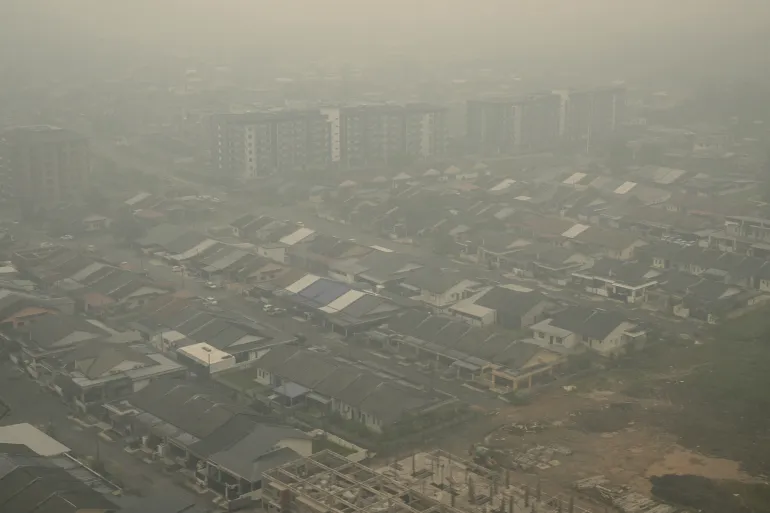
Malaysia has declared a state of emergency in a district in Sarawak state after haze caused by wildfires in neighbouring Indonesia increased air pollution to “hazardous” levels.
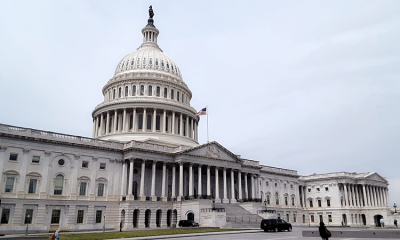
King Sultan Ibrahim “has consented to the declaration of emergency throughout Serian Division, Sarawak, following haze conditions that have reached air pollution levels hazardous to public health and safety”, Prime Minister Anwar Ibrahim’s office said in a statement on Thursday.
The declaration followed a formal request from the Sarawak Disaster Management Committee after the region’s Air Pollutant Index reached levels warranting consideration of a local emergency.
Under the order, 647 schools in Serian will close from Monday until at least the end of next week, alongside government and private offices, plantations, construction sites and quarries, with only essential services continuing to operate.
The state’s disaster management authorities said a three-day cloud-seeding operation launched on Thursday would be extended to at least Monday, citing forecasts of “more conducive cloud formations” during that period.
Sarawak State Disaster Management Committee chairman Douglas Uggah Embas, speaking at a news conference in Kuching, stressed that the emergency applied only to Serian, not the entire state, but urged residents there to take the situation seriously.
“Please minimise outdoor activities and avoid strenuous activities outdoors,” he said.
Sarawak, in the northern part of Borneo island, has been heavily affected by haze for weeks, as have the neighbouring states of Sabah and Peninsular Malaysia.
(Aljazeera)
Latest News
Sun directly overhead Moratuwa, Kesbewa, Handapangoda, Idalgashinna, Yudhaganawa, Kotiyagala and Panama about 12.08 noon today (05)


The sun is going to be directly over the latitudes of Sri Lanka from 28th of August to 07th of September due to its apparent southward relative motion.
The nearest places of Sri Lanka over which the sun is
overhead today (05) are Moratuwa, Kesbewa, Handapangoda, Idalgashinna, Yudhaganawa, Kotiyagala and Panama about 12.08 noon
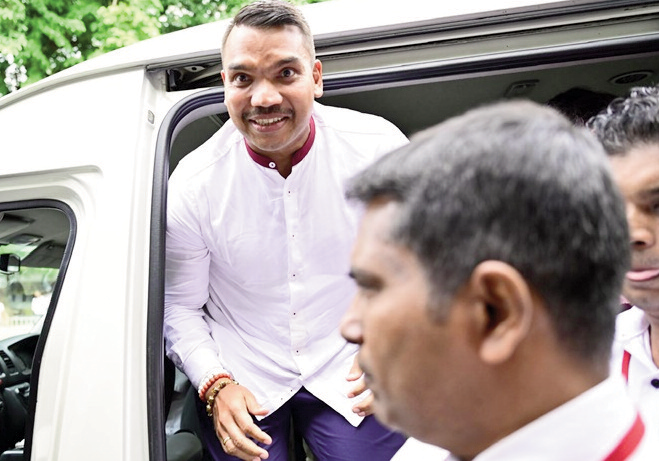
Sri Lanka Podujana Peramuna (SLPP) National Organiser and Parliamentarian Namal Rajapaksa was yesterday remanded until September 18 by the Colombo Chief Magistrate’s Court following his arrest by the Commission to Investigate Allegations of Bribery or Corruption (CIABOC) in connection with an investigation into the controversial SriLankan Airlines Airbus aircraft transaction.
Rajapaksa appeared before the CIABOC at around 9.15 am yesterday to record a statement after being summoned over the transaction. He was taken into custody following several hours of questioning and subsequently produced before the Colombo Chief Magistrate.
The investigation centres on allegations surrounding the acquisition of six Airbus A330 and eight A350 aircraft by SriLankan Airlines in 2013, in connection with an alleged USD 2 million bribe.
Former SriLankan Airlines Chief Executive Officer Kapila Chandrasena and his wife, Priyanka Niyomali Wijenayake, had previously been named in connection with the alleged bribery.
Chandrasena was arrested on March 12 as part of an investigation launched by the CIABOC under the Anti-Corruption Act and was subsequently released on bail. He was later found dead on May 8 while on bail, with police suspecting that his death was a suicide.
Open warrants have been issued for the arrest of Wijenayake, who is named as the second suspect, and Shamindra Rajapaksa, named as the third suspect, in the case pending before the Fort Magistrate’s Court in connection with the Airbus transaction.
The investigation has also received assistance from Airbus, with a delegation from the company’s parent group in France visiting Sri Lanka during the first week of August. The delegation provided statements and other assistance to the CIABOC as part of the ongoing inquiry.
Rajapaksa’s arrest and remand yesterday mark a further development in the widening investigation into the controversial aircraft deal.

Malaysia declares emergency in Sarawak as haze from Indonesia worsens

UAE keep semi-final hopes alive after convincing win over Indonesia

Sun directly overhead Moratuwa, Kesbewa, Handapangoda, Idalgashinna, Yudhaganawa, Kotiyagala and Panama about 12.08 noon today (05)

Showers above 75 mm are likely at some places in the Uva, Central and Eastern provinces and in Polonnaruwa and Mullaittivu districts after 2.00 p.m

Namal remanded until Sept. 18 over Airbus deal investigation

Dengue cases surpass 96,000 this year

‘Dates have the highest sugar content to fight Coronavirus’

Sunday Island 27 December – Headlines

#SundayIsland 17th December – Headlines

Sunday Island – 28th March

Sunday Island Headlines – 21 March

Sunday Island – 21st February – Headlines
-

 Features7 days ago
“Wrap Me Up in My Blazer”— A Gentlemanly Bradby Reminiscence
-

 Features6 days ago
When Sri Lankan stories find their own voice
-
 Features7 days ago
JVP/NPP government as seen from outside by Lionel Bopage now domiciled in Australia
-
 News6 days ago
BASL takes exception to Justice Ganepola being denied a place in SC
-
 Features7 days ago
Prof. Savitri Goonesekere: What has she done?
-

 News3 days ago
Denied of promotion to SC despite vacancies, justice Gurusinghe retires
-

 Latest News3 days ago
Grade 5 scholarship exam results released
-

 News3 days ago
22A: SC urged to suspend hearing, appoint full bench