
News
Ranawaka frowns on amnesty to 12,000 Tiger cadres, endorses C4 allegations

‘Ram and Nagulan responsible for over 600 killings roaming free’
By Shamindra Ferdinando
Sri Lanka Republican Front leader Patali Champika Ranawaka, MP, has questioned the circumstances under which the Rajapaksas granted amnesty to 12,600 LTTE cadres following the successful conclusion of the war in May 2009. However, some of them were released during the Yahapalana administration (2015-2019) in which Ranawaka served as a Cabinet Minister.
Ranawaka has also sought an explanation from former President Mahinda Rajapaksa and his brothers, Gotabaya and Basil as to how they freed Kumaran Pathmanathan (better known as KP), the self-proclaimed successor of LTTE leader Velupillai Prabhakaran, Vinayagamurthy Muralitharan aka Karuna, Sivanesathurai Chandrakanthan alias Pilleyan and two killers known as Ram and Nagulan.
‘KP’ lives here under military protection whereas Pilleyan, leader of YMVP (Tamil Makkal Viduthalai Pulikal) serves the Wickremesinghe-Rajapaksa government as State Minister of Rural Road Development.
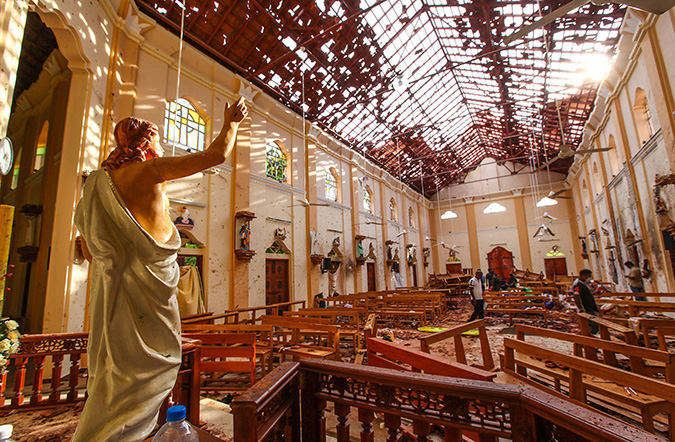
Ranawaka, who was also member of President Mahinda Rajapaksa’s Cabinet, from 2010 to 2014, asked the Rajapaksas to explain their understanding with the LTTE. He raised a spate of issues, including the general amnesty granted to the defeated LTTE, and special treatment meted out to a selected group of LTTE personnel, at a media briefing held over the weekend at the Narahenpita party office. The Opposition MP briefed the media in the wake of British television Channel 4 alleging complicity of the Rajapaksas and breakaway LTTE faction TMVP in the 2019 Easter Sunday carnage and other high-profile cases, including the assassination of Sunday Leader Editor Lasantha Wickrematunga, in January 2009.
MP Ranawaka pointed out that the C4 documentary had been based on disclosure made by Hanzeer Azad Maulana, one-time close associate of Pilleyan.The former PHU heavyweight said that the amnesty granted to ‘KP’ should be examined against the backdrop of his alleged involvement in the assassination of Rajiv Gandhi in May 1991.
Alleging that C4, as well as the BBC, over the years, directed unsubstantiated war crimes accusations, MP Ranawaka said that an attempt was being made to deceive the population that the Rajapaksas were the target of the latest C4 documentary that dealt with the situation here since 2005.
MP Ranawaka recalled the Public Security Minister Tiran Alles’s confession years ago regarding payment made to the LTTE to influence the group to order Tamil speaking people in the North and East to boycott the 2005 presidential election.
People’s Alliance candidate Mahinda Rajapaksa defeated the UNP candidate Ranil Wickremesinghe by 186,000 votes at the 2005 presidential election.Alleging that Ram and Nagulan had spearheaded attacks that claimed the lives of over 600 persons in Hambantota, Panama, Ampara and Moneragala during the conflict, MP Ranawaka said that a future government, consisting of his party, would initiate legal action against those responsible for the heinous crimes.
Referring to Mahinda Rajapaksa’s disclosure after the change of government at the Gatambe Rajopawanaramaye that a group of Muslim extremists had been provided protection by his government, MP Ranawaka stressed that the Rajapaksa brothers (Mahinda and Gotabaya) former Chief of National Intelligence (CNI) Maj. Gen. Kapila Hendarawithana and head of State Intelligence Service (SIS) owed an explanation to the public in this regard.
MP Ranawaka asked who continued with the relationship with those who fought for the LTTE 15 years after the eradication of their conventional military capability. Commenting further on the C4 documentary, Ranawaka pointed out that the government should be mindful of the disclosure that the Geneva-based UNHRC and unnamed European intelligence services gained access to Pilleyan’s aide Moulana. The former minister said that Inspector Nishantha Silva of the CID had avoided the fate befallen on former Director, CID, Shanie Abeysekera by fleeing the country. MP Ranawaka declared that the Inspector’s statement pertaining to Sunday Leader Editor Lasantha Wickrematunga’s assassination was now before the UNHRC. Inspector Silva secured political asylum in Switzerland immediately after the last presidential election.
Ranawaka said that Moulana’s allegations should be examined taking into consideration submissions made by former Senior DIG, CID, Ravi Seneviratne and SSP Shanie Abeysekara pertaining to the Easter Sunday carnage to the Supreme Court.
The ex-minister asked the Rajapaksas to explain how they had received the backing of the National Thowheed Jamaat (NTJ) at the 2019 presidential election. MP Ranawaka endorsed Moulana’s accusations pertaining to several incidents in the run-up to the Easter Sunday massacre. They include the killing of two policemen at a checkpoint at Vavnathivu, Batticaloa, on 30 Nov., 2018. MP Ranawaka claimed that he, too, was on the NTJ hit list. Alleging that the Rajapaksas had unashamedly manipulated all communities to win the 2019 presidential poll, MP Ranawaka said that 6.9 mn votes polled by Gotabaya Rajapaksa had not reflected the real public sentiment.







News
Sun directly overhead Galle, Angulugaha, Imaduwa, Telijjawila, Yatiyana and Tangalle about 12.08 noon today (07)


The sun is going to be directly over the latitudes of Sri Lanka from 28th of August to 07th of September due to its apparent southward relative motion.
The nearest places of Sri Lanka over which the sun is overhead today (07) are Galle, Angulugaha, Imaduwa, Telijjawila, Yatiyana and Tangalle about 12.08 noon.
By Norman Palihawadane
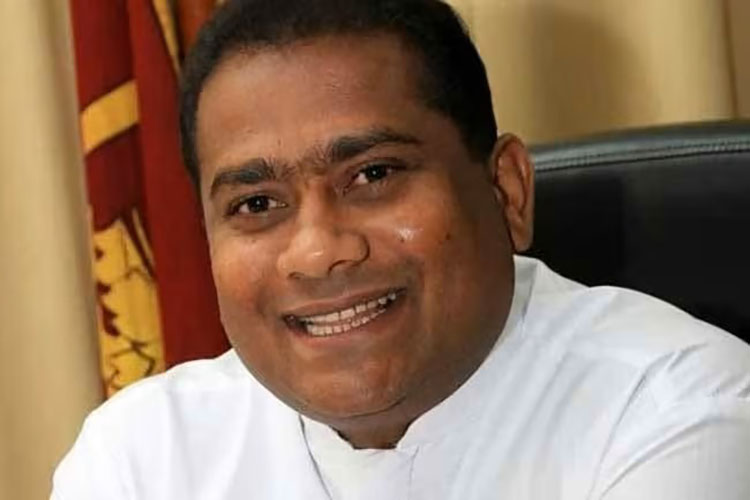
The CID recently found that former SLPP Deputy Minister Premalal Jayasekara, better known as ‘Choka Malli’, had left for Thailand when the Supreme Court imposed an overseas travel ban on him last Friday.
The CID discovered that Jayasekara had left Sri Lanka on August 31, while authorities were taking steps to enforce the travel restriction imposed by the Supreme Court. The Department has subsequently informed the Attorney General’s Department of the development.
The Supreme Court last Friday ordered Jayasekara, and two other men, to appear before court on October 21, and imposed a ban on their overseas travel.
The orders were made as the Supreme Court considered an appeal challenging the acquittal of the three men in connection with the 2015 murder of Shantha Dodangoda, also known as D.G. Sunil Perera.
The appeal was filed by Dodangoda’s wife against a decision of the Court of Appeal to acquit and release Jayasekara and the two other accused, who had previously been convicted and sentenced to death by the Ratnapura High Court.
Dodangoda was killed in a shooting in Kahawatta town, in the early hours of January 5, 2015, while a group of people were putting up decorations for an election rally in support of then common Opposition presidential candidate Maithripala Sirisena.
Two others, Karunadasa Weerasinghe and Mohamed Ilfan, were seriously injured in the shooting.
Following the incident, the Ratnapura High Court convicted Jayasekara, former Chairman of the Kahawatta Pradeshiya Sabha Wajira Darshana de Silva, and former Sabaragamuwa Provincial Council member Nilanta Jayakody, sentencing all three to death.
The Court of Appeal subsequently acquitted the three men and ordered their release.
The victim’s wife later challenged the acquittal before the Supreme Court.
The appeal was taken up before a Supreme Court bench, comprising Justice Preethi Padman Surasena and Justices Achala Wengappuli and Gihan Kulatunga.
During the proceedings, Deputy Solicitor General Janaka Bandara requested that the court impose overseas travel restrictions on Jayasekara and the other respondents.
The Supreme Court subsequently ordered all three to appear before the court on October 21 and imposed travel bans on them.
President’s Counsel Nalin Ladduwahetty, President’s Counsel U.R. de Silva and President’s Counsel Anuja Premaratne appeared for the respondents. President’s Counsel Saliya Peiris represented the aggrieved party.
Police sources said that the discovery that Jayasekara had already left for Thailand, on August 31, has raised concerns over the timing and enforcement of the travel ban.
Sources said that the CID had notified the Attorney General’s Department and was taking further action in relation to the development.
By Pradeep Prasanna Samarakoon
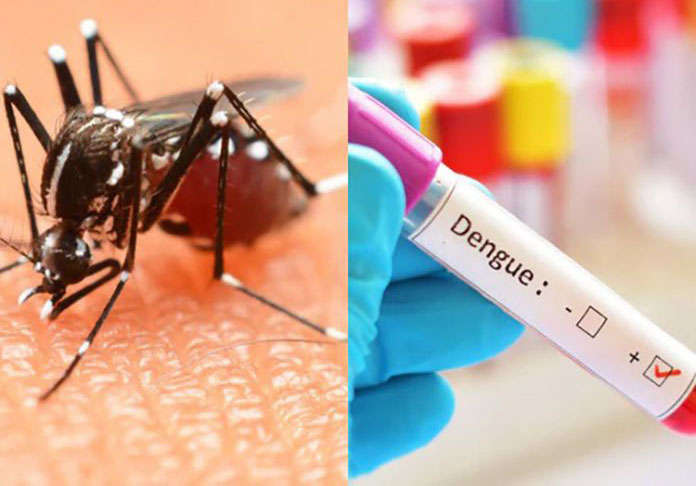
The number of deaths from dengue fever in Sri Lanka has risen to 73 this year, with 96,228 cases reported across the country so far, according to the Dengue Control Unit.
The latest figures indicate that dengue continues to pose a significant public health concern, with 737 new cases recorded during the first four days of September alone.
Dengue infections peaked in July, when 29,964 cases were reported, according to the latest data. June recorded the second-highest monthly total, with 21,533 cases, while 10,155 cases were reported in August.
Earlier in the year, 8,590 cases were recorded in May and 7,866 cases in January.The Western Province remains the worst-affected area, accounting for more than half of all dengue cases reported nationwide. A total of 50,851 cases have been recorded in the province, representing 52.84% of the country’s total.
The Southern Province has recorded 13,950 cases, followed by the Central Province with 8,818 cases and Sabaragamuwa Province with 7,925 cases.

Sun directly overhead Galle, Angulugaha, Imaduwa, Telijjawila, Yatiyana and Tangalle about 12.08 noon today (07)

Showers above 50 mm are likely at some places in the Uva and Eastern provinces.

Harshitha’s composed knock seals Sri Lanka’s semi-final berth

‘Choka Malli’ slips out of country before travel ban

Dengue death toll rises to 73

Ranil accuses govt. of undermining democracy

‘Dates have the highest sugar content to fight Coronavirus’

Sunday Island 27 December – Headlines

#SundayIsland 17th December – Headlines

Sunday Island – 28th March

Sunday Island Headlines – 21 March

Sunday Island – 21st February – Headlines
-

 News4 days ago
Denied of promotion to SC despite vacancies, justice Gurusinghe retires
-

 Latest News5 days ago
Grade 5 scholarship exam results released
-

 News4 days ago
22A: SC urged to suspend hearing, appoint full bench
-

 Midweek Review5 days ago
The local and global dynamics of Sri Lanka’s 22nd Amendment
-
 News4 days ago
Govt. seeks NATO assistance
-

 News2 days ago
Namal remanded until Sept. 18 over Airbus deal investigation
-

 News5 days ago
40 professional organisations and TU oppose proposed 22A
-

 News5 days ago
Ai-CHA expands Lankan footprint with new Negombo outlet