
News
Hakeem raises conundrum, but says SLMC will submit some proposals for ethnic reconciliation


By Rathindra Kuruwita
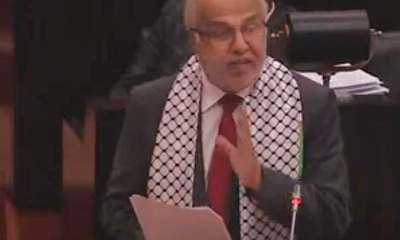
Sri Lanka Muslim Congress (SLMC) has discussed a request made by President Ranil Wickremesinghe for proposals for ethnic reconciliation and will hand over some proposals before 15 August, the deadline for submitting these proposals, SLMC leader, MP Rauff Hakeem said on Wednesday.
During an All-Party Conference (APC), organised by President Wickremesinghe on 26 July, he presented political parties with a 14-page document on issues of reconciliation that he has identified and his proposals to address them, Hakeem said.
“However, this document did not have solutions to the problems faced by Muslims. The President gave a long explanation on reconciliation, the proposed Anti-Terrorism Act, about land issues, about 13A, etc. Ultimately, the discussion ended with him walking out. I don’t know what the President’s intentions were, but I am not sure if anything came out of the APC,” he said.
Hakeem said that during the APC, Tamil National Alliance (TNA) MP, M.A. Sumanthiran started talking about the importance of holding Provincial Council elections. The TNA MP told the President that Provincial Council elections have not been held for almost five years, that they could be held with a small amendment to the laws, and that there was no point in talking about devolving power without holding Provincial Council elections.
“Sumanthiran said let’s hold elections and we can continue the discussion on devolving power and reconciliation. However, the President became agitated when the topic of elections came up. He doesn’t like to talk about elections; this was obvious to us. The President repeated that elections could be held later. Wickremesinghe said police powers can’t be given to provinces. He wanted to talk about devolving other powers to the provinces. Of course, the TNA can’t just agree to let go of police powers, and they are not bound to give answers that please the President. The President took the TNA response as a hostile gesture, got up, and walked off,” Hakeem said.
Hakeem said that Muslims were not happy about the merger of the North and East. What was to be a temporary merger ended up being a long-standing one, he said. This adversely affected Muslims in many ways, he said.
“Now the East is separate, and Muslims can try to secure power in the province. We were able to hold the post of Chief Minister once. Devolving power is important, but there are many other problems with the administrative structure. Because of that, there are many disagreements between Tamil leaders and us,” he said.
Hakeem said that parts of Polonnaruwa and Batticaloa districts were attached to the Ampara district several decades ago, and that changed the ethnic composition in the Ampara district.
“A Sinhalese district secretary is never appointed to Batticaloa or Jaffna. In Ampara and Trincomalee the majority community is Muslim, but we never get a Muslim district secretary. We would be really happy if the district secretaries were Muslim in these areas.About 50 percent of the population in the Ampara district live in Pottuvil, Samanthurai and Kalmunai, the SLMC leader said. 95 percent of those living in the three areas are Tamil speakers, he said.




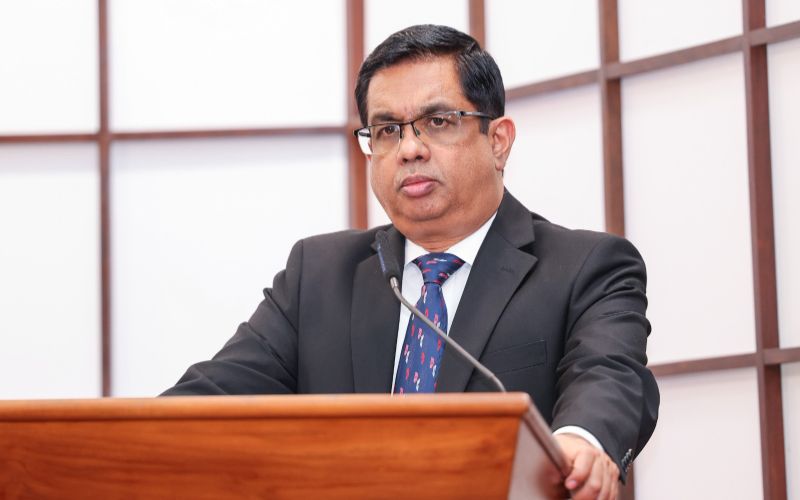
The Memorandum of Understanding (MoU) relating to the project to provide technological solutions to prevent wild elephants from being hit by trains was signed yesterday (01) afternoon at the President’s Media Centre, under the patronage of Secretary to the President Dr Nandika Sanath Kumanayake.
Coordinated through the “Clean Sri Lanka” programme, the project is being implemented as a public-private partnership, with the Railway Department, the Department of Wildlife Conservation and the Forest Conservation Department working together, with full financial support from People’s Bank.
The system consists of three-beam detection, passive infrared (PIR) sensors, automatic temperature sensors and a tamper alarm system to detect animals weighing more than 20 kilogrammes and unauthorised interference. Signal lights (red/yellow/green) installed on either side of the railway tracks, together with a special screen installed inside the locomotive cab, will alert the driver in advance to the exact location of an elephant.
A demonstration test of the system was successfully conducted at the Pinnawala Elephant Orphanage premises in the presence of the relevant officials, following which a report on the system was prepared.
The system will be implemented as a pilot project from next month at 13 locations where wild elephant accidents are frequent. A newly developed website is also scheduled to be launched to enable the progress of the project to be viewed live.
Additional General Manager of Railways P.D.S.B. Chandrasena, Director General of Wildlife Conservation M.S.L.R.P. Marasinghe, Conservator General of Forests S.C. Palamakuumbura and Chairman of People’s Bank Chandana Guniyangoda signed the relevant MoU. Officials from the Clean Sri Lanka Secretariat, including Presidential Additional Secretary (Clean Sri Lanka) Engineer S.P.C. Sugeeshwara, as well as senior officials from the Railway Department, Department of Wildlife Conservation, Forest Conservation Department and People’s Bank, were also present.
[President’s Media Division]

The Commissioner General of Examinations has announced that the results of the 2026 Grade 5 Scholarship Examination have been released online, and can be viewed on the department’s official website: www.doenets.lk

Prime Minister Dr. Harini Amarasuriya departed Sri Lanka on Monday, 31 August, to undertake an official visit to Bhutan to participate in the Global Conscious Food Systems Summit, scheduled to be held in Bhutan.
During her visit, Prime Minister Dr Amarasuriya participated in the opening plenary of the Summit on 1 September, where she delivered a keynote address under the theme “Rising to the Moment: Igniting Consciousness to Address the Polycrisis.”
The Prime Minister will also engage in discussions with international leaders and representatives on strengthening cooperation towards sustainable food systems, food security and resilient communities.

[Prime Minister’s Media Division]

MoU signed for technology to prevent wild elephant-train collisions

Grade 5 scholarship exam results released

Prime Minister participates in Global Conscious Food Systems Summit in Bhutan

Bouchier century sets England up for record 282-run chase against Ireland

Muneeba, Pakistan’s spinners knock Thailand out of Asia Cup

Showers will occur in the Western and Sabaragamuwa provinces and in Galle, Matara, Kandy and Nuwara-Eliya districts

‘Dates have the highest sugar content to fight Coronavirus’

Sunday Island 27 December – Headlines

#SundayIsland 17th December – Headlines

Sunday Island – 28th March

Sunday Island Headlines – 21 March

Sunday Island – 21st February – Headlines
-

 News6 days ago
Eight politicians in drug kingpin probe
-

 Features4 days ago
“Wrap Me Up in My Blazer”— A Gentlemanly Bradby Reminiscence
-

 Business6 days ago
Sri Lanka opens up: A new season of direct connectivity
-

 Features6 days ago
Redefining ageing in Sri Lanka
-
 Latest News6 days ago
Nepal-Tibet floods: What happened, what caused them and who is missing?
-

 Features3 days ago
When Sri Lankan stories find their own voice
-

 Editorial7 days ago
Unfolding El Niño and burning issues
-

 Editorial6 days ago
The toxic legacy of two lakes