
Editorial
First things first


Monday 24th July, 2023
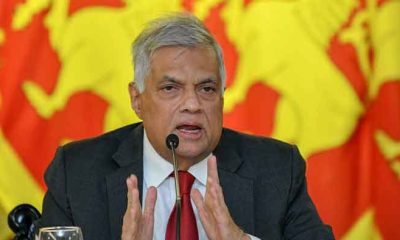
President Ranil Wickremesinghe has returned from New Delhi with a to-do list given by the Modi government. He will have Big Brother breathing down his neck hereafter. It has been reported that the SLPP-UNP government is planning to hold an all-party conference on the ethnic issue. Some of India’s dictates have not been to the liking of the SLPP stalwarts as evident from their whimpers of protest.
President Wickremesinghe had a discussion with the Tamil political parties in Colombo, last week, before leaving for India. The TNA has expressed its displeasure at President Wickremesinghe’s modus operandi and said something uncomplimentary about him. It is seeking New Delhi’s intervention to amp up pressure on Colombo to grant its wishes.
Sri Lanka should be allowed to get its priorities right at this juncture lest its economy should go back into a tailspin, causing untold suffering to all its citizens regardless of their ethnicities or religions.
President Wickremesinghe is performing a high-wire act on the economic front without a political safety net, as it were, and he should not be distracted from this task under any circumstances. Putting the national economy back on an even keel must be Sri Lanka’s No. 01 priority, which should not be subjugated to the interests of Prime Minister Modi, his Rockefeller, Adani, or Tamil Nadu Chief Minister M. K. Stalin.
There is no way India can take the moral high ground and pontificate where Sri Lanka’s ethnic issues are concerned; it cannot absolve itself of the blame for some of Sri Lanka’s never-ending problems, or fault Colombo for not implementing the 13th Amendment fully.
If India, which created, trained and armed Tamil terrorist groups here, had fulfilled its pledge to disarm the LTTE in keeping with the Indo-Lanka Accord, perhaps Sri Lanka’s war would have been over in late 1980s, and tens of thousands of lives and properties worth billions of US dollars could have been saved; there would not have been so much resistance to the full implementation of the 13th Amendment, which India rammed down Sri Lanka’s throat.
Indian Prime Minister Rajiv Gandhi, who, in his wisdom, opted for a Tiger ride, made the same mistake as the lady of Niger, who smiled as she rode on a tiger only to return inside it. This is the price that has to be paid for using terror as an instrument to further geopolitical interests. A proper estimate of Sri Lanka’s losses due to terrorism should be prepared, and we can bet our bottom dollar that they will exceed all the foreign aid this country has received over the past several decades.
That said, India’s economic assistance has stood Sri Lanka in good stead during the current crisis. But for the precious dollars that came from New Delhi, this country would not have been able to procure essentials and end fuel queues, which went out of control, and almost unleashed anarchy. But there is no such thing as a free lunch. India will not be able to prevent Sri Lankans from thinking less of it if it is seen to be compassing its geopolitical ends by taking advantage of this country’s economic crisis.
The Modi government should refrain from bringing undue pressure to bear on Colombo to commit itself to any undertakings that have the potential to cause havoc on the political front and derail the ongoing economic recovery programme.
There is no gainsaying that Sri Lanka’s ethno-religious problems have to be sorted out to forge national unity, but first of all its economy has to be straightened up and political stability consolidated for all other issues to be addressed in a meaningful manner.








Monday 31st August, 2026
It never rains but it pours. While taking a huge political gamble by trying to amend the Constitution to raise the retirement ages of the judges of the Superior Courts and grappling with numerous problems caused by an unfolding El Niño event, the JVP-NPP government has another potential issue to contend with; it is likely to come under intense pressure to grant the public sector employees a substantial pay hike and some tangible relief to other salaried workers.
Sri Lanka ranks 120th out of 130 countries in the latest Visual Capitalist (VC) global minimum wage comparison, based on data from the International Labour Organisation. The VC report puts Sri Lanka’s monthly minimum wage, measured in purchasing-power terms, at the equivalent of USD 200, placing it among the lowest in the world. Sri Lanka also ranks last among the South Asian countries covered by the index. Pakistan ranks 68th with USD 570, followed by Nepal at 78th with USD 490, Bangladesh at 89th with USD 379 and India at 111th with USD 233.
Sri Lanka’s appallingly low ranking in the VC minimum age index could not have come at a worse time for the JVP-NPP government, which is now in the process of preparing Budget 2027. It will prompt the state sector trade unions which have been up in arms against the high cost of living to demand higher pay.
One may recall that among the numerous relief measures the NPP promised the public in the run-up to the 2024 elections were biannual pay hikes for state employees, a 30% power tariff decrease, substantial fuel price reductions, and tax exemptions for essential goods. The NPP leaders said funds would not be a problem because they would eliminate corruption and recover the country’s stolen assets. There is no way the government can claim that it is without adequate funds to meet workers’ demand for pay hikes. Its leaders have been boasting that the Treasury is overflowing with funds. After all, in 2025, President Anura Kumara declared in Parliament that a household would receive as much as one million rupees even if a single roofing sheet had been blown away by Cyclone Ditwah.
Taxes of one kind or another already take a sizeable bite out of household incomes. The government is doing its best to convince the IMF that there is no need for a property tax as the country’s tax revenue has increased significantly. However, whether its efforts will reach fruition remains to be seen. While fighting for power, leftist movements like the JVP frequently project themselves as Robin Hood and his Merry Men, promising to champion the rights of the poor, fight corruption, and redistribute wealth through progressive or “Robin Hood” taxes, but the JVP/NPP, ensconced in power, is behaving like Prince John and the Sheriff of Nottingham, squeezing the taxpayers dry to raise government revenue.
Sri Lankans are facing a double whammy of falling purchasing power and a soaring cost of living. Prices of some essential food items have increased again. Millers exploit farmers and consumers alike with impunity. They make huge profits and buy helicopters and Rolls-Royces while farmers are selling their movable and immovable assets to repay loans and consumers are pawning their valuables as they have no other way of dulling the pangs of hunger, under a government of self-proclaimed Marxists who coined pithy political slogans, such as ‘unta Lamborghini, apita badagini—’Lamborghinis for them and hunger for us’ to muster popular support, while out of power.
Going by World Bank data, Sri Lanka’s poverty rate is likely to remain above 22% through the current year. People are struggling to make ends meet. Needless to say, pecuniary woes have made them extremely unhappy. This fact is borne out by the 2026 World Happiness Report, wherein Nepal ranks 99th, Pakistan 104th, India 116th, Bangladesh 127th and Sri Lanka 134th out of 147 countries. The countries ranked below Sri Lanka are Ethiopia, Comoros, Eswatini, Tanzania, Egypt, the Democratic Republic of the Congo, Lebanon, Yemen, Botswana, Zimbabwe and Afghanistan.
It is said that in ancient Rome, rulers used bread and circuses or panem et circenses to distract people from political problems and loss of freedom. In this country, people are apparently being treated to only circuses to distract them from food issues and serious politico-economic problems. There are frequent arrests, which receive wide publicity, and government politicians bellow rhetoric, vowing to eliminate corruption, while people are demanding relief.
It may be said that when the wolf is at the door, people’s love for a government flies out of the window, as we saw during the SLFP-led United Front government (1970-1977) and the SLPP government (2019-2024). Both those administrations had two-thirds majorities. Huge parliamentary majorities of governments count for nothing when people are struggling to keep their heads above water and their pleas for relief go unheeded.

Politics is more about pure theatre than actual delivery anywhere in the world. This is arguably more so about Sri Lankan politicians, their parties, and successive governments. It is therefore only natural that the incumbent government ensures that maximum possible pollical mileage accrues to it from the repatriation of Sri Lankan criminals arrested overseas. Among the underworld characters brought back here during the past two years or so are several drug kingpins, Shiran Basik being the latest.
Perhaps, it would not have been possible to bring back Basik if he had not filmed some Iranian missile attacks on targets in the United Arab Emirates (UAE) and stored the videos thereof in his mobile phone, drawing the attention of the UAE law enforcement authorities, who arrested him. Nevertheless, Sri Lanka has gained tremendously from his arrest and extradition, for he ran his narcotics operation from Dubai, which has become a haven for Sri Lankan criminals on the run.
Police are investigating alleged links between Basik and a number of prominent politicians, and eight of them are expected to be arrested and questioned as investigators widen their probe into his financial dealings and network of associates, according to media reports. All those who have been in league with criminals must be brought to justice.
Among those who are to be interrogated on their alleged links to Basik include a sitting MP, four former ministers, and at least one of them is said to be a woman. Police are also investigating allegations that Basik provided large sums of money to some politicians during election campaigns. Drug dealers are known to lavish funds on politicians and political parties during elections through various fronts. This may explain why Kudu Lal, who was the main supplier of heroin in Colombo, was allowed to flee the country during the SLFP-led UPFA government in 2010.
The nexus between drug dealers and politicians is only too well known. It has now been revealed that drug barons have invested their black money in films and teledramas. The police have found that Basik had contacts with several artistes and even financed some films and soap operas. This shows how the drug Mafia has spread its tentacles over various fields.
Basik’s beneficiaries are said to include some popular filmmakers-turned-lawmakers, allegedly representing both the ruling party and the Opposition. Responding to allegations levelled against them on social media, two of them have claimed that they were unaware of the actual sources of finance for their films or teledramas. Curiously, they tear into their political opponents, claiming that they have information about the latter’s ill-gotten wealth stashed away in other countries. So, how can these artistes-turned politicians who have allegedly benefited from Basik’s largesse claim that they did not know their benefactors’ identities and backgrounds, just like Pip, the orphan, in Dickens’ Great Expectations. Even if the drug dealers concerned had used fronts to finance or sponsor movies and soap operas, an investigation is called for because the artistes who have benefitted from drug money must be held answerable. Some of these politicians are ardent campaigners for good governance and have embarked on a mission to institutionalise accountability. Let them be urged to set an example to others by surrendering to the police instead of trotting out lame excuses. What they have alleged to have done amounts to money laundering.
Following the assassination of Sarath Ambepitiya, an upright High Court judge, we revealed that Kudu Nauffer, who masterminded the murder, had used a front to sponsor food and beverages served at a judicial officers’ function. A drug dealer, named Shiyam, and his wife, posed as wealthy garment factory owners, before being arrested with a huge stock of heroin in their Ward Place residence, where they had entertained political and business leaders among others. Kudu Lal had himself elected to the Colombo Municipal Council. In 2002, the then IGP T. E. Anandaraja attended a drug dealer’s party in a Colombo hotel. In 2013, a drug dealer obtained a letter from the then Prime Minister D. M. Jayaratne’s office, requesting the Customs to clear some freight containers on a priority basis; the Customs detected 131 kilos of heroin, concealed in one of them. Such is the socio-political clout of drug barons.
One may recall that while Makandure Madush, known as Sri Lanka’s Napoleon of Crime, was operating from overseas, his father died in a road accident. Among the mourners at the funeral of the underworld kingpin’s father were many politicians from both the government and the Opposition. Madush was dominating the underworld at the time, generously helping politicians and artistes, some of whom were arrested with him in Dubai in 2019. He was killed while in police custody. The police claimed an underworld gang had been shot dead in a crossfire. Politicians who had benefited from him must have heaved a sigh of relief.
It is hoped that the police will ensure the safety of Basik and ascertain more information from him about politicians, artistes and others who have benefited from his drug money either directly or indirectly.
Saturday 29th August, 2026
The JVP-NPP government has responded to UN Special Rapporteur on the independence of judges and lawyers, Margaret Satterthwaite’s statement on its move to increase the retirement ages of judges, according to media reports. It has reportedly sought to justify its controversial move by repeating the same old arguments in defence of the 22nd Amendment to the Constitution (22A). Satterthwaite in her statement has warned Sri Lanka that its proposed constitutional amendment to extend superior court retirement ages could undermine judicial independence. One could not agree with her more.
Government politicians and their apologists claim that the Bar Association of Sri Lanka (BASL) and the Opposition have misled the UN, the International Association of Judges, the Commonwealth Lawyers Association, LAWASIA, etc., over 22A. What they should realise is that before issuing statements, these organisations conduct in-depth studies of issues and draw their own conclusions. The fact that they have endorsed the position of the BASL does not mean that they have been misled.
Going by media reports, the government in its response to the UN has muddied the water. It has said the retirement ages of all judges will be extended as part of a broad strategy to expedite the disposal of cases and clear a massive case backlog. But it is obvious that it first sought to increase the retirement age of the SC judges, and when it drew heavy criticism, it sought to mask its real intention by undertaking to extend the retirement age of the CA of judges as well. When its move ran into still more resistance, it proposed to increase the retirement ages of all judges.
What has drawn heavy criticism is not the move to raise the retirement ages of judges as such but the fact that the government has sought to extend the retirement ages of the serving judges of the SC and the CA. Hence so many petitions against 22A. The Judicature (Amendment) Bill, aiming to increase the retirement ages of the High Court judges, District Court judges and Magistrates, has not run into resistance, for they are not specified in the Constitution, much less listed under ‘the Independence of the Judiciary’ unlike those of the SC and CA judges.
The SC has twice articulated or reaffirmed the principle that a constitutional amendment altering the retirement age or period of office of incumbent Supreme Court or Court of Appeal judges would affect judicial independence and engage Article 3, thereby requiring a referendum. The principle was expressly stated in the 2022 Inland Revenue (Amendment) Bill determination and reaffirmed in a subsequent SC judgement. This has been the position of independent legal professionals as well. They have warned that 22A will lead to a conflict of interest on the part of the incumbent judges who are to hear the petitions challenging it. They have rightly argued that 22A has to be placed before the people at a referendum.
The government is doing everything in its power to shift the battle over 22A to the political front, but the issue has now been internationalised, and the hearing of the petitions against 22A will be under intense international scrutiny.
The government may be able to fool some people in this country with its absurd arguments and rhetoric, but there is no way it can dupe the discerning public and the international community into believing its claim that 22A is not tailored to benefit some serving judges and it is aimed at expediting the administration of justice.

Iran attacks US bases in Jordan after US strikes Larak Island

Showers will occur in the Western, North-western and Sabaragamuwa provinces and in Galle, Matara, Kandy and Nuwara-Eliya districts.

Sun directly overhead Neriyakulam, Punewa, Kebithigollewa, Pankulam and Sinhapura at about 12.10 noon today (31)

BASL takes exception to Justice Ganepola being denied a place in SC

Sajith challenges govt. to hold PC polls

Mahendran denies name change allegation

‘Dates have the highest sugar content to fight Coronavirus’

Sunday Island 27 December – Headlines

#SundayIsland 17th December – Headlines

Sunday Island – 28th March

Sunday Island Headlines – 21 March

Sunday Island – 21st February – Headlines
-

 News6 days ago
Missing doctor’s body found in Mahiyanganaya
-
 News6 days ago
Australia declines to release Finance Secy Suriyapperuma’s citizenship details
-
 News6 days ago
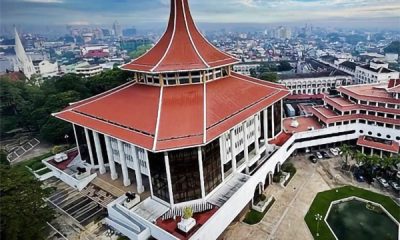
22A: BASL suggests CJ recuse himself from hearing petitions
-

 News3 days ago
Eight politicians in drug kingpin probe
-

 Features1 day ago
“Wrap Me Up in My Blazer”— A Gentlemanly Bradby Reminiscence
-

 Business3 days ago
Sri Lanka opens up: A new season of direct connectivity
-

 Features3 days ago
Redefining ageing in Sri Lanka
-
 Features5 days ago
Insights from Chieftains of Uva: Genealogy of two Kandyan Families – Part II