
Editorial
Corrupt vs Corrupt


Friday 10th April, 2026
A motion of no confidence against Energy Minister Kumara Jayakody is scheduled to be taken up in Parliament, today. The JVP-NPP government, which came to power promising to eliminate bribery and corruption and cleanse Parliament, finds itself in an unenviable position. It assured the public that its members would be above suspicion, but it is now in the dock over a corrupt deal. It has chosen to defend Minister Jayakody indicted of corruption and allegedly involved in a corrupt coal procurement deal. The only way the JVP/NPP can extricate itself from the current imbroglio is to ask Minister Jayakody to step down.
President Anura Kumara Dissanayake badly dented his good governance credentials on Tuesday by claiming in Parliament that the low-quality of coal imports had caused a drop in electricity generation at the Norochcholai power plant, but there had been no irregularities in the coal procurement process. He sought to fix the blame squarely on the coal supplier. He was obviously defending his friend, Jayakody, caught in a cleft stick. Interestingly, no sooner had he made that claim than the National Audit Office released its report on the coal procurement process revealing very serious irregularities therein. This official document has helped knock the bottom out of the government’s argument in defence of Minister Jayakody.
Keheliya Rambukwella and several Health Ministry panjandrums who served under him were arrested, remanded and prosecuted for their involvement in the procurement of substandard medicines which caused huge losses to the state coffers. So, why Minister Jayakody and his officials have not been dealt with in a similar manner over the coal scam defies comprehension. There is a prima facie case against them. The JVP-NPP government has made a mockery of its commitment to upholding the rule of law and accountability. The SLPP-UNP government ruined its chances of winning elections by defending Rambukwella and defeating a no-faith motion against him in 2023. The JVP-NPP administration is doing something similar.
The worst is yet to come where the adverse impact of the coal scam is concerned. Electricity tariffs will have to be increased again to recover the additional cost of burning diesel to produce more than 150 MW of electricity a day to make up for the Norochcholai generation shortfall caused by low-grade coal imports, independent experts have pointed out, warning of power cuts in a few months. The Opposition has stated that unofficial load shedding is already on. It has produced documentary proof in support of its claim.
More information about the Health Ministry procurement rackets came to light after the defeat of the no-faith motion against Rambukwella. Similarly, the magnitude of the coal procurement scam is yet to be determined. JVP/NPP politicians are known for their glib tongue, but they will not be able to pull the wool over the eyes of the resentful public battered by the soaring cost of living.
Two-thirds parliamentary majorities are apparently accursed in this country. Governments with such steamroller majorities indulge in corruption, succumb to the arrogance of power, which blinds them to reality, and dig their own political graves. They remind us of Lord Acton’s words of wisdom about the corruptive nature of power. One may recall that the SLFP-led United Front government, which abused its two-thirds majority, had a Humpty-Dumpty-style fall in 1977.
The Mahinda Rajapaksa government, which had a razor-thin majority, defeated the LTTE, developed the economy, implemented many development projects and lived up to the people’s expectation, but it failed pathetically after securing a second term and mustering a two-thirds majority in 2010. It became a metaphor for corruption, and suffered a catastrophic fall. The Gotabaya Rajapaksa government also became a victim of its two-thirds majority, so to speak. The JVP-NPP government is moving in the same direction, defending corrupt politicians and covering up crooked deals.
Ironically, many key Opposition figures who are flaying the JVP-NPP government for corruption and trying to engineer its ouster are themselves facing allegations of corruption. The people seem to have little option but to set thieves to catch thieves.



Thursday 21st May, 2026
The annual Commemoration of War Heroes was held on Tuesday, and President Anura Kumara Dissanayake, in his address, pledged to fulfill the aspirations of those who had made the supreme sacrifice for the country. He said they had laid down their lives in the hope that their sacrifices would help build a better country. Last year, he drew criticism for avoiding the term ‘war heroes’ when referring to the fallen military personnel, but he used it on Tuesday. However, that commemorative event was like a play without its protagonist. All former war-winning military commanders were there, but ex-President Mahinda Rajapaksa’s absence was conspicuous. When Foreign Minister Vijitha Herath was asked, at Tuesday’s post-Cabinet media briefing, why Mahinda had not been invited to the commemoration, he said no political leaders had been invited. This claim is based on flawed logic.
Mahinda is not just a political leader; he is a former war-winning President and Commander-in-Chief. He and his family politicised and monopolised the war victory, misruled the country and bankrupted the economy, betraying the trust people reposed in them. But the fact remains that it was his unwavering leadership for the war that made the defeat of the LTTE possible. According to Article 33 of the Constitution, it is the President who declares war or peace. Military commanders merely follow orders from the President and Commander-in-Chief. If Mahinda had buckled under western pressure, the war would have ended prematurely and terrorism would have continued to plague the country.
Mahinda did not give in to pressure from the UK, the EU and the US during the final battle in 2009. British Foreign Minister David Miliband and his French counterpart Bernard Kouchner rushed here in a bid to pressure President Rajapaksa to suspend military operations before the decapitation of the LTTE and open an escape route for Prabhakaran. They even tried to visit the war zone. They were not given permission to do so because their presence there would have compelled the government to stop military operations. The Rajapaksa government also denied a visa to Swedish Foreign Minister Carl Bildt, who wanted to join Miliband and Kouchner to save the LTTE leadership.
If Mahinda had bowed down to western powers and left the war unfinished, it would have been impossible to defeat terrorism; the LTTE would have recovered from military setbacks, acquired drone capability, etc., with the help of the western powers, driven by geopolitical interests and the so-called vote bank politics.
Time was when mothers and fathers did not travel together in buses and trains lest their children should be orphaned in case of LTTE bomb attacks. They also had to guard their children’s schools. The LTTE massacred civilians, especially in villages adjacent to the areas under its control. In the North and the East, people were deprived of their franchise, and democratic dissent was suppressed brutally. Forcible child conscription, extortion and political killings were rampant in those parts of the country while the LTTE was around. That reign of terror ended 17 years ago.
So, all those who were instrumental in defeating LTTE terrorism should be honoured. They include the war-time Presidents and defence ministers, members of the armed forces including their commanders, especially those who served during Eelam War IV, the police, and the Civil Defence Force members.
Having demonised the Rajapaksa family, the JVP-NPP government may have decided against inviting Mahinda to the Commemoration of War Heroes to avoid the embarrassment of President Dissanayake having him as a special guest. It is also possible that the government thought Mahinda’s presence would eclipse President Dissanayake. Be that as it may, the JVP leaders cannot deny that they enabled Mahinda to secure the presidency in 2005 and do what he did thereafter. The SLFP did not back Mahinda in the presidential race, and the then President Chandrika Bandaranaike Kumaratunga did her best to queer the pitch for him to settle political scores albeit in vain. The JVP came to his rescue, and led his presidential election campaign from the front. One may recall that the present-day JVP leaders, especially President Dissanayake and Minister Herath, touted Rajapaksa’s election manifesto, Mahinda Chinthanaya, as a panacea, with the same zeal as street vendors. Videos of their snake-oil sales talk, as it were, from Mahinda’s election platform in 2005 are available in the digital realm. So, they can claim part of the credit for Mahinda’s leadership for the successful war on terror, and similarly part of the blame for his alleged wrongdoing should also fall on them.
There is no way the JVP-NPP government can justify the exclusion of Mahinda from the list of guests at the War Heroes’ Commemoration.
Wednesday 20th May, 2026
The police did precious little to prevent the various events, held in the North and the East on Monday, to commemorate the LTTE members killed during Eelam War IV. Some of the youth who attended those commemorations were seen blatantly flouting traffic laws by riding motorcycles without wearing helmets in an unruly manner. The police looked the other way. But they went all out to prevent a group led by National Freedom Front Leader and former minister Wimal Weerawansa from paying a floral tribute to the War Heroes’ Memorial at Battaramulla on Monday. Subsequently, they claimed that they had done so in view of rehearsals for the following day’s commemorative event, and warned that legal action would be taken against Weerawansa. This is an instance of the police resorting to lawfare to harass and intimidate the political opponents of the government. It is something to be expected, for the JVP/NPP has elevated two of its Retired Police Collective members as the Secretary to the Public Security Ministry and the Director of the CID, which is apparently busy with political work rather than crime investigation.
The police statement on Monday’s incident at the War Heroes’ Memorial is as absurd a claim they made during the Mahinda Rajapaksa government when they were asked by the media why they had allowed a group of pro-government goons armed with clubs to operate alongside the riot police to crush an Opposition protest in Colombo. The then Police Spokesman had the audacity to claim those characters may have carried ‘sticks’ to chase away street dogs.
The police are adept at fabricating stories in a bid to justify their politically determined action aimed at pleasing governments. There is no way they can justify their action near the War Heroes’ Memorial on Monday. It was obvious that Weerawansa and his supporters sought political mileage by visiting the place with television crews in tow. However, there would have been no commotion if the police had allowed them to lay flowers at the memorial.
The police were part of the JVP/NPP ensemble that recently enacted the “Malwana drama”, where some members of the JVP’s university student wing grabbed a state-owned mansion set on fire during Aragalaya (2022). The JVP undergrads overcame what the police made out to be resistance, forced themselves into the mansion and spent several days there. The incident reminded us of “Police Kolama”, a comic segment in Sri Lanka’s masked folk drama. Subsequently, Prime Minister Dr. Harini Amarasuriya, in a cameo, displayed her acting skills by meeting the dramatis personae of the Malwana play, which was directed and produced by the JVP/NPP, and agreeing to have what remains of the mansion taken over by the University Grants Commission. They could have reached that agreement without an absurd drama. The police did not initiate any action against the JVP students for the forcible occupation of state property. They also looked on when a group of JVP members blatantly violated the law by parking their buses on the southern expressway on 01 May, 2025. They unashamedly sided with a JVP mob that stormed an FSP party office in Yakkala, assaulted FSP members and seized control of the place. The JVP/NPP politicians are free to drive under the influence of alcohol, and breathalyzers mysteriously disappear from police stations when they happen to cause accidents. But the police swing into action when Opposition politicians hold protests or commemorative events that are not to the liking of the JVP-NPP government.
Oddly, the JVP-led government has done to the police what the JVP accused the previous government of doing to them; it has reduced them to mere putty in its hands and uses them to suppress the Opposition. The police, who were accused of using extrajudicial methods to crush two JVP uprisings, are now at the beck and call of the JVP, which is emulating the previous governments in handling dissent. So much for the new political culture the JVP/NPP promised to usher in.
President Anura Kumara Dissanayake often claims that his government has restored the rule of law, and no person/institution is above the law. If he supposes so, one will say a la Mr. Bumble in Oliver Twist, the law is an ass.
Tuesday 19th May, 2026
Seventeen years have elapsed since the defeat of LTTE terrorism, which plagued the country for about a quarter century. If not for the successful military campaign that eliminated the LTTE leadership, thousands of lives would have been lost in terror attacks and on the battlefield since 2009, and it would not have been possible to rekindle democracy in the North and the East. Today, children can go to school without fear of being abducted and turned into cannon fodder by the LTTE; political dissent is no longer violently suppressed; people can exercise their franchise freely in the former war zone, and there are no political assassinations. Ironically, those who did not oppose the LTTE’s terror campaign or supported it are now championing democracy and human rights. Among them are prominent Tamil politicians, civil society activists and religious leaders.
Terrorism is not a means to an end. It is both the means and the end. Hence, the need to eliminate it in all its forms and manifestations. There were numerous attempts to persuade the LTTE to agree to a political solution, but Prabhakaran remained intransigent, and his terror had to be wiped out. There is space for the remaining LTTE members and their sympathisers to take to democratic politics. They ought to learn from the former southern terrorists.
What paved the way for the JVP’s re-entry into the democratic process and rise to power was the decimation of its leadership and military wing, which was responsible for many gruesome crimes in the late 1980s. The JVP killed thousands of dissenters and state workers who did not follow its illegal orders, and destroyed state assets worth billions of dollars. Today, a JVP-led government is trying to develop the country.
Attempts are being made in some quarters to revive memories of old battles to reclaim lost ground on the political front. Prominent among those who are doing so are SLPP politicians who were in power when the LTTE was defeated. They are trying to rouse nationalism in a bid to make a comeback. They would not have been in the current predicament if they had not misused the defeat of terrorism for political gain.
What the Rajapaksas and their allies did to the country, after defeating the LTTE, was like saving a damsel in distress and abusing her. They laboured under the misconception that the defeat of terrorism for which they provided political leadership was a special licence for them to do as they pleased. They sought to politicise and monopolise the war victory to accelerate their dynasty-building project and perpetuate their hold on power. The post-war Mahinda Rajapaksa administration became a government of the Rajapaksas by the Rajapaksas for the Rajapaksas, with a member of the ruling family in almost every key position in the state sector. They bulldozed their way through, launching as they did witch-hunts against their rivals. They also resorted to state terror to further their political interests. Blinded by the arrogance of power, they ruined things for themselves and suffered a humiliating electoral defeat in 2015. They succeeded in returning to power four years later, as the public thought they had changed and voted for them, only to be disillusioned again when they mismanaged the economy, indulged in corruption and bankrupted the country.
The Rajapaksas squandered an opportunity that presented itself, after the conclusion of the war, to bring about national reconciliation and defeat the LTTE ideology politically. The entry of war-winning Army Commander General Sarath Fonseka into the presidential fray in 2010 at the behest of the JVP and others, provided the pro-LTTE groups, here and overseas, with a rallying point; they crawled out of the woodwork and backed Fonseka in a bid to see the back of Mahinda Rajapaksa, albeit in vain. They succeeded in 2015, and emerged stronger, after enabling Maithripala Sirisena to secure the presidency. In a dramatic turn of events in 2024, they threw their weight behind the NPP led by the JVP.
An oft-heard lament is that reconciliation continues to elude this country. This sorry state of affairs has come about because reconciliation has become a victim of hypocrisy. Those who claim to champion reconciliation are using it to further their own interests, and those who should have made a serious effort to help achieve it after defeating terrorism did not care to do so and chose to advance their own political agenda.

PM meets academic experts from the British Council

Gaby Lewis to lead Ireland at T20 World Cup

PM meets Sri Lankan community living in London

Kapila Wijegunawardena to head SLC’s new selection committee

Afghanistan refugee women’s team set for England tour under ECB initiative

DR Congo cancels World Cup training camp over Ebola outbreak

‘Dates have the highest sugar content to fight Coronavirus’

Sunday Island 27 December – Headlines

#SundayIsland 17th December – Headlines

Sunday Island – 28th March

Sunday Island Headlines – 21 March

Sunday Island – 21st February – Headlines
-
 Features5 days ago
Sri Lankan Airlines Airbus Scandal and the Death of Kapila Chandrasena and my Brother Rajeewa
-
 News6 days ago
Lanka’s eligibility to draw next IMF tranche of USD 700 mn hinges on ‘restoration of cost-recovery pricing for electricity and fuel’
-
 News5 days ago
Kapila Chandrasena case: GN phone records under court scrutiny
-
 News5 days ago
Rupee slide rekindles 2022 crisis fears as inflation risks mount
-
 Features2 days ago
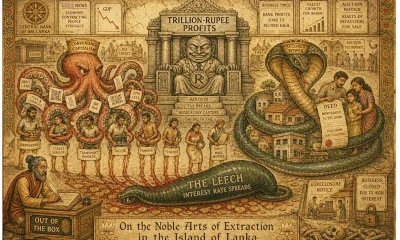
Octopus, Leech, and Snake: How Sri Lanka’s banks feast while the nation starves
-
 Business5 days ago
Expansion of PayPal services in Sri Lanka officially announced
-
 News22 hours ago
Steps underway to safeguard Sri Lanka’s maritime heritage
-
 Features7 days ago
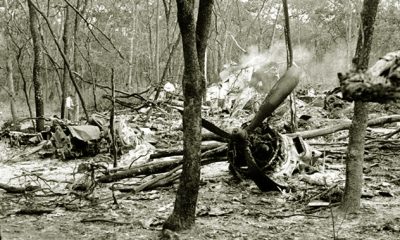
Mysterious Death of United Nations Secretary General Hammarskjöld