
Editorial
SJB punching above its weight


Some more deaths in government hospitals allegedly due to the administration of substandard drugs have been reported while the SJB is drumming up support for its motion of no confidence against Health Minister Keheliya Rambukwella. The Health Ministry has sought to pooh-pooh the reports that the hurriedly-imported low-quality drugs are causing deaths, but the health sector trade unions are convinced otherwise; they insist that substandard drugs and equipment are procured as emergency purchases, which enable some venal elements in the Health Ministry to line their pockets at the expense of the sick. They are demanding a thorough probe into corruption in the Health Ministry.
Having appointed a seven-member committee to investigate the aforesaid allegations as well as other issues affecting the government hospitals, etc., Health Minister Rambukwella has urged the Opposition to fast-track its no-faith motion against him so that he can clear his name. He is obviously putting on a brave face. He did not seem his usual self when he said so in Parliament on Thursday; his speech was devoid of rhetoric and pugnacity, and worry was apparently written all over his face.
Not all Opposition politicians are agreed on the SJB’s decision to move a no-faith motion against Minister Rambukwella. Opposition parties see eye to eye on the need to expose corruption in the Health Ministry and hold the Health Minister and the top bureaucrats in charge of the procurement of medicinal drugs and equipment to account, but some of them think a no-confidence motion could end up boosting the morale of the government, which still has a working majority in the House. Among the proponents of this view are some SLPP dissidents.
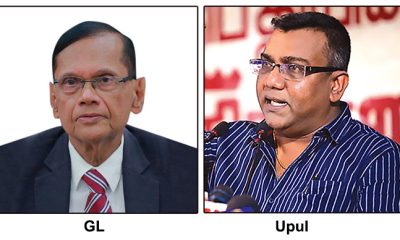
SLPP MP Udaya Gammanpila has warned that the no-faith motion could prove counterproductive. However, the fact remains that extremely remote as the SJB’s chances of securing the passage of its no-faith motion are, the Opposition will get an opportunity to address the various allegations against the Health Minister and top health officials under him.
The general consensus is that everything is rotten about the public health sector, and therefore a campaign against corruption and other forms of malpractice in it should not be limited to an attempt to remove the Health Minister; it should have a broader scope. This argument sounds tenable, but it may also be argued that a no-faith motion will allow issues other than the allegations against the Health Minister to be taken up for debate in the House, provided the Opposition remains unprovoked and thereby frustrates the government MPs’ efforts to raise a ruckus and derail the debate. The opponents of no-confidence motions against government politicians usually succeed in making parliamentary debates descend into slanging matches, which leave the public none the wiser.
Perhaps, the SJB is trying to make use of the differences among its rivals on the other side of the House with the help of its no-faith motion against Minister Rambukwella. Some Opposition MPs who are supportive of the government but not well-disposed towards Rambukwella are reported to have signed the no-confidence motion to be moved; the SJB may be trying to drive in the wedge. Claiming that the no-faith motion is not against the Prime Minister or the government, the SJB has called upon the ruling party MPs to support it.
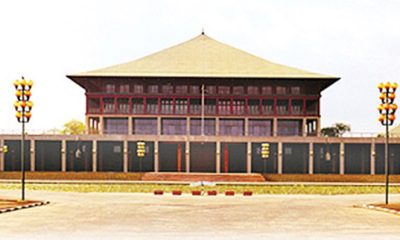
Politicians are driven by their party allegiances and expediency rather than their conscience when they make decisions or vote in Parliament. The SLPP MPs, save a few, will therefore circle the wagons and vote against the SJB’s motion of no confidence at issue, because they do not want the Opposition to score a win in Parliament at this juncture, but in doing so they will only make the allegations against Minister Rambukwella applicable to the entire government, and provide grist for the Opposition’s mill. This may be one of the objectives the SJB is seeking to achieve with the help of its no-faith motion. It is desperate for some traction on the political front.









Monday 13th July, 2026
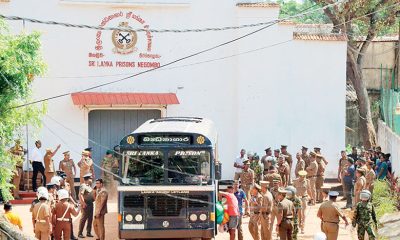
The government has come under heavy criticism over its decision to abandon a plan to convert the former Bogambara Prison, Kandy, into a modern hotel complex, restore the status quo ante and repurpose the Mahamodara Hospital, Galle, as a prison. Desperate times are said to call for desperate measures. Recent riots in the overcrowded Negombo Prison have jolted the government into addressing the issue of overcrowding.
Prison congestion did not arise after the 2024 regime change. Successive governments have let the grass grow under their feet, and the current dispensation has had to grasp the nettle; its difficulties need to be appreciated. The Opposition and other opponents of the aforesaid government move to set up new prisons in an ad hoc manner ought to stop protesting and propose alternative ways and means of managing the issue.
Overcrowding is one of the root causes of prison unrest and violence. Sri Lanka’s prisons are said to accommodate as many as 41,000 inmates or about 400% more than they are equipped to hold. It has been reported that the anti-drug campaigns and the resultant arrests have led to a huge increase in the number of prison inmates. Media reports, quoting the Department of Prisons, have placed the increase between 2021 and 2024 at a staggering 65%. Why no action was taken to address this problem earlier is the question.
The Negombo Prison, where riots snuffed out 28 lives including those of eight officers recently, was holding as many as 2,400 inmates at the time of the incidents whereas it has space and facilities only for 650 prisoners. Inmates become aggressive when they have no space for sleeping, and basic medical and hygienic facilities are scarce. So, it is high time the problem of prison overcrowding is tackled as a national priority. There could be a wave of copycat prison disturbances.
There are also other causative factors that need to be addressed urgently. The prison system is under immense strain owing to the ever-increasing remand prisoner population and prolonged custody due to judicial delays. Many suspects spend months, if not years, in prisons. Researchers have proposed solutions to the issues affecting prisons, but successive governments have ignored them. Action is called for to expedite trials and ensure that bail is granted wherever possible and adopt modern methods, such as using electronic ankle monitors where low-risk suspects are concerned.
The state ought to get rid of its overreliance on imprisonment for minor offences. Instead, it should consider rehabilitation, community-based supervision, as options, experts have suggested over the years. Sadly, the police and the Attorney General’s Department apparently do everything in their power to have the opponents of governments in power held on remand for extended periods to please their political masters. It has also become blatantly clear from the recent bout of prison riots that efforts so far made to curb drug trafficking in prisons have not yielded the desired results due to various factors, particularly corruption among prison officers. A solution to this issue will continue to elude the prison system unless intelligence gathering and surveillance are strengthened with modern technology being used to prevent organised crime suspects and convicts in prison from communicating with their associates outside.
Violence erupts in prisons also due to lack of proper classification of prisoners and action to hold them separately, as was the case in the Negombo Prison. Hardcore criminals must be separated from other inmates, and the so-called officer-to-inmate ratio has to be increased urgently. Worryingly, it has not been possible to recruit the required number of prison officers due to declining attractiveness of prison service and bureaucratic delays, Minister of Justice and National Integration Harshana Nanayakkara has recently told Parliament, explaining why the government has not been able to fill 1,300 vacancies in prison service. The recent murder of prison officers in Negombo is bound to make the government’s efforts even more difficult. Ensuring the safety of prison officers, enhancing their salaries and perks and providing them with better training may help make prison service attractive to the youth.
Prison reform initiatives have not brought about the intended results during the past several decades due to deficiencies therein. The need has arisen for a comprehensive, multi-pronged national prison reform strategy integrating judicial reform, sentencing policy, rehabilitation, staffing and infrastructural development, prisoner welfare and independent oversight. This is what the government and the Opposition should discuss in Parliament and at other fora, instead of locking horns and trading insults.
Prime land in urban centres, such as Colombo, Kandy and Galle, should be utilised for high-income-generating activities, and the prisons situated there should be relocated for security, economic and aesthetic reasons. One can only hope that the prisons to be set up at Bogambara and Mahamodara to ease overcrowding will serve as only stopgap measures until modern correctional facilities are built in appropriate locations.

Sri Lankan legislators never miss an opportunity to affirm their commitment to the principle of natural justice, the presumption of innocence, etc., but they unflinchingly use their parliamentary privileges to insult others, and even treat suspects in custody as guilty and carry out vilification campaigns. One wonders whether they are trying to run a parallel judiciary, as it were. Ruling party members predict arrests and the incarceration of their political rivals. This deplorable practice, however, is not of recent origin.
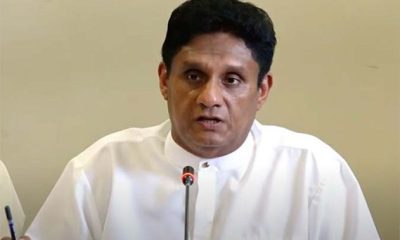
Opposition Leader Sajith Premadasa and Deputy Minister of Media Dr. Kaushalya Ariyarathne had a heated argument in Parliament on Thursday over crime and criminals in politics. Ariyarathne claimed that the JVP-NPP government had prevented a person who even obtained protection money (kappan) from underworld figures from securing the post of deputy leader in the SJB. She mentioned the name of Charith Abeysinghe currently in remand custody. Premadasa retorted that a party that had committed heinous crimes was now levelling baseless allegations against his party. His reference was obviously to the JVP and its past crimes.
During the past several decades, lawmakers have abused their parliamentary privileges by treating some suspects as guilty solely because of their arrests, without leaving the determination of guilt or innocence of the suspects to the judiciary in the interests of fairness and the separation of powers. Suspects and others who are at the receiving end of such malicious attacks carried out by legislators during their parliamentary speeches have no means of defending themselves. If sovereignty resides in the people and Parliament only exercises their legislative power vested in it, they should be able to seek redress when legislators blatantly violate their rights, taking cover behind parliamentary privileges.
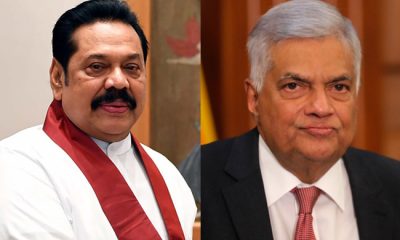
One may recall that Parliament was turned into a kangaroo court during the second term of President Mahinda Rajapaksa, and the then Chief Justice Dr. Shirani Bandaranayake was subjected to vilification by a parliamentary Select Committee, which was packed with Rajapaksa supporters. Obviously, due process was not followed in ‘impeaching’ her. That being the experience of a Chief Justice, the helplessness of ordinary people who become targets of malicious attacks by legislators goes without saying.
Strangely, the MPs who conduct what may be described as legislative trials and trade allegations of criminal offences baulk at having high-profile crimes probed. The incumbent government made a hue and cry about the Batalanda torture chambers, where hundreds, if not thousands, of suspects were ‘put to the question’ before being killed. It alleged former President Ranil Wickremesinghe’s involvement in them. Most of the victims were JVP members or sympathisers. So, it was widely thought that the JVP-NPP government would get to the bottom of it. But what has become of the much-publicised probe is anybody’s guess. Has the government got cold feet as the probe is very likely to open a can of worms for it, given the numerous crimes the JVP committed during its second uprising in the late 1980s? The JVP leaders should explain to the public why they opted for a political honeymoon with the UNP under Ranil Wickremesinghe’s leadership from 2015 to 2019.
President Anura Kamara Dissanayake has declared that his government will not allow serious crimes to be buried in the sands of time. So, he should have all crimes committed under successive governments probed. Prosecution for serious crimes is not time-barred, and he ought to appoint a special presidential commission to probe all political killings since 1977. Why the JVP-led government has not ordered an investigation into the extrajudicial execution of JVP founder Rohana Wijeweera in 1989 is the question. Some of the perpetrators of that crime are said to be still alive, and they must be brought to justice.
The SJB should make a pledge in its next election manifesto to have the crimes which its leader Premadasa says the JVP committed in the 1987-89 period, investigated thoroughly. It should also explain why its leaders did not call for a probe into those crimes while they were in power from 2015 to 2019 as members of the UNP-led Yahapalana government. They had no qualms about enlisting the JVP’s support to retain their hold on power following the SLFP’s pullout from their government. The JVP even had representation in the National Executive Council of the Yahapalana government.
When the members of the current Parliament clash, accusing one another of criminal activities, it is a case of the pot calling the kettle black. They ought to stop trading accusations and have those crimes probed while in power. They should fish or cut bait.

Saturday 11th July, 2026
The Bar Association of Sri Lanka (BASL) has been urging President Anura Kumara Dissanayake to take action to fill four vacancies each in the Supreme Court (SC) and the Court of Appeal (SC), but in vain. It has renewed its call, in a letter to the President, who however remains impervious to public opinion and fervent calls for filling the judicial vacancies. The BASL has warned that the prolonged delay in filling them could undermine the administration of justice and public confidence in the Judiciary.
The BASL has further noted that it is still awaiting a response to its previous letter to President Dissanayake, objecting to a government proposal to amend the Constitution to increase the retirement ages of the SC and CA judges and warning that such a move could have implications for judicial independence. Is it that the President’s Office has chosen to remain silent on the BASL letter?
The first of the SC vacancies arose following the retirement of Justice Gamini Amarasekera on 20 June 2025, according to the BASL. The other vacancies occurred due to the retirement of Justices S. Thurairaja, Kumudini Wickramasinghe and Priyantha Fernando.
There are no signs of President Dissanayake initiating action to fill the vacancies in the SC and the CA any time soon. Neither he nor his government has been able to offer any plausible explanation either, and it is only natural that an ulterior motive is suspected.
The BASL has rightly reminded President Dissanayake of his constitutional responsibility in this regard. Quoting Article 107 (1) of the Constitution, it has said the President is duty bound to appoint the judges of the SC and the CA, and warned that the continuation of judicial vacancies at issue over a long time is inconsistent with the effective discharge of that vital constitutional function. It is being asked in some quarters whether the President’s failure to fulfil this constitutional responsibility amounts to a violation of the Constitution.
The SC and CA vacancies have impeded the career progression of members of the judiciary, the BASL has argued cogently, insisting that they have placed an additional heavy burden on the two courts, as both of them now have to function with 25% fewer judges than their constitutionally stipulated complements. This situation has severely impacted the administration of justice and the efficient disposal of matters coming before the SC and the CA, according to the BASL. This is a very serious situation, and it defies comprehension why President Dissanayake has chosen to remain silent.
What’s the world coming to when the Head of State of a country keeps 25% of positions each in the superior courts vacant and refuses to heed serious concerns and counsel of professional organisations of lawyers and individual legal experts?
There is no way President Dissanayake can justify his decision to keep judicial vacancies under discussion unfilled. His failure to fill them could give rise to the perception that he is doing so pending the eligibility of certain individuals, as the BASL and other professional organisations have argued. Such perceptions do matter as much as reality in this country, given the manner in which successive governments have interfered with the judiciary to further their political interests.
If President Dissanayake thinks he can wear down his critics and have his own way, where judicial vacancies and the questionable government move to raise the retirement ages of the SC and CA judges are concerned, he will be mistaken. Such obduracy stemming from the arrogance of power is counterproductive, for it compels the critics of the government to harden their position on the issue and erodes public confidence in both the government and the judiciary.

Qatar’s Father Emir Sheikh Hamad bin Khalifa Al Thani laid to rest in Doha

Brendon McCullum removed from post as England Men’s Test coach

Yastika century, seamers put India on the brink of historic win at Lord’s

Showers will occur in the Sabaragamuwa, Western and North-western provinces and in Kandy, Nuwara-Eliya, Galle and Matara districts.

JSA opposes move to extend retirement ages of superior court judges

Next two weeks critical as dengue risk soars

‘Dates have the highest sugar content to fight Coronavirus’

Sunday Island 27 December – Headlines

#SundayIsland 17th December – Headlines

Sunday Island – 28th March

Sunday Island Headlines – 21 March

Sunday Island – 21st February – Headlines
-
 News4 days ago
Herath warns prospective migrant workers not to get fleeced by racketeers
-

 Midweek Review6 days ago
Unexpected focus on ‘pieces of tin’ worn by military men
-
 Features2 days ago
Prison riots and politics: NPP’s biggest challenge and Sri Lanka’s biggest opportunity
-
 Latest News6 days ago
Nyamhuri and Ngarava stun Bangladesh by defending 141
-

 Editorial3 days ago
What’s the world coming to?
-

 News5 days ago
Negombo Prison riot: Ensuring protection of prisoners fundamental responsibility of the state – UN
-
 Foreign News3 days ago
Tensions erupt in Indian state after 11-year-old raped and murdered
-
 Features4 days ago
Devanesan Annan – in Memoriam