
Foreign News
Stanford University president resigns following research ethics probe


The president of Stanford University has stepped down in the wake of an independent investigation that found “substandard practices” in research papers he was involved in.
Marc Tessier-Lavigne, the leader of the prestigious California university, issued a statement on Wednesday (19 July) saying he would leave his post, effective August 31.
Media reports in the United States had raised questions about “falsified data” in research linked to Tessier-Lavigne, a prominent neuroscientist from Ontario, Canada.
But on Monday, a scientific panel commissioned by Stanford’s Board of Trustees cleared Tessier-Lavigne of participating in any misconduct, though it did find “serious flaws” in the research papers reviewed. “The Panel has identified evidence of manipulation of research data in at least four of the five primary papers at issue,” it wrote in a report. “But the Panel did not find evidence to conclude that Dr Tessier-Lavigne engaged in, directed or knew of the misconduct when it occurred.”
The group also found that “a scientist exercising reasonable care could not have been expected” to detect the research flaws at the time, though it did fault Tessier-Lavigne for failing to “decisively and forthrightly correct mistakes in the scientific record”.
The panel — comprised of neuroscientists, biologists and one Nobel laureate — examined 12 research papers Tessier-Lavigne participated in, seven in which he was a “non-principal author” and five where he was listed among the leads.
The review, it said, involved filtering through 50,000 documents and holding more than 50 meetings with witnesses and individuals involved in the scandal.
Questions about Tessier-Lavigne’s scientific work started to emerge on the platform PubPeer, where scientists can discuss and evaluate research online.
There, commenters like scientist Elisabeth Bik raised concerns as far back as 2015 about images in Tessier-Lavigne’s research that appeared to be digitally altered.
One research paper in particular, published in the journal Nature in 2009, sought to identify causes for brain degeneration in Alzheimer patients.
Tessier-Lavigne’s employer at the time, the biotech company Genentech, hailed the paper as “groundbreaking research” that offered “an entirely new way of looking at the cause of Alzheimer’s disease, the sixth leading cause of death in the United States”.
“Because of this research, we are working to develop both antibodies and small molecules that may attack Alzheimer’s from a novel entry point and help the millions of people who currently suffer from this devastating disease,” the company wrote in its annual report.
But scientists struggled to reproduce the results documented in the 2009 paper, leading to questions about the accuracy of its data — or whether it had been falsified altogether.
The Stanford Daily, a student-run campus newspaper, helped bring these concerns to light with a series of articles over the last year, quoting Bik and other scientists, some of whom chose to remain anonymous.
While Monday’s independent review ultimately found Tessier-Lavigne was “not reckless” in his scientific practice, it did affirm that “there was apparent manipulation of research data by others”.
Timely corrections, retractions and “forthright and transparent actions” would have “better served science and all concerned”, the panel said.
It called for “significant action” to “correct the scientific record”. It also noted that Tessier-Lavigne now plans to retract several of the publications.
For his part, Tessier-Lavigne has continued to deny allegations of unethical behaviour, noting that his career spans three decades and hundreds of research papers.
“I am gratified that the Panel concluded I did not engage in any fraud or falsification of scientific data,” he said in his resignation statement on Wednesday (19)
“As I have emphatically stated, I have never submitted a scientific paper without firmly believing that the data were correct and accurately presented. Today’s report supports that statement.”
One of the most selective private research universities in the US, located in the heart of Silicon Valley, Stanford has a history of pumping out notable alumni, from world leaders like the United Kingdom’s Prime Minister Rishi Sunak to tech entrepreneurs like Elon Musk who reportedly dropped out after two days.
Tessier-Lavigne has served in his role as president for nearly seven years. He will be replaced by interim president Richard Saller, starting in September.


Thousands of Kenyans have marched through central Nairobi to demand that the government declare a national crisis over rising cases of femicide and child disappearances.
The march, composed mostly of women, was organised on Monday by the End Femicide movement alongside women’s rights, human rights, and child protection groups. It was one of the largest demonstrations against gender-based violence the Kenyan capital has seen in months, and brought traffic to a standstill across parts of the city’s central business district.
The protest organisers used the brutal murder of a gospel singer, Rachel Wandeto, to rally support.
Wandeto was doused with petrol and set on fire by three men as she walked home in Nairobi on May 16. She suffered burns to over 85 percent of her body and died two days later at Kenyatta National Hospital.
The lobby groups have given the Kenyan government a 40-day ultimatum to declare gender-based violence a national crisis, or face nationwide protests.
Participants dressed in white carried red roses and gathered around symbolic coffins covered in flower petals in a tribute to the victims. A large wall listing the names of the dead stood at the centre of the gathering beneath the message “Stop Femicide in Kenya”.
Protesters carried placards reading “Stop Killing Women,” “Enough is Enough,” and “End Pedicide”.
Former Chief Justice David Maraga joined the march, lending his voice to calls for stronger government action.

The ultimatum to the government demanding action, issued on May 21, came as the Federation of Women Lawyers in Kenya reports receiving roughly 70 gender-based violence cases every week across its three offices in Nairobi, Mombasa, and Kisumu.
(Aljazeera)

The United States Department of Defense has barred journalists from its press office, the latest move by the Pentagon to restrict media access since President Donald Trump’s return to the White House.
Acting Pentagon Press Secretary Joel Valdez said on Monday that the administration had re-designated the office as a “Sensitive Compartmented Information Facility” due to its use by speechwriters with access to classified government information.
“These speechwriters routinely handle classified material and require SIPRNet access,” Valdez said in a statement provided to Al Jazeera, referring to the secure computer network used by the Pentagon to share classified information.
“As a result, journalists will no longer be permitted to enter the office space. Access to the office of the Assistant to the Secretary of War for Public Affairs and to the Press Secretary remains available by appointment only,” Valdez added, using the Trump administration’s preferred title for Defense Secretary Pete Hegseth.
The Washington Post first reported the change.
The move follows a slew of steps by the Trump administration to curtail the ability of US media outlets to report on the military and other areas of the government.
In March, the Defense Department said it would no longer allow media outlets to maintain offices at the Pentagon after a judge sided with The New York Times in a lawsuit challenging the imposition of new rules for obtaining press credentials.
The Pentagon also announced that journalists would require an official escort while inside the complex, a policy that The New York Times is seeking to overturn in a separate lawsuit filed in May.
The National Press Club, the main professional organisation for journalists in the US, condemned the latest restrictions as a “troubling escalation” in the Trump administration’s efforts to curtail media scrutiny of the Pentagon.
“Independent reporting on the US military is not optional,” National Press Club President Mark Schoeff Jr said in a statement.
“When journalists are pushed farther from the institutions they cover, the American people are left with less information, less transparency, and less oversight. Any effort to restrict that access should alarm everyone who values a free and informed society.”
The Freedom of the Press Foundation, a nonprofit advocacy organisation, also criticised the move.
“It’s rare for anything other than disingenuous spin and outright lies to come out of the Pentagon’s press office these days, so it’s hard to imagine what basis they have to call the space classified,” Seth Stern, chief of advocacy at the organisation, told Al Jazeera.
“The only thing sensitive or confidential about the information released by Pete Hegseth’s Pentagon is that it’s not true.”
[Aljazeera]
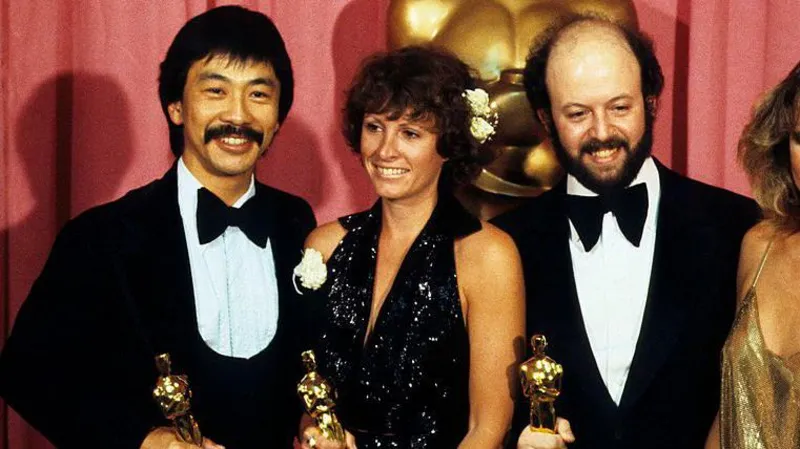
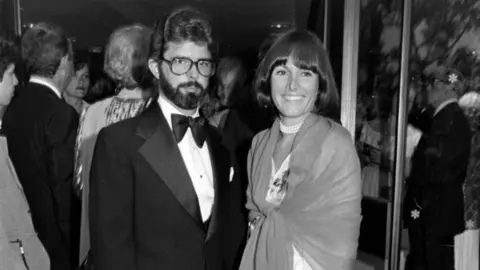
Marcia Lucas, the Oscar-winning editor of the original Star Wars film, has died aged 80.
Lucas, who was married to Star Wars creator George Lucas during the making of the first three films, was regarded as a pivotal creative force behind the space saga’s early success, imbuing the original series with emotional depth and narrative clarity.
She died from metastatic cancer at her home in Rancho Mirage, California, on Wednesday surrounded by loved ones, according to her family.
“Marcia was a force,” her family said in a statement to US media on Friday. “A true trailblazer for women in film and one of the most influential editors in cinematic history; she helped redefine what film editing could be.”
Lucas won the Academy Award for Best Film Editing for 1977’s Star Wars – later renamed A New Hope – alongside editors Richard Chew and Paul Hirsch.
Although her contributions largely took place behind the scenes, her role in shaping the film’s emotional heart and narrative structure has been widely recognised in the decades since its release.
George Lucas credited her with helping make sense of the vast amount of footage filmed for the climactic Death Star battle sequence.
“It was extremely complex and we had 40,000 feet of dialogue footage of pilots saying this and that,” he told Rolling Stone shortly after the film’s release
“Nobody really has ever tried to interweave an actual plot story into a dogfight, and we were trying to do that.”
Born Marcia Griffin in Modesto, California, in 1945, she began her career as a film librarian before becoming one of Hollywood’s most respected editors.
After marrying George Lucas in 1969, she worked on several of his early films, including THX 1138 and American Graffiti – earning an Oscar nomination for the latter.
She also collaborated with director Martin Scorsese on a string of his acclaimed 1970s films including Alice Doesn’t Live Here Anymore, Taxi Driver and New York, New York.
Lucas later returned to the Star Wars franchise, working on The Empire Strikes Back in 1980 and Return of the Jedi in 1983.
She and George Lucas adopted a daughter, Amanda, in 1981. The couple divorced in 1983 after 14 years of marriage.
She later married Tom Rodrigues, a production manager at Skywalker Ranch, with whom she had a second daughter, Amy.
Her family said in its statement: “Her influence on film is indelible, but those who knew her best will remember the way she made life feel more vivid, more beautiful, more fun and more full of love.
“Her work was known for its emotional intelligence, rhythm and humanity – a rare ability to find the truth of a scene and bring heart, momentum and clarity to the screen.”
“I love film editing,” Lucas once told a reporter, according to Lucasfilm.
“I have an innate ability to take good material and make it better, and to take bad material and make it fair.”
Paying tribute on Saturday, Lucasfilm said it was “deeply saddened” to learn of her death, adding it “joins the global filmmaking community in mourning the loss of Marcia Lucas”.
Meanwhile, Mark Hamill, who portrayed Star Wars protagonist Luke Skywalker, wrote that he and his wife Marilou were “deeply saddened by the loss of our lifelong friend”.
He added: “Not just a gifted, innovative artist, she also happened to be a genuinely nice person. Smart, funny and just plain fun to be around. Thankfully, her memory lives on and we will never stop missing her.”
[BBC]

Nuwan Thushara among 46 men’s cricketers to be awarded SLC contracts

Pakistan naval trio arrives at Colombo Port

Sri Lanka Cricket relieved at ICC’s mild response to Transformation Committee

ICC approves red-to-pink ball change to reduce bad-light impact in Test cricket

LPL introduces impact subs for 2026 season

Protesters call on Kenyan government to halt femicide crisis

‘Dates have the highest sugar content to fight Coronavirus’

Sunday Island 27 December – Headlines

#SundayIsland 17th December – Headlines

Sunday Island – 28th March

Sunday Island Headlines – 21 March

Sunday Island – 21st February – Headlines
-

 News4 days ago
IMF urges Lanka not to meddle with exchange rate
-

 Business5 days ago
Sri Lanka’s construction industry losing ground while no one watches
-
 News4 days ago
State of emergency extended
-

 Business2 days ago
IMF’s unstated rate:Sri Lanka’s $695m loan costs about 5.33% per annum
-
 Midweek Review7 days ago
Israeli-US aggression won’t go unanswered -Iranian Ambassador
-

 Features5 days ago
The Division Bell Mystery
-

 News2 days ago
UNP challenges NPP move to amend Vihara – Devalagam Act
-

 News6 days ago
RTI query of Ditwah funds: Presidential Secretariat mum on key questions