
News
FSP warns danger of negating country’s successful vaccination programme by importing low quality drugs

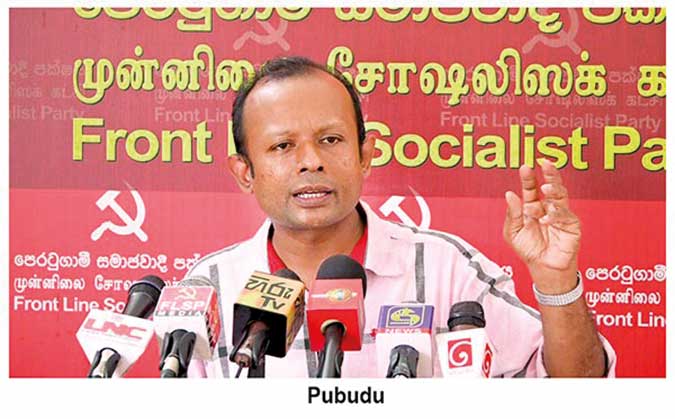
By Rathindra Kuruwita
Sri Lanka’s successful vaccination programmes will be undermined if the government continues to import low quality drugs, Education Secretary of the Frontline Socialist Party (FSP) Pubudu Jagoda told The Island.
“Sri Lanka is a role model for successful vaccination because people have no fear about vaccinating their kids. This is why the vaccination programme is successful. What will happen if public confidence in the quality of vaccines drops? People will not vaccinate their children and that would lead to many health problems. If people start worrying about anesthetics, they might hesitate to undergo surgeries. This can exacerbate the crisis in our healthcare,” he said.
The Sri Lankan governments have been abusing section 109 of the National Medicines Regulatory Authority (NMRA) Act, which allows importing unregistered drugs during emergencies, ever since COVID, Jagoda said.
Section 109 of the National Medicines Regulatory Authority Act notes that the ‘The Authority may grant permission in special circumstances, such as to save a life, to control an outbreak of an infection, or an epidemic, or any other national emergency, or for national security, to import and supply a particular medicine, medical device or borderline product in specified quantities.”
“More than anyone, the current Minister is abusing this section and has been importing many unregistered drugs,” he said.
Jagoda said that this section of the Act was not abused by health ministers, prior to COVID-19. Medical purchases in Sri Lanka were always corrupt, however, those in power made money by manipulating prices of registered and relatively high-quality drugs.
“We started importing low quality unregistered drugs following COVID. This is done in two ways. One is that the Minister can give a waiver of registration letter. Another technique is called consignment release. This is how it’s done. Each company must renew drug registrations each year. With consignment release, we allow the release of a drug, not registered this year, if it had been registered in a previous year. The drugs have to be tested and re-registered each year because drugs affect human health. A company might produce a high-quality drug in one year but a few years later there could be drastic drops in quality, due to many factors,” he said.
Jagoda added that when registering a drug in Sri Lanka, a group of experts conduct their own independent survey on the quality of the drug. Those in charge of registration, currently the NMRA, study reports on drug trials, journey articles, reports on whether there have been any side effects, etc.
“However, the NMRA is increasingly under political pressure. S.B. Jayaratne and Vijith Gunasekara, Chairman and CEO of NMRA, respectively, addressed a press conference recently. They were asked why the anaesthetic Bupivacaine, which is not registered and has caused several deaths, were allowed into Sri Lanka. The NMRA officials said when the Minister of Health asks them to do something, they have to do it. When the NMRA act was introduced, we said that the Minister should not be able to override professionals,” he said.
The FSP Education Secretary added that while the NMRA’s testing capacity must be enhanced, the main problem faced by them is political interference.
The quality of drugs can be proven chemically and clinically and a lot of countries do both because they have facilities. Sri Lanka, too, can access these reports easily and determine whether a drug should be allowed to come in.
“NMRA also has a good lab, and they are trying to close it down. Recently officials went there and asked the chemists there whether they can find new jobs if the lab is closed. The lab is only open because for some reason senior officials don’t want to fire chemists who work at the lab,” he said.
The use of low-quality drugs have already taken several lives in the country and have caused irreparable damage to the health of some people, he said. About 15 people lost their sight after an Indian-made eye drop, Prednisolone, was used following surgery. These cases were mainly reported in Nuwara Eliya, he said.
“Then there are issues with the Indian made anaesthetic Bupivacaine. About two months ago, a 60-year-old retired school principal became sick after Bupivacaine was used during her surgery. She died recently after over six weeks at the ICU. On 06 April, a pregnant woman died, also in Peradeniya, after the same anesthetic was used on her on 04 April. Bupivacaine was purchased from the Indian company Divine Laboratories Private Limited, and the drug is not registered in Sri Lanka. These are drugs imported without testing the quality and people have died because of that,” he said
On top of that, two machines used at Sirimavo Bandaranaike Specialised Children’s Hospital to administer anesthetics to children have broken down. Nothing has been done to replace or repair the machines and this has caused great distress, Jagoda said.
“We are now dependent on other countries for everything. We received an Indian credit line for medicine and we have to purchase the drugs from India. However, about 85 imported drugs used in Sri Lanka anyway came from India. Those are drugs checked and registered by the National Medicines Regulatory Authority (NMRA). The Indian government didn’t ask Sri Lanka to buy from unregistered suppliers. Recently, China gave us a soft loan to buy medicines for the Hambantota General Hospital. Sri Lanka purchased medical equipment from Chinese companies that are registered in Sri Lanka, not from new ones. These countries are not forcing our politicians and officials to buy from unregistered suppliers, this is on us,” he said.









By Chaminda Silva
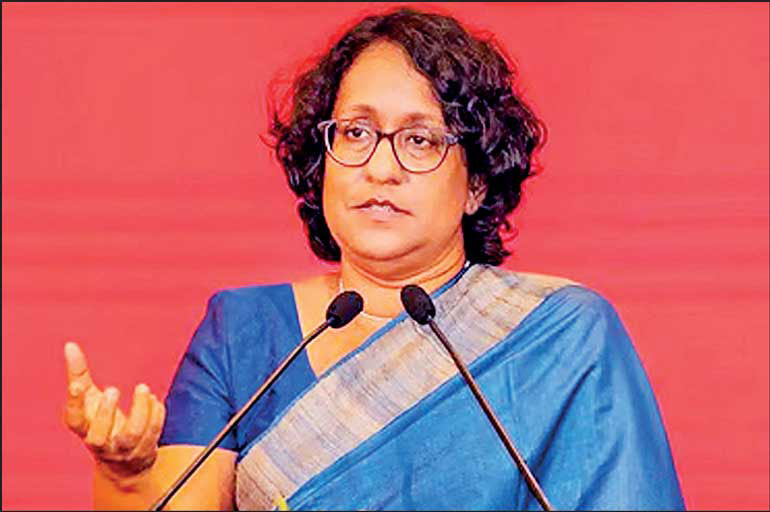
The government’s ambitious plans to overhaul Sri Lanka’s school education system and introduce new curricula could face serious implementation difficulties, with teacher unions warning that a longstanding and severe shortage of teachers remains unresolved.
The warning came as Prime Minister Dr. Harini Amarasuriya announced yesterday that new curricula would be introduced for Grades 2 and 6 next year, while also stating that the government planned to recruit around 30,000 new teachers across the education system by February.
However, the Ceylon Teachers’ Union (CTU) questioned whether the government would be able to provide the teachers required to implement the proposed reforms, claiming that the recruitment process itself had become mired in problems.
CTU General Secretary Joseph Stalin accused the government of making misleading claims about teacher recruitment and said the shortage that had affected schools for more than a year would continue into next year.
“There is currently a severe teacher shortage in the school system,” Stalin told a press conference in Colombo yesterday.
He said the government had previously acknowledged that there were about 46,000 teacher vacancies in the school system, but the figure was later revised to around 36,000.
“Those vacancies have remained unfilled for more than a year and a half. The school system has continued to operate with a severe teacher shortage throughout this period,” he said.
Stalin questioned how the government intended to introduce new curricula while thousands of existing teaching vacancies remained unfilled.
He said the Government had initially announced plans to recruit 23,000 teachers, despite the number of vacancies being significantly higher.
Although a gazette notification, relating to the recruitment had been issued, only around 17,000 applicants had been summoned for the initial round of interviews, he added.
Stalin said interviews were expected to begin in November and that appointments would, therefore, be made only from January onwards.
“If there are more than 36,000 teacher vacancies, the Government has decided to recruit only 23,000 teachers, and only around 17,000 have been called for interviews.
Who will take responsibility for the remaining vacancies?” he asked.
He said the problem was not merely one of numbers but also involved the Government’s recruitment procedure.
According to Stalin, shortcomings and ambiguities in the gazette notification issued for the recruitment examination had contributed to the present crisis.
“We primarily believe that the lack of proper procedures in the gazette notification issued for the recruitment examinations has contributed to this crisis. The ambiguities in the notification itself have led to the recruitment process becoming a major issue,” he said.
The shortage was also affecting the transfer system, Stalin mentioned.
A large number of teachers had been unable to obtain transfers because replacements were not available, with some teachers remaining at the same school for 12 or 13 years, he claimed.
As replacements had not been recruited, such teachers would have to remain at their present schools for another year, he said.
“This is a serious crisis. However, the situation is even more critical for students who are left without teachers,” Stalin said.
He also questioned the Government’s plans to close schools with fewer than 50 students.
“We suspect that this move is to take the teachers from these schools and redeploy them to other schools to fill vacancies there.”
The union’s concerns come at a time when the Government is pushing ahead with a major overhaul of the education system.
Addressing the Badulla District Women’s Conference yesterday, Prime Minister Amarasuriya said the Government would introduce new curricula for Grades 2 and 6 next year as part of its wider education reforms.
She said a new curriculum had already been introduced for Grade 1 this year, while new curricula for Grades 2 and 6 would be introduced over the next two years.
The Prime Minister said the Government was developing a new education system aimed at securing the future of all children, with the emphasis shifting away from producing students, focused solely on examinations.
The Government’s objective was to nurture a generation capable of facing future challenges successfully and confidently, she said.
The Prime Minister also announced that interviews for the recruitment of 17,000 teachers would commence on November 20.
She said approval had also been granted to recruit 2,000 academic staff members for the university system, with that recruitment process already under way.
The Government plans to recruit approximately 30,000 new teachers across the education system by February next year, she said.
A special programme would also be implemented to improve infrastructure facilities in schools, the Prime Minister added.
The contrasting positions highlight a potentially significant gap between the Government’s education reform timetable and the capacity of the existing school system to deliver it.
While the Government has set out a timetable for introducing new curricula and recruiting tens of thousands of teachers, the CTU argues that the existing shortage, delays in recruitment and unresolved transfer problems could leave schools struggling to provide adequate teaching staff when the reforms take effect.
With the Government planning to introduce another round of curriculum changes next year, the ability to fill vacancies in time could, therefore, become a crucial test of whether its broader education reform programme can be implemented as planned.

The Norochcholai coal power plant will remain disconnected from the national grid for several days following Saturday’s countrywide power failure, as authorities continue to follow safety procedures after the incident.
The National System Operator (NSO) said the 810-megawatt plant had been shut down as a precaution after the sudden power outage on October 17 and would not be reconnected to the grid until the necessary safety measures were completed.
The temporary loss of 810 MW of generating capacity would be managed through careful electricity supply arrangements to minimise the impact on consumers over the coming days, the NSO said.
It said the prevailing rainy weather was expected to help sustain hydropower generation at high levels, while a projected decline in electricity demand would further ease pressure on the system.
The countrywide blackout occurred at around 11.43 a.m. on October 17 after a generating unit disconnected from the national grid, creating an imbalance that caused the entire power system to collapse within less than 30 seconds.
Restoration efforts began shortly afterwards. By 12.11 p.m., major hydropower generating units had been brought back online and the power system was restarted simultaneously in four separate sections.
The restoration process was complicated by small-scale power generation facilities that were not under the direct control of the system control centre. However, electricity supplies were progressively restored through the activation of distribution feeders from 12.37 p.m.
By around 3 p.m., power had been restored to essential services, including major hospitals, water treatment plants and the airport.
Grid substations across the country had been reconnected by around 5 p.m., restoring electricity to the majority of consumers, the NSO said.
The operator stressed that the sudden disconnection of a generating unit as a safety measure was a normal occurrence at power plants. However, such a disconnection resulting in a complete collapse of the national power system was not considered normal.
An internal investigation has, therefore, been launched to establish the sequence of events that led to the islandwide outage and determine its underlying causes, the NSO said.
By Norman Palihawadane
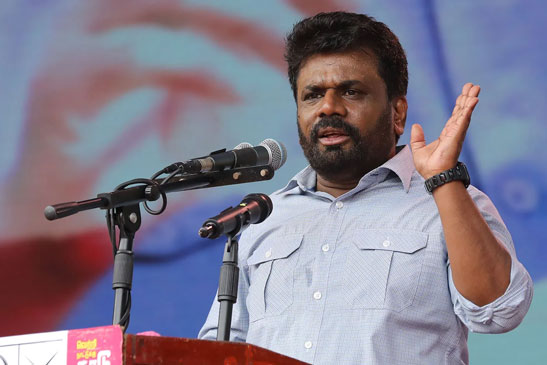
President Anura Kumara Dissanayake yesterday said a businessman, arrested with a caches of firearms, ammunition and hand grenades, had links to a politician, as authorities continued investigations into the seizure.
Addressing a public gathering in Badulla, the President said the suspect was among those being investigated in connection with operations targeting organised crime and that authorities were aware of his political connections.
He also referred to a video footage allegedly showing the suspect firing at people in the Weliweriya area, describing it as an example of the dangerous activities associated with individuals possessing illegal firearms.
The 38-year-old businessman, who is reportedly the owner of a cinema, and a relative of a politician, was arrested following a search conducted by officers of the Colombo District Crime Division at the cinema on Hanwella Road, in the Kirindiwela Police Division, on October 17.
Police said the search had been carried out based on information received by investigators.
The weapons and ammunition seized included two foreign-made pistols, a revolver, a foreign-made repeater firearm and a foreign-made 12-bore firearm.
Police also recovered hundreds of rounds of ammunition, including 398 rounds of 12-bore ammunition, 278 rounds of 9mm ammunition, 49 rounds of .32-calibre ammunition and 3,083 rounds of .22-calibre ammunition, along with two live hand grenades.
The suspect, a resident of the Millathe area, is being questioned as investigations continue.
The Police Media Division said police would seek a detention order to facilitate further questioning of the suspect and advance the investigation.
The Colombo District Crime Division is conducting further investigations into the cache of weapons and the suspect’s alleged activities and connections.

Showers or thundershowers will occur in most parts of the island after 1.00 p.m

CTU: Teacher shortage casts doubt on govt.’s education reforms

Norochcholai to remain offline for several days after blackout

President links businessman held with arms to politicians

CID probe sought into tusker’s death amid fears of elephant-killing syndicate

Bill to allow remote witness testimony in courts

‘Dates have the highest sugar content to fight Coronavirus’

Sunday Island 27 December – Headlines

#SundayIsland 17th December – Headlines

Sunday Island – 28th March

Sunday Island Headlines – 21 March

Sunday Island – 21st February – Headlines
-

 Latest News6 days ago
Nissanka’s return headlines Sri Lanka’s Test squad against Pakistan
-

 News5 days ago
Sri Lanka, India caught in US-Iran ship crisis
-
 Latest News6 days ago
Imran Khan’s PTI braces to fight federal takeover of Khyber Pakhtunkhwa
-

 Latest News6 days ago
Missiles intercepted near Riyadh after Saudi coalition hits Yemen fuel depot
-
 News2 days ago
Asgiri Mahanayake calls for immediate release of Gnanasara Thera
-

 Latest News6 days ago
Kusal Mendis’ unbeaten 87 hands Sri Lanka consolation win
-
 News6 days ago
Mahinda and Shiranthi hospitalised
-

 Features1 day ago
Kotahena:A Small Enclave, An Extraordinary Legacy