
Editorial
Wrongs don’t cancel one another out

Saturday 10th June, 2023
Prime Minister Dinesh Gunawardena and Opposition Leader Sajith Premadasa crossed swords in Parliament, on Thursday, with the former reminding the House that the latter’s late father, President Ranasinghe Premadasa, had violated people’s democratic rights blatantly. What one gathered from the Prime Minister’s line of reasoning was that he thought the Opposition Leader, as President Premadasa’s son, had no moral right to talk about allegations of human rights violations against the present government. Sajith responded that not everything his father’s government had done was acceptable to him, and he celebrated only its good deeds.
Premadasa’s presidential legacy has been an asset as well as a liability for Sajith, paradoxical as it may sound. The overall assessment of a departed political leader’s rule is usually influenced by various factors, and public perception of it evolves with biographers, researchers and historians providing fresh insights into discussions, debates and studies on their lives and careers. It is, in fact, a process that goes on for years, if not decades. However, posthumous remembrances of political leaders in this country tend to be shaped by basically what they did during the final phases of their tenures. Hence the need for the heads of state who want the people to have a positive impression of them posthumously not to wait until it is too late to retire or demean themselves by entering/re-entering Parliament after leaving high office.
The popularity of Premadasa Snr. was very low at the time of his untimely demise in May 1993 owing to the assassination of Lalith Athulathmudali, who had broken away from the UNP together with several party stalwarts,following an abortive attempt to impeach the former, and founded the DUNF, which emerged as a formidable political force. The Premadasa government resorted to extremely oppressive measures to hold its political enemies at bay and was accused of killing tens of thousands of youth during the second JVP uprising in the late 1980s. It is the people’s dreadful memories of that phase of the Premadasa rule that PM Gunawardena craftily sought to evoke when he took on Sajith in Parliament, on Thursday, in a bid to defend the incumbent administration against the allegations of human rights violations.
PM Gunawardena specifically took up the issue of mass sackings and blatant violations of labour rights during the Jayewardene and Premadasa governments, which were antipathetic to unionised labour despite having its own trade union wing, the JSS. They turned hostile towards labour unions and did everything in their power to crush strikes. PM Gunawardena was right in pointing out the plight of the workers who took part in a general strike in July 1980; tens of thousands of them lost their jobs, and the JRJ government bragged that ‘the elephant’ had only shaken its tail; it was a dire warning that trade unions would have to face a far worse fate if they resorted to industrial action again.
What PM Gunawardena, however, left unsaid was that his current political boss, President Ranil Wickremesinghe, was one of the diehard supporters of President Jayewardene and President Premadasa and served in their Cabinets. One may recall that when some UNP MPs led by Athulathmudali and Gamini Dissanayake, together with the Opposition, tried to impeach President Premadasa, Wickremesinghe solidly stood behind him in 1991, and remained ever faithful to him until his untimely demise about two years later despite numerous violations of human rights and attacks on democracy on his watch. Mahinda Rajapaksa was one of the key campaigners against the Premadasa government. In fact, it was his public protest campaigns that helped him rise to national prominence and work his way up to become the President. Today, Mahinda has thrown in his lot with Wickremesinghe. So has PM Gunawardena!
It may be recalled that the SLFP, which was involved in the 1980 strike, promised to look after the interests of the terminated workers, some of whom were driven to suicide. But the unfortunate strikers’ problems remained unsolved even under the SLFP-led governments of Presidents Chandrika Bandaranaike Kumaratunga and Mahinda Rajapaksa. Gunawardena was a minister in those administrations, which did not honour the SLFP’s assurance to the July strikers that justice would be served. One cannot but agree with PM Gunawardena that democracy suffered tremendously under the Ranasinghe Premadasa government, but he needs to be told that the wrongs that previous regimes committed cannot be cited in extenuation of the incumbent dispensation’s undemocratic acts, which are legion. Let that be the bottom line.








Sri Lanka’s legal fraternity has woken up to threats to democracy and embarked on a campaign to neutralise them. The Bar Association of Sri Lanka (BASL) is leading the battle against the incumbent government’s efforts to undermine democracy and judicial independence. It deserves praise for its laudable mission, whose success however hinges on the cooperation of all other stakeholders.
Former BASL President Saliya Pieris, speaking at the launch of Dr. Jayampathy Wickramaratne’s book, Constitutional Conversations, in Colombo on Thursday (16), inter alia, pointed out that democracy had to be protected from the elected representatives of people as well. He must have struck a responsive chord with the discerning public when he said democracy faced graver threats under governments with steamroller majorities.
The wellbeing of democracy is inversely proportional to the concentration of unchecked political power, as evident from the experience of countries like Sri Lanka, where legal and institutional constraints are absent or inherently weak and ineffective. However, a distinction has to be made between state capacity and arbitrary, unchecked state power. Mature democracies often combine extensive democratic freedoms with highly capable states, rather than weak ones, as some political scientists have argued.
So, one may say, with apologies to Shakespeare, the fault is neither in state capacity nor in our stars, but in ourselves and the legal and institutional safeguards in place to protect democracy. President Anura Kumara Dissanayake has failed in his constitutional duty by leaving four vacancies each in the Supreme Court (SC) and the Court of Appeal (CA) unfilled for months, as legal experts have pointed out, but there is nothing that can be done to ensure that he does what the Constitution requires him to do. Who says the culture impunity came to an end with the 2024 regime change?
Mammoth parliamentary majorities not only undermine democracy but also become the undoing of the governments that command them. This has been Sri Lanka’s experience since 1970, when the SLFP-led United Front government secured a two-thirds majority (with the help of the JVP, which conducted its propaganda campaign). That administration bulldozed its way through and even extended its parliamentary term by two years. The UNP, which obtained a five-sixths majority at the 1977 general election, debilitated all legal and institutional constraints, and democracy suffered immensely under its rule as never before. Political violence and election malpractices came to be institutionalised. That regime made a general election disappear in 1982 with the help of a heavily rigged referendum. The SLFP-led UPFA government mustered a two-thirds majority after winning the 2010 general election and went to the extent of amending the Constitution to further the interests of the then Executive President by weakening the constitutional safeguards that had been introduced to ensure the independence of vital state institutions. The SLPP government, elected in 2020, abused its two-thirds majority to amend the Constitution to strengthen the executive presidency at the expense of democratic institutions. The arrogance of power made that regime impervious to public opinion and economic reality, and the economy went into a tailspin, leading to political upheavals. That supermajority turned out to be the SLPP government’s undoing as well as a curse for the country.
The JVP-led NPP, which capitalised on public anger and came to power on the back of a massive protest vote, in 2024, thinks no end of itself mainly because of its two-thirds majority. President Dissanayake has been accused of planning to amend the Constitution to increase the retirement ages of the superior court judges with an ulterior motive. He continues to ignore calls for abandoning his ill-conceived plan and filling the vacancies in the SC and the CA.
Democracy suffered extensive damage under previous governments with supermajorities, which were abused in every conceivable manner to advance the political agendas of the political leaders of the day. Now, another juggernaut is bearing down on democracy. The political Opposition is too pusillanimous to stand up to the powerful JVP-NPP government; its leaders bellow rhetoric but baulk at taking up the cudgels for democracy. Their bark is worse than their bite. Only a few individual Opposition politicians have had the courage to oppose the ongoing assault on democracy and educate the public on the excesses committed by the present-day leaders. As a result, the BASL, the independent media, and some civil society outfits have had to act as a countervailing force against the government, which is now doing exactly what it condemned previous governments for doing.

Saturday 18th July, 2026
US President Donald Trump has accused China of interfering in the 2020 US presidential election and alleged “shocking vulnerabilities” in American voting systems. Speaking from the White House on Thursday, he repeated unsubstantiated claims about voter fraud and foreign meddling in the 2020 election, which he lost.
Trump claimed he had declassified hundreds of intelligence files which supported his claim that Beijing tried to sway the election in his rival, Joe Biden’s favour. However, the US intelligence agencies have concluded that China did not interfere in the 2020 election. One may recall that there were allegations of Russian interference in the 2016 US presidential election, which Trump won. After securing the presidency, Trump insisted that those allegations were false, politically motivated and an attempt to delegitimise his victory.
Trump’s allegation against China has come three months ahead of crucial US midterm elections, where the Republicans are expected to suffer a setback. Trump is doing everything in his power to prevent a situation that will make his position as a lame-duck President even weaker. So, it is only natural that he is concocting conspiracy theories and resorting to hard power projections, such as using military force, and economic coercion to influence other nations, in a bid to shore up the crumbling image of his government. However, it is doubtful whether his tactics will pay off.
Meanwhile, US Vice President JD Vance has accused a section of the Israeli government of trying to sway US public opinion against a peace deal to end the Iran war. He said so in an interview with a podcaster on Wednesday. Defending a deal that the US reached last month to end the war with Iran, Vance said, “I know beyond a shadow of a doubt that there have been people within the Israeli government who are trying to, like, actually shift us away from that policy because they want to continue the military campaign,” according to media reports. Vance’s allegation followed a Time magazine story that a former Trump campaigner had been hired to influence US views of Israel and the Iran war. Vance’s allegation is damning; he has called the Israeli efforts “very discreet, extremely well-funded campaign to try to derail the negotiation and try to derail the deal”.
That Israel does not want the US to enter into a peace deal with Iran is obvious. It wants the US to go on attacking Iran until there is a regime change in Tehran. Israeli Prime Minister Benjamin Netanyahu makes no bones about the fact that he was not well-disposed towards the interim peace deal signed between the US and Iran. The resumption of hostilities must have gladdened his heart as well as those of all other hawks in Washington and Tel Aviv.
There is no way Israel can prevent the US from signing a peace agreement with Iran if President Trump so desires strongly. What has stood in the way of efforts to end the Iran war is Trump’s intransigence. Iran is not without blame, but the US is to be blamed more for the resumption of war. Trump knows he cannot go on attacking Iran indefinitely for economic and strategic reasons. The US weapons stockpiles have to be replenished, and the economic cost of war is escalating. The war has also driven oil prices and the cost of living high in the US, much to the consternation of the US public, the majority of whom are against the ongoing war, which they think Israel manoeuvred the Trump administration into. Trump only made a virtue of necessity when he agreed to a ceasefire, but wanted to end the war on his own terms; he failed because Iran did not give in to US pressure.
As for the aforesaid ‘conspiracies’ Trump is in a position to order a thorough probe into the alleged Chinese interference in the 2020 US election and get to the bottom of it, and instead of blaming Israel, Vance can ask his boss, Trump, to stop attacking Iran.

Friday 17th July, 2026
Israeli Prime Minister Benjamin Netanyahu must be on cloud nine. The US is now doing exactly what he wanted it to do; it is attacking Iran without Israeli involvement. Israeli officials have told the media that they do not expect Israel to become directly involved in the new phase of fighting though the Israel Defence Forces remain on alert should the conflict expand. This can be considered another dream come true for Netanyahu, who said after the first round of US-Israeli airstrikes which killed Iranian Supreme Leader Ayatollah Ali Khamenei that he had been dreaming of attacking Iran for 40 years.
What is unfolding in West Asia is an asymmetric conflict where the US firepower is far superior to that of Iran, which is resisting Trump’s “Epic Fury”. Tehran’s resilience is remarkable. The US cannot go on carrying out airstrikes indefinitely. Only a ground war will determine a clear winner.
Trump has threatened a ground assault in Iran, but he has the war powers resolution passed by the Congress recently to contend with. A ground operation won’t be a walk in the park. Deploying ground troops is a high-risk gamble that did not pay off for the US in Vietnam and Afghanistan. A steady flow of body bags from a foreign theatre of war that lacks popular support at home has the potential to unsettle any government.
Weapons stockpiles are not unlimited for any nation however mighty and wealthy it may be. The ongoing conflict has depleted the weapons inventories of both sides to it. However, it can be considered a matter of greater concern to the US than Iran in that Washington has to fire a large number of missiles at multiple targets in Iran as part of its strategy to keep Tehran under pressure. Michael O’Hanlon, who leads the Brookings Institution’s foreign policy research, has been quoted by the media as saying that the US weapons stockpiles are doubtlessly lower than Washington would prefer.
The Center for Strategic and International Studies, a Washington-based think tank, has reportedly said that by the time full-scale fighting between the US and Iran stopped in April, the Pentagon had fired at least half of its THAAD ballistic missile interceptors, nearly half of its Patriot air defence interceptors, and around 30% of its Tomahawk land-attack missiles. This revelation runs counter to President Trump’s boastful claim that the US has a never-ending supply of missiles. Besides, in March, Trump said that his officials had met the heads of US arms manufacturing companies and they had promised to increase production.
Military analysts are of the view that it could take between one to four years for the US to replenish its vital munitions stockpiles and restore them to the pre-Iran war levels, according to an Al Jazeera report. Speculation is rife in international defence circles that if the depletion of the US weapons stockpiles continues at this rate, Washington may find it difficult to face a military conflict elsewhere.
Global oil prices are rising again due to the closure of the Hormuz Strait. A US naval blockade will be of little use. The global economy will be the biggest loser. Oil supply disruptions will take a heavy toll on the US economy as well. The first phase of the Iran war sent the US fuel prices up, and the closure of the Hormuz chokepoint will make the situation far worse. Trump is fighting a war that a vast majority of Americans are opposed to, according to opinion survey results. US farmers have been complaining of production cost escalations due to the knock-on economic effects of the West Asia conflict, according to media reports. US midterm elections are due in a few months and the Republicans are not doing well on the political front.
The White House will have to justify the colossal amounts of funds being spent on the current war. The financial cost of the conflict is still being calculated, but according to some estimates the direct military cost ranges from about USD 40 billion to more than USD 100 billion, with equipment losses, base repairs and weapons replenishment being taken into account. The cost continues to escalate. These politico-economic factors will also have a bearing on Trump’s military campaign.

Showers will occur in the Western, Sabaragamuwa and North-western provinces and in Kandy, Nuwara-Eliya, Galle and Matara districts

Former IGP’s death likely due to an accidental weapon discharge

Rosy Senanayake appears before CMC corruption probe commission

Cop suspended after sitting on female cop’s lap

Arrest warrants issued for Deputy Minister Eranga Gunasekara, MP Jagath Manuwarna

America at 250: Most unfitting President, Biggest World Cup Tournament

‘Dates have the highest sugar content to fight Coronavirus’

Sunday Island 27 December – Headlines

#SundayIsland 17th December – Headlines

Sunday Island – 28th March

Sunday Island Headlines – 21 March

Sunday Island – 21st February – Headlines
-
 Features4 days ago
Dirty Money
-
 News1 day ago
Dengue outbreak gallops ahead: Infections surpasses 73,455, leaving 50 dead
-
 News1 day ago
Evidence recorded in money laundering case against Yoshitha Rajapaksa
-

 News2 days ago
Money laundering case against Yoshitha, fixed for pre-trial conference
-

 Latest News20 hours ago
Davis cup Asia/Oceania Group IV 2026 to be held in Colombo from 20th to 25th July
-
 Midweek Review4 days ago
The sordid tale of theft and tragedy at Finance Ministry
-
 Latest News5 days ago
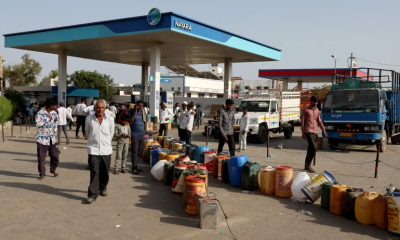
Oil prices hit 1-month high as US-Iran attacks dim Strait of Hormuz outlook
-

 Editorial2 days ago
Overwhelming fire power and stubborn resilience