
Business
No second chance for Sri Lanka, says CB Governor

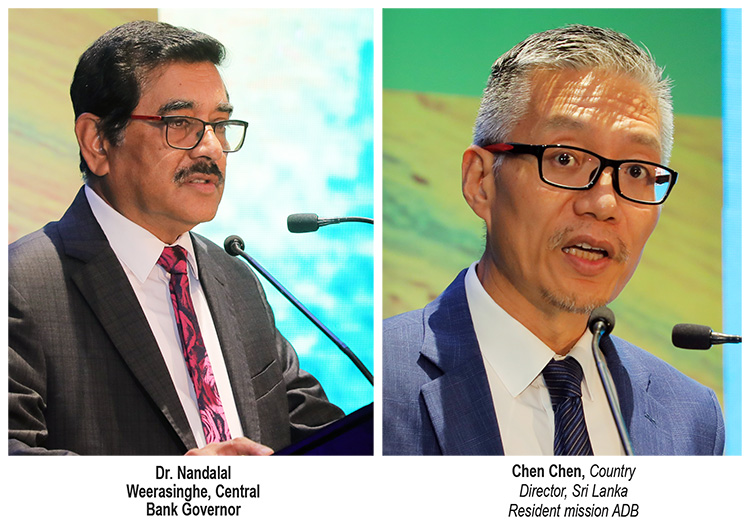
Turn this crisis into an opportunity – ADB
By Sanath Nanayakkare
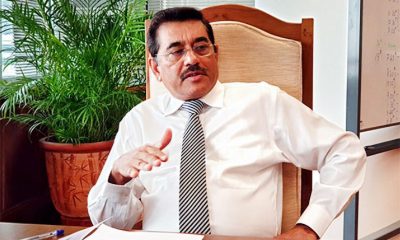
Sri Lanka will have no second chance if this time it forgets why it took the Extended Fund Facility from the IMF and goes back to doing things that create fiscal imbalances, like in the past 16 programs with the IMF, Central Bank Governor Dr. Nandalal Weerasinghe warned on Tuesday.
The Governor conveyed this well-informed message to all stakeholders in Sri Lanka at the Asian Development Bank’s “Serendipity Knowledge Program” (SKOP) event, at the Cinnamon Grand Colombo. ADB’s SKOP also saw the launch of the Asian Development Outlook for 2023.
Inviting the CBSL Governor as keynote speaker of the event, Chen Chen, Country Director, Sri Lanka Resident mission ADB, urged Sri Lanka to turn the current economic crisis into an opportunity and go for deep, comprehensive reforms to address the long standing issues inflicting the economy, assuring that the ADB will remain steadfast in its support to Sri Lanka.
“In 2022, ADB provided emergency support to sustain Sri Lanka’s basic services and livelihood and to mitigate the impacts of the economic crisis on the people, particularly on the poor and vulnerable groups. We also supported the essential trade facilitating the importation of medicine and fertilizers. ADB worked very closely with the private sector, the civil society and development partners to maximize the impact of its emergency assistance. We will continue this collaborative approach in ADB’s future assistance to Sri Lanka. One year on, since the unprecedented crisis, we hope the worst is already behind us. However, there are lessons to learn from the crisis. Moving beyond the near term outlook, the main question remains on tackling the long standing challenges of Sri Lanka. Although the country has come a long way since last year, there is a long road ahead for economic recovery. I hope this discussion and insights into ADB’s outlook for 2023 will help understand and navigate the uncertainties that lie ahead.”
Later on Dr. Nandalal Weerasinghe in his keynote speech said:
“The root cause of the economic crisis was the long standing fiscal imbalance we have carried forward over a long period of time. There is empirical evidence to show that structural fiscal imbalances and the current account balance had a strong association to the economic crisis. Sri Lanka is a classic case of a twin-deficit country over several decades. As a result, we have been experiencing recurring Balance of Payment (BOP) issues. This is the reason why we have sought IMF bailout packages for 16 times and the latest rescue package is Sri Lanka’s 17th IMF programme. This time it is different from the past because we are not only in a BOP crisis, we are also in a sovereign debt crisis–both occurring together. That’s why it is much more difficult and complex this time. We had to continuously seek bailout packages because we have never been able to address the fiscal imbalance on a permanent basis. The key theme of any IMF programme was revenue-based fiscal consolidation and some structural reforms related to fiscal imbalances. We agreed with certain policy packages with the IMF, got some money and focused on stabilization in the beginning and we even completed two three programmes successfully; for example from 2009- 2012 after the end of the war.
“But soon after completing the programme or in between , after achieving stability, we had forgotten why we took those loans; why we agreed with those bailout packages and took two steps backward without going forward. It made us go back to the same crisis creating current account imbalances, depletion of our reserves, depreciating our currency and thereby resulting in a repetition of the vicious cycle. As a result, the country came to a point of unsustainable sovereign debt situation. If we had sought an IMF bailout when we saw the balance of payment crisis coming, we could have stabilized the economy without landing on an economic crisis. In the past, people didn’t feel the pain of the crisis as a lot of people hadn’t known there was a looming BOP crisis. If we had taken timely action, we could have at least stabilized the situation without addressing long term structural issues.
“The lesson learned from this was to seek assistance without being too late so that people wouldn’t have felt so much pain arising from a crisis that led to hyper-inflation. All what the Central Bank did was aimed at avoiding the collapse of the economy and preventing the social and political unrest. Certain analysts claim that the Central Bank contracted the economy with its tight monetary policy and other policies. My argument is; due to the BOP crisis, the economy was going to collapse and we were able to limit the contraction to 7.8% last year. This is not a happy situation, but still the contraction was minimized and hyper- inflation was reversed despite many had thought it would go spiral over 100%. It is the fiscal policy that has to implement cost reflective utility prices and address revenue and expenditure, and also address expansive monetary financing which was the root cause of the hyper-inflation experience d last year.”
“The key lesson I learned from this crisis was; for Sri Lanka, I don’t think we have a second chance this time. We can’t afford to what we did with our past IMF programmes- take one step forward and stabilize and then take two steps backward and cause fiscal imbalances. This time we have no chance. This is why we need strong commitment from all stakeholders of the country to take forward the 4-year IMF extended facility and implement the targets of the IMF which are also the benchmarks of the government.
“This time we need to be able to not just meet those targets, but outperform them and get out of the crisis for good.”







Business
Ceylon Chamber welcomes IMF review approval, urges continued reform momentum amid external pressures


The Ceylon Chamber of Commerce welcomes and commends the Government of Sri Lanka on the successful completion and approval of the 5th and 6th Reviews under the International Monetary Fund (IMF) Extended Fund Facility (EFF) programme. This milestone enables Sri Lanka to access approximately USD 695 million in financing support, reinforcing confidence in the country’s ongoing economic recovery and reform agenda.
At a time of heightened global uncertainty and external sector pressures arising from the conflict in the Middle East, the Chamber believes this approval sends a strong positive signal to markets, investors, and the private sector. Continued engagement with the IMF programme remains critical to preserving macroeconomic stability, restoring investor confidence, and strengthening Sri Lanka’s external resilience.
The Chamber notes that the IMF review underscores the importance of sustaining structural reforms, including improving the investment climate, enhancing competitiveness, and accelerating infrastructure and institutional reforms that support private sector-led growth.
At the onset of the Middle East crisis, The Ceylon Chamber of Commerce submitted recommendations to the Government addressing several immediate economic and energy-related risks. These recommendations remain highly relevant in managing emerging pressures on the exchange rate, energy costs, and overall external sector stability.
In line with the Ceylon Chamber’s earlier recommendations, the following priority measures are reiterated:
Strengthen and optimize the fuel QR system as a digital platform to improve efficiency and facilitate better targeted support mechanisms for priority groups such as public transport and school transport operators, while maintaining cost-reflective pricing principles.
Continue to ensure clear and consistent communication on the direction of economic policy to further reinforce confidence among businesses and investors, support orderly exchange rate expectations, reduce market uncertainty, and sustain overall macroeconomic stability.
The Ceylon Chamber also emphasises the importance of accelerating reforms that improve Sri Lanka’s competitiveness in trade, investment, tourism, logistics, and digitalisation. Advancing these reforms will be essential to sustain and improve macroeconomic stabilisation and resilience. The Ceylon Chamber has also urged its members to act responsibly during this critical period by supporting measures that preserve economic stability and safeguard Sri Lanka’s long-term interests.
The Ceylon Chamber of Commerce remains committed to actively engaging with policymakers and stakeholders in supporting progressive economic reforms, the successful completion of future IMF programme reviews, and Sri Lanka’s transition towards a resilient and competitive economy.
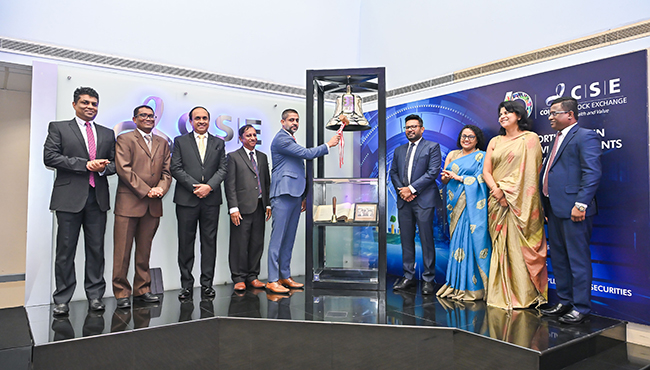
Abans Finance PLC (Abans Finance) recently marked the official listing of its maiden 13,384,000 debentures on the Colombo Stock Exchange (CSE) with a bell ringing and market opening ceremony held at the CSE trading floor.
The offer for subscription for the initial issue of ten million (10,000,000) listed, rated, senior, unsecured, redeemable five-year (2026/2031) debentures of LKR 100/- each, was rapidly oversubscribed, having received subscriptions for 13,384,000 debentures for a value of LKR, 1,338,400,000/-, reflecting strong investor confidence in Abans Finance’s strengths and the debt market.
Abans Finance is a licensed non-banking financial institution and subsidiary of the Abans Group and currently operates with nine branches, nine customer centres and four kiosks in addition to the head office, leveraging on the island wide presence of Abans Group to reach customers across the island. Abans Finance services include finance leasing, hire purchase, mortgage loans, personal loans, real estate development and acceptance of time and savings deposits. Founded in 2006, the Abans Finance was also listed on the CSE in 2011 and enjoys a Fitch Credit Rating of A – (lka) Stable Outlook.
Through its first debenture, which carries an “A-” (lka) rating from Fitch Ratings Lanka Limited and was managed by NDB Investment Bank Ltd, Abans Finance aims to expand its asset base, strengthen loan portfolios, grow its presence by leveraging the Abans Group financial ecosystem to drive digital transformation and deliver integrated solutions.
K.J.C. Perera, Chairman of Abans Finance PLC and keynote speaker at the ceremony, remarked upon the company’s debenture issue, commenting “This milestone underscores strong investor confidence in Abans Finance PLC and strengthens our capital base as we advance our strategy for sustainable growth and innovation.”
Delivering his welcome address at the event Rajeeva Bandaranaike, CEO of CSE, remarked upon the debenture listing, stating: “Today’s listing of the debt issue by Abans Finance PLC reflects a broader engagement by companies to use the capital market for their funding requirements. More recently we have seen a fair growth in the primary issuances of debt. In 2024 approximately LKR 95 Bn was from debt. In 2025, LKR 113 Bn was raised through debt – and in 2026 approximately LKR 60 bn was raised through debt.”
2025 saw 22 debt listings including 3 new companies listing on the exchange by way of debt initial public offerings (IPOs) including several firsts in the country from GSS+ debt instruments (Green, Social, Sustainability linked), Shariah compliant debt instruments and High Yield Bonds, with access to investors and brokers facilitated by a fully digitized CSE platform, which can be accessed through CSE’s website and mobile app.

Sun Siyam Pasikudah, Sri Lanka’s five-star boutique retreat and part of the Privé Collection within Sun Siyam, reinforced its commitment to community and conservation with a beach cleanup along Pasikudah Bay on 08th May 2026. Held under the group-wide Sun Siyam Cares umbrella, guided by “Caring for our People, Nature and Culture”, the morning brought together school students, hotel staff, and in-house guests for hands-on environmental action.
Unlike typical cleanup drives, this initiative placed education at its heart. Students from a local school joined guided sessions on coastal ecosystems, the impact of marine litter on biodiversity, and the role every individual plays in protecting Sri Lanka’s coastline, giving young people from the surrounding community a firsthand understanding of why this bay matters, ecologically, culturally, and economically.
Arshed Refai, General Manager of Sun Siyam Pasikudah, said: “What makes this cleanup different is who we did it with. When a child understands why this bay is worth caring for, its ecology, its beauty, what it means to the families who live here, that knowledge stays with them. That is the most sustainable investment we can make.”
Pasikudah Bay’s shallow, crystal-clear turquoise waters and the Eastern Province’s rich marine and cultural heritage, from centuries-old mosques and kovils to the vibrancy of Kattankudy, make it a coastline worth protecting. Participants spread across the shoreline collecting and sorting waste in line with the resort’s zero-waste management principles, while guests noted the activity deepened their connection to the destination beyond a typical resort experience.
Sun Siyam Pasikudah holds the Travelife Gold Certification across 147 criteria spanning energy, water, wildlife, waste, and community welfare. The resort grows over 38 varieties of fruits, vegetables, and herbs on its organic farm, operates solar-powered installations, has eliminated single-use plastics entirely, and sources locally wherever possible. The Sun Siyam Cares Fund supports CarePhant, backing the care of Kalo, a young elephant at the Elephant Transit Home in Udawalawe, ahead of his return to the wild in 2029.
As part of Sun Siyam Resorts, named Most Influential Sustainable Hotel Group of the Year at the 2025 GO TRAVEL Awards, initiatives like this reflect a sustained, year-round commitment to ensuring tourism on the East Coast is a force for renewal, not depletion. For reservations, visit www.sunsiyam.com/sun-siyam-pasikudah or call 065 205 5555.

Let us dispel the roots of greed, hatred, and delusion, and transform our lives into a nobel period that brings peace and serenity – PM

Prime Minister and United Nations Resident Coordinator discuss post-Ditwah recovery and humanitarian cooperation

Further embrace the values of Buddhism founded upon non-violence, compassion and boundless loving-kindness towards all living beings – President

Showers will occur at times in the Western, Sabaragamuwa and North-western provinces and in Galle, Matara, Kandy and Nuwara-Eliya districts

IMF urges Lanka not to meddle with exchange rate

Court orders arrest of Basil in Rs. 7.8m poll funds case

‘Dates have the highest sugar content to fight Coronavirus’

Sunday Island 27 December – Headlines

#SundayIsland 17th December – Headlines

Sunday Island – 28th March

Sunday Island Headlines – 21 March

Sunday Island – 21st February – Headlines
-

 News7 days ago
All-New GRAVITE launches at LKR 6.99 Mn
-

 Features7 days ago
The NPP’s pivot to the past
-

 News6 days ago
Police probe underway to ascertain links between criminals deported from UAE and local politicians
-
 News5 days ago
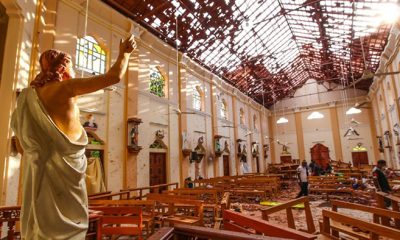
Easter Sunday carnage: Court told Maulana’s statement cannot be accepted without cross-examination
-

 Features7 days ago
End of Peacekeeping
-
 Opinion5 days ago
Undermining the democratic political framework
-

 News5 days ago
UK passport holder hiding here wants to have deportation order rescinded to leave without blemish
-

 Features2 days ago
The Division Bell Mystery