
Sports
“You can’t take a break for education”-Lalith Priyantha

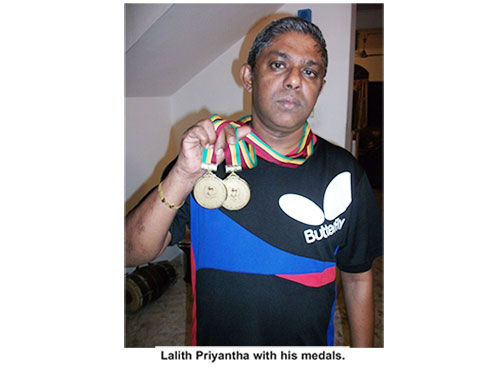
A table tennis legend speaks
by A Special Sports Correspondent
Table tennis was one of worst affected sports due to the pandemic. One reason for this could be that most players are also engaged in some kind of coaching; hence there being a loss in income.
Table tennis legend and veteran’s player Lalith Priyantha was one such player. He said that he survived a difficult period.
We can’t sometimes fathom as to how Priyantha stays in shape and contests the veterans’ events. Times were hard during the past one year without coaching and Priyantha looks back and can send a sigh of relief.
He coaches two schools and Methodist College, one of those schools, was good enough to release his salary in full despite table tennis activities coming to a standstill in the country. Life for table tennis coaches looked bleak for almost a full year because health authorities banned all sports in the island.
Exactly after March last year the table tennis players got an opportunity last February to access their growing skills when they contested the All Island Ranking Table Tennis Tournament conducted by the Western Province Table Tennis Association for the year 2020. Afterwards they played in another All Island Ranking Table Tennis Tournament in Kegalle which was conducted by the Sabaragamuwa Province Table Tennis Association, also of these being events in the table tennis calendar for year 2020.
Priyantha is one person who sought media attention for the sport during the pandemic. He organised press conferences and said table tennis would be one of the safest disciplines to conduct because the players positioned themselves at a safe distance during matches. He is of the opinion that the Table Tennis Association of Sri Lanka (TTASL) must be innovative and shouldn’t wait till the government or the Ministry of Sports clears the path for them.
The sport over the years lacked the involvement of former national players as administrators. The reason for this is a rule brought by the Minister of Sports that individuals involved in coaching can’t hold office in national sports associations. That literarily ruined the chances of Priyantha serving the TTASL; which he once did in the capacity of president. But he states that he is willing to serve the TTASL in an advisory role if he along with past national players are drafted into a committee to help the sport. He states that much can be done to take the game to schools which have not had the table tennis experience.
One thing that is to his advantage is that he still plays competitive table tennis and contests all the veterans’ tournaments. “This helps me to be in touch with the players. I can also relate to them because I also coach schoolgirl table tennis players. A coach must be able to be the sparring partner of players and play his shots” said Priyantha who is still fit for a 55 year old veteran player. For the record he is the present singles champ and has won the doubles and mixed doubles events at the national veterans’ table tennis tournaments.
Priyantha is happy about the present facilities the players enjoy. Most tournaments are now played on carpet and the players play with the best rackets and shoes. But it was not so many years ago. Priyantha remembers wearing t-shirts which were not stretchable; which made playing shots all the more difficult. But the sun shone on him in 1987-1988 when Butterfly company (Japan) sponsored him offering him rubbers, rackets and t-shirts. That was a boon, but he had other advantages. He was squint-eyed so opponents struggled to read his movements. He finished off his opponents with his forehand play; hence his backhand rubber was rarely wasted.
If there is one word that describes this man it’s ‘versatile’. Of course during his playing days he was known by the press by a gamut of names: Piranha, Dark Horse, King of Ping Pong and King Kong of Ping Pong. But after retiring in 1993 after the national players’ tour to Germany he stepped on his coaching and also served the association as an administrator and Sri Lanka coach.
Describing his career in table tennis he compared it to following a map and not as a venture where he was achieving one goal after another. He enjoyed playing table tennis and one of the benefits or fringe benefits he received was winning medals. He won on most days he played, but there were also days where he lost. Winning a tournament and waiting anxiously overnight to read about it in the newspapers the next day destroyed his sleep.
He is a coach who creates bridges so that the younger generation of players can reach him. Apart from coaching the players at the two schools he is coaching Priyantha also undertakes private coaching. He would be mindful when talking with youngsters and avoid saying, at any cost, words like, “During my time things were different and we did things differently’. That would, according to Priyantha, burn the bridges that would connect the present generation with the past. “I never compare people in different eras because the present generation wouldn’t relate to that. I just appreciate and acknowledge their skills and effort” said Priyantha who during his youth was rated as the island’s number one player and also became the Sri Lankan male player with the highest world ranking.
He wants the present players to do well and bring glory to the country. According to Priyantha winning a medal outside South Asia is extremely difficult for Sri Lankans, but not unthinkable if the right contributions and exposure are provided for the players. In one rare instance of comparing eras Priyantha said that players during his time played in about 10 domestic tournaments while the present generation players are contesting as little as 3-4 domestic tournaments per year; hence lesser opportunities for the present players to grow and much easier to secure player rankings.
He is also concerned about education clashing with table tennis in a country like Sri Lanka. “Players in this country think very differently and take a break from the sport to pursue exams. This is an unhealthy practice and something of great concern. In other countries players manage both table tennis and education and this method of balancing sports and studies continues throughout their sports careers till they complete their degrees,” reminded Priyantha.
The veterans table tennis player wishes to work with the younger generation of players for many more years. He wants a player to come up from the present set of players and make Sri Lanka proud. He wishes them to be better players and at the same time be educated individuals. But he wishes them to see the thin dividing line that separates those who receive an education and end up as average performers and those who receive the same education and become extremely successful and to be in that second group he wishes his chargers to cultivate intelligence.





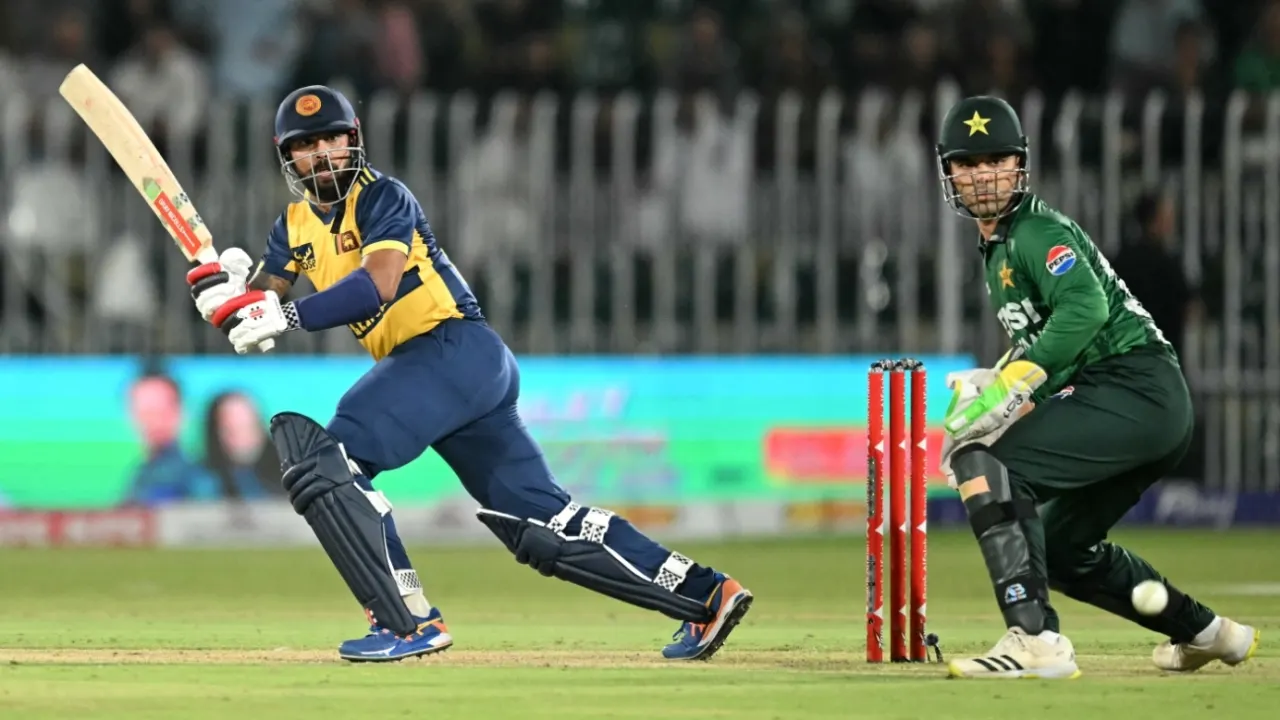
The series may have been lost but Sri Lanka will be feeling a lot better about themselves following a comprehensive win in the third and final T20I. Kusal Mendis’ 87 off 48 led the way in the chase, as Sri Lanka hunted down Pakistan’s total of 168 for 8 with 17 balls and eight wickets to spare.
There was the customary fifty-plus score from Sahibzada Farhan but this time Sri Lanka’s bowlers ensured their plans were executed with more precision than had been for much of the tour. This was highlighted by the fact that aside from Farhan, only one other Pakistan batter scored more than 20 – Arafat Minhas with 34.
Dasun Shanaka was the unlikely hero with the ball, picking up figures of 3 for 21, while Vijayakanth Viyaskanth – in for Maheesh Theekshana – too was pivotal in halting the run-scoring during his four overs which went for just 23 and brought about one wicket. There were two wickets apiece too for Eshan Malinga and Nuwan Thushara.
Then with the chase, Lahiru Udara fell early – even though SL opted against a review that would have reprieved him – but after that Kusal put together stands of 59 and 98* with Sineth Jayawardena (38 off 26) and then Kamindu Mendis (40 off 27) to see the game to a close with quite some degree of comfort.
It was Farhan once more putting Sri Lanka’s bowlers to the sword as he pummelled seven fours and three sixes across his 76-run, 47-ball innings, but that Sri Lanka still managed to restrict Pakistan to under 170 highlights just how well the Sri Lankan bowlers executed their plans against the rest of the batting.
After yet another quick start from the openers Malinga’s outstanding opening over – the fourth of the inning and a double wicket maiden – brought Sri Lanka right into the contest, as both Fakhar Zaman and Maaz Sadaqat were removed trying to hit out.
This though did not slow down Farhan, as he and Hasan Nawaz struck five boundaries over the next two overs to end the powerplay on 57 for 2. This though was where Sri Lanka put on the squeeze, led by the excellent Viyaskanth.
The 24-year-old legspinner from Jaffna did his chances of more starts no harm at all with a brilliant spell of defensive bowling. On a wicket with good bounce and the ball coming on well, Viyaskanth kept his trajectories flat and speeds consistently between 90-100kph.
It meant runs were being blocked up from one end, a T20 currency that you could argue is more important than wickets. Benefitting from Viyaskanth’s control and defensive aptitude was Shanaka, who himself has been showing increasing bowling nouse as of late. Despite possessing pace in the mid 120s, Shanaka’s variations in pace and length proved frustrating for the Pakistani batters as they time and again failed to get him away for significant runs.
But at the other end Farhan was playing his own game as he proceeded to pretty much bat right through the innings, falling only off the penultimate ball of the innings. While Arafat’s runs were also vital, Farhan was no doubt the difference between Pakistan stumbling to a score below 140 and what they eventually managed.
It’s been a roller coaster couple of months for 21-year-old Sineth Jayawardena. Following an exceptional breakout season in Sri Lanka’s premier domestic T20 tournament, where he struck 372 runs across nine innings to help Tamil Union to the title, he earned a call up to the national side for the Asian Games before making the national side proper for the tour of Pakistan.
But it hasn’t been his batting that initially caught the eye; his dropped catch off Farhan proved to be pivotal sliding doors moment in the second game, and in this game it was his over-exuberant throw to the keeper that meant Sri Lanka missed out on a crucial run-out chance of Arafat just as he had come to the crease. That Arafat proceeded to crack 34 off 20 from then on, was the proverbial salt in the wounds.
Jayawardena’s inexperience was then further highlighted when his opening partner Lahiru Udara was trapped lbw by a booming in swinger from Imran Randhawa, only for him to opt against a review presumably on the advice of his partner. Replays showed that the impact had been outside off. Was Jayawardena tentative in pushing for a review owing to his earlier lapses? Perhaps.
But the flip side of the unpolished nature of his game – rough edges that can be only sharpened with game time – was on full display with the bat. His 26-ball stay fetched five fours and two sixes, and while there were 13 dot balls, nearly all of those were in service of an attacking shot of some sort. It was a showcase of unbridled intent.
Gary Kirsten spoke before the game about the T20 side being in an “exploratory phase” ahead of the next World Cup still two years away. In that sense, in Jayawardena there seems to be a talent well worth exploring, rough edges and all.
Kusal has been key to several of Sri Lanka’s wins, and it’s no surprise that in the first two games, Kusal falling cheaply meant they struggled with the bat.
Here though, after a subdued start where Kusal deferred to the rawer Jayawardena, he grew into his innings and by the end of the chase was striking at a rate above 180. Alongside him, Kamindu provided an ideal foil with his strike rotation – he faced just four dot deliveries across his 27-ball innings.
It would not be wrong for Sri Lanka to be worried about their over-reliance on their skipper, but in the absence of other star man Pathum Nissanka, the likes of Jayawardena and Kamindu stepping up are definitely promising signs for the future.
Scores:
Sri Lanka 172 for 2 in 17.1 overs (Sineth Jayawardena 38, Kusal Mendis 87*, Kamindu Mendis 40*; Mohammad Imran 1-31, Arafat Minhas 1-26) beat Pakistan 168 for 8 in 20 overs (Sahibzada Farhan 76, Fakhar Zaman 12, Hasan Nawaz 16, Abdul Samad 15, Arafat Minhas 34*; Nuwan Thushara 2-38, Eshan Malinga 2-38, Vijayakanth Viyaskanth 1-23, Dasun Shanaka 3-21) by eight wickets
[Cricinfo]

Pathum Nissanka’s return to the red-ball fold provides a downtrodden Sri Lanka with a timely boost, while debuts are also in the offing for wicketkeeper Anjala Bandara and seamer Eshan Malinga after both were named in Sri Lanka’s 15-man squad for the upcoming two-Test series against Pakistan.
The 22-year-old Bandara is tipped to make the playing XI following Kusal Mendis’ promotion to captain, with the longtime Test keeper now likely to play solely as a specialist batter. Malinga’s inclusion is less certain, with Asitha Fernando, Lahiru Kumara, Milan Rathnayake and Dilshan Madushanka – who returns to the squad having been omitted from the one named for the second Test against India – all in line to make up Sri Lanka’s pace contingent. Dinesh Chandimal, who missed the second India Test with an injury, is also in the squad.
Making way are Kamil Mishara and Sahan Arachchige – both of whom had drafted in for the second Test against India – as well as Lahiru Udara, Niroshan Dickwella and Vishwa Fernando.
Malinga’s inclusion comes as Sri Lanka’s red-ball fast-bowling stocks had been waning. Former skipper Dhananjaya, who has been retained in the squad, had been vocal during the India tour of Sri Lanka’s need for more express seamers in the playing XI – aside from Lahiru Kumara, who is capable of clocking speeds in the 140kph range, most other options tend to veer around the low 130s. Malinga is certainly capable of matching Kumara on the speed gun, and that could point towards a potential first Test cap.
Bandara has been a player of genuine promise since making his debut in 2022, with his 31 first-class matches fetching 2239 runs at an average 65.85. There had been a clamour among fans for The Colombo CC keeper to be included in the squad to face India, but that spot was eventually taken by Dickwella.
The rest of the squad pans out as expected, with Nissanka’s return the headline. Pasindu Sooriyabandara, who made his debut earlier this year against India, retains his place ahead of the more experienced Udara. However if Bandara does take up wicketkeeping duties as expected, it Dhananjaya could be the odd man out, with Chandimal, Kamindu Mendis, Sonal Dinusha and Kusal Mendis all assured a spot in the playing XI. Sri Lanka have two spin bowling options in Prabath Jayasuriya and Keshara Nuwantha.
The first Test will take place in Rawalpindi on November 9.
Sri Lanka squad for Pakistan Tests
Pathum Nissanka, Pasindu Sooriyabandara, Dinesh Chandimal, Kamindu Mendis, Sonal Dinusha, Kusal Mendis (capt), Dhananjaya De Silva, Anjala Bandara, Keshara Nuwantha, Prabath Jayasuriya, Milan Rathnayaka, Lahiru Kumara, Asitha Fernando, Dilshan Madushanka, Eshan Malinga
[Cricinfo]
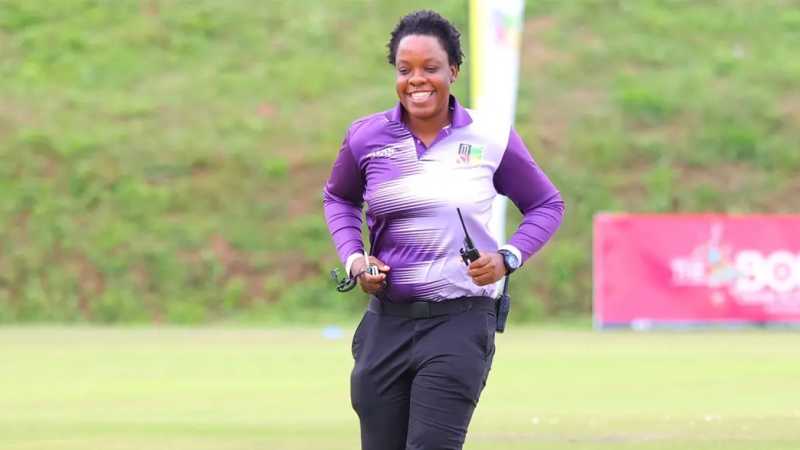
Former Zimbabwe fast bowler and umpire Sarah Dambanevana passed away in Harare on Monday. She was 36.
A Zimbabwe Cricket release said Dambanevana was in hospital receiving care since undergoing a medical procedure in March.
Her senior international umpiring career began on 2 September 2023, and she went on to officiate at the Women’s T20 World Cup 2024 in the UAE and the Women’s ODI World Cup 2025 in India and Sri Lanka, where she was part of the tournament’s historic all-female panel of match officials.
Prior to that, Dambanevana officiated in the final between India and England at the 2023 Under-19 Women’s T20 World Cup in South Africa, becoming the first Zimbabwean woman to umpire a World Cup final.
Overall, she officiated in 63 senior internationals, comprising 42 women’s T20Is, 11 women’s ODIs and 10 men’s T20Is, alongside her assignments in domestic cricket and global youth tournaments.
Dambanevana also represented Zimbabwe as a player between 2009 and 2014, including at the World Cup Qualifier in 2011. She joined the ICC development panel of umpires in 2022.
“Sarah served Zimbabwe with distinction, first as a player and then as an umpire whose ability earned her a place on the world stage,” ZC chairman Tavengwa Mukuhlani said. “Watching her stand in a World Cup final was a moment of immense pride for our cricket community and our country. She showed young Zimbabwean women that they belong at the highest levels of the game, including in roles where opportunities had long been limited.
“Through her achievements, she opened doors and gave others the confidence to pursue their own ambitions. We will remember her dedication, her professionalism and her willingness to help others grow. Her passing leaves a painful void in our cricket family, but the example she set will continue to inspire those who follow in her footsteps.”
(Cricinfo)

Pope diagnosed with lung cancer but had successful surgery, Vatican says

Expedite the cleaning of Colombo’s canals and drainage systems within the next two weeks – PM instructs officials

Kusal Mendis’ unbeaten 87 hands Sri Lanka consolation win

Cabinet approves redrafting of State Assets Management Act
Cooperative Employees Commission Act No. 12 of 1972 to be amended
Dilki Wathsala Marambage appointed as Director General of the Department of Technical Education and Training

‘Dates have the highest sugar content to fight Coronavirus’

Sunday Island 27 December – Headlines

#SundayIsland 17th December – Headlines

Sunday Island – 28th March

Sunday Island Headlines – 21 March

Sunday Island – 21st February – Headlines
-

 Features6 days ago
The Sri Lankan who made Scottish history
-

 Sports6 days ago
Nissanka absence opens door for Sri Lanka’s young guns
-

 News5 days ago
NDB fraud Rs 60mn more than reported
-

 News7 days ago
Gnansara Thera to be assigned to prison printing section: Officials
-

 News5 days ago
Removing monk’s robes matter for Sangha to decide: Mahanayake Theras
-
 News7 days ago
OIC of FCID summoned before Maligakanda Magistrate
-
 News6 days ago
Shiranthi R remanded until 13 Oct.
-

 Features6 days ago
Future of Sri Lanka’s state university system: Should it be shut down and reopened?