
News
Women Parliamentarians’ Caucus calls on all to stand in solidarity with the Global Activism against Gender-Based Violence

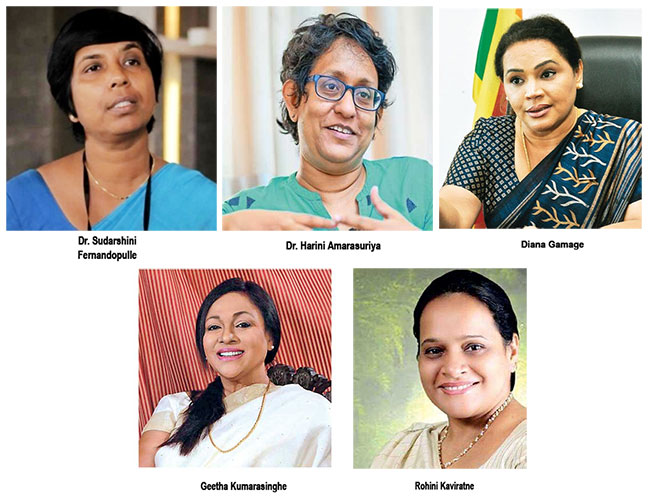
The Women Parliamentarians’ Caucus is calling on all Sri Lankans to pledge solidarity with the Global Activism against Gender-Based Violence (GBV) that will be carrying out a series of advocacy measures during the 16-day campaign against Gender-Based Violence.
The female parliamentarians’ movement has said that while Sri Lanka is facing new vulnerabilities with the current economic crisis, women and girl children are at greater risk.
The Caucus has, in a statement, noted that even prior to the economic crisis, women and the girl child did not enjoy complete freedom, opportunities and safety due to the grave human rights violation of gender-based violence.
The Women’s Wellbeing Survey 2019 conducted by the Department of Census and Statistics reported that during their lifetime, 20 percent of the ever-partnered women have faced physical and/or sexual violence by an intimate partner and that 25 percent of women have experienced physical or sexual violence by a partner or a non-partner after 15 years of age. 18 percent expressed that they were subjected to economic abuse by a partner in their lifetime. 21 percent of the women who experienced violence by a partner had never expressed it to anyone before the interviews.
“The economic crisis has certainly made these already vulnerable individuals at further risk. High inflation rates and the resulting hunger, nutritional crisis, expenditure struggles at homes, rising poverty levels, social unrest, reduction in healthcare assistance including reproductive health and other services would only make women and girls more vulnerable to gender based violence and its resultant adverse impact on them,” the statement said.
The global theme of the campaign 2022 is UNITE! Activism to end violence against women and girls.
“It emphasises that without unity GBV cannot be combatted, thus calling on governments, development partners, CSOs, youth, media and all other stakeholders to come together to fight against GBV. Therefore, the 16 days of activism against GBV is an important advocacy period for our goal to advocate for and ensure equal grounds for women in Sri Lanka.” Dr. Sudarshini Fernandopulle, Chairperson, Women Parliamentarians’ Caucus (WPC) said.
MP Rohini Kaviratne, Deputy Co- Chairperson, WPC said GBV is nothing new to women in Sri Lanka. “We as women have to face it always. But, that doesn’t make it okay. We cannot let it be normalised. As women parliamentarians we always face verbal violence based on our gender. During elections, and whenever someone needs to disgrace us, the most common weapon used is our gender roles and the stereotypical thinking that stigmatised our roles in the public sphere and stepping out of the house to be a leader in politics, as a female parliamentarian. We should fight this. We should fight any form of GBV.”
“Today we enter into this year’s 16 days of global activism against GBV, within this grave context in Sri Lanka. As women parliamentarians, we take it very seriously. We have always sought to bring about, or at least improve gender equality in Sri Lanka as people’s representatives,” Geetha Kumarasinghe, State Minister of Women and Child Affairs said.
“We urge all Sri Lankans to have zero tolerance for any kind of violence or sexual harassment committed against any human being by showing strong aversion coupled with adequate responses expressing zero tolerance for such acts of GBV. It is our indifference that causes the perpetrators to normalize these human rights violations they commit. So, we should act, not be silent and be passive observers,” Diana Gamage, State Minister of Tourism urged.
“We understand that this is an era where society has lost trust in parliamentarians in general. However, despite our party differences, we, as twelve female parliamentarians, stand in unity with the global community to fight against GBV, particularly to empower women in Sri Lanka to stand against GBV,” MP Manjula Dissanayake, Member of WPC commented.
Parliamentarian Dr. Harini Amarasuriya, Member of WPC said the Caucus is in the process of supporting the drafting of a Women’s Bill to be presented to parliament.
“However, we are also conscious that laws alone do not effect change and that there is a lot of work that needs to be done institutionally and politically to ensure that the bill when passed will make a meaningful difference in the lives of women in Sri Lanka,” she added.
To stand in solidarity with this global movement, the female parliamentarians will be carrying out a series of advocacy measures starting from 25th November.
They are conducting two panel discussions on combating GBV on 28th and 29th November and also a press conference on 1st December.
On the day of the press conference, a wristband with the message “Let’s Unite to end Gender Based Violence” will be tied on Parliamentarians as a solidarity measure and all women MPs will be invited to come in Orange attire. This will take place in the recently established Gender and Social Inclusion Section of the Parliament Library which contains publications relevant to gender equality and social inclusion available for reference by all MPs.
All these activities will be carried out hand in hand with the Parliament Communications Department and the Parliament Secretariat in the hope of raising awareness among Parliamentarians and the public against GBV.

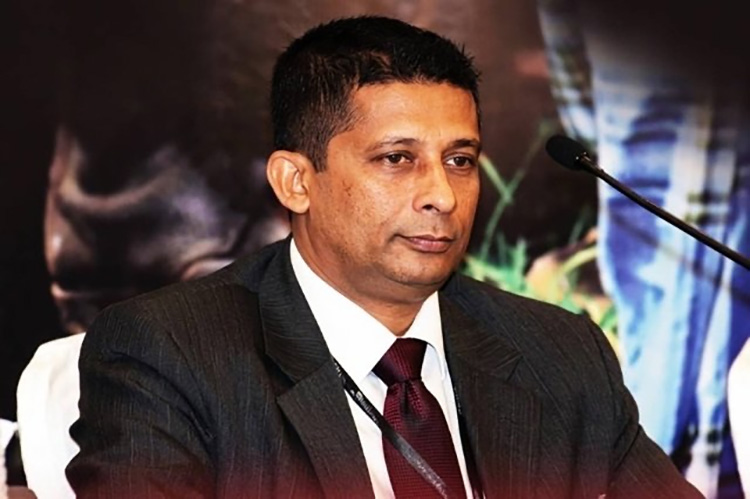
The government has chosen not to respond to questions raised by the United Nations Human Rights Council (UNHRC) regarding the detention of retired Maj. Gen. Suresh Sallay in connection with the ongoing investigations into the 2019 Easter Sunday attacks.
The Criminal Investigation Department (CID) arrested the ex-official in late February this year. The Special Rapporteur on the promotion and protection of human rights and fundamental freedoms while countering terrorism, the Working Group on Arbitrary Detention, the Special Rapporteur on the right of everyone to the enjoyment of the highest attainable standard of physical and mental health and the Special Rapporteur on the independence of judges and lawyers have jointly raised the issue on 20 July, 2026.
Drawing attention of President Anura Kumara Dissanayake to what they called alleged arbitrary detention of Sallay, former Director General of the State Intelligence Service (SIS) and former Director of Military Intelligence (DMI), under the Prevention of Terrorism Act (PTA), as well as allegations of torture and other cruel, inhuman or degrading treatment while in custody, resulting in the grave deterioration of his health, and imminent risks of retaliation through further torture and ill-treatment resulting in irreparable harm, should he be released from hospital and returned to custody, the UN sought the government explanation with a 60-day period.
The UN has stated: “This communication, and any response received from your Excellency’s Government, will be made public via the communications reporting website at the 60 days mark. Should your Excellency’s Government respond within 60 days, both the communication and the response, may be published before the 60 days mark. The communications and responses
will also be made available in the subsequent periodic report to be presented to the Human Rights Council.”
In the absence of the government’s response, the UN posted the letter, dated 20 July, 2026, addressed to President Dissanayake. The full letter can be accessed https://spcommreports.ohchr.org/TMResultsBase/DownLoadPublicCommunicationFile?gId=31125
News
Section of wartime KKS High Security Zone vacated to facilitate economic development in the area

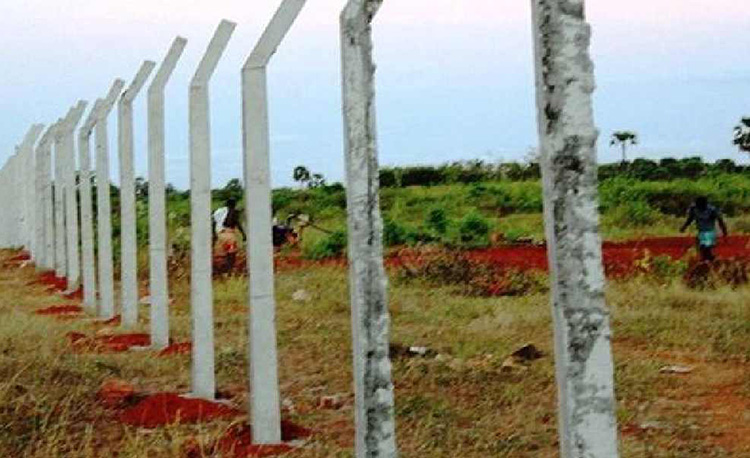
The Army, last week, vacated an area, within the wartime high security zone in the Jaffna peninsula. The Defence Ministry said that an extent of 187.56 acres of land, belonging to the Cement Corporation in Kankesanthurai, Jaffna, has been released by the military. The released land, located in Grama Niladhari Division J/233, Kankesanthurai West, within the Valikamam North (Tellippalai) Divisional Secretariat Division, had been utilised by the Sri Lanka Army since the middle of 1997.
The release of the 187.56-acre extent forms part of the initiative to make State land available for the proposed investment zone in Kankesanthurai, thereby facilitating future investment and economic development in the area.
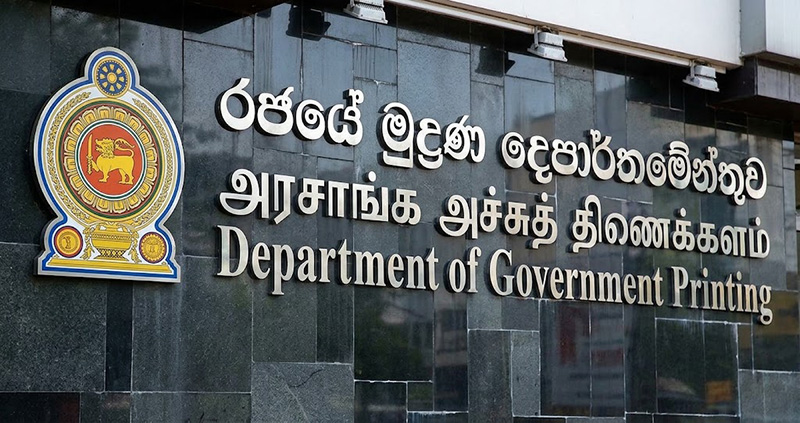
A complaint has been lodged with the Colombo Fraud Investigation Bureau against the Government Printer and the Secretary to the Ministry of Media regarding the online release of falsified documents bearing a forged Speaker’s certificate.
Attorney-at-Law Aruna Laksiri has lodged a complaint with the Colombo Fraud Investigation Bureau requesting legal action against the Government Printer of the Department of Government Printing (No. 118, Dr. Danister de Silva Mawatha, Colombo 08), Prasanna Jayaratne, and the Secretary to the Ministry of Mass Media (Asidisi Medura, 163, Kirulapone Mawatha, Polhengoda, Colombo 05), Dr. Anil Jasinghe.
The complaint alleges the commission of offences by forging and uploading falsified documents online using a forged Speaker’s certification, failure to perform statutory duties, and misappropriation of public property.
The complaint states that a copy of the English translation of the 22nd Amendment to the Constitution was downloaded and printed from the official website of the Government Printing Department (www.documents.gov.lk), which operates under the Ministry of Mass Media. On its outer cover and on page 1, the text “certified on 25th of September, 2026” is inscribed inside brackets.
The complaint pointed out that the Speaker has certified an English translation. Under Articles 23, 79, 83, and 80 of the Constitution, Parliament enacts laws and the Speaker certifies bills strictly in the Sinhala and Tamil languages; under the Constitution, therefore the Speaker cannot apply such certification to an English translation.

Showers or thundershowers will occur at several places in the most part of the island after 1.00 p.m

GS1 Lanka drives Sri Lanka’s shift to 2D barcodes

Geneva takes up Sallay’s case and govt. ignores opportunity to answer accusations

Section of wartime KKS High Security Zone vacated to facilitate economic development in the area

Lawyer lodges complaint against Govt. Printer, Media Ministry Secy.

Sri Lankan troops in joint anti-terrorist exercise in Russia

‘Dates have the highest sugar content to fight Coronavirus’

Sunday Island 27 December – Headlines

#SundayIsland 17th December – Headlines

Sunday Island – 28th March

Sunday Island Headlines – 21 March

Sunday Island – 21st February – Headlines
-

 Latest News5 days ago
Gold winner Tharanga gets brand-new Honda Vezel from SLAAJ
-

 Features5 days ago
Why Sri Lanka needs an Inclusive Civic Nationalism – urgently
-

 News4 days ago
US-assisted ‘Ice’ detection: NPC to examine IGP’s move to transfer drug-busting team
-

 Features6 days ago
Thailand’s biggest new global star …
-
 News6 days ago
First cases taken up by SC after enactment of 22A dismissed
-

 News5 days ago
Civil society activist accuses govt. of favouring Ven. Gnanasara
-

 Editorial3 days ago
Colombo Port drug bust: The plot thickens
-

 Editorial6 days ago
Aftershocks of 22A