
News
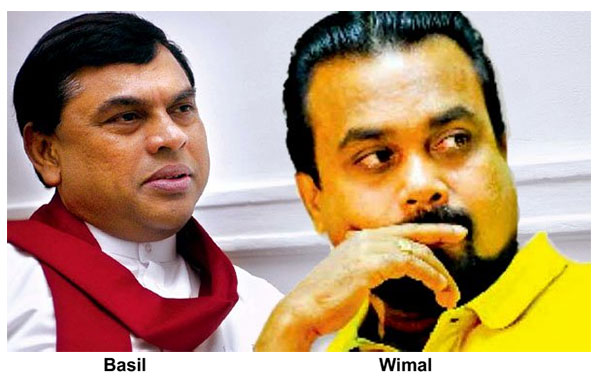
Wimal blames Gota’s naivety, Basil’s arrogance for current situation

By Rathindra Kuruwita
It would have been better for the country if former Finance Minister Basil Rajapaksa was allowed to leave Sri Lanka when he attempted to do so in early July, National Freedom Front (NFF) leader, Wimal Weerawansa said.
“Basil tried to go, but officers at the airport didn’t let him go because passengers opposed it. Three officers at the counters left their duties because a passenger took their photos and threatened them. This was a time when the protests were at their zenith. Because of that Basil didn’t go. It would have been better if he had gone,” he said.
Weerawansa said that a person doesn’t need to be in Sri Lanka to investigate whether he had engaged in corruption and that there are UN mechanisms that can be used to punish such individuals and reclaim their assets.
“So there was no reason to keep him. If he had been allowed to go, he wouldn’t still be playing such a big role here,” he said.
The NFF leader said that successive Sri Lankan governments, after 1977, are responsible for the current economic crisis.
“We created this economic mess, and we haven’t really seen the worst of this crisis. Before 1977, Sri Lanka had a positive balance of payment, for the most part. Now it’s the other way around. Especially in the 60s and the 70s, Sri Lanka was trying to manufacture things. A lot of credit must go to then Prime Minister Sirimavo Bandaranaike. I am not saying that things were great, but we were making progress. But this was cut short in 1977. JR Jayawardene opened up Sri Lanka before our industries could mature. Now we are enjoying the ‘benefits’ of the system that JR created,” Weerawansa said.
The NFF leader said that the crisis was exacerbated by the actions of the Rajapaksa family, in the last few years, especially Gotabaya and Basil Rajapaksa.
“The main reason was Basil, but Gota also played a big role in creating this mess. Gota stuck to his family and let them run the show. This is not what the people wanted,” he said.
Weerawansa added that Gotabaya also had no political experience and they had asked him to discuss with trusted Ministers, and expert advisors, before taking serious decisions.
“Because he had no political experience, he needed to talk to people who know how things operated. But he didn’t do that. There was no discussion or consensus building. I don’t think Gotabaya even consulted the other Rajapaksas before deciding on banning agro-chemicals overnight. Therefore, a lot of necessary decisions were not made and a number of errors were made. Things were going down really fast and we tried to warn him, we tried to fix things from within. When we failed, we told the people where the country was heading and Gotabaya responded by firing us,” he said.
The NFF leader said the during party leaders’ meetings, former Finance Minister Basil Rajapaksa would act like a slave owner and treated party leaders like his personal property.
“He used to talk to respected politicians like they were peasants and he was the landlord. He thought their good nature was a sign of weakness. Because of this arrogance, Gotabaya now languishes in a hotel in Thailand and he can’t even come out,” he said.





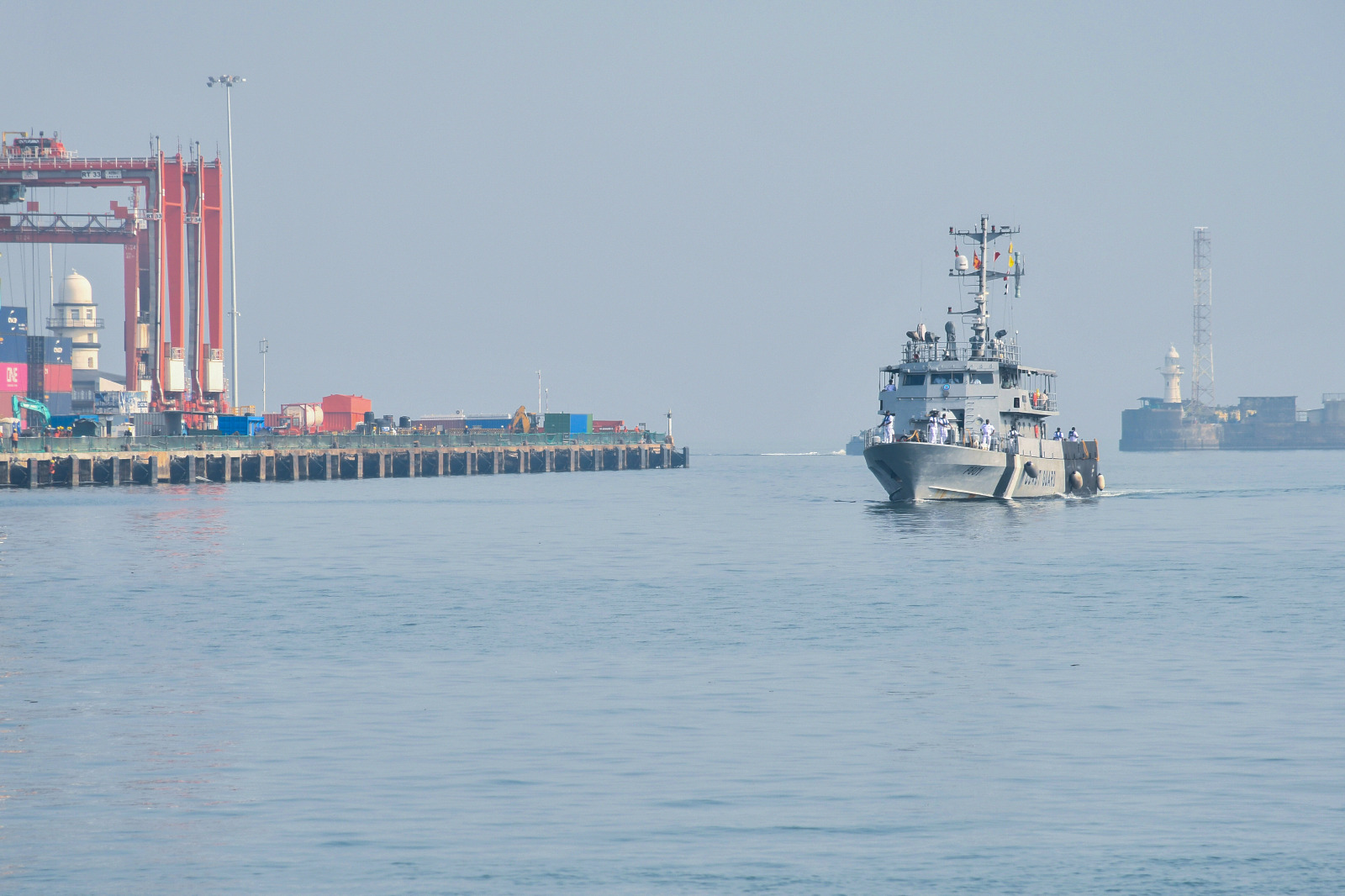
The Maldives Coast Guard Ship Huravee arrived at the Port of Colombo for replenishment purposes on 02 Mar 26. The visiting ship was welcomed by the Sri Lanka Navy (SLN) in compliance with time-honoured naval traditions.
The ship is a 48.9m long Offshore Patrol Vessel which is commanded by Lieutenant Colonel Ahmed Nafiu Mohamed.
Meanwhile, the ship’s crew is scheduled to visit several tourist attractions in the city of Colombo, during their stay in the island.
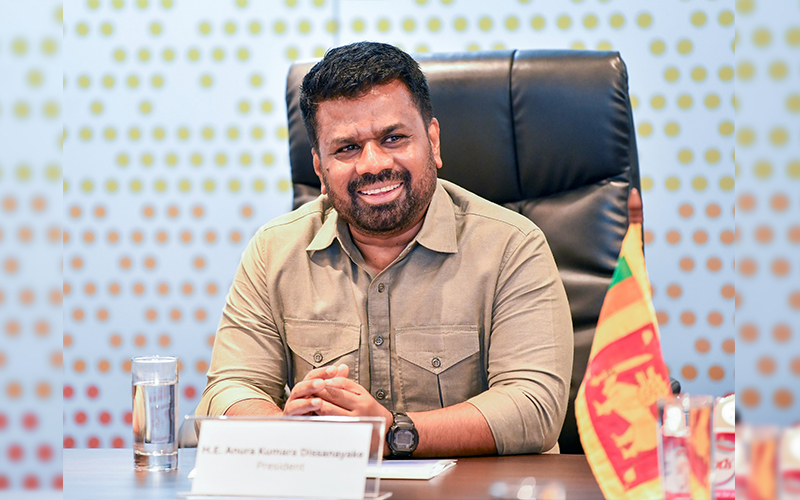
President Anura Kumara Dissanayake yesterday called for an immediate and peaceful resolution of the escalating Middle East conflict, warning that the crisis could have far-reaching repercussions on the global economy, including Sri Lanka.
Addressing Parliament, the President stressed that no military conflict benefited humanity, particularly at a time when destructive military technologies were rapidly advancing.
“Any military conflict does not create a favourable situation for any group of people,” he said, urging all parties to make urgent commitments towards peace. “As Sri Lanka, our position is that all parties involved in this war must, as soon as possible, take steps toward a peaceful world.”
He cautioned that Sri Lanka could not remain insulated from the fallout from the conflict, noting that disruptions to global oil and gas supplies, threats to migrant workers in the Middle East, and potential shocks to tourism, remittances, shipping and aviation were real concerns.
A national programme was being formulated to mitigate the impact, he said, adding that its success would hinge on broader international efforts to restore stability, the President said.
Acknowledging public anxiety shaped by past economic hardships, President Dissanayake said social stability could not be ensured through rhetoric alone but required tangible guarantees that citizens would not face another crisis.
While noting that the government had successfully navigated multiple challenges since assuming office, he described the Middle East situation as distinct due to the uncertainty surrounding its duration and outcome.
The government, he said, was closely monitoring developments. The Central Bank had conducted a review with a report on the likely economic impact expected shortly. The Ministry of Finance is also preparing an assessment of the potential effects on public life, alongside measures to ensure the uninterrupted provision of essential services locally and for Sri Lankans overseas.
“The primary responsibility for finding a path out of the crisis rests with the Government,” he said, calling on Parliament and the public to collectively confront the challenge under a unified national plan.
Providing a detailed account of the country’s energy reserves, the President said storage capacity rather than supply remained the key constraint. Excluding the Indian Oil Corporation tanks in Trincomalee, total storage capacity at Kolonnawa and Muthurajawela stands at approximately 150,000 metric tons.
Diesel stocks were currently sufficient for 33 days, with refining contributing around 1,800 metric tons daily. Petrol reserves will last 27 days, with a 35,000 metric ton shipment due on March 7 or 8 expected to extend availability to around 40 days.
Aviation fuel stocks are adequate for 49 days, supported by both daily refining and imports. Scheduled shipments include vessels from RM Parks on March 14, Sinopec on March 17, IOC on March 21 and the Ceylon Petroleum Corporation on March 28.
Crude oil supplies were sufficient to operate the refinery for 26 days, with an additional shipment expected to extend operations by a further 18 days, the President said.
“Because of this, there is no crisis regarding oil,” the President assured Parliament.
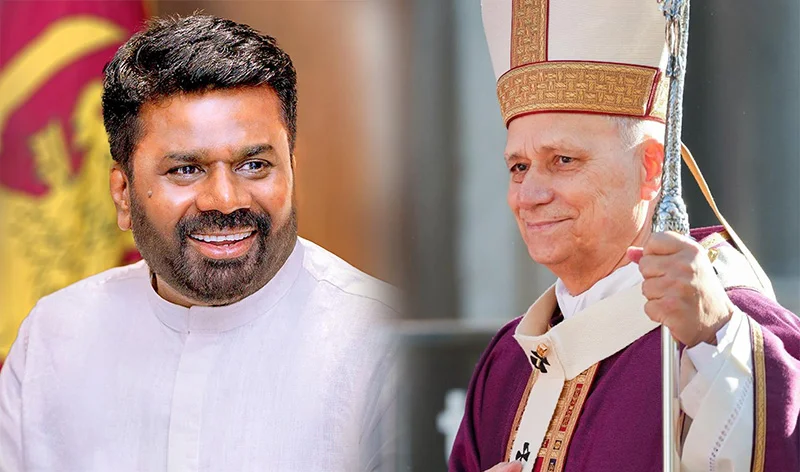
President Anura Kumara Dissanayake has invited His Holiness Pope Leo XIV to visit Sri Lanka.
The official invitation was handed over by Minister Bimal Ratnayaka to the Vatican’s Under Secretary for Relations with the States, at the Vatican, yesterday, during the Minister’s official visit to Italy, the President’s Media Division said.

Maldives Coast Guard Ship Huravee arrives in Colombo

New charges for son of Norway’s crown princess on trial for rape

US sends planes to evacuate nationals from Middle East as Iran conflict spreads

Trump threatens to halt trade with Spain over military base access

Dry weather will prevail in most parts of the island

AKD warns of far reaching economic consequences of Middle East war

‘Dates have the highest sugar content to fight Coronavirus’

Sunday Island 27 December – Headlines

#SundayIsland 17th December – Headlines

Sunday Island – 28th March

Sunday Island Headlines – 21 March

Sunday Island – 21st February – Headlines
-

 Opinion5 days ago
Jamming and re-setting the world: What is the role of Donald Trump?
-

 Features5 days ago
An innocent bystander or a passive onlooker?
-

 Features2 days ago
Brilliant Navy officer no more
-
 Features6 days ago
Ratmalana Airport: The Truth, The Whole Truth, And Nothing But The Truth
-

 Opinion2 days ago
Sri Lanka – world’s worst facilities for cricket fans
-
 Business6 days ago
IRCSL transforms Sri Lanka’s insurance industry with first-ever Centralized Insurance Data Repository
-

 Business5 days ago
An efficacious strategy to boost exports of Sri Lanka in medium term
-
 Features3 days ago
Overseas visits to drum up foreign assistance for Sri Lanka