
Opinion
Why the Grade 5 scholarship examination?

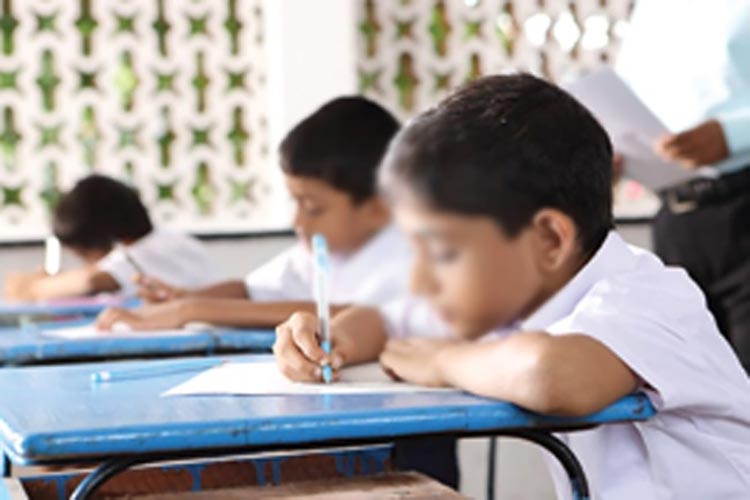
It is in the news that the Ministry of Education is seriously reconsidering the case for the Grade 5 Scholarship Examination. It is wise of the Minister of Education to undertake such reconsideration, given that the examination has lived, I think usefully, for more than sixty years. Long life itself is not a sufficient reason for a longer life; it may have outlived its usefulness and there may be more productive and fairer alternative solutions to the problems it was initially designed to solve. Or, the problems themselves may have changed. Has the Grade 5 Scholarship Examination outlived its usefulness? There are no longitudinal studies of the lives of children who won these scholarships, and one has to depend on anecdotal accounts.
The first 5th standard scholarship examination was held in 1944 and my sister won a scholarship and later volunteered to go to the Training College in Maharagama and become a Specialist English Teacher, so that I could go to university. I took the second Scholarship Examination in 1945 and joined my sister at Hikkaduwa Central School in January 1946. The case of these two siblings was repeated many times over to become a significant social force. The overthrow of the ‘Colombo elite’, who later became little more than a gang of thieves, from political power and the election to office of men and women from entirely new social strata, is an outcome of the social dynamics partly driven by ‘free education’. Can those social forces function without the fillip provided by the 5th standard scholarship examination?
Our parents had no idea of university education or the English language. This was true of most people in the country in the 1940s; it is no longer true. Now, practically everyone is literate and ‘university’ (uni, varsity, campus) is a part of their regular vocabulary. English is no longer a language spoken by people in a distant and strange land. Movies, radio and television, cheap air travel and somewhat higher incomes have combined to bring English closer home to most adults.
At home, English is still a stranger and not a familiar friend who casually walks into the living room. There are small groups of people who are conversant with Arabic, Japanese, Korean or Hindi. English is more familiar than Tamil to most Sinhala speakers and more than Sinhala is to most Tamil speakers. Even parents earning very little and are otherwise stingy and scraping to meet daily expenses, manage to send their children to ‘tuition classes’ to improve the chances that their children would do well at the 5th Grade Scholarship Examination. Changes during the last two generations in a world that has benefited from growth in knowledge and in technology have brought in massive changes in our society.
The social fluidity that the 5th grade scholarship examination and ‘free education’ brought to this society has fired up the imaginations of most people to demand high standards of living, which a sluggish economy has denied them. (I have argued many times on these pages that school education is not a condition necessary to promote or sustain economic growth.) Hence, the exodus from this country during the last generation continues unabated. To call in moralistic considerations and accuse the students of ingratitude when they emigrate for employment is to misread the plight of these young men and women.
Besides, they now remit more than several billion dollars annually, which helps to keep the economy from sinking, weighed down by debt, a part of which was robbed by politicians and public servants. (In 2024, émigré Indian workers remitted some $135 billion to India. In 1976, the amount was about 500 million.) All these changes have made the 5th standard scholarship examination superfluous for driving children to school and for making them stay there for some 11 years. Drop-out rates become sharp at the end of grade eleven. These are massive achievements in our society, but I doubt the 5th standard scholarship examination is any longer necessary to sustain the dynamism that will sustain them.
The scholarship examination was part of a broader programme. Until well into the 1960s, secondary schools thrived in ‘urban’ areas. When I was in school, a child wanting to study beyond Grade 5 had to attend a secondary school, sometimes several and often many miles away from home, in a town that required resources for transportation, boarding and lodging near the school. (Martin Wickremasinghe and Gunadasa Amarasekera both wrote about this feature in their novels).
Likewise, parents needed information about these opportunities, which was scarce among poor people. An important part of the free education package was opening 54 good secondary schools in rural areas, each in an electoral district. Between 1944 and 1947, 54 central schools opened, first in Matugama and the last in Kuliyapitiya (Meeghakotuva). In between, schools opened in Weeraketiya and Henegama, Poramadulla and Green Street (Kotahena), Ginigathhena and Neliaddy. (Three months ago, when I was in the neighbourhood, I went up to see Wanduramba Central School, where the first principal was Sumanasuriya, whom I knew a little.
I expected more imposing infrastructure.) Most of these schools had young men as their first principals, mainly university graduates. Many of these men had been teachers in urban secondary schools: Devendra in Hikkaduva from Trinity College, Kandy; Jayatilleke in Ibbagamuva from St. Peter’s, College, Bambalapitiya; T.C.I. Ekanayake in Pelmadulla from Christian College, Kotte. Young men and women emerging from the new University of Ceylon taught English, European and Indian history, Sinhala/Tamil, and occasionally mathematics and sciences in these schools.
Women had yet to enter these institutions, but when they came from central schools in large numbers, they almost took over the teaching profession. These schools taught in English, the ‘white’ language that once thrived in towns and now sought habitats in ‘brown’ rural areas. Students who won the 5th standard scholarships gained entry to these central schools. Most central schools had hostels for both girls and boys, which enabled students to participate fully in all school activities.
More important, life in hostels was culturally much richer than in the homes of most of those children. There were many bright students at varying stages of schooling and interaction among them was stimulating. There were a few teachers living in the hostel who were a constant source of help. (My novel aluth mathanga has a detailed account of that life.) Now, education from Grade I to university is available in Sinhala and Tamil. Secondary schools are widespread in the countryside, and the 5th standard scholarship examination is no longer required for children to access secondary education.
However, the culture of poverty, especially in disadvantaged homes, remains a serious problem. Some communities have yet to benefit from that feature of ‘free education’: children of families working on plantations. We, as a society, miss out on the contributions these children can make.
The children themselves lose both the material and the cultural wealth that education brings. As the 5th standard scholarship and the free education scheme both left these children and communities behind, any reform of the education system must address their needs seriously and without delay.
Yet, why are parents so keen to see their children score high marks at the 5th standard scholarship examination? Because those high marks have come to serve new purposes. The nature of the examination itself has changed over time, although I have not seen any analytical account of these changes. When I sat the scholarship examination, and many years later, it was a test of intelligence as was understood then.
There were no textbooks, and so far as I knew, nobody worked out answers to old question papers in preparation for the scholarship examination. For the examination itself , students were required to bring with them an HH pencil. They answered questions in simple logic, unencumbered, as far as possible, with differences in cultural backgrounds. That feature ensured that children from poor homes and affluent families, of equal intellectual ability, had equal chances of scoring roughly equally. The examination, as now administered, is deeply biased against children from underprivileged homes. Casual evidence is that students who are felicitated each year for obtaining high scores are almost invariably from homes where both parents are highly educated, in regular employment and live in homes where a student could work quietly.
(The Consumer Finance Surveys conducted by the Central Bank in the earliest years and the Living Standards Surveys conducted by the Statistics Department latterly, inform you about the quality of housing by locality and income levels.) The whole idea of the 5th standard scholarships was to give a leg up to bright children from disadvantaged homes and not to speed up the progress of students from fairly affluent families. Such intensive study as 5th graders now undertake should not be necessary, if the objective were to test the intellectual ability of children. The present examination tests not only the intelligence of students but also their cultural sophistication, which varies with the income levels of parents.
(I ran around the village in grade 5, as if nothing else mattered. If we had had to answer question papers that students face now, my sister and I would not have had a ghost of a chance of going to secondary school and university.) A child who runs off the noise and dust on village roads must be able to do as well as one who comes from a home with several rooms, cemented floors and tiled roofs. At least that is my experience.
Evidence is now plentiful that the culture in the home that children come from is a large determinant of how well students perform at higher levels of education. Where data is available, it is possible with knowledge of the zip code in the address of a student’s home, to guess correctly the level of education and the professions of the parents of a student and the probability of that student’s high SAT score and the eventual admission to an elite college. In rich countries, during the last 30 years or so, there has come to perpetuate a sort of a ‘caste system’ where children of brahmins perpetually keep out the rest from learning in elite colleges and universities.
As brahmins exclusively read, learn and pray from the vedas, so do the offspring of highly educated and well-off persons monopolise admission to elite universities and professions. The concern of parents to seek a ‘good school’ for their child is right. But that search must be backed up by the right kind of information. The ‘right kind of information’ is not distributed randomly. The more affluent have connections and the funds to obtain the right information.
The parents may be past pupils of ‘good schools’ and it is known that past pupils work to get elected to senior positions in the past pupils’ association when they need to admit their child to that school.
The 5th standard scholarships, central schools with students’ hostels and the system of ‘free education’ all served a civilising function in this society. Some features of that combination are no longer essential to continue that noble endeavour. There is a special responsibility of our society to integrate children from the plantations with the main society and a good school system can help in that process. New sources of social stratification are emerging and we need to provide pathways both in and out of such structures. The new minister of education and the new government can be helpful.
by Usvatte-aratchi ✍️



‘Ferocious in battle, Magnanimous in victory (Col Tim Collins- Brit Army)
Sri Lanka commemorated the 17th anniversary of the end of the 30-year Eelam conflict with a moving War Heroes Remembrance Day ceremony on 19 May 26 at the monument on the Parliament grounds. It was a solemn occasion when the Nation paid tribute to over 29,000 Defence and Police people (women and men) who died in the conflict. Sadly, politics, aberrations and theatrics were also on display.
The gravity of the sacrifices made and consequences of the Eelam war and two Southern terrorist insurgencies (1971 and 1988-9), are felt mostly by those who lost their loved ones in the conflicts as the nation mourns with them. Any hesitation to pay tribute belittle the fallen.
It was regrettable to see that the ceremony was also political. Why were the general public excluded from honouring the fallen? It defies understanding that such actions could take place at an event held sacred by the nation. Is there any other country where citizens are prevented from laying wreaths at a National Remembrance monument?
In the UK, from where this ceremony originates, 10,000 veterans (of an army of 109,000 -just half of Sri Lanka’s) take part in the march past every November. They are selected by their regimental associations from thousands of applications on a first come first served basis. Public access is unrestricted with numbers attending being the only barrier to viewing.
It is shocking that in Sri Lanka while public access is denied (selectively?), ‘invitations’ are given to attend a national Remembrance Day. They were restricted to just three government nominees! Who made this unwise decision and why?
Did the other government cohorts object to being invited? Would they have been embarrassed to come? Is the purpose of this to prevent prominent actors in the victory from receiving overwhelming accolades if they attended? Was there a fear of gate crashing? Perish the thought.
What is the need to make political speeches at an event to honour the nation’s dead? Couldn’t the speeches be made in Parliament or broadcast the day before? Seeing VIPs enjoying a joke at this ceremony hurts.
When laying wreaths at the monument, national customs should be followed by all, as in the past. A traditional low bow with hands clasped humbly, as at funerals, should be the form. In the West the head is bowed. It is unnecessary to imitate Americans by placing one hand over the heart when bowing, as on CNN. Bringing the other hand over the midriff elaborates but is an awkward addition.
The dress for all civilians attending should be similar, respectful and appropriate as for formal events and uniform, matching that of the retired military.
This is the time for the nation to remember and reflect for a moment on the dead in conflict, not only of the Military and Police who sacrificed their lives in thousands doing their duty but also of the innocent civilians who died in tens of thousands. Or, is it that some, other than the NOK, who survived in the North and South, have become hardened to death and do not wish to recall how appalling the losses were? Has death lost its meaning if also not its sting?
During 1988-9, when 60,000 died in 13 months (over 100 a day), a tea planter in Bandarawella was shot dead by Southern terrorists for hoisting the national flag on Independence day.
In the Eelam conflict just one regiment, (regiments are the core and heart of the Army), Gemunu Watch, lost 3,424 KIA and 4,272 WIA. The Imperial British Army after WWII lost 2551 (just over half of the Gemunu Watch number) in war in Korea (1949-51), Falklands (1982), Iraq, Afghanistan (20 years) and 40 years of insurgency in Northern Ireland. (SL Army infantry regiments (SL Light Infantry, Sinha, Gemunu, Gajaba and Vijayba) had about 19,000 of 21,000 of the Army KIA. That is the enormity of the sacrifices made by our indomitable military. Who then struggled to find heroes in the military?
Fisher Weerasuriya from Matara and farmer Vernugopal from Jaffna who never knew each other were brought to a place hundreds of miles from their villages, to blow each other’s brains out. ‘Had they a quarrel? Busy as the devil is, not the smallest. Their political leaders had fallen out; and instead of shooting one another had the cunning to get these blockheads to shoot each other’ (transcribed from ‘Sartor Resartus’ – Carlyle). Do Sri Lankan politicians who stirred the pot not know this when they fervently say they hope to prevent conflict in the future?
Is it correct then to exult that 6,000 troops died in the last phase of the war? Is that an achievement? As FM Montgomery said of the WW1 British Army “Good fighting Generals of the war appeared to have complete disregard for life’.
Reparations are claimed by the winners in wars between nations. After civil conflicts there should be reconciliation. There should be no humiliation. When will commemoration of the dead be national in Sri Lanka? How many from communal minorities attend this ceremony? Every citizen from North to South should be welcomed to attend Remembrance ceremonies in the future. That will hopefully help to sow unity.
The military died without a murmur for their companions so that the nation would survive. Let next year’s commemoration be a truly national event where the focus is on those who died while veterans in large numbers and the next of kin together with the general public, are warmly welcomed.
“If it be life that awaits, I shall live forever unconquered: If Death I shall die at last strong in my pride and free”. – Scottish National Memorial
by Old Soldier
Aragalaya betrayed? ‘The treason of the intellectuals’ in the age of populism – Part II
The JVP/NPP conceptualisation of the ‘Jathika punarudaya’ (national renaissance) interpreted the Sri Lankan Renaissance as the aspiration to regain the moment we lost in the global modernisation project, which is believed to have emerged in the twentieth century as a result of the Western European Renaissance and Enlightenment imagination. Jathika punarudaya values modernity as the era of citizens based on a representative democratic model founded on a common social contract. It values human rights, civil rights, and political rights as the core of modernity. It values social interventions based on the values of social justice and collectivism. But is the current government acting on the basis of those renaissance beliefs that they claim to believe in?
This government came to power within the framework of bourgeois parliamentary democracy. However, the opposition alleges that the government is working to limit the right of the opposition to question the government’s actions within that framework, and within Parliament itself. The continued postponement of provincial council elections by the government has been criticized as a delay in the implementation of decentralised political power, especially in provinces inhabited by Tamils and Muslims.
The promise to abolish the executive presidency and restore a parliamentary-based political power structure continues to be postponed. This has drawn attention as a possible way to suppress trade union activities and intimidate political activists through repressive laws such as the Public Security Act and the Emergency Law, which are continuously implemented through the authoritarian use of the power of the executive presidency.
‘Honest party leadership,’ not the institutional system
The JVP, the core political party of the current government, which insists that its members are honest, claims that even if they violate certain rules and regulations in the course of governing, there is nothing wrong with it because it is not done for personal interest but for the common good. This implies that this government does not rely on rules, regulations, and a system of institutions built to last, but rather on the leaders of its own party, the JVP, whose leaders believe themselves to be honest. The system of institutions established on rules and regulations is for the rest of the people.
Attempts to subjugate institutions and public opinion to the government’s opinion
It is apparent that the government wants to implement its pre-designed agenda without any hindrance. To that end, the government is trying to subjugate all institutions and public opinion to its sole opinion. The most striking example of this approach is the government’s attempt to implement, without any genuine public discussion, neoliberal reforms formulated by previous governments regarding national education, which will have a decisive impact on the future of the country. The leadership brags that the proposed education reforms will be implemented as originally designed, regardless of any criticism or objections.
The government sets up committees at the local level claiming to represent the public, but people complain that they exclude anyone who does not conform to their way of thinking.
Freedom of expression
Civil rights activists say the current government’s continued use of the Online Safety Act, which was passed by the previous government despite public opposition, poses a serious threat to freedom of expression. Freedom of expression has been suppressed under the guise of legality. The government has made it a policy to summon and question individuals who criticise the government—even national-level politicians—at the CID. This amounts to intimidating its critics.
The government has not only broken its promises by failing to repeal the existing PTA but is also attempting to pass a new anti-terrorism law that local and international civil rights organizations have unanimously condemned as even more repressive. It has been stated that there is scope for the proposed new law to intensify the current use of anti-terrorism law as a weapon to suppress freedom of expression.
“The Arts Council has become an arts police!”
The latest instance of the government’s attempt to curb freedom of expression that has come under serious public criticism is the detention of four books by a Sri Lankan writer, Theebachelvan, who writes in Tamil, by Sri Lankan Customs when they were brought into the country from India. Later, a statement issued by the Director of Customs said that two of the novels would be released based on recommendations issued by the National Arts Council and the Literary Council, while the other two would not be released based on the recommendations of those boards and the Ministry of Defense.
The statement that “The Arts Council has become an arts police!” sums up the public protest that arose questioning the “legal and moral rights of the members of the Arts Council and the Literary Council who have received political appointments” to “measure and mark the boundaries of freedom of speech and expression at their own discretion” by giving such recommendations and assuming a power that they do not have.
Going beyond this general situation, the serious question that has been raised is: on what basis did Customs consider the views expressed in the two books by Theebachelvan that have been censored to be equivalent to the crime of ‘sedition’ under Section 120 of the Penal Code, which was cited as the reason for the detention? A related question is whether there is a connection between the allegation of sedition and the fact that the writer is a Tamil from Kilinochchi.
The irony here is the intervention of the current government’s Minister of Culture, the heads of the Arts Council under the Ministry of Culture, and its own literary sub-council in deciding this matter, along with the follow-up statements defending the government’s decision made by the same authorities, as well as by writers, artists, intellectuals, and academics who have been holding positions under the current government and those who have not.
There was strong public criticism that these individuals—who were believed to have held radical, liberal views on freedom of expression and ethnic rights before the current government came to power—have been appointed to various positions under the current government and now approve its repressive decisions in the name of ethnic reconciliation.
The following sentiments extracted from the comments made by Sumathy Sivamohan on her FB page, expressing her shock at a statement made by one of the leading Sinhala writers involved in making such statements, encapsulate the essence of the public criticism of the issue:
” I am shocked at [name of the person]’s words on the detainment of Theebachelvan’s works by Customs. … The radicalness, the liberalness, are just thin veneers of their Sinhala-only stances. …. Now, they talk of Reconciliation. Reconciliation via Repression. …. Reconciliation, my foot! …. reconciliation is in your head, I think …. [I am] outraged. But now, [I] am certain of one thing. This is the bluff and bluster of liberals. …. That [name of the person] and others think, when Sinhala people think there’s reconciliation, there’s reconciliation, smacks of very deep-rooted racism
I don’t understand the argument, ‘we have to protect this government’ sentiment, touted by many liberals, who in intimate circles voice criticism. And these are the same people who supported the LTTE too, when it suited them—their liberal Sinhala agendas. … Now, they are blubbering …. it is shocking, for it whisks the mask off the faces of these liberal faces. There is a side of Sinhala liberalism that slavishly supports sentiments pertaining to the LTTE. They are the same, they are all the same. Those radicals, those liberals, those everybody, who think because they are Sinhala they have superior knowledge of matters. Sickening.” (reproduced with permission). (To be continued)
by Kumudu Kusum Kumara

 (The author is on X as @sasmester)
On 6 May 2026, I wrote an essay in this column titled, ‘Monks, the Law and the Future of the Buddhist Monastic Order.’ While my point of departure was the arrest of 22 Buddhist monks on narcotics charges, my focus was the need to treat everyone in this country equally before the law – including Buddhist monks. The fact that the Mahanayaka Theros had requested in a statement that the errant monks be thoroughly investigated and legally dealt with was encouraging given their usual silence in such cases. Now, another – and an even more visible case – has come to the fore. This time, the Chief Prelate of the Atamasthana, Venerable Pallegama Hemarathana Thero, has been accused of sexually abusing an underage girl from Anuradhapura. The National Child Protection Authority reported the facts of the incident that had been discovered to the Anuradhapura Magistrate’s Court on 8 May 2026, and the court subsequently ordered the arrest of the suspect monk and the girl’s mother. Anuradhapura Chief Magistrate has also imposed a foreign travel ban on the suspect monk.
But unlike with the 22 monks in the earlier case, the usual silence on the part of the Reverend Mahanayakas and other senior monks have descended upon Venerable Hemarathana’s case and the seeming non-equality before the law seems to prevail again – at least to some extent. This time, there are no public statements or meetings with the President to urge action to the ‘fullest extent of the law’ as was the case earlier. One must assume this is because the accused this time is a senior and influential prelate as opposed to a group of unknown young monks in the earlier case.
While his case was gathering momentum both in the courts and in public discourse, Ven Hemaratana promptly admitted himself to a comfortable private hospital in Colombo following the established path already followed by many affluent suspects. However, he was officially arrested on 8 May 2026. It is unfortunate that he resorted to this course of action rather than presenting himself to the prison authorities through the courts. This is because this action of anticipated privilege places him on par with all the powerful suspects in this country in recent times who have taken the same path. This is a matter of his own choice. My understanding is Venerable Hemarathana, after being arrested at the private hospital has been officially placed under remand and held in a government hospital under prison custody. While the law has worked here in terms of the arrest and the preceding action unlike numerous other occasions in recent decades when it comes to powerful individuals, many commentators claim it has still been somewhat slow. This perception also comes from the long history of negative experiences society has witnessed and the expectation of better delivery of justice under the watch of the present government. Overall, however, I think the procedure so far indicates a somewhat positive development given the unenviable history involving such high-profile cases in the past. But the public vigilance over the case should not diminish.
However, despite the typical silence within the formal Buddhist ecclesiastical establishment, there is considerable debate and often unmitigated noise mostly emanating from social media clamouring for the need for justice for the allegedly abused girl. If not for this noise, my sense is, the present case too might have been swept under the carpet as has been done many times before in similar circumstances.
But the social media clamour, despite its positive impact on pressuring government agencies towards action, has its own major failings. Many of these articulations have already decided upon Venerable Hemarathana’s guilt as if they had access to all the evidence in the case and have unparalleled legal expertise that would allow them to act as judge, jury and executioner in a court of public popularity. This approach itself is very dangerous. Irrespective of how we may feel about the case and the plight of the young girl who has been victimised in more ways than one, Venerable Hemarathana is still merely an accused or suspect. Nothing has been proven beyond any doubt in a court of law. Social media acting as an all-inclusive judicial mechanism is simply dangerous and unintelligent. The next victim can easily be any one of us for no good reason and the present social media trend-setters have already set the precedent.
The only sensible thing the social media and intelligent citizens, particularly Buddhists can do is not to make judgements in a situation where they simply cannot, but contribute to sensible and thoughtful debate and pressure the Buddhist establishment as well as the government to initiate urgent ecclesiastical reforms and ensure monks are treated exactly the same as all other citizens when they violate the law of the land. Hiding or protecting wrongdoers is not the solution as it will only make matters worse in the long run.
A somewhat comparative but limited global example is the Catholic Church which has faced extensive and recurring controversies regarding child sexual abuse across almost all continents, mostly as a vocal public discourse from the 1980s onward. It would be good to see how these controversies emerged and what happened.
The controversies in the United States emerged in 1985, 2002, 2018 even though it is the 2002 Boston Globe exposé that is considered the most damaging and became a global turning point indicating systemic institutional silence within the church. The controversies in Ireland emerged between the 1990s and 2009 mostly emanating from several government-commissioned reports that include the Ryan Report (2009) and Murphy Report (2009), which documented widespread physical and sexual abuse in Church-controlled institutions from 1936 to 1999, which concluded both the Church and state failed to protect children. Similar conservatories concerning the Catholic Church have emerged in Canada between the 1990s and 2015; in Australia between 2012 and 2018 as well as in other countries like Germany, Belgium, the Netherlands, France, Spain, Mexico and Chile.
What is important is these controversies created considerable public concern, characterised by a profound loss of institutional trust and demands for transparency. Crucially, these scandals fundamentally transformed the public perception of the Church and prompted significant legal and institutional reforms globally. This sense of public outrage, concern, demand for institutional reform and follow-up action is what is woefully lacking in Sri Lanka when it comes to the Buddhist monastic order.
But the Buddhist order certainly needs reform. And it needs such reform urgently and we must see these reforms in action without delay. Monastic orders should not be allowed to deal with or protect wrongdoers when they violate the law. Dealing with such situations should only be up to the legal and judicial system of the country.
Venerable Galkande Dammananda, in a YouTube interview with Saroj Pathirana on 18 May 2026 clearly noted that any member of the clergy who has violated the law should be dealt with by the law and it would simply be wrong not to do so. He was very clear in his explanation that no exemptions should be provided to monks. This basic legal and commonsense position which we seem to have forgotten in this country when it comes to powerful people in general and Buddhist monks in particular, should be the point of departure for reforming the Buddhist monastic order.
It would be instructive to understand the dilemmas faced by the Catholic Church globally if we are serious about getting Buddhist institutional network reformed. The crisis in the Catholic Church and its long-term neglect of justice and silence over wrongdoing ensured many people, particularly in countries like the United States distanced themselves from the church. Any inaction on the part of the Buddhist order and the government might lead the future of the Buddhist establishment in this direction too. One should not disregard the present unhappiness that is clearly visible and felt in society, mostly articulated in social media. These are mostly Buddhist voices.
We need to decide whether we want to reform our institutions and go forward or allow them to collapse and descend into chaos. The people should not forget that like any elected government, the Buddhist as well as other religious establishments survive on our collective kindness. And that kindness should not be based on blind and unintelligent faith. If they do not reform themselves and reinvent themselves, they certainly do not deserve our support.

Explosive top orders in focus as Rajasthan Royals face bogey team Sunrisers Hyderabad

New High-Definition (HD) Television Studio at the University of Vocational Technology handed over to students with the participation of the Prime Minister

Multiple people killed and others missing after chemical explosion at US paper mill

Dozens killed in Lebanon as Israel intensifies strikes

Showers will occur at times in the Western, Sabaragamuwa and North-western provinces and in Galle, Matara, Kandy and Nuwara-Eliya districts

Banking sector claims its integrity intact despite ‘isolated incidents of fraud’

‘Dates have the highest sugar content to fight Coronavirus’

Sunday Island 27 December – Headlines

#SundayIsland 17th December – Headlines

Sunday Island – 28th March

Sunday Island Headlines – 21 March

Sunday Island – 21st February – Headlines
-
 Opinion6 days ago
Murder of Ehelepola family, Bogambara Wewa and Sightings of Wangediya
-

 Business5 days ago
Historic launch of CCWE Fashion Week & International Summit 2026
-
 News6 days ago
Steps underway to safeguard Sri Lanka’s maritime heritage
-
 News2 days ago
Police probe underway to ascertain links between criminals deported from UAE and local politicians
-
 Features3 days ago
The NPP’s pivot to the past
-

 News3 days ago
All-New GRAVITE launches at LKR 6.99 Mn
-

 Editorial6 days ago
A play without its protagonist
-

 Opinion5 days ago
The need to reform Buddhist ecclesiastical order